The NAACP and National Board of Review Confront “The Birth of a Nation’” Racism from 70 Fifth Avenue
On February 8th, 1915, D.W. Griffith’s acutely racist film The Birth of a Nation debuted.

On February 8th, 1915, D.W. Griffith’s acutely racist film The Birth of a Nation debuted.
Café Le Metro, now the 13th Step Sports Bar, was located at 149 Second Avenue. A four-story Greek Revival row house, it is the oldest on its block front and … Continued

The University Place Book Shop was one of the longest-running “Book Row” shops.

Village Preservation’s curriculum on Black history for middle school students focuses on local, citywide, national, and global themes and movements from pre-European settlement through the 21st century. One of the … Continued

Influential Abstract Expressionist painter Paul Jackson Pollock was born on January 28, 1912 in Cody, Wyoming. With his father, a farmer and government surveyor, mother and four brothers, Pollock grew up in … Continued

The anti-war and civil rights activist Igal Roodenko was a leader in a number of the most significant social movements of the twentieth century.

Village Preservation shares our oral history collection with the public, highlighting some of the people and stories that make Greenwich Village, the East Village, and NoHo such unique and vibrant … Continued

We have posted a number of times about the origins of the names of various streets in our area, nearly all of which honor men. Bethune Street, barely three blocks … Continued

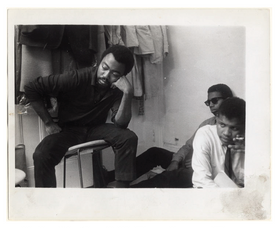
Like the New York branch of the Black Panther Party, the Umbra Poets Workshop started in an unidentified location somewhere in the East Village. Working to establish a Black poetic … Continued
In 1900, the Social Reform Club hosted a lecture by labor leader Edward King.

Butterfly McQueen — it’s an unusual name, but in many ways perfect for the woman to whom it is attached, as it evokes both flight and royalty. Born in Florida, … Continued

In her manuscript for the novel People in Trouble, lesbian author and activist Sarah Schulman tells of a fictionalized AIDS activist organization called JUSTICE. By the time People in Trouble … Continued

Around 1907, after recovering from a chronic backache, the 24 year old Max Eastman moved to New York City.

A remarkable number of people and places in Greenwich Village, the East Village, and NoHo played important roles in the move towards women’s suffrage. These neighborhoods were long centers of … Continued

The creation of the African Free School, which was founded on November 2, 1787, signaled a profound shift in the course of social reform, abolition, education, and racial equality in … Continued

The East Village is home to a dynamic group of historic LGBT+ sites — overshadowed as they may be by the many such landmarks of the West Village, including Stonewall. … Continued

Carl Jung (1875-1961) was a Swiss psychiatrist whose ideas about the human unconscious had a profound effect on literature, art, and philosophy. While he was a longtime corresponder and collaborator … Continued

In 2007, Village Preservation published “The Italians of the South Village” by Mary Elizabeth Brown, Ph.D. The report is exhaustive and highlights buildings, people, and dynamic histories of a long-storied … Continued

Throughout the nineteenth and twentieth century, the neighborhood south of Union Square was a hub for leftist and labor organizing.

Over 2.4 million New Yorkers, or nearly one-third of its population, identify as Hispanic or Latino, including myself. National Hispanic Heritage Month (September 15-October 15) is one of many occasions … Continued

The progressive mutual-benefit organization the International Workers Order (IWO) was located at 80 Fifth Avenue.

“The pathfinder mural is a historic political and artistic landmark now nearing completion on a six-story wall of Pathfinder publishing house in New York’s Greenwich Village. The centerpiece of the … Continued

Responding to the census and participating in the upcoming national elections are critical to ensuring our communities are represented, our voices heard, and our democracy maintained. However, doing each is a … Continued

The five story Italianate style cast-iron loft building at 112 Fourth Avenue was constructed in 1872.

A remarkable number of people and places in Greenwich Village, the East Village, and NoHo played important roles in the move towards women’s suffrage. These neighborhoods were long centers of … Continued

August 18th is the hundredth anniversary of the adoption of the 19th Amendment, which prohibited discrimination in voting in the United States based upon sex. It was the culmination of … Continued

The 19th Amendment to the Constitution was adopted on August 18, 1920, affirming that “The right of citizens of the United States to vote shall not be denied or abridged … Continued

On May 4, 1912, ten thousand people marched for women’s suffrage along Fifth Avenue.

In the late 1880s, Brooklyn-born Sarah Smith Garnet helped found the Equal Suffrage League, a Brooklyn-based club for Black women, which worked with the Niagara Movement, a predecessor to the … Continued

Ira Frederick Aldridge is today remembered as one of the most renowned actors of the nineteenth century.

Art of Our Century Gallery Celebrates 100 Years of Women’s Suffrage with a contemporary twist A Particular Group of Women at a Particular Place in Time, a solo exhibit of paintings timed … Continued

We’re in the midst of battling a global pandemic, with a federal government which often seems disinterested at best in addressing the situation and unwilling to take the steps necessary … Continued

On July 10, 1925, what would come to be known as the “Scopes Monkey Trial” began in Dayton, Tennessee.

For nearly a quarter of a century, the International Workers Order fought relentlessly for racial equality.

LGBT nightlife in New York has changed drastically throughout the years, with an exodus of sorts to Brooklyn. There have been a multitude of reasons suggested for the decline, including … Continued

The Women’s House of Detention, an eleven-story prison in the center of Greenwich Village, closed on June 13th, 1971.

June is Pride Month, which makes it an especially exciting time to be in the Village. LGBT history is closely tied with our neighborhood and their culture, and throughout the … Continued

Uta Thyra Hagen had one of the longest and most impressive acting careers in American theater.

It’s Pride Month!! Today we look at Richard Wandel, someone who has been instrumental in archiving LGBT history and who shared his story with us through our Oral History Project … Continued
Westbeth is the first subsidized housing for artists in the United States, offering affordable housing and work space in New York City.

June is Pride Month, a time when LGBT communities come together and celebrate the freedom to be themselves. The Stonewall uprising in June 1969 is the original inspiration behind the annual June festivities. … Continued

On the 19th of April in 1860, the New York state legislature passed a bill punishing an act, or omission of an act, that caused pain to animals “unjustifiably.” It … Continued
In 1983, Michael Konnon decided to create a dedicated, independent community pharmacy.

Each year, Village Preservation honors the invaluable people, businesses, and organizations that make a special contribution to our neighborhoods at our Annual Meeting and Village Awards. On June 17th, 2020 … Continued
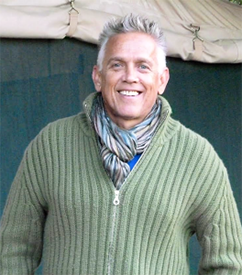
Our neighborhoods have been the home of many of history’s most important civil rights and social justice leaders, as documented in Village Preservation’s Civil Rights and Social Justice Map. Three … Continued

For twenty four years, the entire existence of the organization, the International Workers Order (IWO) was headquartered at 80 Fifth Avenue (southeast corner of 14th Street), an elaborately-detailed Renaissance Revival … Continued

A collective supportive response to health disasters or other struggles is not new to our neighborhoods. “Mutual aid” as it’s often called and mutual aid societies have been a hallmark … Continued

Rita Mae Brown, New York University alumnus & former Greenwich Village resident, has achieved great success in the fields of LGBTQ activism and writing. Her most popular work, “Rubyfruit Jungle,” … Continued

Part of our blog series Why Isn’t This Landmarked?, where we look at buildings in our area we’re fighting to protect that are worthy of landmark designation, but somehow aren’t landmarked. … Continued

On the 19th of April in 1860, the New York state legislature passed a bill punishing an act, or omission of an act, that caused pain to animals “unjustifiably.” It … Continued

Greenwich Village has long been the home of many of history’s most important social change champions. Now, using Village Preservation’s interactive map of the Greenwich Village Historic District, we can … Continued

The history of medical and public health advancements have played a key role in our neighborhoods’ stories. While the story of Elizabeth Blackwell, the first woman doctor in America is … Continued

The St. James Presbyterian Church at 409 West 141st Street, on the corner of St. Nicholas Avenue, stands on the incline of a hill looking eastward over Harlem. The commanding, 1904 neo-Gothic structure boasts an ornate bell tower, visible from the nearby St. Nicholas Park and the City College of New York.

If you walk down West 11th Street between 5th and 6th Avenues, you’ll notice one home with a curiously angled facade at No. 18. If you follow that curiosity, as … Continued

One afternoon in 1939 or 1940, a young Ph.D. student and aspiring writer named Thomas Merton (January 31, 1915 – December 10, 1968) was sitting on the floor of his … Continued

The Abyssinian Baptist Church at 136-142 West 138th Street is the home of the second oldest African-American congregation in Manhattan, and has long been a center of civil rights and social justice activism.

When we think of great African American historic sites in New York, we typically think of Harlem’s Apollo Theater, Lower Manhattan’s African Burial Ground, or Brooklyn’s Weeksville Houses. But one building that should … Continued

Emma Goldman was born in Kovno, Lithuania in 1869. By the time she was 23 years old, she was a divorced American citizen under arrest. For everything from being associated … Continued

The Mother African Methodist Episcopal Zion Church at 140-148 West 137th Street is the sixth home of New York City’s very first black church, and the founding church of the A.M.E. Zion Conference of churches.

An abridged version of this piece appeared as an op-ed in the January 23, 2020 edition of AM-Metro NY. A recent report issued on behalf of the NYC Department of … Continued

Part of our blog series Why Isn’t This Landmarked?, where we look at buildings in our area we’re fighting to protect that are worthy of landmark designation, but somehow aren’t … Continued

On January 16th, 2013, Village Preservation sent a letter to the New York City Landmarks Preservation Commission (LPC) requesting that it landmark key sites of significance to lesbian, gay, bisexual, … Continued

Village Preservation’s Civil Rights and Social Justice Map was launched on January 3, 2017. This online resource, which marks sites in our neighborhoods significant to the history of various civil … Continued

In the years before the abolition of slavery in New York State in 1827 and the Civil War, New York was a hotbed of both pro-slavery and anti-slavery sentiment. The … Continued

When doing research on buildings in our area, you never know what you may find. We try to exhume and bring to light all the history we find — the … Continued

Part of our blog series Why Isn’t This Landmarked?, where we look at buildings in our area we’re fighting to protect that are worthy of landmark designation, but somehow aren’t … Continued

The New York Foundling is one of New York City’s oldest and largest child welfare agencies. Founded in 1869 to save the lives of babies being abandoned on the streets of New York, the Foundling currently serves over 30,000 people each year in New York City, Rockland County, and Puerto Rico.

Part of our blog series Why Isn’t This Landmarked?, where we look at buildings in our area we’re fighting to protect that are worthy of landmark designation but somehow aren’t. Women have … Continued

That village, the labyrinth of streets and lanes… into which those restless individuals seeking political or social or cultural change began settling after 1910 consisted mostly of buildings grown dingy … Continued

Few places have made more significant contributions to civil rights and social justice struggles, artistic creativity, and freedom of expression than the East Village. Now more than ever, it’s important … Continued

The Shiloh Presbyterian Church is one of many African American churches once found in Greenwich Village, when nearly all the city’s leading African American churches were located in this neighborhood. … Continued

We at Village Preservation keep tabs on all different types of preservation, including environmental sustainability. So we’ve been really interested to learn about the expanding opportunities in our neighborhoods for … Continued

Rattlestick Playwrights Theater has been on quite a journey this past year, and Village Preservation has been thrilled to be a companion on the ride. Novenas for a Lost Hospital … Continued

The Attica Prison Riots, which took place September 9th through 13th, 1971, rocked the entire country. The bloodiest prison disturbance in recent American history, the riot was unplanned but ignited … Continued

Village Preservation collaborated recently on a major project with Google Arts + Culture. We put together tours of Greenwich Village, the East Village, and NoHo that highlighted the deep and rich cultural and artistic movements in … Continued

On a farm far from the city on August 15, 1969, the Woodstock music festival entered into history and helped define a generation. The “Aquarian Exposition: 3 Days of Peace … Continued

101 Avenue A is home to the Pyramid Club which became a launching point for pioneering drag superstars like Lady Bunny and RuPaul, setting in motion the contemporary drag movement. … Continued

On June 18, 2019, Village Preservation scored a big victory five years in the making — persuading the City to landmark two more LGBT historic sites: the LGBT Community … Continued

This is one in a series of posts marking the 50th anniversary of the designation of the Greenwich Village Historic District. Click here to check out our year-long activities and … Continued

This is one in a series of posts marking the 50th anniversary of the designation of the Greenwich Village Historic District. Click here to check out our year-long activities and … Continued

Millions converge in New York City each year in late June to celebrate events which took place in and outside of a Greenwich Village bar in 1969. The Stonewall Riots are not only be memorialized … Continued

On June 27th, 2016, President Obama designated the Stonewall National Monument, the 412th National Park site, and the first U.S. National Monument chosen specifically for its LGBT history. This milestone … Continued

On June 24, 1969, the Stonewall Inn was raided by New York City Police, four nights before the infamous raids that sparked the Stonewall Riots. This was not the first … Continued

Six sites were recently designated landmarks by the NYC Landmarks Preservation Commission based on their LGBT history and association, two of which were part of a five-year campaign by Village Preservation: … Continued

Their neighbor to the west, Greenwich Village, may be more well known as a nexus for lesbian, gay, bisexual, and transgender history, but the East Village and Noho are chock full of … Continued

In late June, New York is in the throes of celebrating the anniversary of the Stonewall Riots, three nights of disturbances from June 28th to June 30th 1969, which are recognized globally as the … Continued

This is one in a series of posts marking the 50th anniversary of the designation of the Greenwich Village Historic District. Click here to check out our year-long activities and … Continued

Each year, immigrant history week is celebrated in late April, commemorating the day in 1907 when more immigrants came through Ellis Island than any other day in history. More than … Continued

Few places on Earth have attracted more or a broader array of activists and agitators for social change than Greenwich Village. And much of that activity took place right in … Continued

This is one in a series of posts marking the 50th anniversary of the designation of the Greenwich Village Historic District. Click here to check out our year-long activities and … Continued

On March 18, 2008, the NYC Landmarks Preservation Commission (LPC) approved the designation of four East Village landmarks, and they were as varied as the East Village itself. They were … Continued

This year marks the 50th anniversary of the designation of the Greenwich Village Historic District on April 29, 1969. One of the city’s oldest and still largest historic districts, it’s … Continued

Good news, all Off the Grid-ers: we’ve made it to March! In addition to marking the near-end of winter, March is the month for two important celebrations – Irish Heritage … Continued

The corner of East 9th Street and Avenue C looks rather naked to some local residents. But it’s not because it is February and the trees are bare. It’s because … Continued

Emma Goldman, anarchist and feminist, advocate of free speech, free love, birth control, and the eight-hour workday, was arrested in New York City on February 11, 1916. Charged with violating … Continued

I was holiday shopping at my local bookstore and was delighted to encounter Emily Jenkins’ “All of a Kind Family Hanukkah.” In the book, a Jewish immigrant family prepares for … Continued

World AIDS Day takes place on the 1st December each year. It’s an opportunity for people worldwide to unite in the fight against HIV, to show support for people living … Continued

“For all of us who were worried that the conservative backlash in this country would bring about unnamed terrible things, the future is now.” These words date to November 1980, … Continued

On October 15, 1974, the Gay Activist Alliance Firehouse, located in SoHo at 99 Wooster Street, was bombed.

October 11th is National Coming Out Day, a day dedicated to raising awareness and visibility of the LGBT community through the process of “coming out,” or identifying one’s LGBT identity … Continued
