Deborah Glick
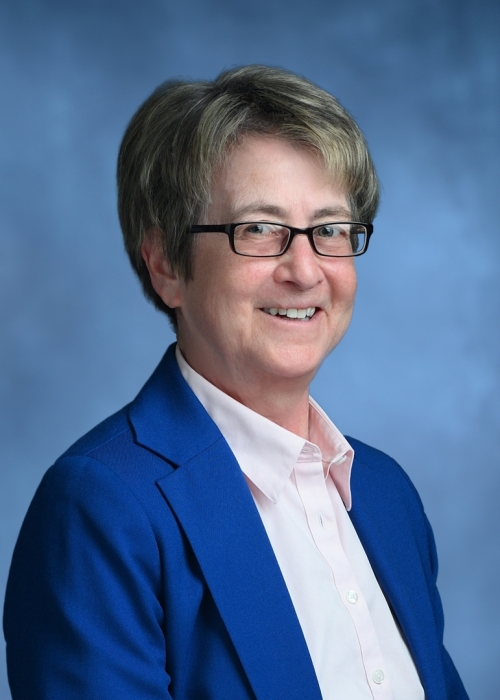
As Lower Manhattan’s elected representative for 35 years, Deborah Glick was a leading advocate for civil rights, reproductive freedom, animals and environmental preservation, the arts, and tenants’ rights. Glick was the first openly LGBTQ member of the State legislature when elected in 1990 and a leader in the fight for marriage equality. She fought to pass the Sexual Orientation Non-Discrimination Act [SONDA], which prohibits discrimination on the basis of sexual orientation, and the Gender Expression Non-Discrimination Act [GENDA], which protects transgender and gender non-conforming New Yorkers from discrimination. Glick chaired the Assembly Committee on Environmental Conservation and also served on the Ways and Means, Rules, and Governmental Operations Committees. Highlights from Glick’s oral history include memories of her family’s Village-based printing and stationery business, discussions of navigating electoral politics as an out lesbian, and recollections of the Village’s vibrant gay cultural and nightlife scene.
Clip from Oral History
Excerpts from Oral History with Deborah Glick:
“And so, it really was a working middle-class neighborhood, lower middle-class, I would say, neighborhood. There were lots of shops that catered — I remember the Golden Rule Liquor Store across the street on Hudson Street. Which is still there, but obviously, the proprietor, Martha, is long gone. They had a screen door. I loved that because that felt like home, because we had screen doors. Not that I went to the liquor store except to deliver some sort of, you know, invoice materials. So it felt different in that it was very much a working area. It wasn’t endless restaurants being the primary business. There were other kinds of businesses and shops. There wasn’t the same sense of a consolidation as an entertainment and nightlife area. And shopping, high-end shopping. Because clearly, there was no high-end shopping. And Hudson Street itself, not right then, but as it started to change, became a row of antique stores. There are no more antique stores, but Bleecker Street and Hudson Street were replete with wonderful antique stores. And within them, there might be — a local person making jewelry would have a small little place set up. And there were, you know, the other things that people needed: tailors, shoemakers. There aren’t as many of those around as there were.” (p. 8-9)
“So it was a show in 1973 — New York Illustrated [Homosexuals out of the Closet], I believe was the name of it. And they came to interview the Lesbian Liberation Committee of the Gay Activists Alliance. So, the women’s auxiliary. And there were a very small number of us. I don’t think there were more than 10 people in the room, and half were in shadow. And I was willing to be out, thinking, Well, I have this job. If I lose it, I’ll get another one. Not really being, you know, having that sort of carefree early twenties attitude of I don’t have — it’s not a great job anyway, what the hell. But then I realized it was gonna show in a certain amount and I had to tell my family before they learned TV-wise. And so that’s how I came out. And the LLC became Lesbian Liberation — Lesbian Feminist Liberation, LFL. I was very involved in that. And I was also a little later — I wasn’t that involved in NOW until later on, but feminist analysis of society was certainly very much a part of who I was.” (p. 17-18)
“So we don’t have as many active block associations and what the block associations were able to do. 20 years ago, the Ye Olde Village Faire, the Bedford Barrow Commerce Block Association, taking over three blocks for a long day and night. Bloomberg didn’t like all of that stuff at night, so it was, you have to close up at six o’clock. Dancing under the stars to live music was a hallmark of that street fair. So I think the homogenization has been one of those changes. The shift to increasingly more expensive shops. Bleecker Street, there are very few things you can pick up for the evening. It’s just there for the tourist trade. And I understand that. I mean, change is inevitable and change is not inherently bad.” (p. 28-29)
“I mean, it is the erosion of the common good and the concern for a community. Why did you come here? Why are you here? Why did you come to this neighborhood? You see what it is. You came from somewhere on Long Island or somewhere in Westchester, or maybe you came from the Upper East Side. And you say, “Oh, I love it because there’s so much air and light. And now I’d like to put three more stories on the top of this building.” Well, where do you think the air and the light came from? So that — and it’s not individuals. It is a societal problem of people caring more about themselves. And that’s the perniciousness of the current political climate that this top-down selfishness, cruelty, and callousness is infecting. And I use that very decidedly.
I mean, one thing that we didn’t touch on, and I sort of mentioned it and then we went off in another direction, but the cultural milieu of this community changed a great deal with the AIDS crisis. We lost a generation of creative artists, whether it was Keith Haring or Charles Ludlam from the Ridiculous Theater company. There was an energy and a vibrancy that we lost, and some of it was replaced with a sense of loss and depression without an immediate regeneration. I think that’s changed. And I think, you know, things like the Village Vanguard. God bless Deborah Gordon, who’s still keeping that going. And there are those markers. But, you know, the coffee houses that encouraged interaction. Now everybody’s on a screen. Those screens are barriers. And people have to put them down. And if you want to write something, take a paper and a pen and write it down so people can see you while you’re creating.” (p. 29-30)