
Fighting Back: The Tompkins Square Park Riot of 1988
Every neighborhood has a place where people go to express their discontent. For the East Village, that place is undoubtedly Tompkins Square Park. Ever since its founding in 1834, the park has hosted community meetings, protests, and several infamous riots. The most recent one broke out on August 6, 1988, between the NYPD and a group of protesters.
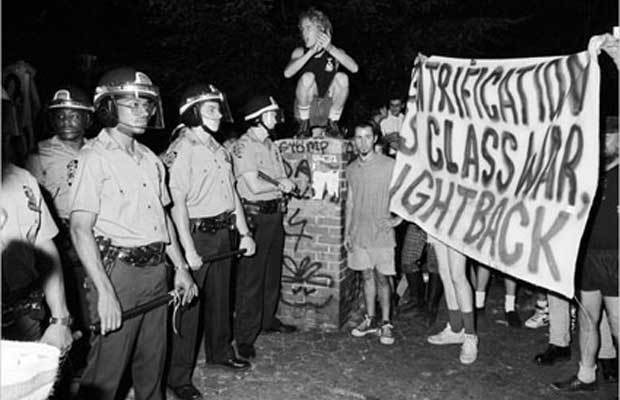
What incited this particular riot?
After the recession of the 1970s, the growing economy of the 1980s generated interest in the East Village from a new group of higher income residents, who began to gentrify the neighborhood. Meanwhile, people experiencing homelessness had taken refuge in the East Village’s Tompkins Square Park for a long time, and the park was well known for its congregations of those who lived on the margins of society. As is often the case in places of poverty and marginalization, the park was notorious for the buying, selling, and use of drugs. It was also known for loud, raucous gatherings, particularly all-night rock concerts.
The park and its occupants made new residents feel unsafe. In response to their complaints, the city imposed a 1 A.M. curfew in the park. Many residents, including members of the park’s homeless community, saw this as an act of hostility against them, rather than a solution to a safety issue. On the evening of August 6th, 1988, a group of protesters gathered in the park to dispute the new curfew. Police captain Gerald McNamara and over 80 officers showed up to the scene to respond. McNamara eventually called in 400 officers, including officers on horseback.
What ensued was a tense standoff, followed by a riot that lasted until 6 A.M. the next morning. Officers blocked off exits to the park and began charging at the crowd. With nowhere to flee the increasingly confrontational scene, several protesters retaliated by throwing bottles at the officers. The police continued to charge the protesters and began beating them with batons, injuring 38 people. Eventually over 100 complaints of police brutality were filed, but no officers were reprimanded.
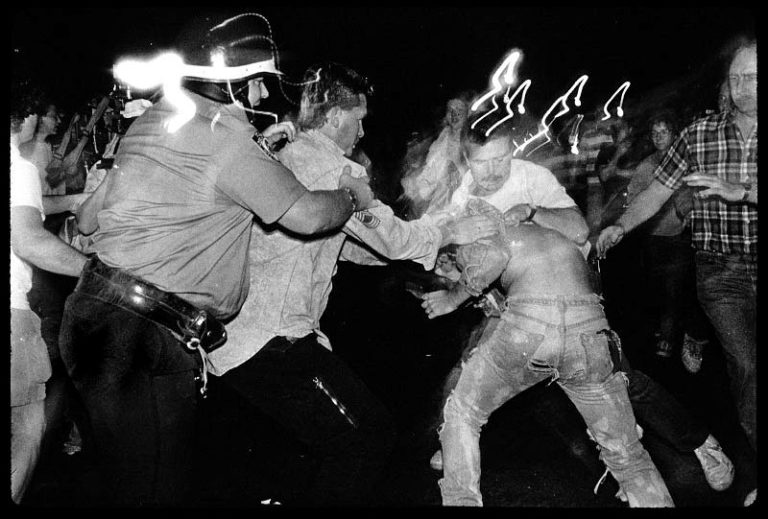
The aftermath of the riot laid bare the growing class tension within the East Village, as well as the problems with policing that accompanied it. Many felt a deep distrust of the city government and the police, while others felt that the protesters were agitators who were provoking violence.
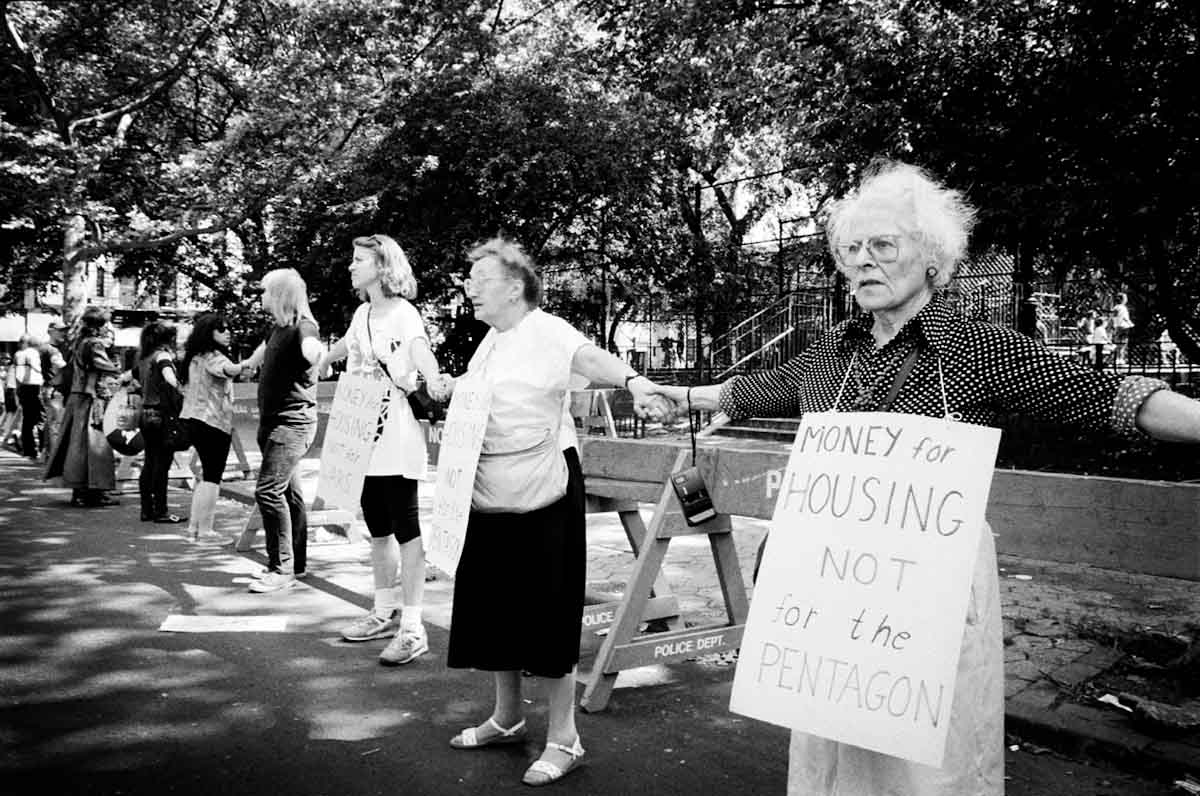
The riot was captured on film and in photographs by numerous witnesses, including photographer Q. Sakamaki. Their documentation increased public outrage about the violent attacks on protesters by the police. It even influenced the mayor’s response. Mayor Ed Koch had approved of the curfew, but was critical of the police department’s response to pafter seeing footage of the riots. In a 2010 interview, he stated that “those who were in charge failed in their responsibility.”
In 1990 and 1991, the park closed for restoration. This closure was widely regarded as a strategy to curb tensions between protesting residents and police and keep its former occupants away. The curfew remains in effect to this day.
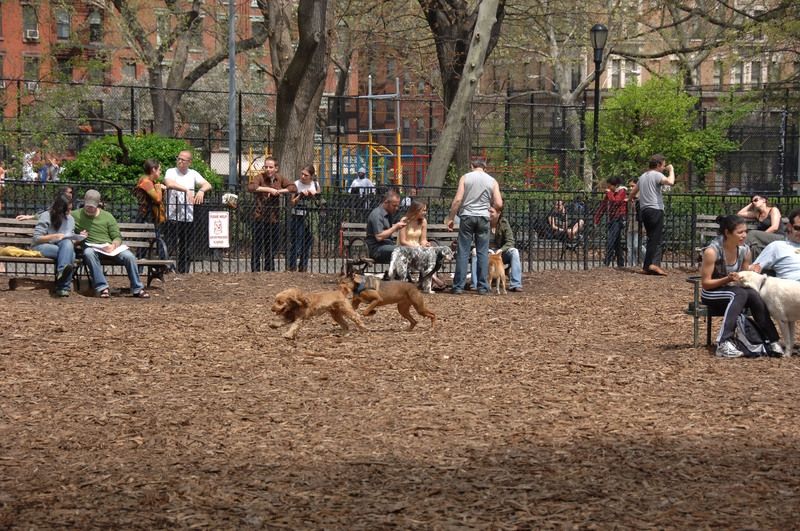
Criminalization of homelessness, such as curfews and the destruction of homeless encampments, continues to be an issue in the East Village and across the city. The city has a long way to go toward effective, non-punitive policy solutions for those experiencing homelessness. However, several long standing neighborhood organizations continue to serve food to those in need. Maryhouse on 55 East 3rd Street and St. Joseph’s House on 36 East 1st Street, both founded by volunteers of The Catholic Worker, serve food to all those in need. As of 2024, activist group Food Not Bombs serves food every Sunday at the southwest corner of Tompkins Square Park, and has done so for several years. The Sixth Street Community Center, a 2024 Village Award winner, operates a bi-weekly emergency food distribution program.
To learn more about the history of Tompkins Square Park, check out our East Village Building Blocks site and our Image Archive. To learn more about the history of civil rights activism in Greenwich Village, the East Village, and Noho, check out our Civil Rights Map.