
James Lenox and the New York Public Library’s Greenwich Village Beginnings
James Lenox was born in New York City on August 19, 1800 to Robert and Rachel Lenox. Robert had immigrated to the United States from Scotland during the Revolutionary War, and went on to become one of the most successful real estate developers and investors in New York City. When Robert died in 1839, James inherited the family business, and 300 acres of property on today’s Upper East Side, comprising what is now known as Lenox Hill. By 1845, James had retired and began focusing on his own passions, including collecting rare books and constructing an elaborate home for himself. The two would come together in a most eye-popping way in Greenwich Village.
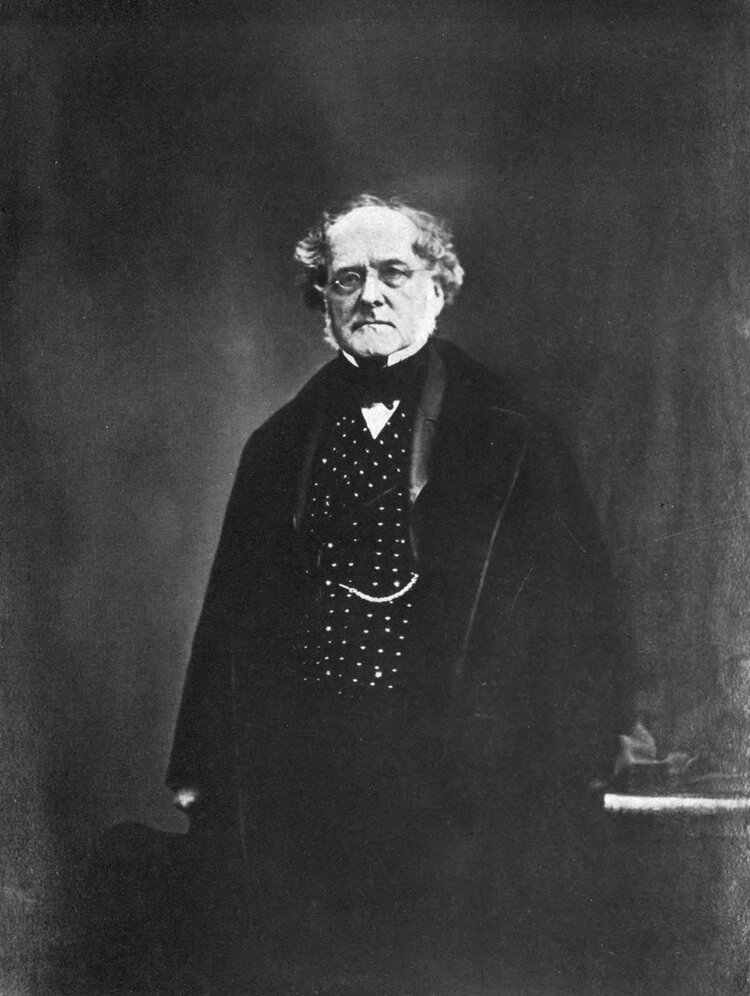
The home, which he would move into by 1846, just a year into his retirement, was located the corner of Fifth Avenue and 12th Street, catty-corner to the First Presbyterian Church, of which James Lenox was a dedicated member. Lower Fifth Avenue was a more than suitable location for the mansion, as other prominent New Yorkers, notably Isaac Brevoort, had also built homes on the street.
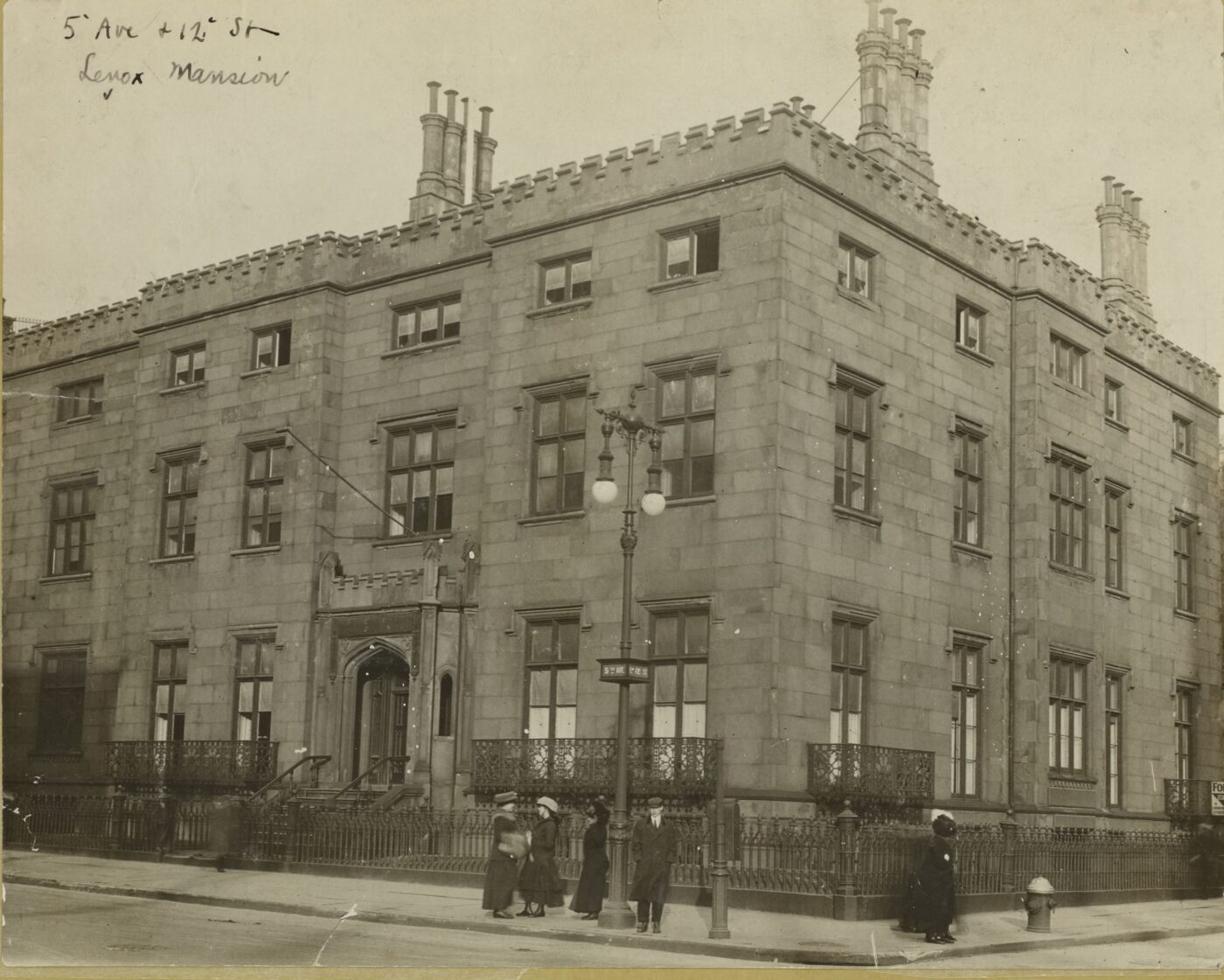
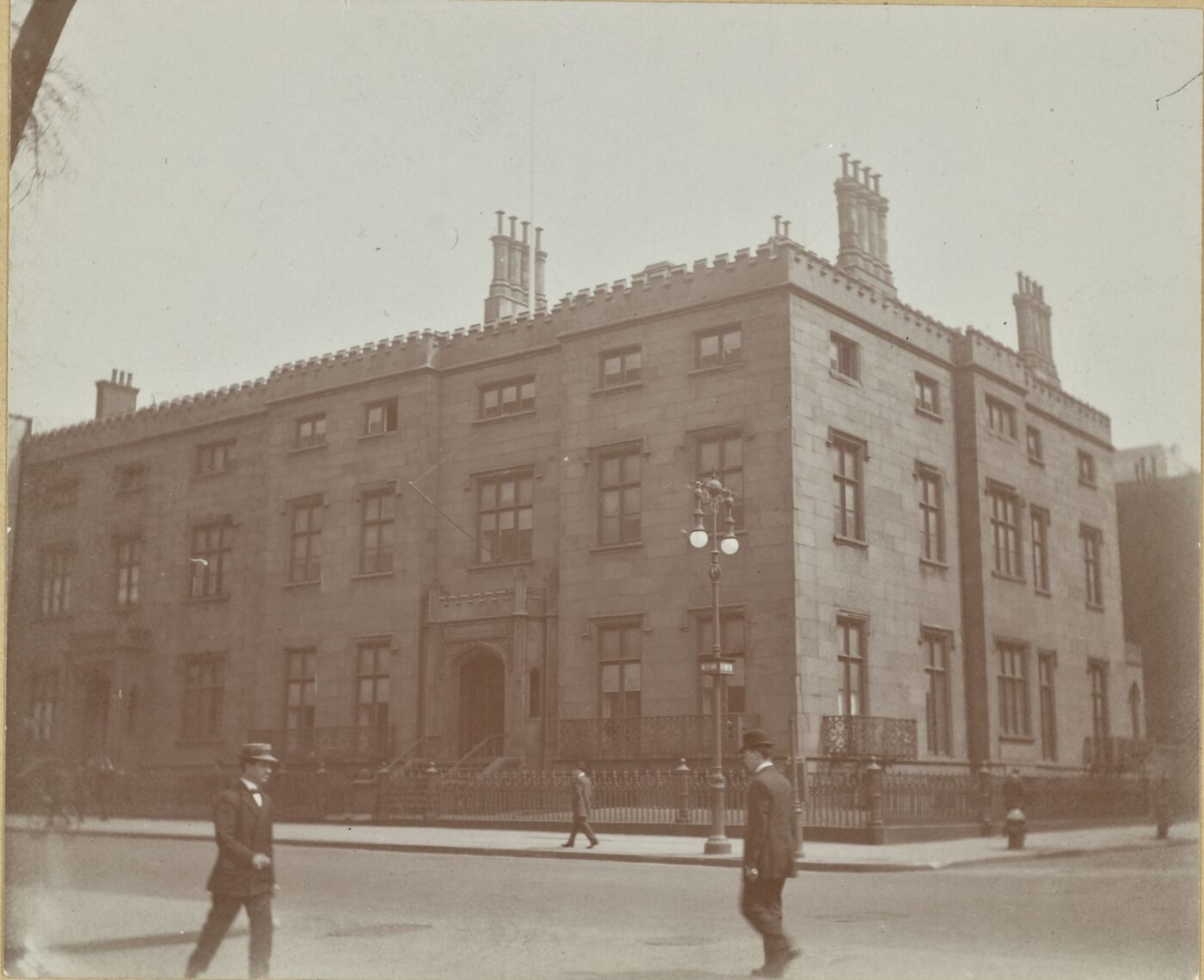
Lenox’s mansion was designed in the then-popular Gothic Revival Style, and constructed with its nearly identical neighbor, No. 55 Fifth Avenue. Soon after its completion, No. 55 became home to James’ sister Mary and Brother-in-law John Fisher Sheafe.
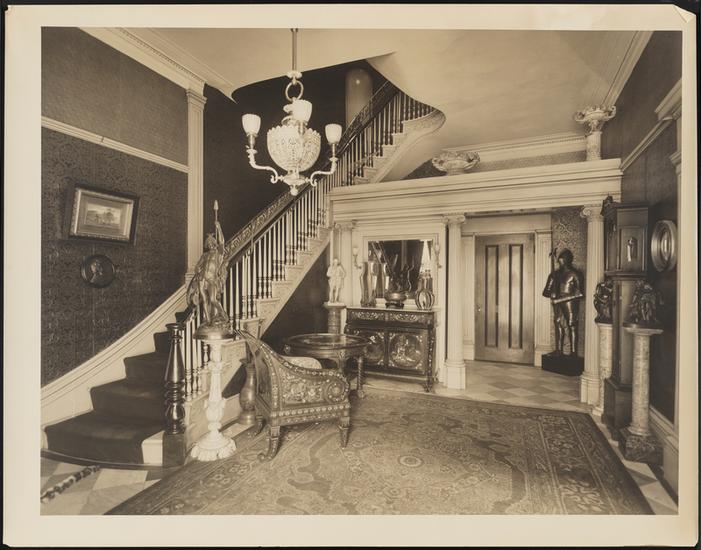
Lenox remained in the mansion for the rest of his life, dedicating much of his time to developing his collection of rare books. The mansion allowed him the space to store and continue to grow his collection, and he eventually turned the home into a repository for his books. Despite it including notable books such as George Washington’s farewell address, and all known editions of Milton’s Paradise Lost, most visitors who wished to access the library were refused. A rare exception was when New York’s chief Judge Charles P. Daly wished to see a book of which Lenox owned the only known copy in the country; Lenox had it sent to Daly with a servant, who was instructed to wait with it and the judge until he was done reading, and then immediately return with it.
Lenox was eventually convinced to move his collection of books to a location where it could be accessed, albeit on a limited basis, by the public. In 1877, his Lenox Library opened uptown, in a sumptuous Neo-Grec-style structure occupying the full blockfront of Fifth Avenue between 70th and 71st Streets facing Central Park, designed by one of the 19th century’s most renowned architects, Richard Morris Hunt. Located in the middle of Lenox’s 300 acres, the building was one of Gilded Age New York’s most striking landmarks. Housing 85,000 items, the library and its galleries were a must-see for scholars and elites, who had to apply or pay for admission.
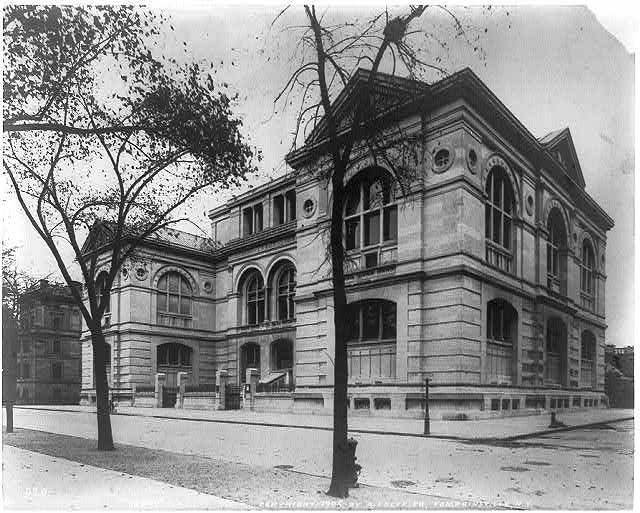
James Lenox died in his home at 53 Fifth Avenue in 1880. Soon after the finances of his library began to suffer, and in 1895 it merged with the Astor Library and the Tilden-Trust to form the New York Public Library. The 70th Street location of the Lenox Library remained open until 1911 when the main branch of the New York Public Library Opened on 42nd Street. The following year the Lenox’s Upper East Side library was demolished, and replaced with Henry Clay Frick’s Mansion, now the Frick Museum.
Following James’ death, his sister Henrietta, who lived in the adjoining mansion, inherited much of his wealth. After her death in 1886, the mansion 53 Fifth Avenue was used by the First Presbyterian Church, and later as the Headquarters of the US Aeronautical Reserve.
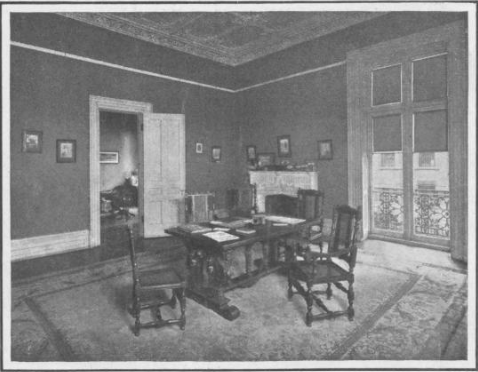
Nos. 53 and 55 Fifth Avenue were demolished and replaced by an 18-story office building at 55 Fifth Avenue completed in 1912 with its own remarkable history. Much of this information comes from our South of Union Square Map + Tours, where you’ll find it on our “Gone But Not Forgotten” tour that highlights this and several other buildings that have since been demolished. To read more about the New York Public Library’s origins in Greenwich Village, the East Village, and NoHo, click here.