
Exploring the Holland Plaza Building and Hudson Square
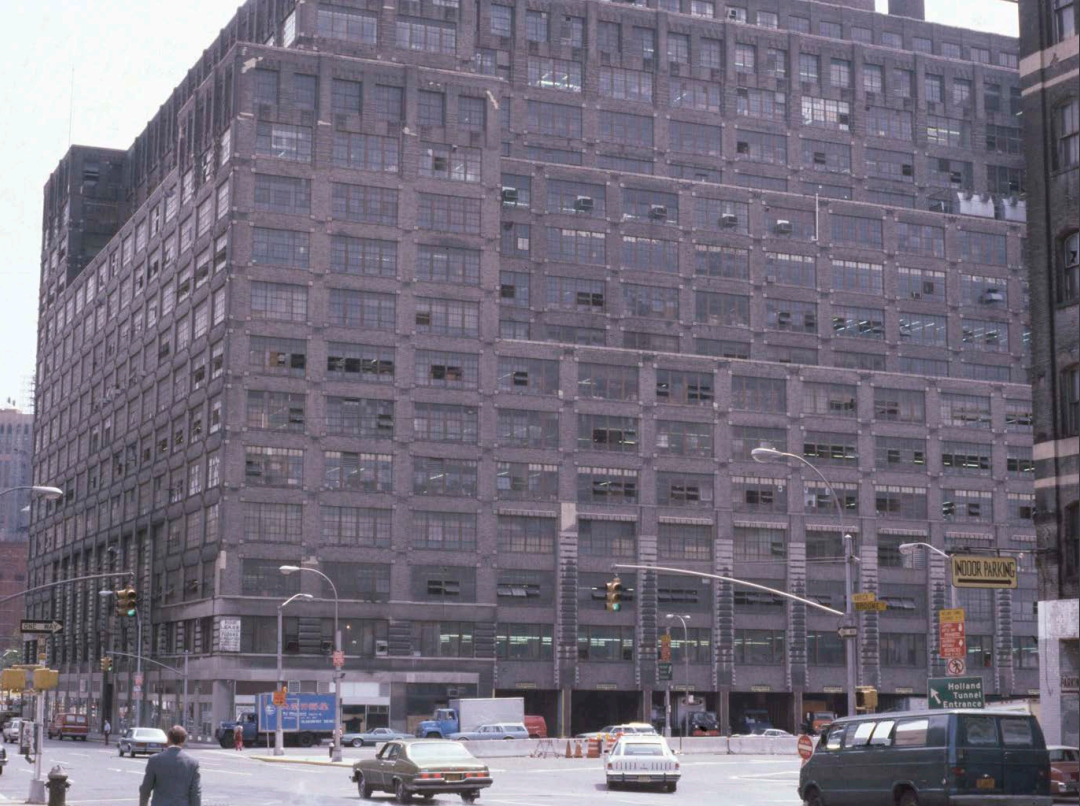
The Holland Plaza Building is a unique, large manufacturing building that occupies an entire, irregularly shaped block, bound by Canal, Watts, and Varick Streets. The building, also called One Hudson Square, helps tell the story of its neighborhood fittingly called Hudson Square.
Hudson Square is situated between Tribeca, the West Village and SoHo. For much of the 19th century, it was primarily residential, with a number of historic rowhouses still extant, like those found in the nearby Charlton-King-Vandam Historic District. By the end of the century, the neighborhood started to become more commercial, with many residential structures being demolished and replaced by manufacturing and loft buildings.
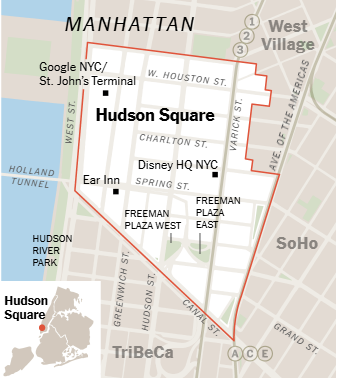
The area was further transformed with the construction of the Holland Tunnel, which necessitated the widening of the streets surrounding Canal Street, its eastern terminus. The tunnel opened on November 13th, 1927, as the longest and largest vehicular tunnel in the world, successfully transforming the area into a major transportation hub. Anticipation of the tunnel spurred commercial development in the area, with millions of square feet of industrial and office space added to the neighborhood during the late 1920s and 1930s.
The Holland Plaza Building was one of the largest of these developments. Located across from the Holland Tunnel entrance, it was built in 1930 as a manufacturing structure. Its construction was funded by the New York Investing Corporation, whose president, Abe Adelson, secured a long-term lease from Trinity Church, who owned the piece of land. The New York Investing Corporation, a subsidiary of the Bank of New York, funded the construction of several buildings around New York City, hiring esteemed architect Ely Jacques Kahn for a number of them, including the Holland Plaza Building.
Kahn primarily designed commercial buildings, which were his specialty and preference. He particularly enjoyed working under the constraints given by different clients. The Holland Plaza building was no different, as it was built on an almost triangular lot, entirely for manufacturing while many of his other designs were tall loft towers. Through his designs, Kahn would try to create an organized pattern on the building’s facade, using the Holland Plaza’s many windows to organize its large facade.
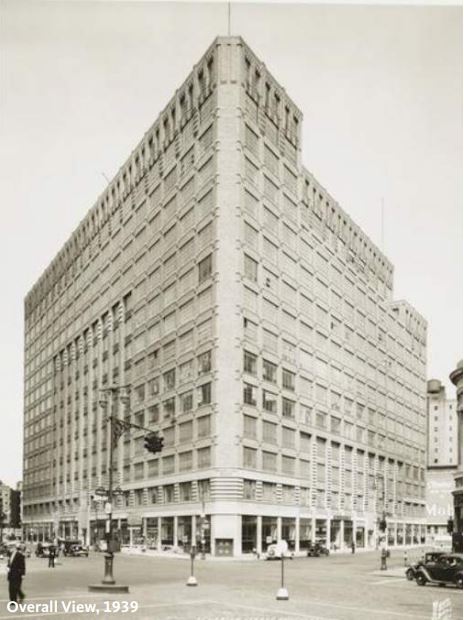
Hudson Square was long known as the Printing District, due to the high concentration of print companies in the area. Many of the Holland Plaza buildings’ earliest tenants were related to the printing and publishing industries. These included the Royal Typewriter Company, the American Book Bindery, the Chesterfield Press, The MacMillan Company, the National Process Company (lithographers) and the International Printing Ink Company.
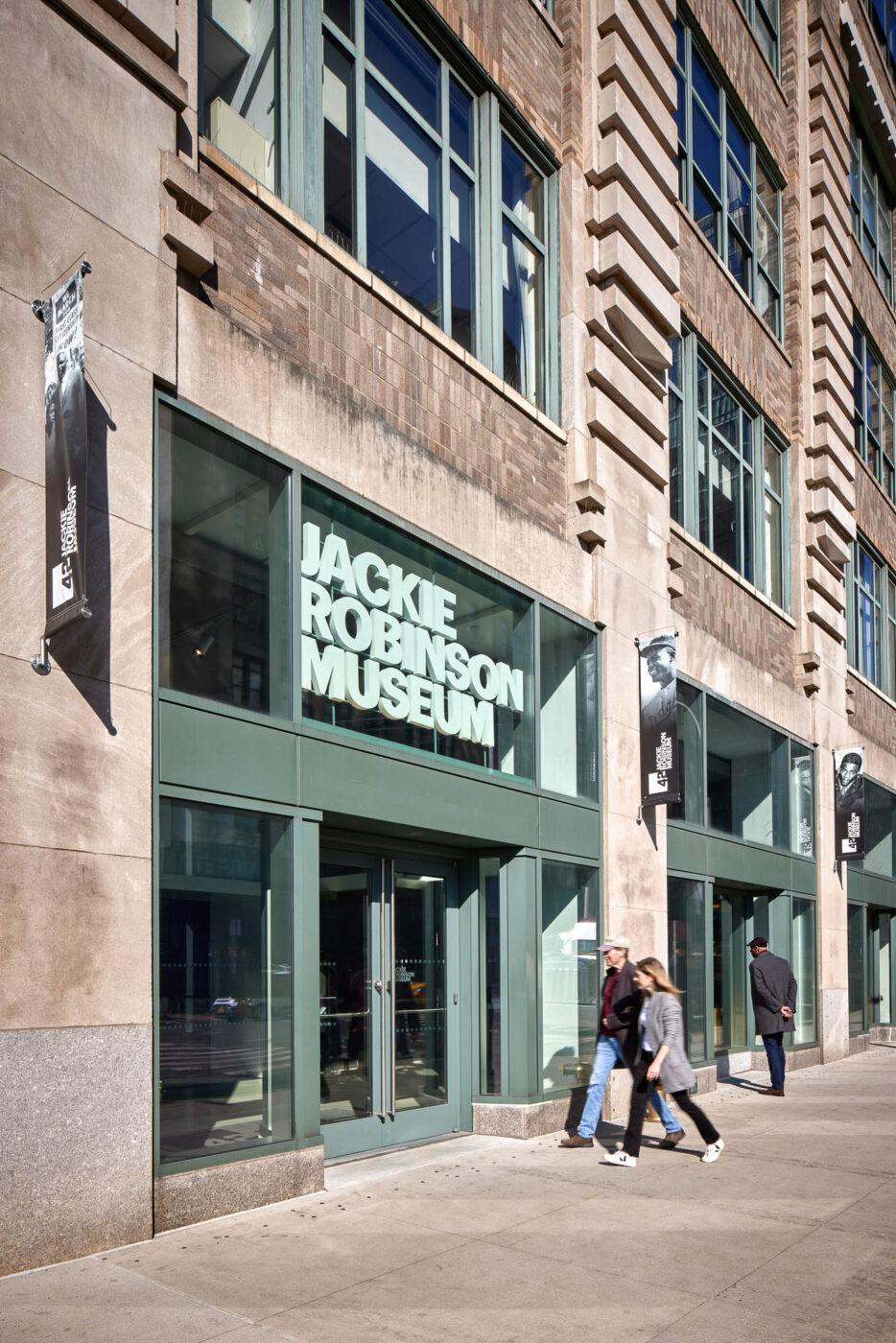
The building was designated as an individual landmark in 2013, and much of this information comes from the building’s designation report, written by the Landmarks Preservation Commission. Today, the building’s upper floors are used as office space. In 2022, the Jackie Robinson Museum opened on the ground floor. It commemorates the legacy of Jackie Robinson, the first African American to play Major League Baseball, through memorabilia, exhibits and other interactive programming.
Learn more about our advocacy for the Hudson Square neighborhood here. To read more designation reports for individual landmarks and historic districts in our neighborhood, check out the designation report section of our website.