
Sylvia Rivera: A Fierce Fighter for Trans and Queer Liberation
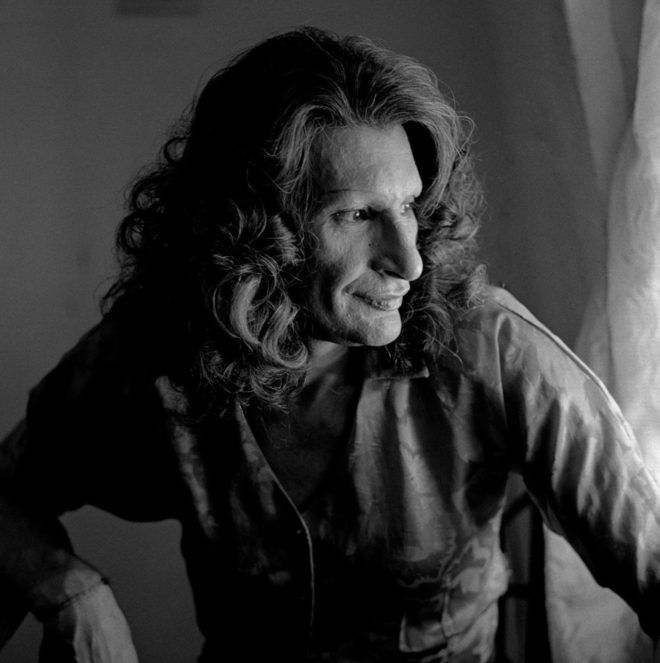
Sylvia Rivera (July 2, 1951 – February 19, 2002) was a fighter.
Rivera (she/her) was an LGBTQ+ activist, a trans woman, and fixture in Greenwich Village and the East Village, and perhaps most prominently, a champion for those who did not adhere to the gender binary. Within the gay rights movement, Rivera advocated for those who were even further marginalized and all too often overlooked or even shunned even within that community —specifically transgender people as well as gay and queer people of color.
Born July 2, 1951 in New York City, Sylvia Rivera was of Puerto Rican descent and Venezuelan descent. As throughout much of her life, Rivera’s childhood was defined by hardship and struggle. Abandoned by her father at birth and orphaned after her mother died by suicide when she was just 3 years old, Rivera was raised by her grandmother. But she as the subject of abuse and mistreatment due to her feminine, gender non-conforming traits.
Around age 11, Rivera left home and lived on the streets. During her early teenage years, she relied on sex work to support herself, and found refuge through a community of drag queens and other gender non-conforming individuals like Marsha P. Johnson. A found family of sorts, Rivera was encouraged to continue exploring her sexuality and gender identity, leading her to eventually adopt the name Sylvia. While poverty and exploitation riddled Rivera’s adolescence, her commitment to liberation across the civil rights movements never wavered. She was involved with Puerto Rican and African American youth activism, and eventually with the Young Lords and the Black Panthers.
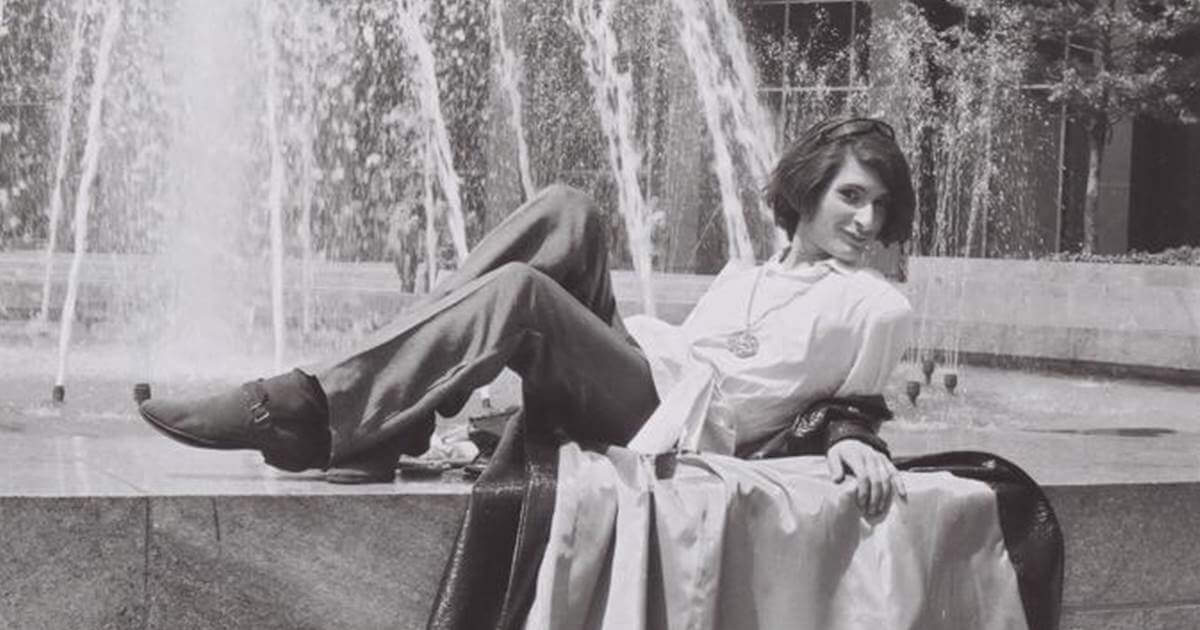
Stonewall Riots
Just days before her eighteenth birthday, Rivera participated in the Stonewall Uprising riots beginning June 28, 1969 at 53 Christopher Street. Legend has it that she was the first rioter to throw a Molotov cocktail at the police (in truth, Rivera says she was actually the second). She was present and fighting for six days and nights, refusing to go home or sleep—she said, “I’m not missing a minute of this—it’s the revolution!”
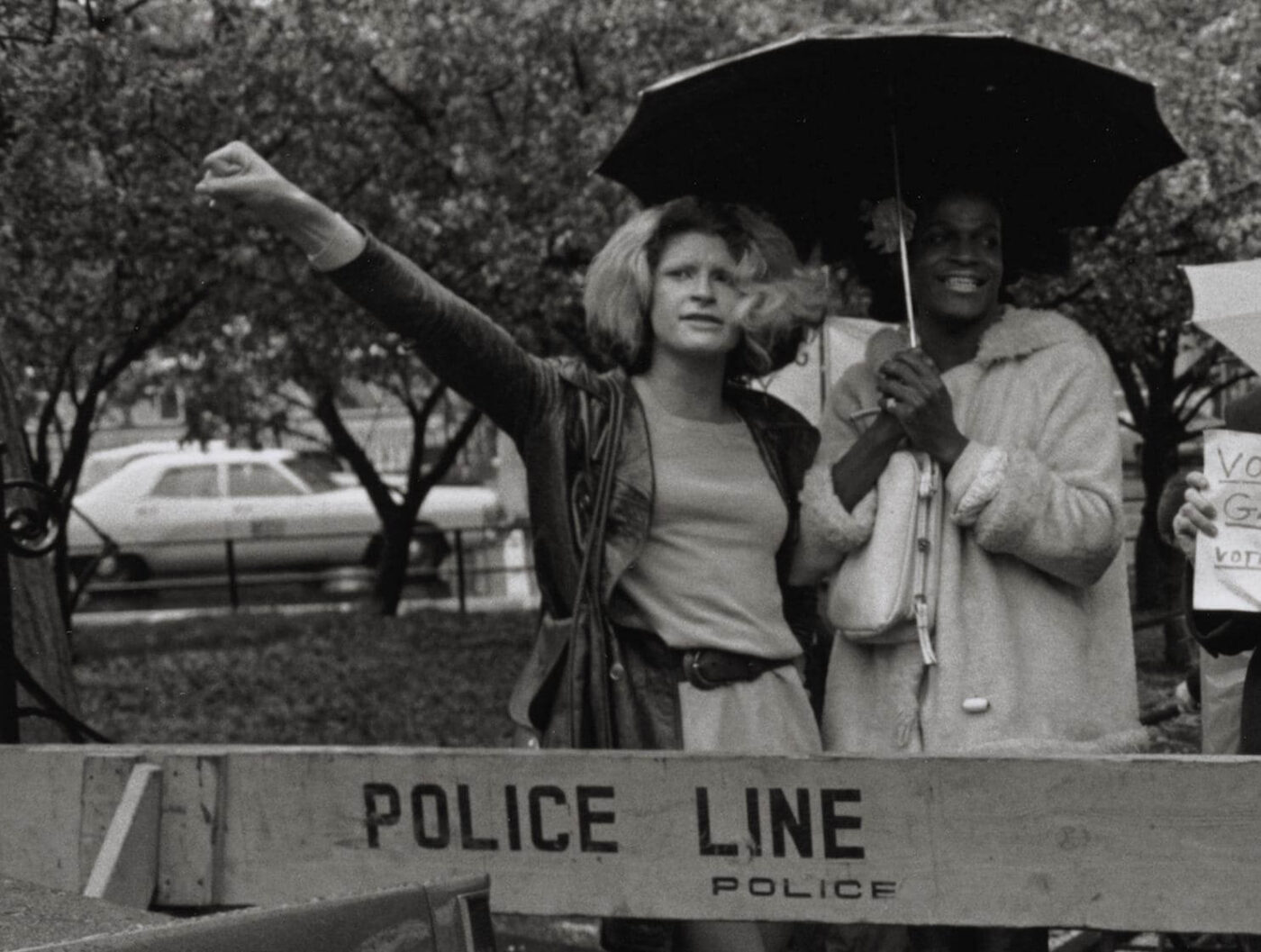
STAR (Street Transvestite Action Revolutionaries)
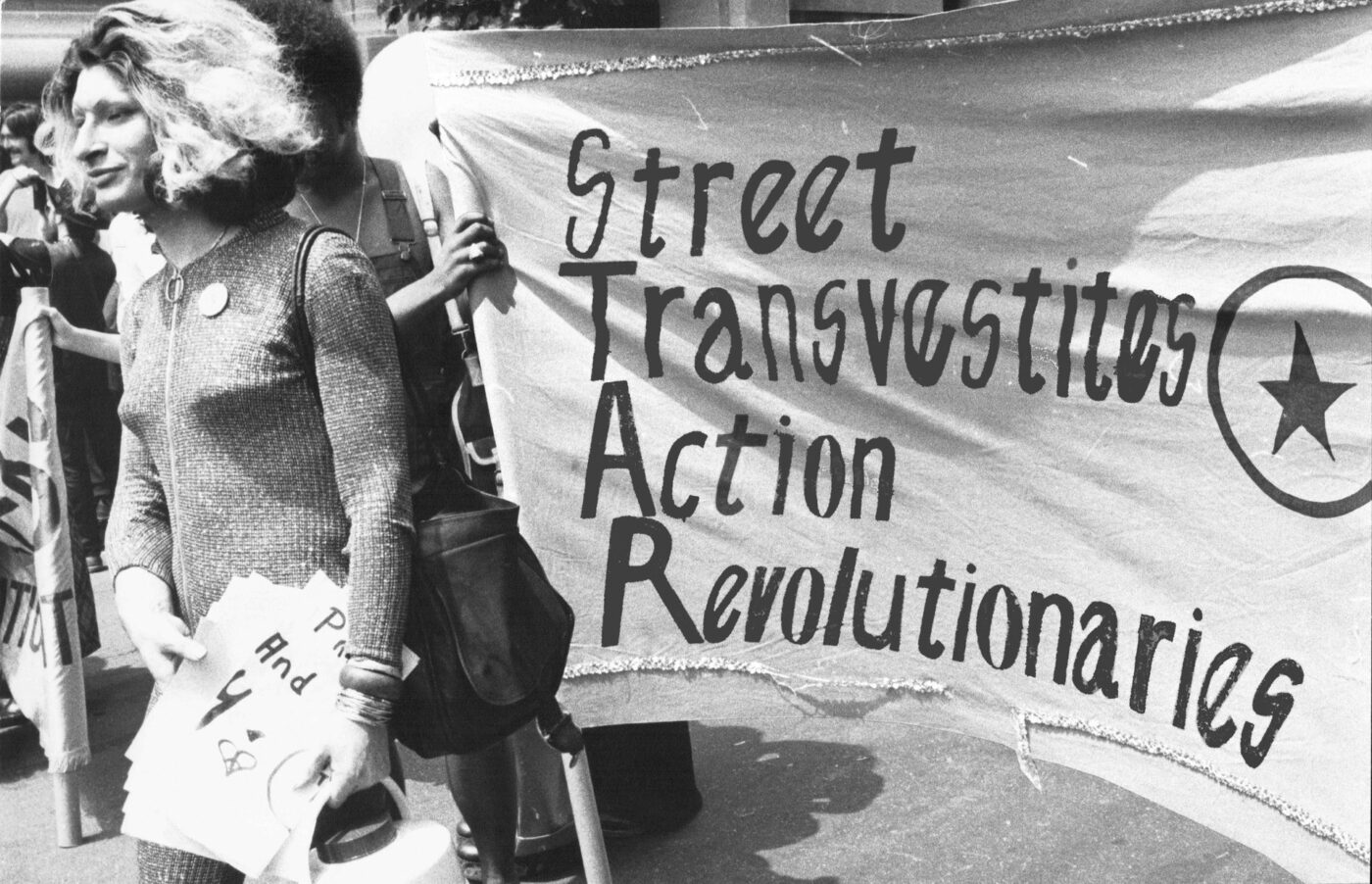
Her involvement at the Stonewall Riots marked a pivotal moment in both her activism and legacy. Rivera was an active member of the Gay Liberation Front (GLF), the Gay Activists Alliance (GAA), and, in 1970, she and Johnson formed STAR (Street Transvestite Action Revolutionaries), a political organization centered around helping and providing shelter and community to unhoused transgender youth, who often turned to prostitution and sex work to support themselves. The first STAR shelter was an abandoned trailer truck, stationed in a Greenwich Village parking lot. Unfortunately the truck was soon towed with several of its residents still asleep inside. But Rivera and Johnson did not lose hope, and the STAR headquarters moved to 213 East 2nd Street, a renovated, burned-down building that was formerly a traditional Jewish tenement home.
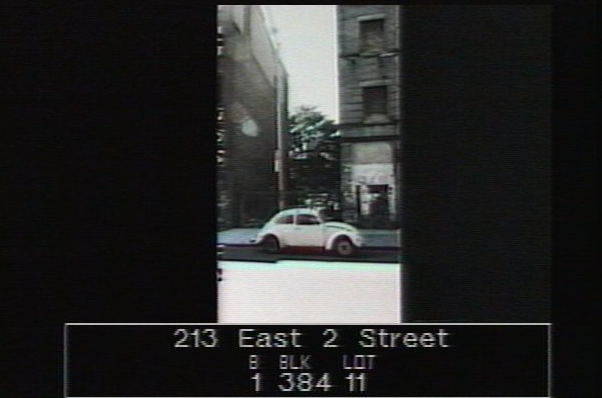
The building was owned by Michael Umbers, a Greenwich Village mafia-affiliated club owner who also was a big advocate for gay rights. Umbers charged Rivera and Johnson $200 a month to operate out of the Second Street house. And while the roof caved in, the heat was broken, and the water ran dry, they figured it out nonetheless. Rivera and Johnson did more than provide just room and board to the coalition. But their stay was short-lived and the group was evicted in July 1971 after being unable to keep up with rent. Still, the STAR house brought some respite to the many trans and queer youth who were often excluded from mainstream activism that focused on white, middle-class, cis-gender, gay men. In an interview with trans activist Leslie Feinberg, Rivera said “there was always food in the house and everyone had fun.”
Y’all Better Quiet Down, Speech in Washington Square Park
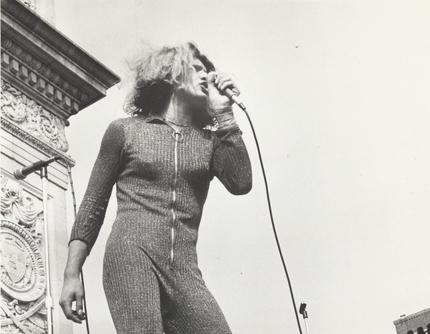
Clips of Rivera’s speech at the 1973 Christopher Street Liberation Rally in Washington Square Park continue to circulate on the internet today. In her speech, aptly known as Y’all Better Quiet Down, Rivera shouts back from the crowds’ booing and heckling, pushing back and challenging the audience to include trans people in their protests. Her speech, running less than four minutes long, is encapsulated by: “I have been beaten. I have had my nose broken. I have been thrown in jail. I have lost my job. I have lost my apartment for gay liberation and you all treat me this way? . . . I believe in the Gay Power. I believe in us getting our rights, or else I would not be out there fighting for our rights. That’s all I wanted to say to you people.”
Today, transgender and queer people continue to face oppression, discrimination, and violence, and the federal government has recently erased all references to transgender people from all federal literature, including the Stonewall National Monument, which originally prominently featured and acknowledged the roles of transgender people in leading those events. Sylvia Rivera was a crusader; throughout her life she tirelessly gave voice to the voiceless, putting her body and life at the front line of danger. Rivera’s unwavering commitment to empowering marginalized people, especially transgender and queer youth, shaped the landscape of LGBTQ+ rights.
Village Preservation will continue to uplift, document, and preserve LGBTQ+ history. Last week, we explored just how fundamental the story of the LGBTQ+ civil rights movement, including transgender rights, is to our neighborhood. We encourage you to also explore at our LGBTQ+ history page as well as the Civil Rights and Social Justice Map available on our website for more information on transgender history and civil rights efforts connected to our neighborhoods.