
How One Developer/Architect Partnership Changed West 14th Street
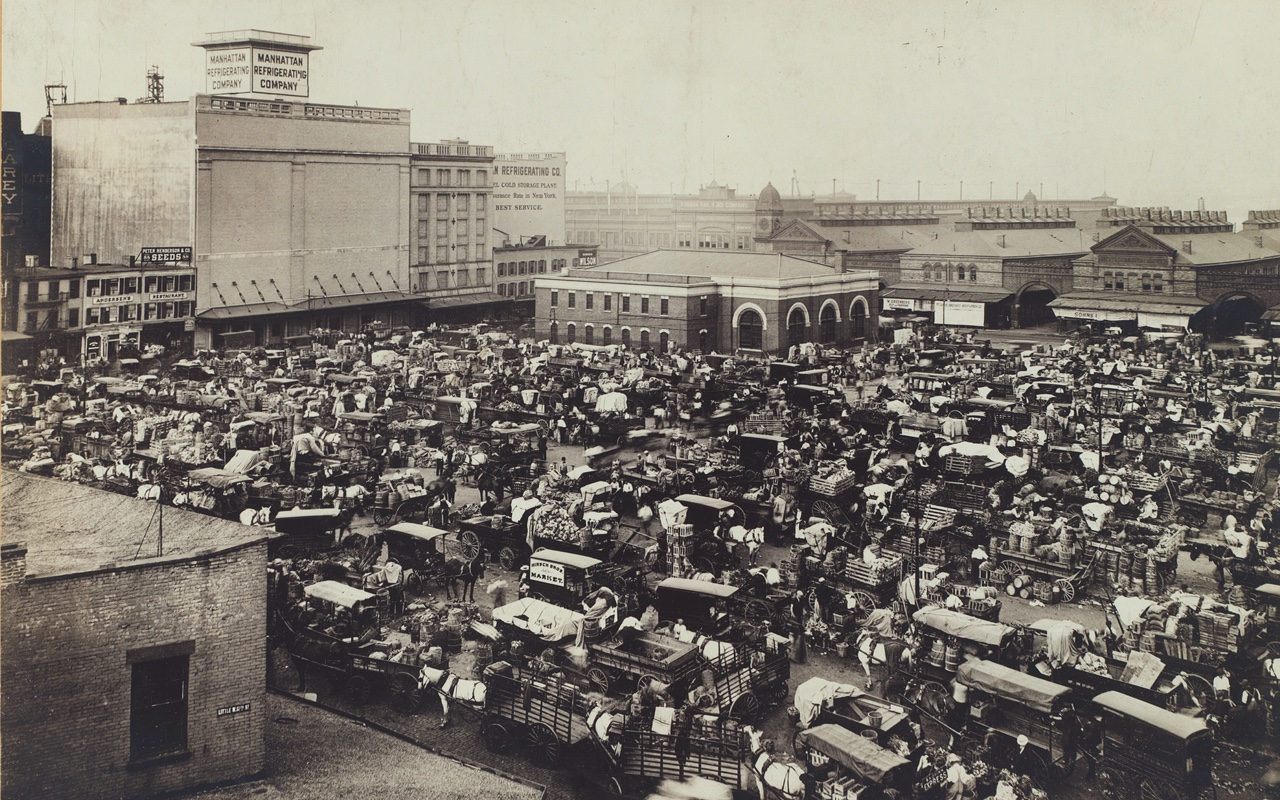
New York City was changing rapidly in the early 1900s. Industrialization and exponential population growth led to a shifting architectural landscape: single-family homes gave way to grand high-rise apartment buildings, and several neighborhoods increasingly became host to commercial and manufacturing uses. One such area was the Meatpacking District where, in 1887, the City widened Gansevoort Street between Hudson Street and the Hudson River to allow for a greater number of vendors. Over the next several decades, existing houses and plots of vacant land were overtaken by structures built to accommodate market and commercial functions.
One of the architects who had a significant impact on the built landscape of the Meatpacking District during this time, and especially along a particular stretch of West 14th Street between 9th and 10th Avenues, was James S. Maher.
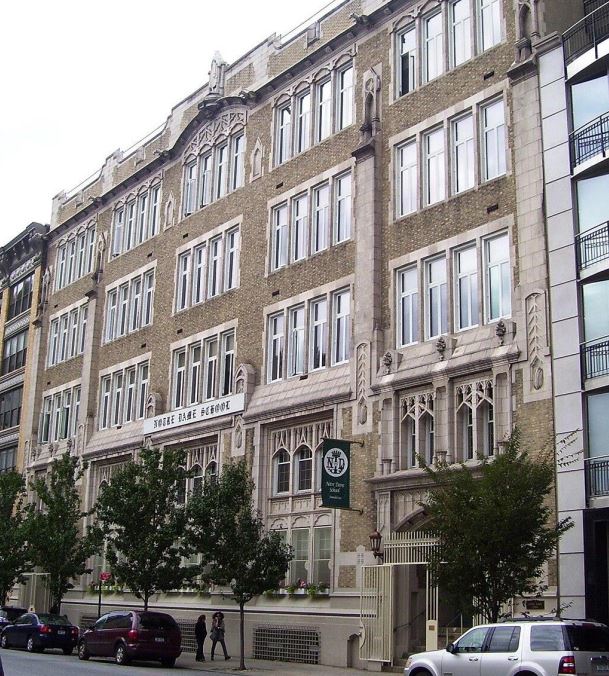
Maher entered the profession as a builder in his father’s architecture firm, where he eventually became a partner in 1893. Initially established by the senior Maher in 1870, when James joined the firm, it was renamed John Maher & Son. In 1899, James broke off to form his own architectural practice, which lasted until his death. He designed buildings throughout New York City, including a cold storage building in the Bronx (1909), but the majority of his work was in the northern part of Greenwich Village and the Meatpacking District. His buildings in this neighborhood include the Simon Donovan Trucking Co. stable at 356-360 West 11th Street (1914-15); St. Bernard’s Church School at 327-335 West 13th Street (1915-16); the conversion of the row of six houses at 44-54 Ninth Avenue into a bachelor apartment building in 1916; and alterations for 444 West 14th Street, a row house that he converted into a utilitarian style market building with a new facade in 1923.
A particularly significant phase of Maher’s career was his partnership with developer John J. Gillen, with whom he designed and developed a number of buildings, including two on 14th Street.
413-435 West 14th Street, The Gillen Building
The Landmarks Preservation Commission Designation Report for the Gansevoort Market Historic Districts describes the history of this building as follows: “The New York Times carried an item in February 1913 that announced the imminent construction of this 12-bay building, of concrete construction, for developer John J. Gillen. Henry Kelly & Sons, Inc., wholesale produce merchants, had already leased the four easternmost bays (Nos. 413-419). In March, the paper reported that Kelly would lease an additional two bays. The building was to “contain all facilities for a wholesale market, such as cold air refrigeration, steam heat, modem plumbing, and installation consisting of pressed cork and cement. …the combined structures will be known as the Gillen Building.”
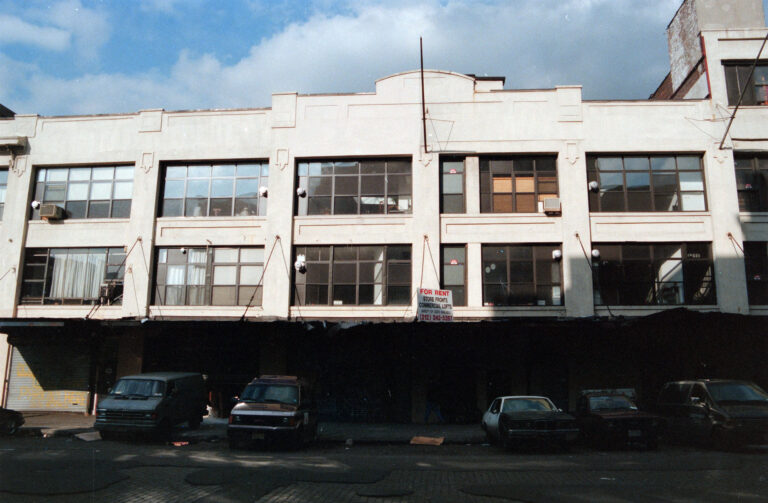
Constructed in 1913-14 during a major phase of development of the district, when buildings were constructed for produce- and meat-related businesses or other market uses, this building further contributes to the visual cohesion of West 14th Street in that it is one of three buildings designed by architect James S. Maher, who was also a partner in its development.
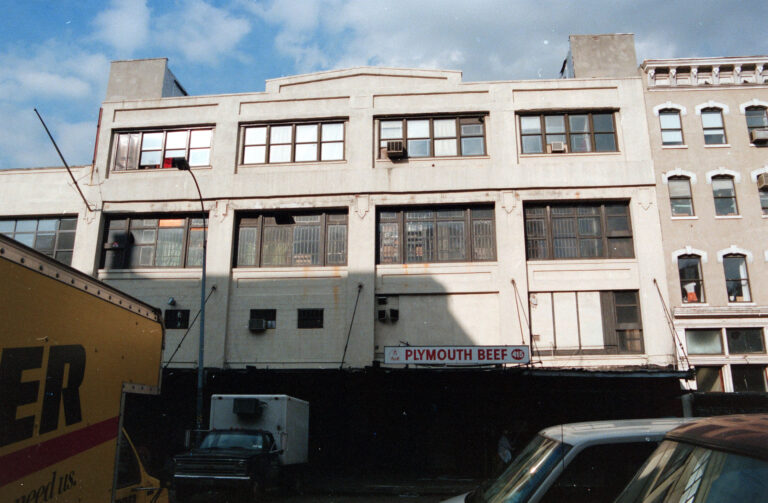
James Maher and John Gillen both had their offices in this building, and from its completion in 1914 until the 1980s, the building was host to a slew of food industry tenants that pervaded the Meatpacking District during this time, including distributors of fruit, produce, meat and poultry, and other goods.
401-403 West 14th Street
This was the second of two modern buildings constructed on this block by Gillen and Maher, in 1923. Per the LPC, “the property had been purchased in 1923 from the estate of William Waldorf Astor, who had died in 1919. Like their other building [413-435 West 14th Street], this one was quite successful in attracting long-term tenants, which included both food-related and non-food-related businesses: George Cook Poultry Corp., and L.I. Duck Growers Assn./ L.I. Duck Packing, poultry; Woolley & Hughes, Inc., produce; Rothschild-Bernstein, Inc., Edward J. Burbank Co., Gotham Hotel Supply Co., and M&W Packing, Inc., meat; Charles Wissman Co., provisions; Josephson Mfg. Corp., stationery; World Examining /Sponging Works; and the Coffee Pot and Blue Arrow Luncheonette, restaurants.”
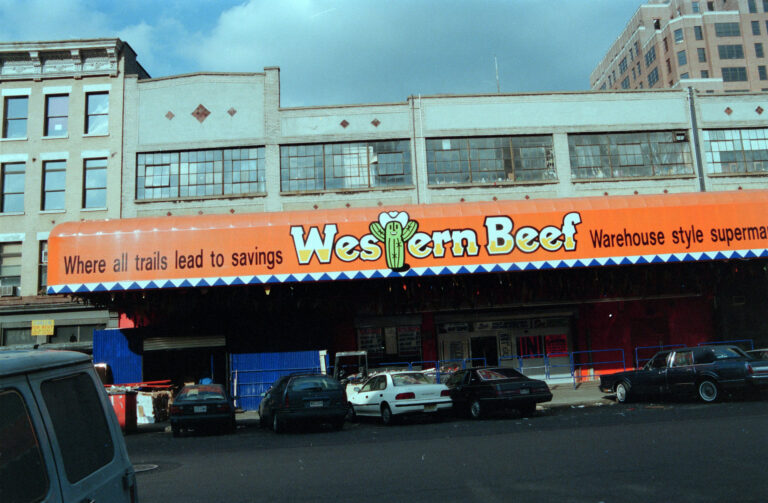
This Arts and Crafts style building, which is largely intact, contributes to the historically mixed architectural character and varied uses – including market-related functions – of the Gansevoort Market Historic District. The building contributes to the visual cohesion of West 14th Street through its prominent comer location, two brick and concrete facades, large steel industrial windows, and the fact that it is one of three buildings on the street designed by Maher in partnership with Gillen.
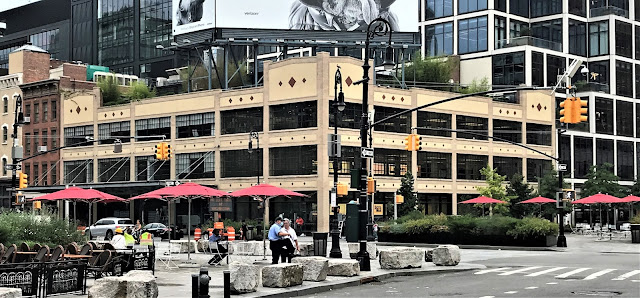
In 2006, Apple, Inc. purchased the building, which had for years been occupied by the warehouse-style supermarket Western Beef, and the architecture firm Cookfox was hired to renovate it. Thanks to its landmark status as part of the Gansevoort Market Historic District, most of the original features were retained.