
Holden Caulfield’s Lost Weekend in Greenwich Village
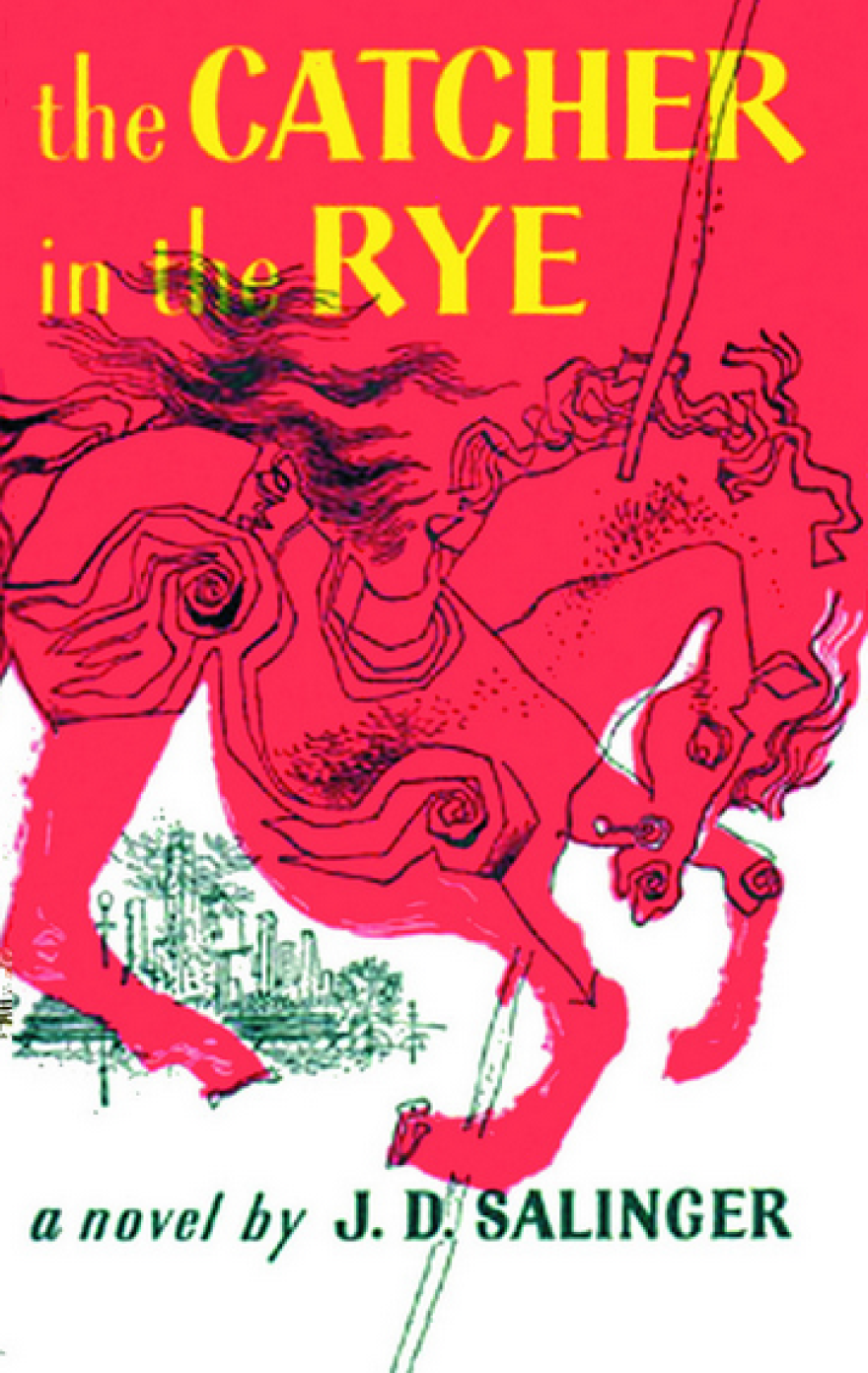
On July 16, 1951, the best-selling novel, The Catcher in the Rye by JD Salinger (January 1, 1919 – January 27, 2010), was released. It’s a coming-of-age story that follows the depressed and increasingly dejected sixteen-year-old Holden Caulfield in his aimless escapades around Manhattan.
An aspiring lost soul, Holden spends an unchaperoned weekend wandering the streets of the city he grew up in, mere hours after being kicked out of the phony and overtly pretentious Pencey Preparatory Academy in Pennsylvania.
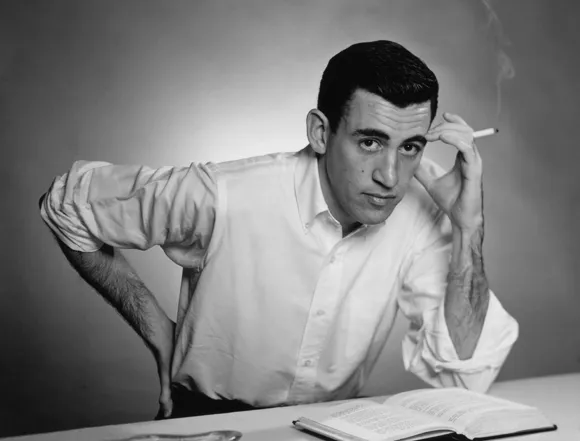
In a perhaps semi-autobiographical choice, Caulfield—like Salinger—was born and bred on the Upper East Side, but spent a fair amount of time in Greenwich Village. Salinger was known to spend time at the legendary bar and restaurant Chumley’s, at 86 Bedford Street, a haunt previously frequented by other writers like F. Scott Fitzgerald and Ernest Hemingway.
The novel is a two-day-long tale of an angsty adolescent who tries to bring a new, more mature meaning to his childhood streets. And while much of Caulfield’s expedition transpires above 14th Street, he does taxi down to our neighborhoods where he’s greeted by the alluring, bohemian atmosphere of Greenwich Village in the 1950s.
During his downtown stint, Caulfield finds himself at Ernie’s Nightclub, a fictional jazz bar packed to the brim with other “prep school jerks and college jerks,” all of whom were just a few years older than our brooding protagonist. His time in the club, while short, exemplifies his overarching desire for connection and need to feel older and more mature—it’s no surprise Salinger placed Caulfield in our neighborhood, where lost souls go to find respite through art, music, and community.
The inspiration behind Salinger’s Ernie’s Nightclub remains unknown. We, however, have a few guesses as to what real-life venues might have influenced it, such as popular jazz clubs in 1940s Greenwich Village like the Village Vanguard (178 7th Avenue South) or Cafe Society (1 Sheridan Square). And just as Holden drifts through the city in search of meaning, these iconic Village venues offered real-life sanctuary to artists, rebels, and lost souls alike.

Opened by Max Gordon on February 23, 1935, the Village Vanguard is a New York institution after almost a century in our neighborhood as one of New York’s most cherished jazz clubs. Originally, Gordon opened the Vanguard on Charles Street, but was refused a cabaret license due to insufficient facilities. He then purchased a speakeasy a few blocks over on 7th Avenue, and thus the Village Vanguard, as we continue to know it today, was born! The club initially featured a variety of acts, including folk music, poetry, comedy, and reviews, but switched to a primarily all-jazz format in 1957 as the genre itself exploded in popularity. Soon the club regularly featured artists like John Coltrane, Miles Davis, Charles Mingus, Cecil Taylor, and Bill Evans, with over 100 jazz albums being recorded at the venue. Max Gordon passed away in 1989 and the Vanguard was closed in his honor the day after his passing. The day after that, however, under his wife Lorraine’s direction, the Vanguard reopened and ever since, lost souls like Holden Caulfield have enjoyed many a night in the iconic, tight-quarters basement.
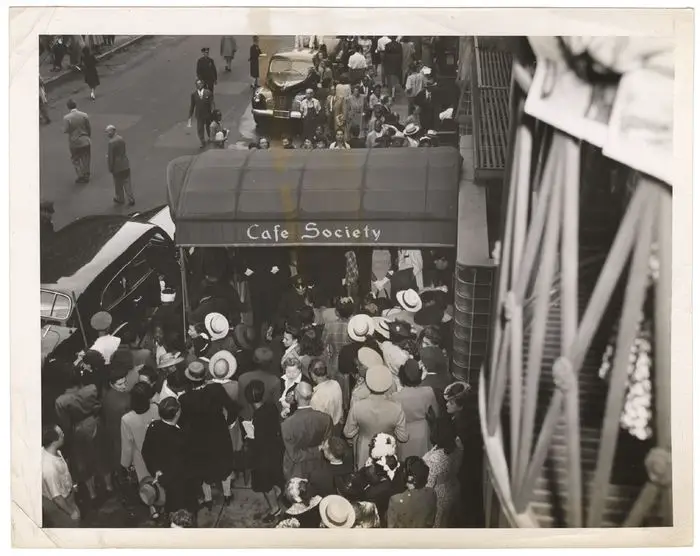
Just a short walk down 7th Avenue and you’ll find perhaps what would have been Holden Caulfield’s next stop, the groundbreaking Café Society. Opened in 1938 by former shoe salesman Barney Josephson, Café Society was the first racially integrated nightclub in the United States. Captivated by the talents he’d heard in clubs across Europe, as well as some of the greats like Duke Ellington and Ethel Waters, Josephson set to open a club where artists of all types, regardless of race, could perform. Josephson said:
Like the Vanguard, Josephson’s cabaret was also in a basement and oozed with the bohemian spirit of Greenwich Village—walls were adorned with murals by local artists; the doorman poked fun at swankier establishments with his tattered top hat and torn white gloves. Popularly known as the wrong place for the right people, the club welcomed some of the biggest talents in jazz history to its stage, including Josh White, Ida James, Duke Ellington, Bessie Smith, Count Basie, Nat King Cole, John Coltrane, Miles Davis, Ella Fitzgerald, Lena Horne, Big Joe Turner, Nellie Lutcher, and Mary Lou Williams.

Café Society was also a true mixing ground for progressive politics. Josephson’s club was not only for singing and music, but also challenged bigoted and outdated beliefs of all kinds. It was at Café Society where Billie Holiday first performed Strange Fruit—an explicit song of protest against racism, lynching, and a government that refused to pass anti-lynching laws. Its political leanings are what led to Café Society’s downfall. After about ten years, the club’s progressive stance and Josephson’s ties to the Communist Party made it a target of the federal government, ultimately forcing the club to close its doors in 1950.
It’s easy to imagine Holden slipping into either the Vanguard or Café Society. He’d probably take a seat in the back corner, trying to disappear behind the smoky haze, and attempt to nurse a scotch and soda while pretending to care about the setlist. Now, nearly a century later, the same energy still persists through the neighborhood, ready to welcome the next wandering soul.