
Unearthing Social Justice in Stone and Speech
Voices and Landmarks of Social Change in the Village
There are moments when a building becomes more than brick and stone — when it holds not just architectural value, but the emotional weight of the people who passed through it. And sometimes, it is through the voices of those people that we learn to see those buildings, those street corners, those familiar stoops, in an entirely new way.
Village Preservation’s oral history project is full of such voices and such places— people who have lived, organized, resisted, and rebuilt in our neighborhoods, along with the places where they did it. Their stories do more than document time; they invite us to linger in the spaces where history happened, to look again at the facades we pass each day and imagine what lives have unfolded behind them.
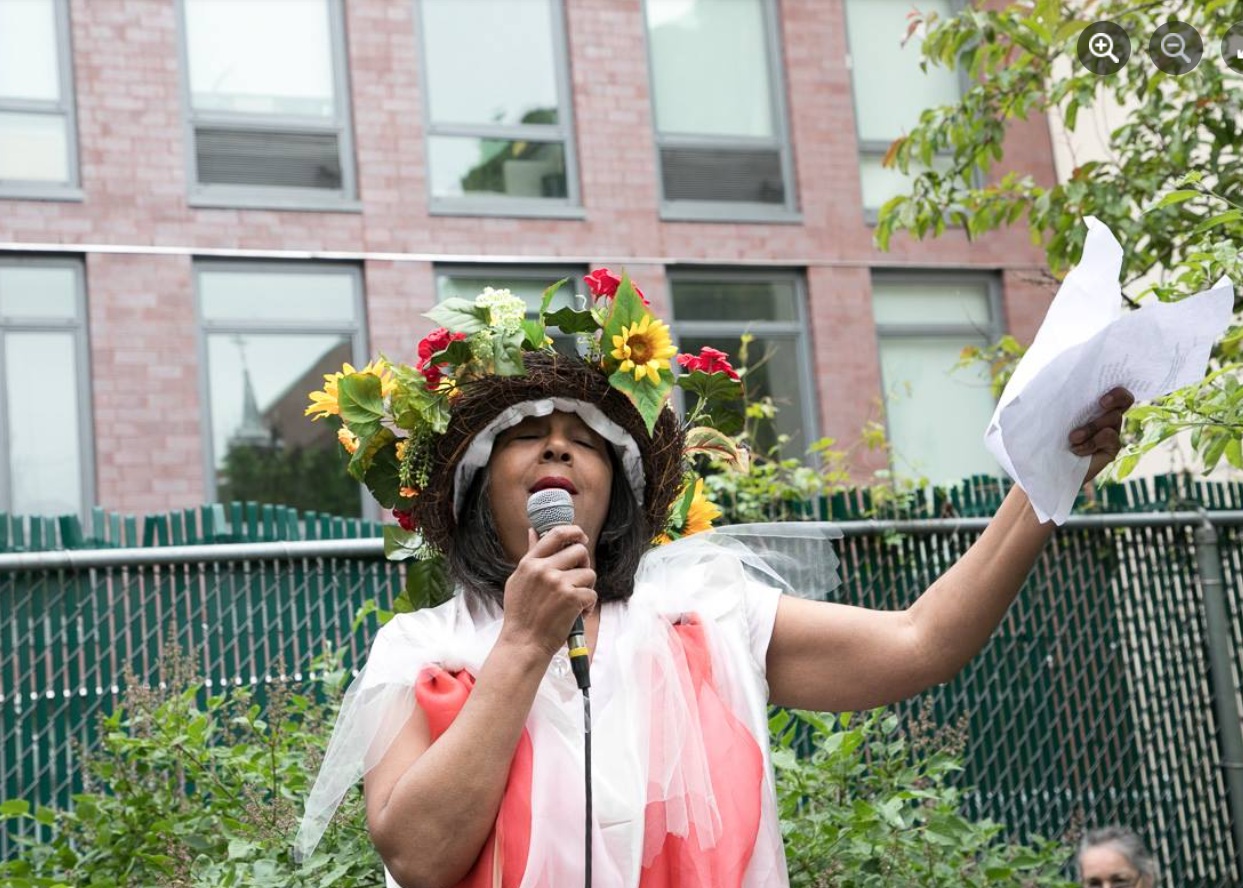
Activist, lifelong East Village resident, and Village Preservation oral history subject Ayo Harrington offers one such view. A participant in the Student Nonviolent Coordinating Committee and later a fierce defender of community gardens, in her oral history, Ayo recalls arriving in the neighborhood in 1968: “I had no idea that I was stepping into a community that was going to change my life,” she says. The battles she fought — over open space, equitable education, and environmental justice — are written not only in memory but into the very fabric of the neighborhood: the community gardens she helped defend still bloom between tenements today, quiet monuments to perseverance.
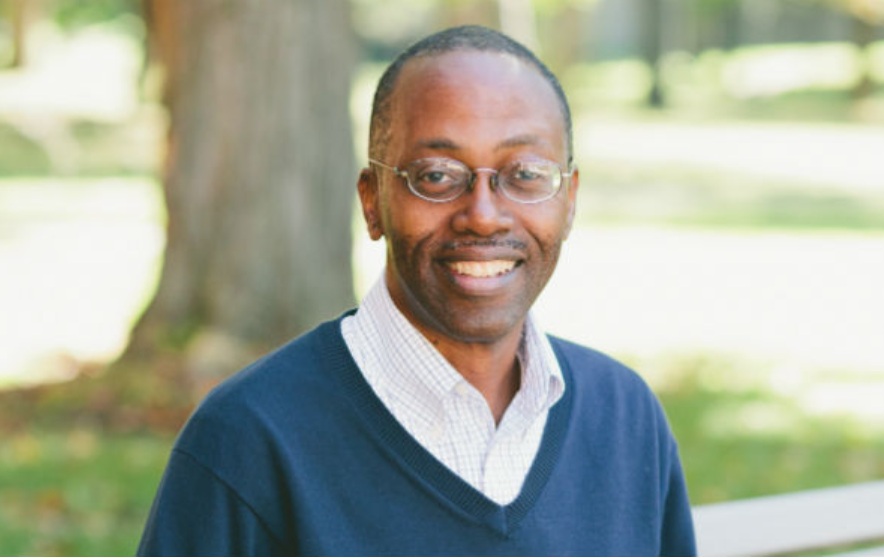
Just blocks away, the echoes of another movement take root. Kevin McGruder, a historian who worked and was a civic organizer in our neighborhoods, reflects in his Village Preservation oral history on the Black gay experience in the Village in the 1980s. “There were bookstores and coffee shops… It wasn’t just a place to live; it was a place where people found each other.” His recollections frame the Village not simply as geography, but as a constellation of connections, especially for those whose voices were too often left out of broader civil rights narratives.
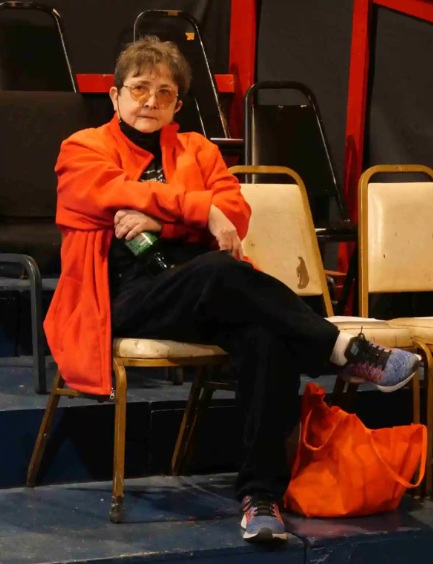
Meanwhile, playwright Barbara Kahn, whose career is rooted in both LGBTQ+ and labor justice histories, recounts in her Village Preservation oral history creating theatrical works connecting the Triangle Shirtwaist Fire to modern workers’ rights. Her stage — both metaphorical and literal — has been shaped by intersectional activism that emerged from these Village blocks.
Walking through Greenwich Village, the East Village, and NoHo, the experience of an immersive museum of social justice is palpable. These are far from the only oral histories within our collection that deal with these issues — if you click on the “Activists and Advocates” tab, you’ll find other oral histories like LGBTQ+ historian Jonathan Ned Katz, prison and criminal justice system reformer David Rothenberg, housing advocate Frances Goldin, and Loisaida community leader Chino Garcia that share similar social justice themes.
Want to learn about even more civil rights and social justice history in our neighborhoods? Through Village Preservation’s Civil Rights & Social Justice Map, our online resource that now includes over 200 significant sites, you can find even more place-based stories in our neighborhoods connected to these movements for change and transformation.
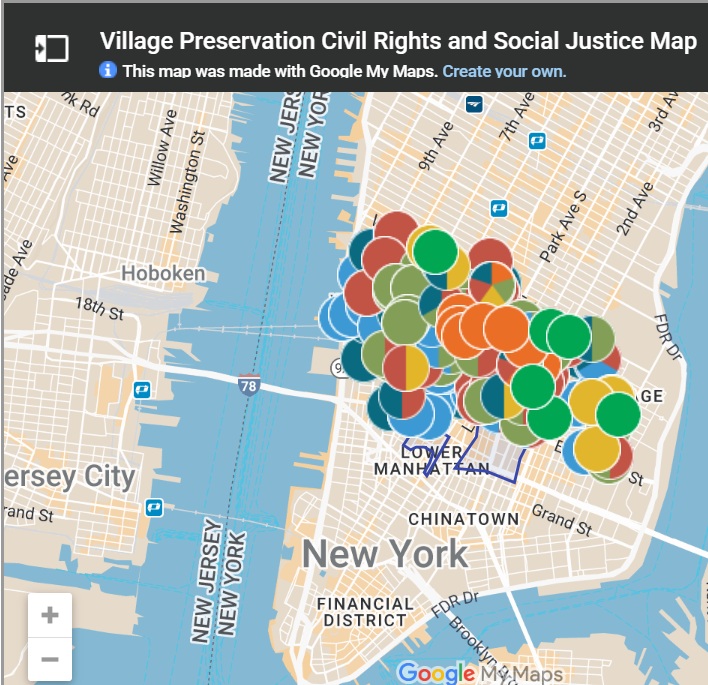
What unites both these resources is a sense of lived activism: not always loud, sometimes intimate, often deeply rooted in a sense of place. These were not distant figures working in abstract — these were neighbors. And the buildings they inhabited were not mere backdrops; they were collaborators in the story, and stand around us everywhere.
We invite you to explore our Oral History Collection and our Civil Rights and Social Justice Map, not just as resources, but as guides to seeing your neighborhood anew. In the stories of those who fought for justice — sometimes with a bullhorn, sometimes with a garden trowel — you may just find the architecture of community itself.