
The Beautiful History of Café Wha?
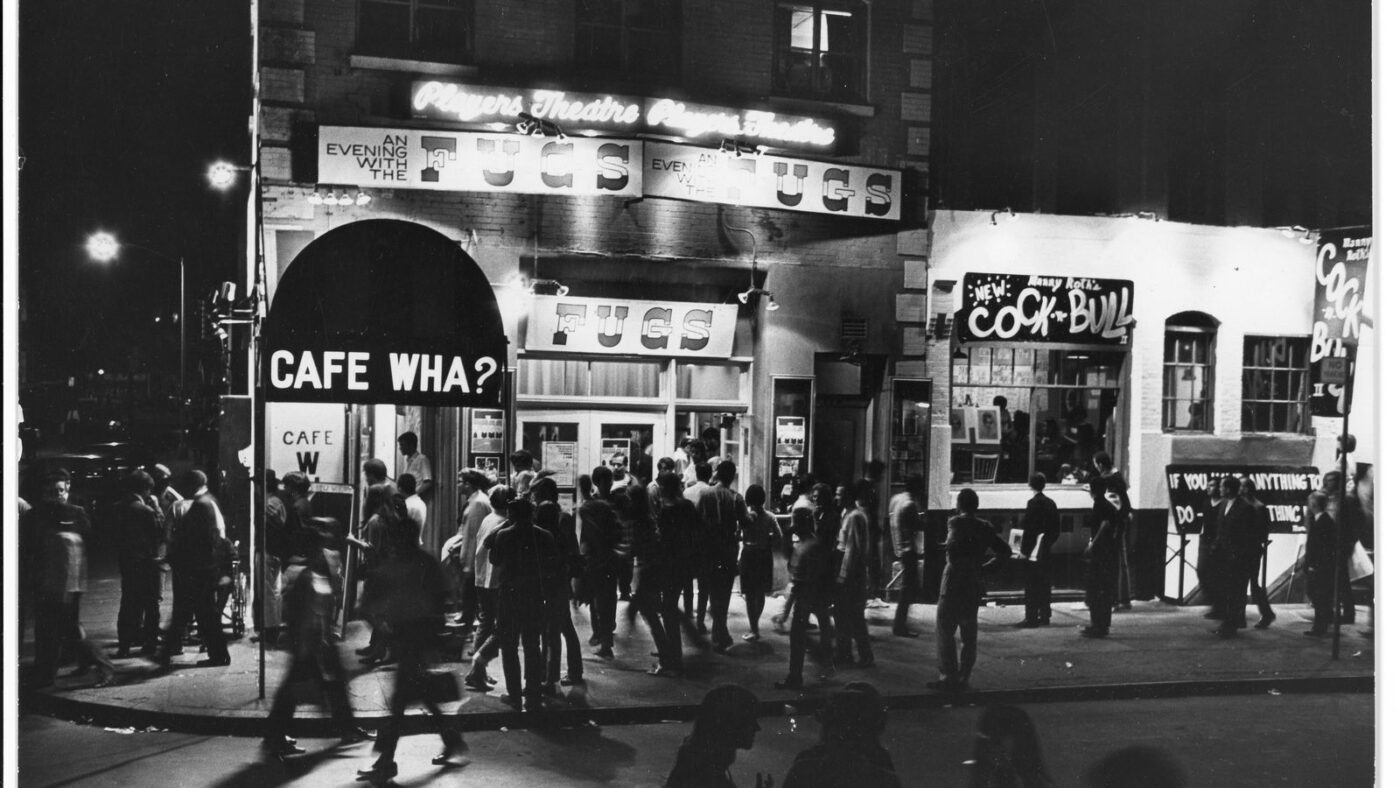
Café Wha? sits half-underground at 115 MacDougal, a basement once used to stable horses. In 1959 actor Manny Roth hauled in broken marble for the floor, sprayed the walls black, and lit candles on cast-off tables. Capacity: 325 souls and one restless dream of fame. Greenwich Village already pulsed with poetry, but Roth’s “swingingest coffee house” gave the neighborhood a louder heartbeat.
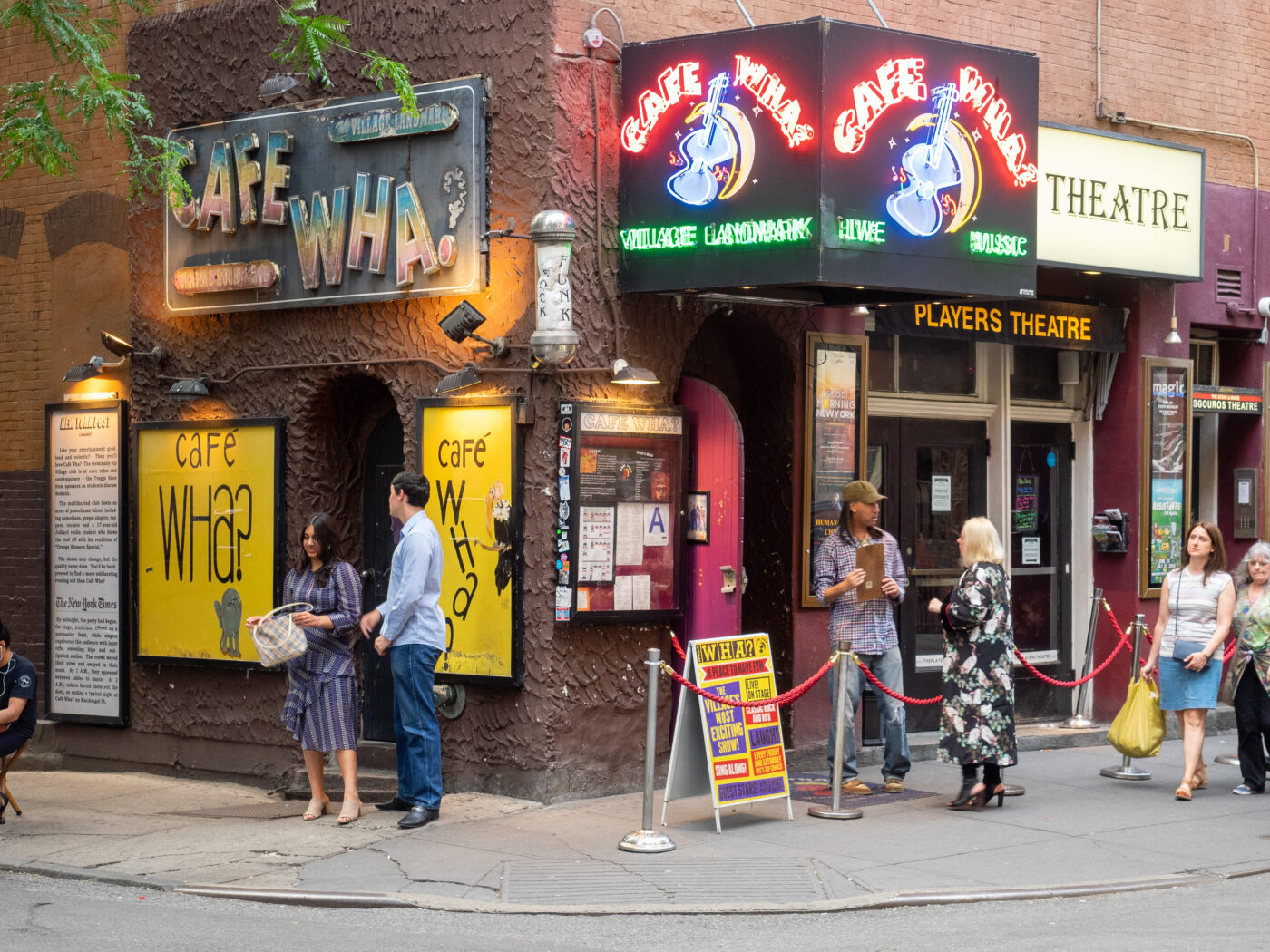
On a frozen night, January 24, 1961, a hitch-hiking nineteen-year-old named Bob Dylan asked for “a few songs.” He sang Woody Guthrie ballads, the crowd “flipped,” and a legend began. Dylan soon played afternoons as a backing harmonica, sharing the room with Mary Travers, who waited tables before forming Peter, Paul & Mary.
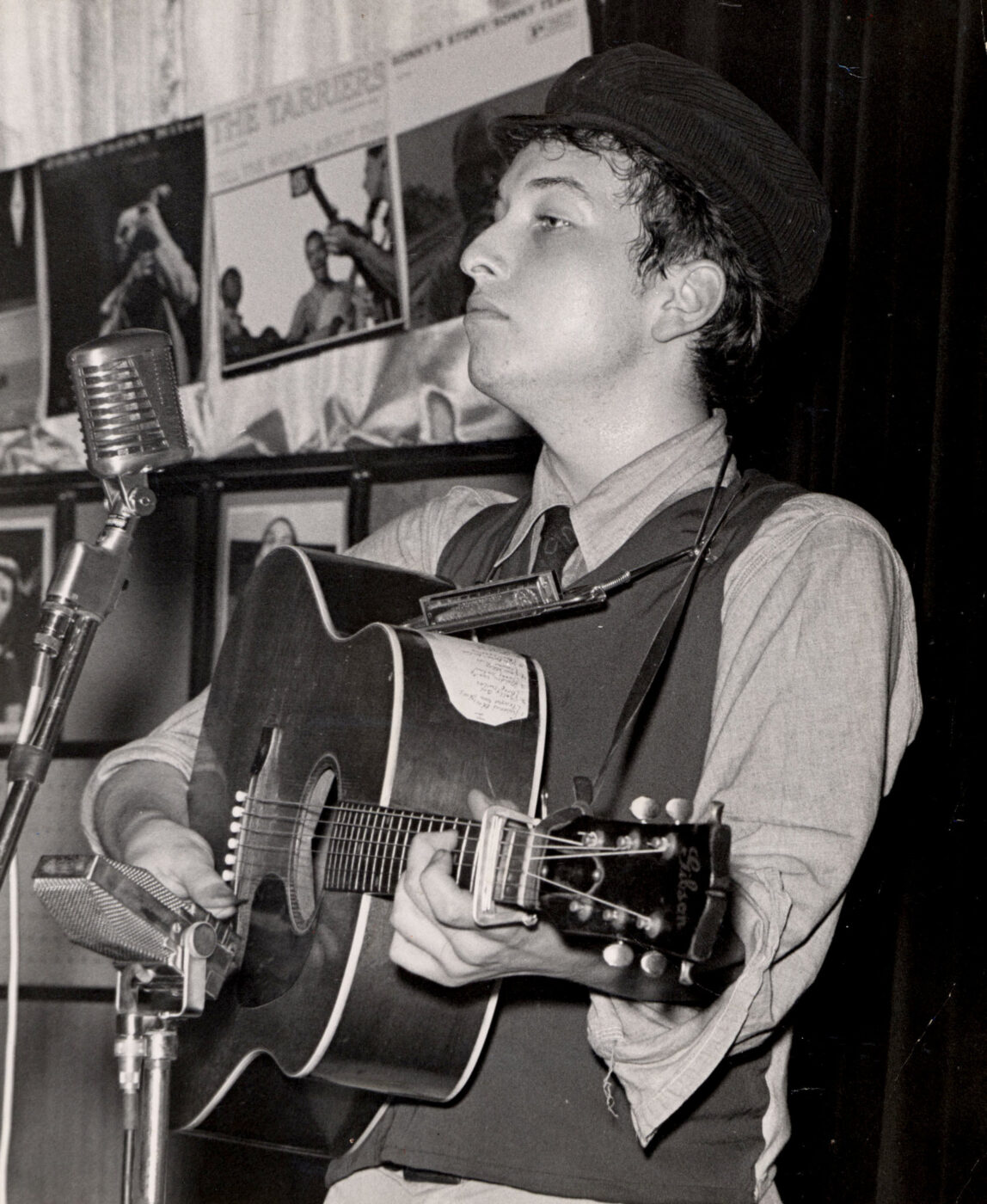
Café Wha? became a proving ground. Jimi Hendrix, then “Jimmy James,” ripped five blistering sets a night in 1966 until Animals bassist Chas Chandler whisked him to London. Bruce Springsteen’s Castiles filled teen matinees in 1967, and Richie Havens, Janis Joplin, the Velvet Underground, and Cat Mother followed. Comedians Woody Allen, Lenny Bruce, and Joan Rivers sharpened their timing between the folk guitars. The mix of radicals, tourists, sailors, and students turned the room into a social crucible where dissent found melody and electric volume.
Just up MacDougal, the Gaslight Café (opened 1958) offered beat-poet finger-snaps, then folk hootenannies that echoed through Washington Square. Dylan recorded his 1962 Gaslight tapes there, and the club’s basket-house economy—pass the hat, pay the artist—fed the egalitarian spirit sweeping the Village.
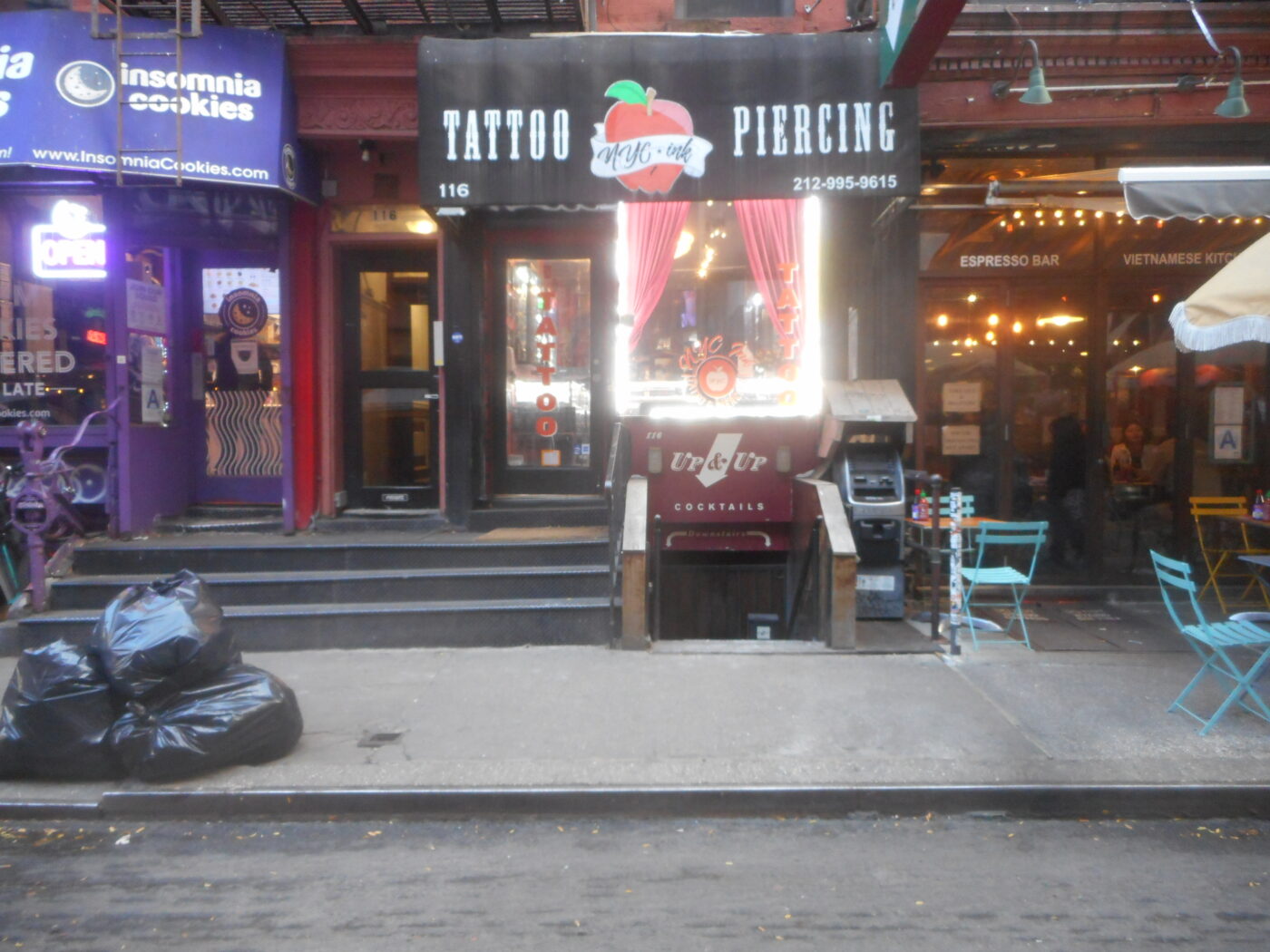
Two blocks west, Gerde’s Folk City opened in 1960 at 11 West 4th. It was here Dylan played his first paid gig on April 11, 1961, supporting John Lee Hooker. Gerde’s launched careers from Simon & Garfunkel to Judy Collins, earning a Rolling Stone nod as one of the world’s three most influential venues.
To the south on Bleecker, The Bitter End unlocked its red-brick stage in 1961. Tuesday night hootenannies packed the 230-seat room; Joni Mitchell, James Taylor, and Neil Young learned to survive tough crowds there, while later Rolling Thunder Revue rehearsals welded folk to rock theatrics. In 1992 the city proclaimed July 23 as “The Bitter End Day” in New York City, proof that the club’s cultural weight matched its mythology.
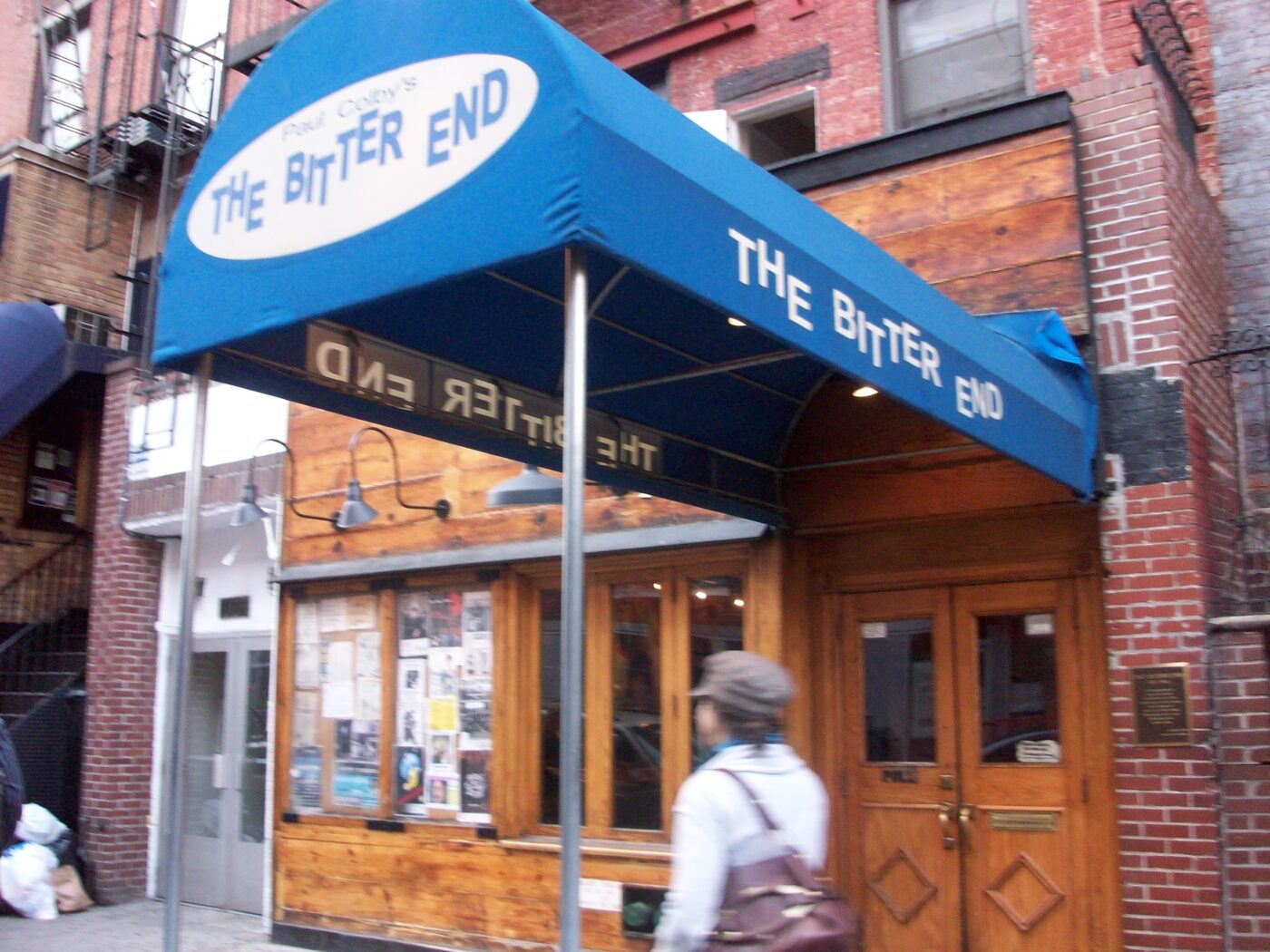
Collectively these four rooms—Café Wha?, the Gaslight, Gerde’s, and The Bitter End—formed a tight constellation that guided America’s 1960s counterculture. Greenwich Village supplied the village square where protest songs could be road-tested, while the emerging East Village absorbed the amplified shockwaves and birthed psychedelic temples like the Fillmore East. The cross-current of ideas and sounds helped shift popular music from Tin Pan Alley polish to raw personal confession, from polite nightclubs to rallies of electricity and feedback.
Roth sold Café Wha? in 1968, but its neon still glows across Minetta Lane. Step below street level today and the stage remains a stone’s throw from history: the same low ceiling, the same sense that the next unknown act might rewrite the soundtrack of the city. In Greenwich Village, music is memory you can still dance to, and Café Wha? is the room that keeps the memory awake.
In 2013, Village Preservation got the buildings housing Cafe Wha?, The Bitter End, Gerde’s, and the Gaslight, and scores of others on surrounding streets, landmarked as part of the South Village Historic District we proposed and fought for.
Let’s not forget Fred Neil he was the King
In fact Dylan’s big break was backing him up