
The One Where the Village Inspired a Sitcom
Decades after the show’s debut on September 22, 1994, the corner of Bedford and Grove Street remains a must-see destination for fans of a certain iconic ‘90s sitcom. From 1994 to 2004, Friends dominated television screens, influencing a generation into talking a certain way and a certain kind of haircut. Primarily set in our neighborhood, the show followed six young twenty- (and then thirty-) somethings and their subsequent trials and tribulations through young adulthood.
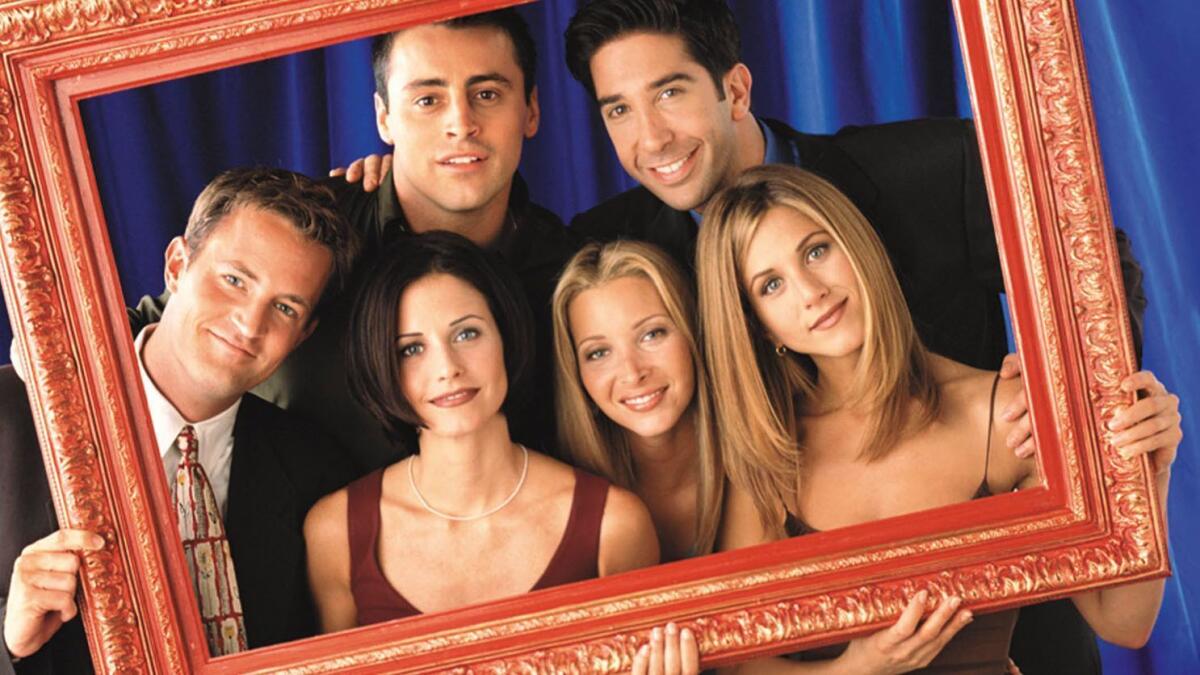
The lives of Monica, Ross, Rachel, Phoebe, Joey, and Chandler were filled with amusing escapades that felt close enough to reality to be relatable, yet still held a layer of untouchability. For most viewers, the long, lazy mornings spent lounging in the living room, followed by countless hours at the local coffeehouse were enjoyable to watch, but aspirational at best. Ultimately, the show depicted a far cry from the day-to-day responsibilities experienced by most Villagers in the 90s (or today).
Perhaps the most famous and noteworthy stop on any Friends aficionado’s tour is 90 Bedford Street—where, at one point or another during the show’s ten-year run, every member of the ensemble cast lived.
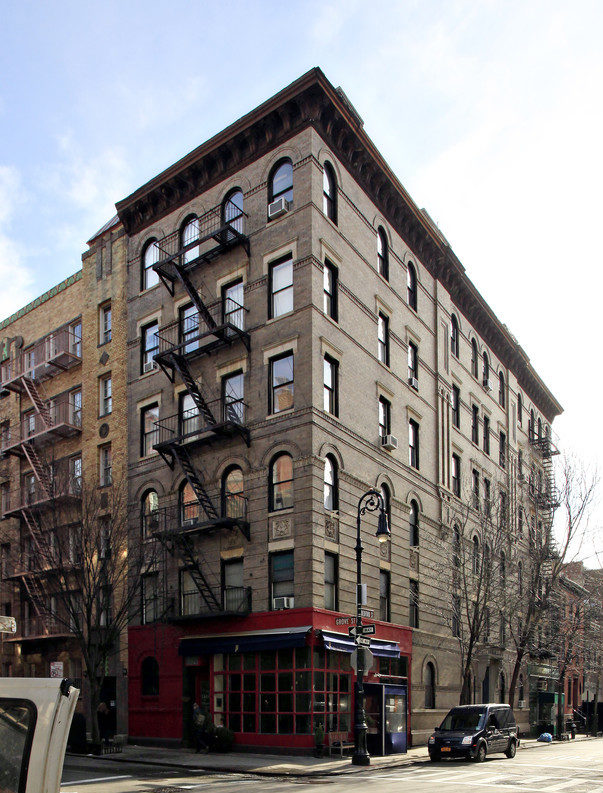
The building, while a sacrosanct destination for many Friends fans, served nothing more than an exterior shot and B-roll to indicate a scene change during the show. The interior of the apartments was filmed a thousand miles away in Burbank, California.
Still, 90 Bedford has a real history worth telling. Constructed between 1898 and 1899, it’s an old-law tenement building shaped by the Tenement House Act of 1879. Buildings such as 90 Bedford Street were constructed to include shallow side indentations in buildings to produce “air shafts.” Consequently, these buildings have narrow spaces between buildings, ostensibly allowing for sunlight and air to flow into units but often affording little of either. The buildings were also dubbed dumbbell tenements, mainly because from a birds-eye perspective, that’s what they looked like. By 1901, this type of building could no longer be built as a result of new housing reforms or the “New” tenement law of 1901, and were called “one of the worst forms of housing ever employed.”
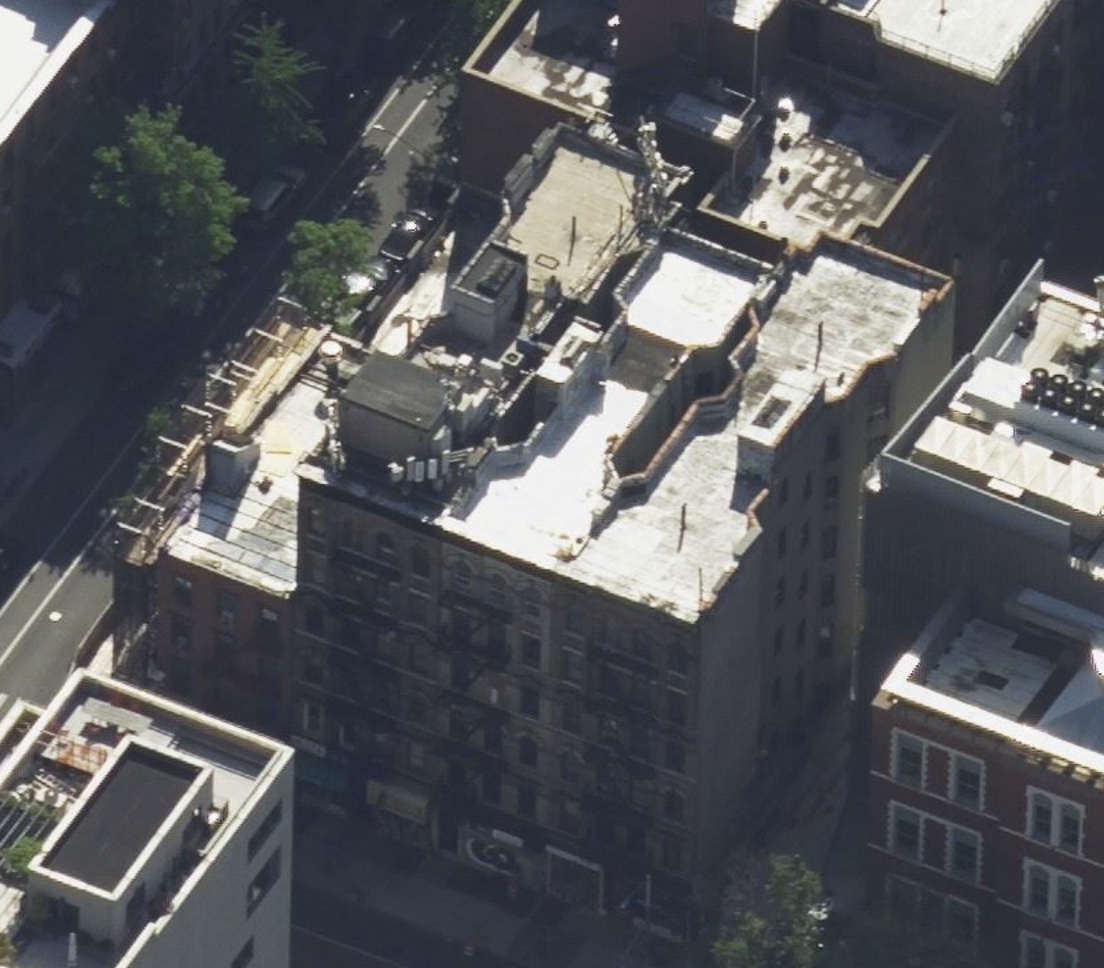
Aside from Monica and Rachel’s apartment—later shared with Chandler—the show’s other primary setting was Central Perk, the beloved coffeehouse supposedly located at the base of 90 Bedford Street, where Rachel worked as a barista during the early seasons. While Central Perk exists only in the Friends universe, since 2006, the actual ground floor of 90 Bedford has been occupied by the restaurant, Little Owl.
For a real-life counterpart to Central Perk, look no further than Caffè Reggio on MacDougal Street—a cozy Village staple that captures the same eclectic charm and lived-in feel.
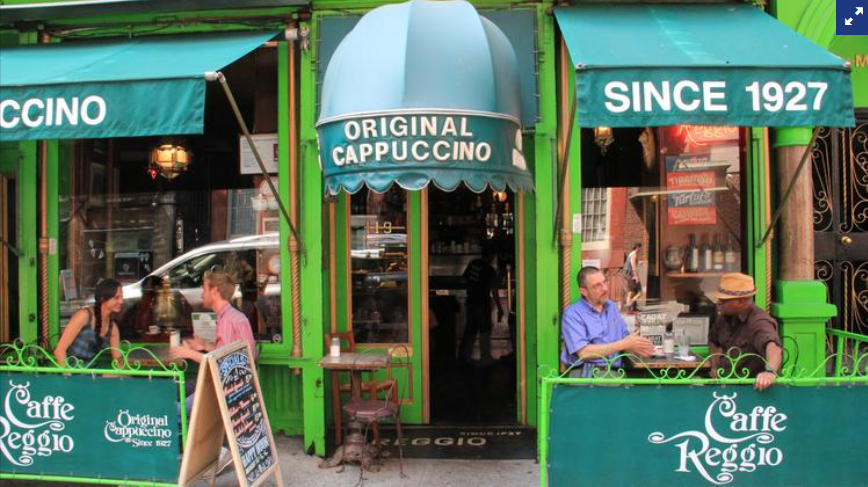
Located at 119 MacDougal Street, Caffè Reggio has been a New York institution since it opened on August 29, 1927. Originally owned by hairdresser Domenico Parisi, not much else has changed about the joint (other than the early 2000s-era no-smoking inside policy). When purchasing the cafe, Parisi took his entire life savings of $1,000 to buy a 1902 espresso machine from Italy—and the machine has survived all these decades, still to be found at the back of the cafe in all its glory. And Parisi’s risk paid off; he successfully brought the cappuccino to America, and success came with it.
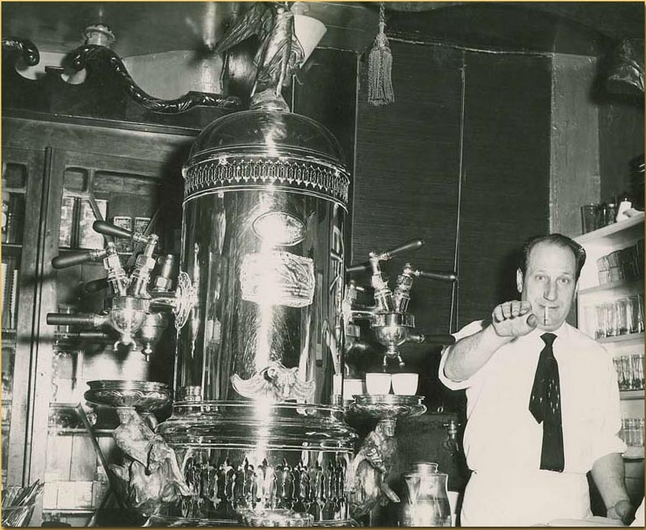
Aside from the espresso machine, the coffeehouse is adorned with Renaissance-era paintings and artwork and was the known hangout spot for a litany of neighborhood beatnics and bohemians (Gregory Corso and Jack Kerouac to name a few). Over the years, the cafe’s acclaim only grew, and it secured itself as a neighborhood staple. With its vintage charm and mismatched furniture, it’s easy to imagine Rachel fumbling the espresso machine, Phoebe reading bad poetry, and everyone else hanging out for hours on end.
Traveling back a few blocks west, our next stop is the Christopher St-Stonewall subway station. Throughout the Friends ten-year-long run, the gang is rarely spotted on New York’s most common form of transportation. Given audiences are meant to believe that the cast live a somewhat modest, and normal life, excluding subways from their daily life seems unrealistic—especially because the group does travel outside of the Village somewhat frequently. If Rachel really did work at Bloomingdale’s, and Ross at the Museum of Natural History, it’s hard to believe they weren’t regularly catching the 1 train out of this very station.
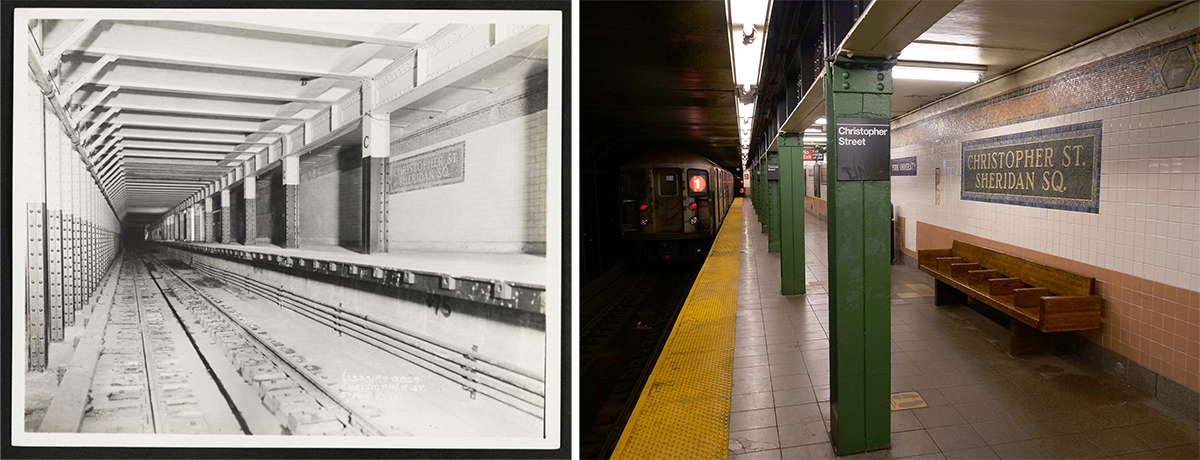
Opened July 1, 1918, the station was originally the Christopher Street-Sheridan Square Station, only to be renamed to the Christopher Street-Stonewall Station in June 2024. Its construction came as a result of the 1913 “Dual Contracts” that facilitated the construction of lines in Brooklyn and Manhattan, including one from Times Square to lower Manhattan that required the extension of Seventh Avenue through the Village to create Seventh Avenue South. Like most subway stops of its time, the station features mosaic tilings of its name and historic imagery, relevant to the location—here, it is the Newgate State Prison that was bordered by Christopher, Perry, and Washington Streets and the Hudson River shoreline, and demolished in the mid-19th century.
In 1994, the station commissioned artist Lee Brozgol to add The Greenwich Village Murals to its walls. Inspired by “the founders, providers, bohemians, and rebels” of the neighborhood, Brozgol worked with local elementary school students to help select figures to feature. So while the Friends ensemble may have skipped the subway on screen, the Christopher Street-Stonewall station is a living example of day-to-day city life for countless locals (including Ross, Rachel, and everyone else if their commutes had played out realistically).
In the end, Friends offered a polished, idealized version of life in the Village: one where a barista could afford a two-bedroom apartment and everyone was always free to hang out. There are glimpses of Friends-isms still present in the Village, and perhaps that’s what made the show so popular to aspire to: walkable, human-scaled streets, comfortable cafes, and deep relationships with neighbors. Our neighborhood may lack a laugh track, but it does offer the lived-in reality that inspired a cultural phenomenon.
Phoebe never read poetry on the show. She was a singer-songwriter and guitarist who performed in Central Perk.