
The New Deal in the Village: Local Roots and Local Transformation
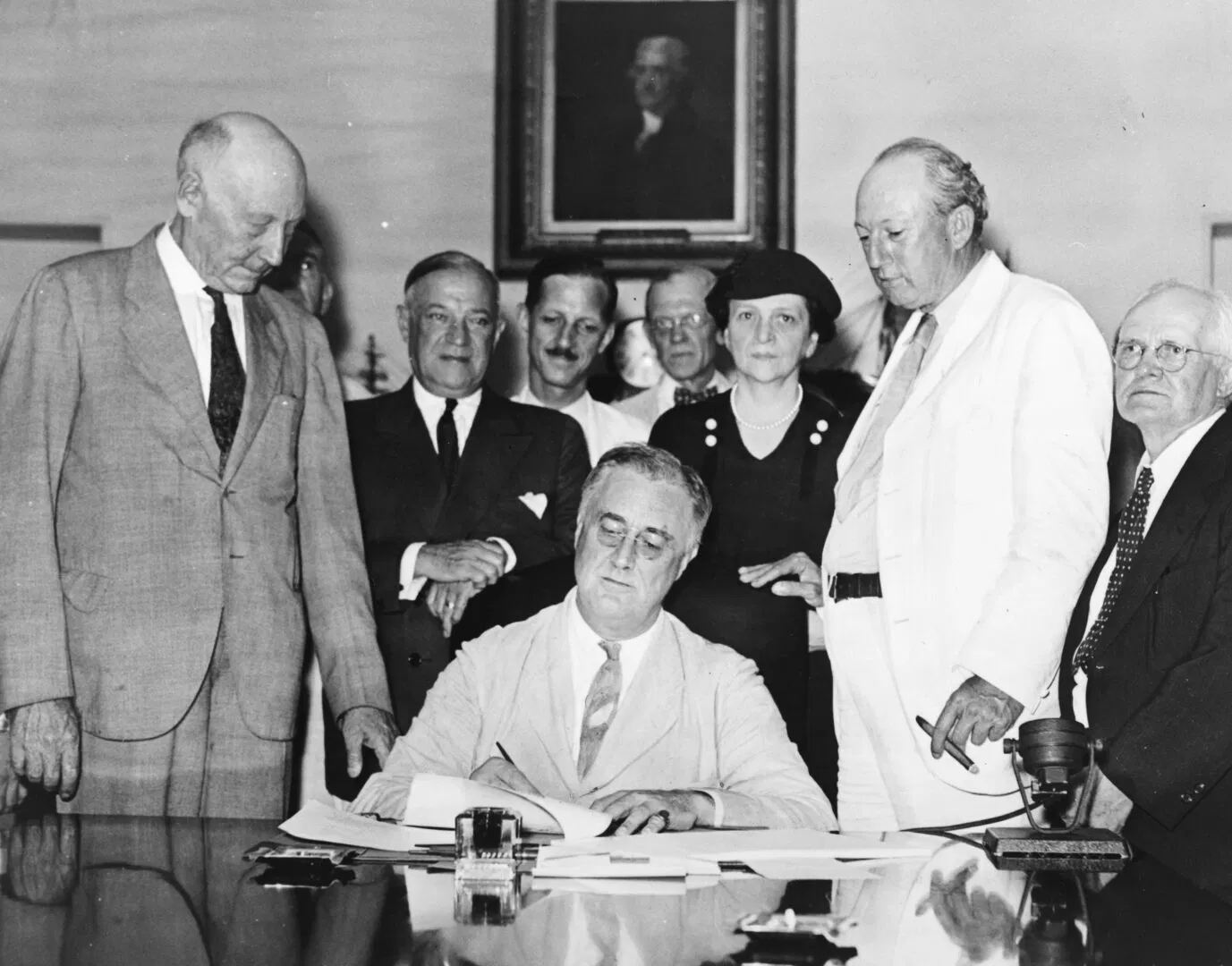
The New Deal is one of the most consequential presidential achievements in the history of this country. Context matters. The national economy at the time was on the verge of collapse. A third of the workforce was unemployed; panicked withdrawals threatened the viability of banks; soup kitchens had lines that went around the block; half of the elderly population lived in poverty; schools were shutting down. The response by the just-inaugurated Roosevelt inauguration was extraordinary in its breadth, discipline, and pace, shepherding the passage of over a dozen major pieces of legislation and issuing almost a hundred executive orders. The statistics alone, however, hardly tell the story. After all, the stroke of the presidential pen can just as easily be an outlet for the venal, vindictive, and unrestrained. In the case of the New Deal, however, executive (and legislative) action was anything but that. It helped rescue the economy and laid the infrastructure for decades of stability and prosperity in this country.
The New Deal’s initiatives were far ranging and its accomplishments profound. These included: funding major public works, including dams, bridges, and schools; shoring up the farm economy; introducing unemployment relief; separating investment banking and commercial banking so as to limit reckless speculation; setting a minimum wage; banning child labor; bringing electricity to rural areas; establishing a right to union organizing and collective bargaining without fear of retaliation; putting in place unemployment insurance and retirement pensions; and the list keeps going. Some New Deal initiatives have expired; others have persisted, despite long standing resistance from those who, evidence be damned, see no need to curb the inherent tendencies of the free market. Nonetheless, there is little argument that the New Deal reconfigured our economy and workforce, and changed the face of our country. And, as it happens, its roots in the Village run as deep as the impact that it had on the neighborhood. Today, we explore both.
Several individuals and organizations that helped shape the New Deal emerged from our neighborhoods.
Frances Perkins

Frances Perkins lived in Greenwich House as a young woman and developed her political awareness through her association with intellectual circles in the neighborhood. Her advocacy efforts on behalf of workers’ rights eventually led to her appointment in 1933 as Secretary of the Department of Labor, making her the first woman to serve in a U.S. presidential cabinet. She was one of only two members of Roosevelt’s cabinet to serve throughout his entire presidency, and played a key role enacting New Deal social welfare laws and programs, including the Social Security Act, the Fair Labor Standards Act, the Federal Emergency Relief Act, the National Industrial Recovery Act, and the Civilian Conservation Corps. We placed a historic plaque in Frances Perkins’ honor at her home at 121 Washington Place.
Abraham Epstein
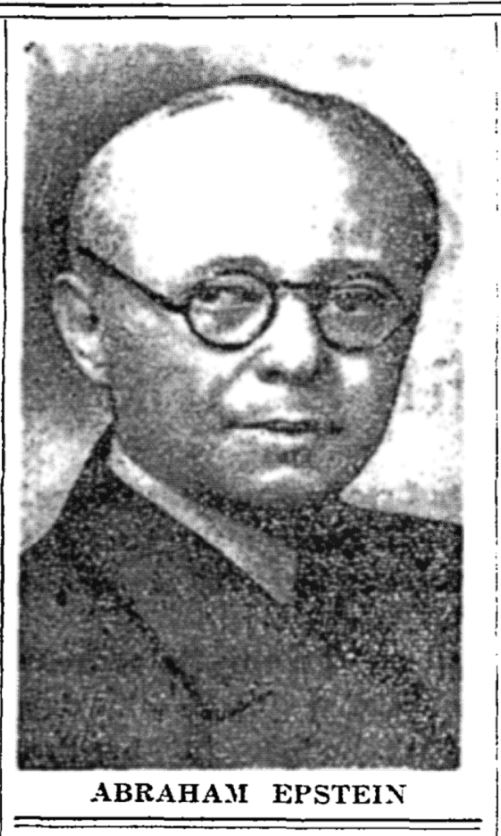
Abraham Epstein was a founding member of the American Association for Social Security, which played a key role in the formulation of the Social Security Act. This act, which was signed into law by President Roosevelt on August 14, 1935, established the Federal Old Age Benefits program, the Unemployment Compensation program, and the Federal-State Assistance program. After its institution, Epstein pushed Congress to expand its scope. These efforts informed the 1939 Amendments, which expanded coverage to dependents and survivors.
Epstein lived at 389 Bleecker Street, and his family was among the founders of Bleecker Gardens, an idyllic courtyard created in 1929 and shared by his and twelve other 19th century homes.
International Workers Order
The progressive mutual-benefit organization the International Workers Order (IWO) was located at 80 Fifth Avenue since its founding in 1930. At the time, the area south of Union Square was a major hub in the burgeoning labor movement. As one its pioneers, the IWO took strong positions on civil rights. It also had a profound influence on the development of many New Deal reforms, especially the Social Security Act and the National Labor Relations Act, and laid the groundwork for the ongoing struggle to assert the civil rights for all Americans.
Fiorello LaGuardia
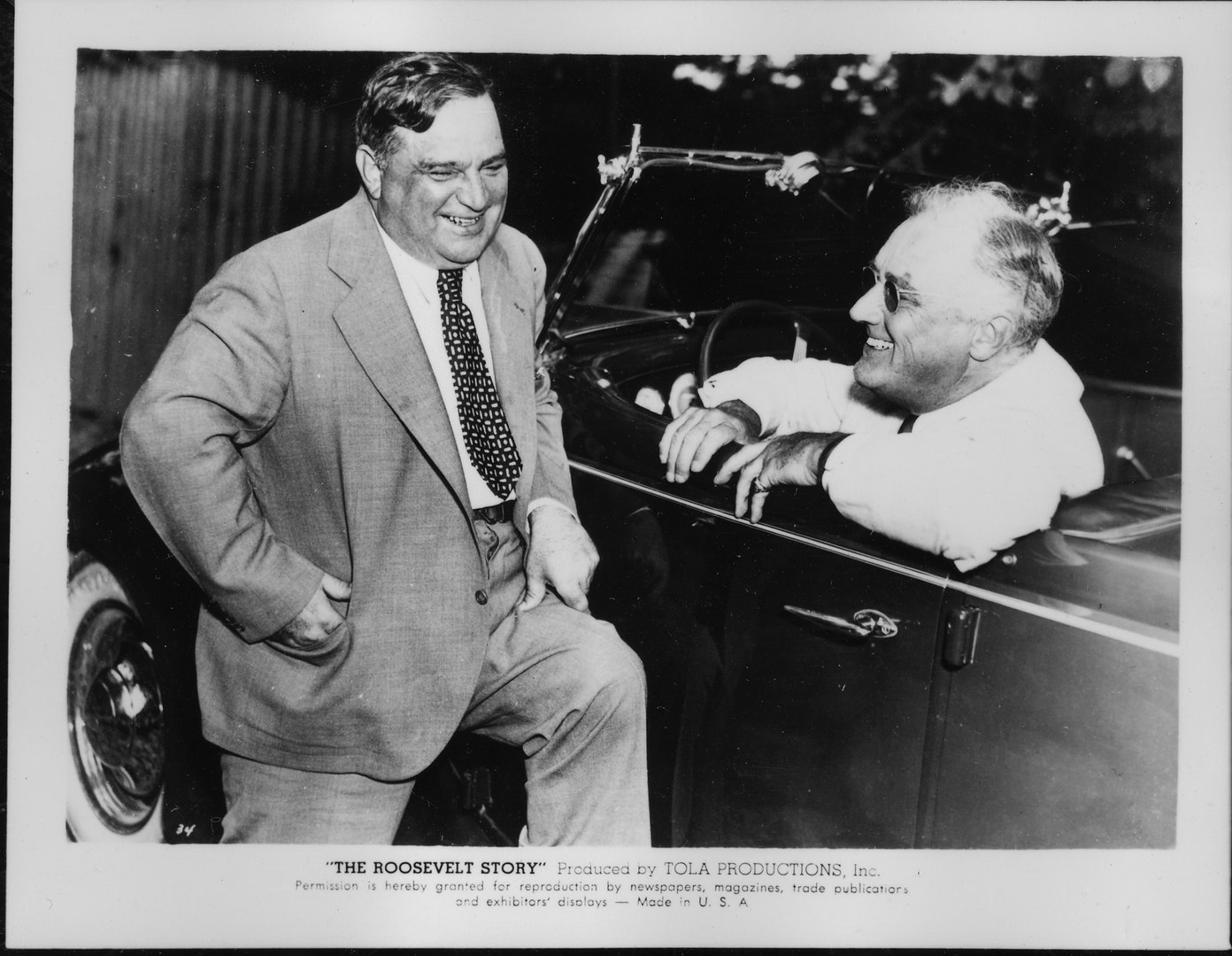
New York City’s “greatest mayor,” Fiorello LaGuardia, grew up at 177 Sullivan Street (then 7 Varick Street) and served twelve years as mayor, starting in 1936. As mayor, he was responsible for administering New Deal programs in the city. This put him in charge of billions of dollars issued by the Work Progress Administration (WPA), a New Deal agency, for the development of public works projects. WPA projects helped employ 700,000 New Yorkers and provided the city with much needed infrastructure upgrades.
The Local Impact of the New Deal

The WPA’s legacy in our neighborhood is all around us. The agency’s Division of Operations was behind the construction and rehabilitation of hundreds of buildings throughout the city. Noteworthy additions to our neighborhoods include the First Avenue Retail Market building (155 First Avenue; btw 9th and 10th Streets), which was purchased in 1986 by the Theater for the New City, revitalizing that corner of the neighborhood, and the Cooper Station post office at Fourth Avenue and 11th Street.
All told, WPA is responsible for over 26 different projects in the Greenwich Village, East Village, and NoHo. Some of these projects consisted of nursery schools and playgrounds. Those in our neighborhood include: Joseph E. Sauer Park (East 12th Street between Avenues A and B); Tompkins Square Park Playground (East 9th and 10th Streets and between Avenues A and B); First Park (East 1st Street and 1st Avenue); Minetta Playground (West 3rd Street & 6th Avenue); Playground of the Americas (West Houston Street and 6th Avenue); and Vesuvio Playground (99 Thompson Street).

Months after its creation, the WPA formed the Federal Arts Project and the Federal Writers Project. These initiatives, which were both headquartered at 110 King Street at Hudson Street, employed thousands of artists, writers, photographers, and craftsmen. Among them were future local notables like photographer Bernice Abbott, and painters Willem de Kooning, Jackson Pollock, and Lee Krasner.
Looking back
Decades after the New Deal launched, it remains a history worth revisiting. It’s one that can shed insight into the steadiness of purpose, depth of analysis, and compassion that it takes to formulate and implement a genuine and comprehensive effort to try to make America great.