
Landmarks60: Designations During the Swinging Sixties
In April of 1965 the New York City Landmarks Law was approved and took effect. Created to protect the City’s invaluable stock of historic sites, it allows for the preservation of buildings, neighborhoods, and other historic locations through landmark designation. To celebrate the law’s 60th Anniversary, Village Preservation created an interactive Timeline Map, showing the history of designated sites within Greenwich Village the East Village, NoHo and Hudson Square. The map shares photos and background on these sites and how we have been able to help preserve them.
The main way to use the map is by watching the designations play on the timeline, but there is an alternate route – allowing viewers to select a specific decade (or adjust the timeline bar to set a custom time period). Today we will use this feature to explore the earliest designations within our neighborhoods – those during the swinging sixties.
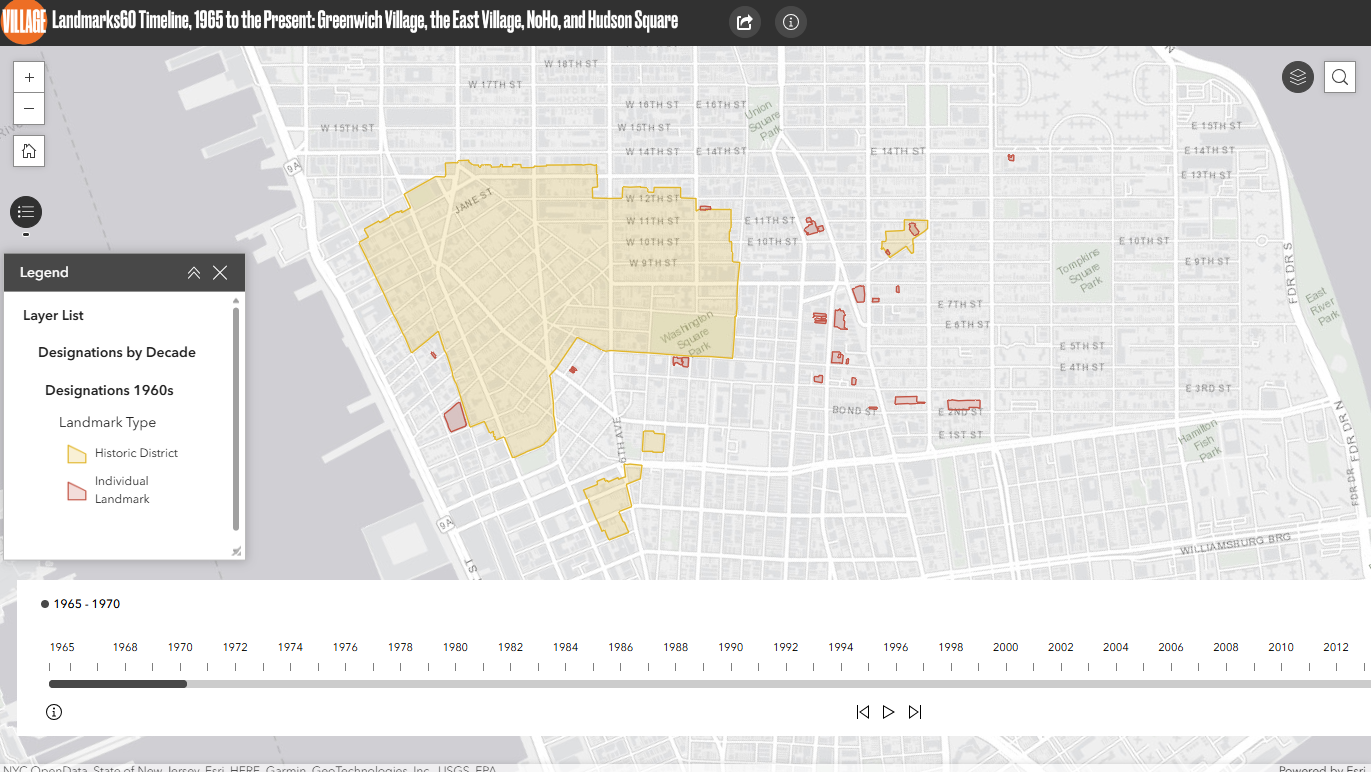
The first designations within our neighborhood occurred on October 14th, 1965 — the very first landmark designations in all of New York City — with the landmarking of Colonnade Row and the Old Merchant’s House (Seabury Tredwell House).
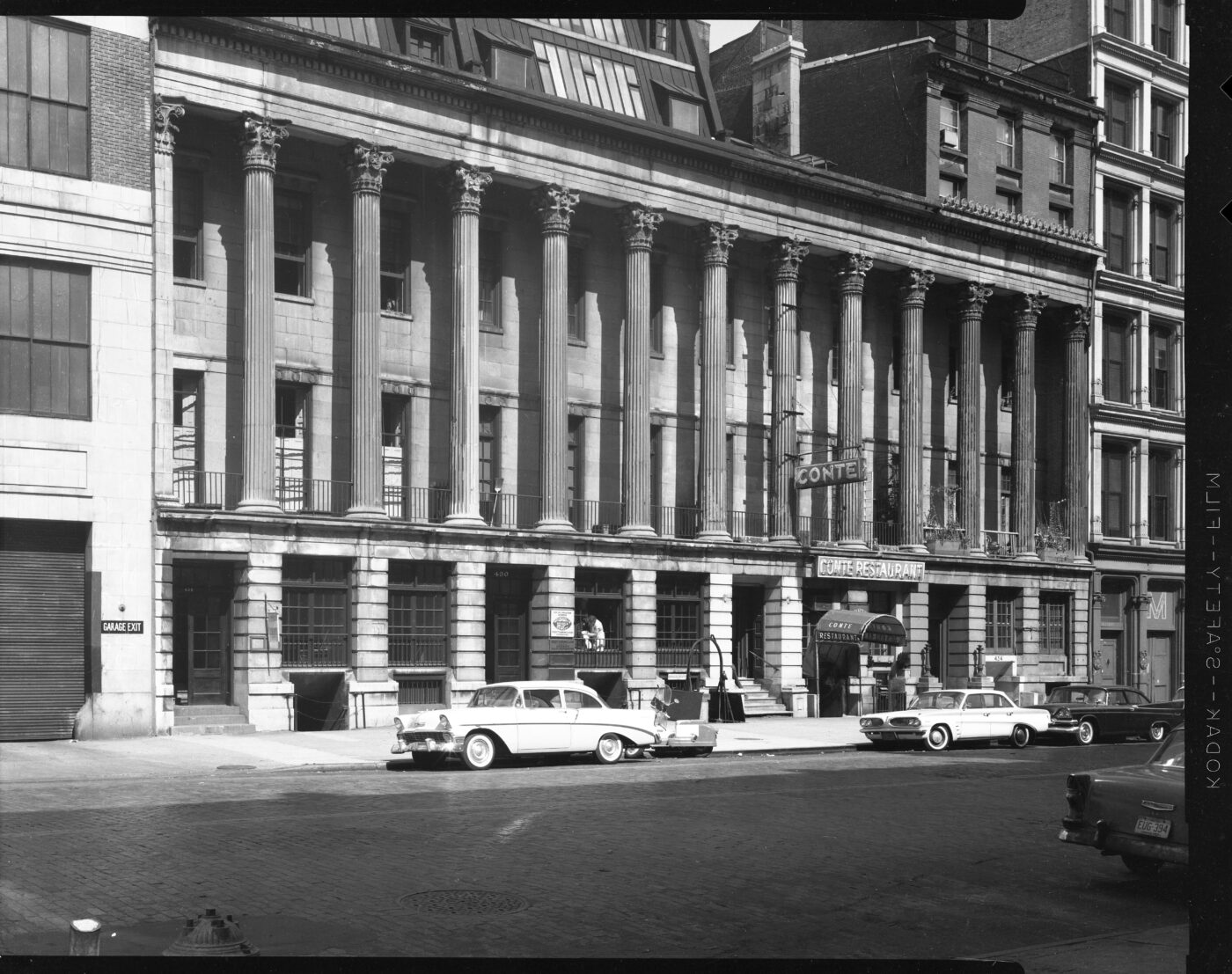
Colonnade Row, also known as La Grange Terrace, is located at 328-334 Lafayette Street. Constructed ca. 1832-33 in the Greek revival style, the row is exceptional due to its unifying Corinthian colonnade.

Built in 1831-1832, the Seabury Tredwell house remains of what was once a row of six transitional Greek Revival / Federal Style rowhouses. A remarkably well preserved remnant of its time, the building’s interior was landmarked in 1981 and has been used as a museum since 1936.
Over ten other sites around our neighborhoods would be individually landmarked during the 1960s. Further west, this includes 131 Charles Street, a Federal-era row house constructed in 1834.

The 1960s also saw a number of historic districts designations. In our neighborhoods, the earliest was the Charlton-King-Vandam historic district. Designated on August 16th, 1966, it contains the densest concentration of Federal-style row houses in New York City.

The following year, the MacDougal-Sullivan Gardens Historic district was designated. The unique district features 22 colorful buildings, ten facing Sullivan Street and 12 facing MacDougal Street, which share a communal private courtyard garden.

On January 14, 1969, the St. Marks Historic District was designated — the first (and for more than four decades only) historic district in the East Village, And finally, last, and far from least, the Greenwich Village Historic District was landmarked on April 19, 1969. It remains the largest historic district in the city. Featuring an eclectic mix of architecture, ranging from 19th century rowhouses to 20th century apartment houses, its preservation remains at the core of our mission.
To learn more about landmarking over the years, explore our landmarks timeline map HERE. You can explore all of our maps HERE.