
Remembering 9/11: Personal Perspectives from Downtown Manhattan
New York is the city of the world. Dozens of languages fill the streets; foods from any corner of the world can be found on any block; and people of all kinds, regardless of nationality, creed, race, gender, or socio-economic background, can and do end up here. It’s a city that thrives off difference, with every neighborhood and borough emphasizing its diversity and its own unique identity. Yet, in the aftermath of peril, like that of the crushing terrorist attacks of September 11, 2001, New York united as one city.
Today, we continue to remember the tragedy and terror of the 9/11 attacks by highlighting two new image archive collections, from Danielle Sevier and Annie Shaver-Crandell. Both Sevier and Shaver-Crandell lived in downtown Manhattan at the time of the 9/11 attacks, and documented the initial impact and the response from their own first-hand perspectives.
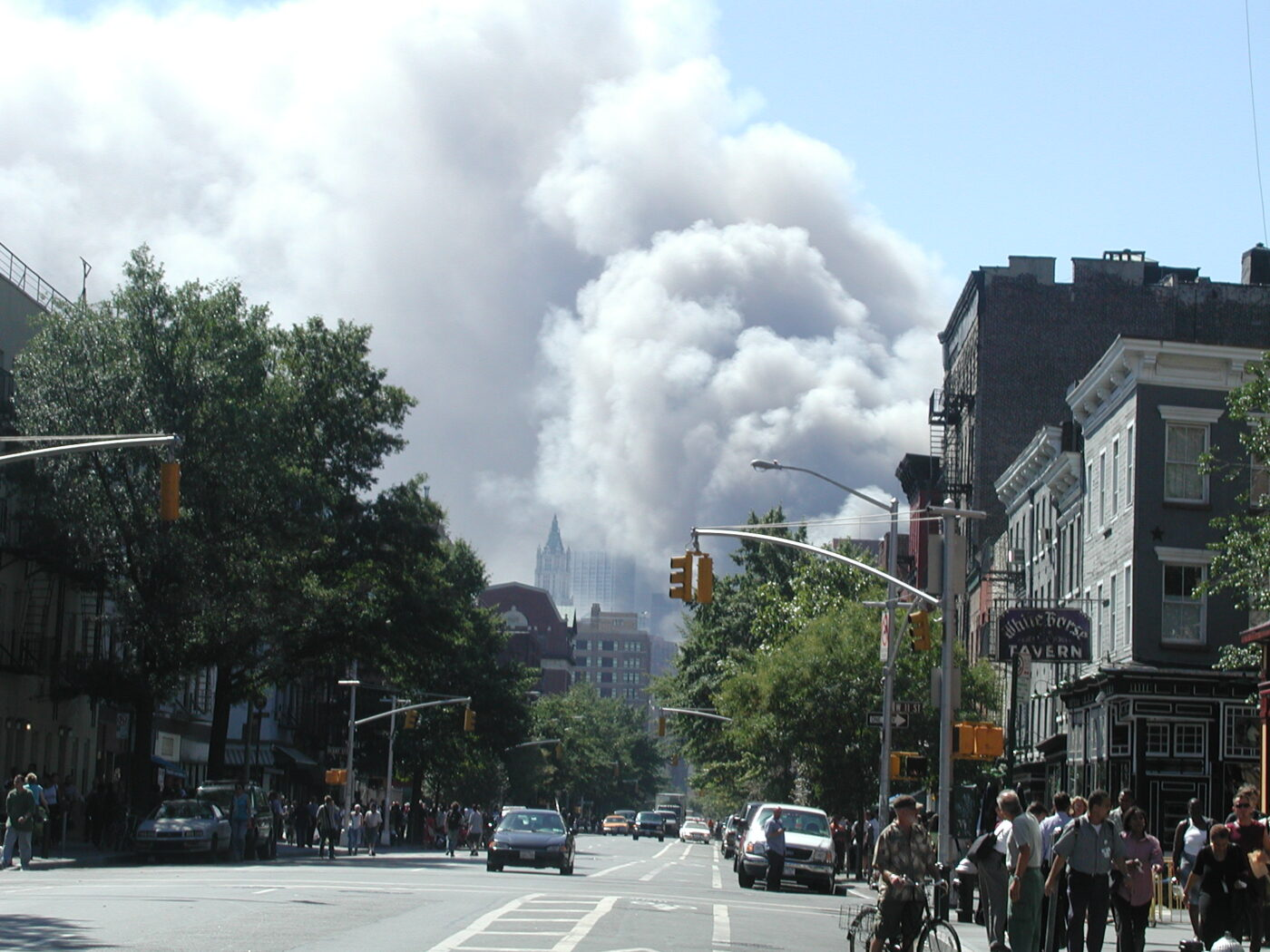
Shortly after two planes struck the Twin Towers, Danielle Sevier captured the effects of the terrorist attacks by photographing our neighborhood, showing immediate reactions, the physical impact on the built environment, and the community’s raw grief.
Running north-south, Hudson Street connects Tribeca all the way through the West Village and to the Meatpacking District. It’s best known for its commercial shopping, neighborhood staples like the White Horse Tavern, and connection to urban theorist legend Jane Jacobs (former resident of 555 Hudson Street). On 9/11, however, when smoke engulfed the better part of lower Manhattan, Hudson Street looked more like the set of a disaster movie.
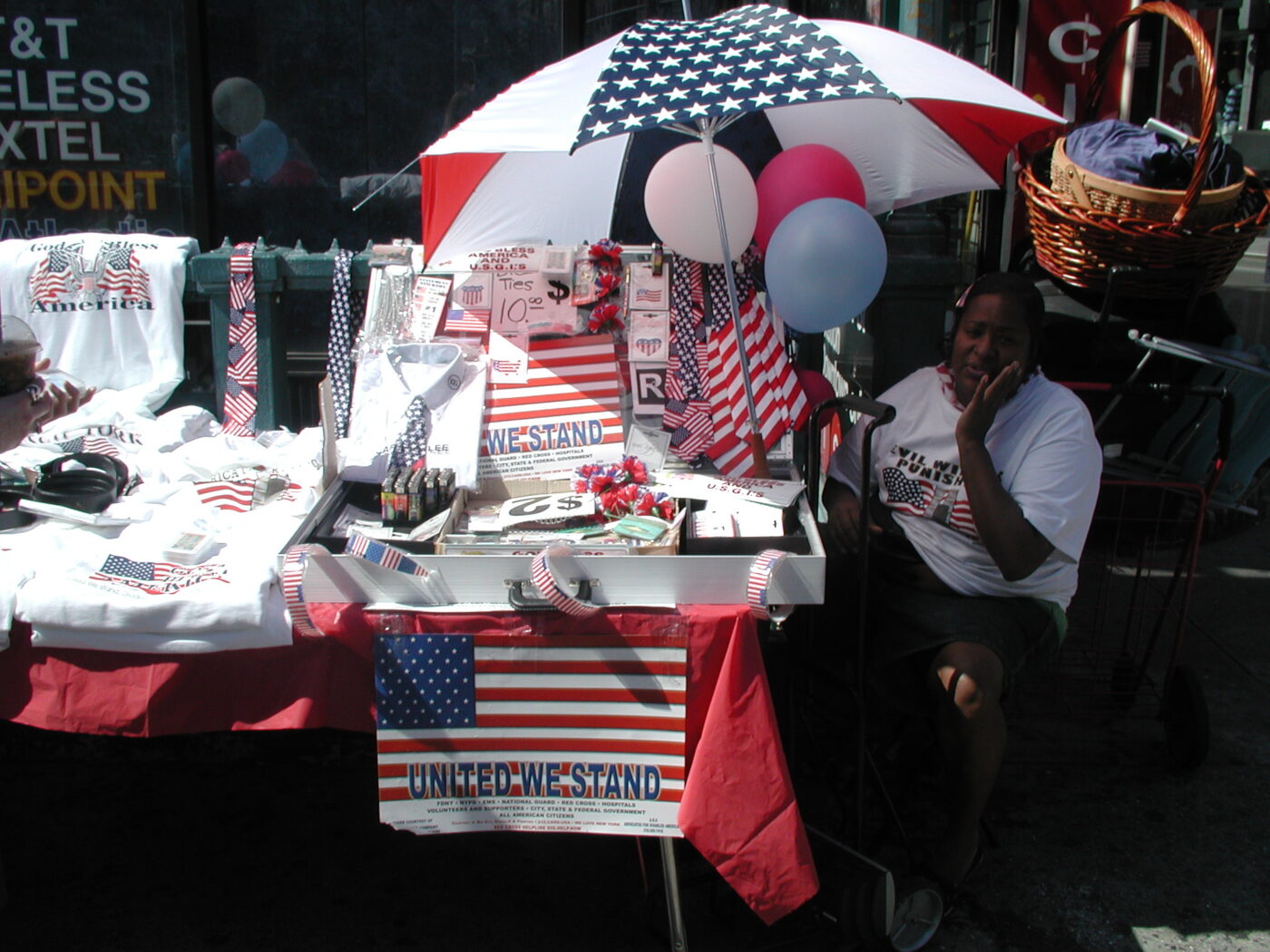
In the days, weeks, and months following the 9/11 attacks, American patriotism was one of many manifestations of what was being felt and what was put on display. Many individuals turned to the government for support, bonding over their shared grief and pain, and the nation united. Subsequently, American flags and other national symbols were found all over New York.
Pictured above is American flag memorabilia on sale in front of Village Cigars, at the corner of Seventh Avenue South and Christopher Street. Normally, a bustling subway stop and crowded intersection, after the attacks, the corner represented a bigger movement—asking New Yorkers to put differences aside and stand united as Americans.
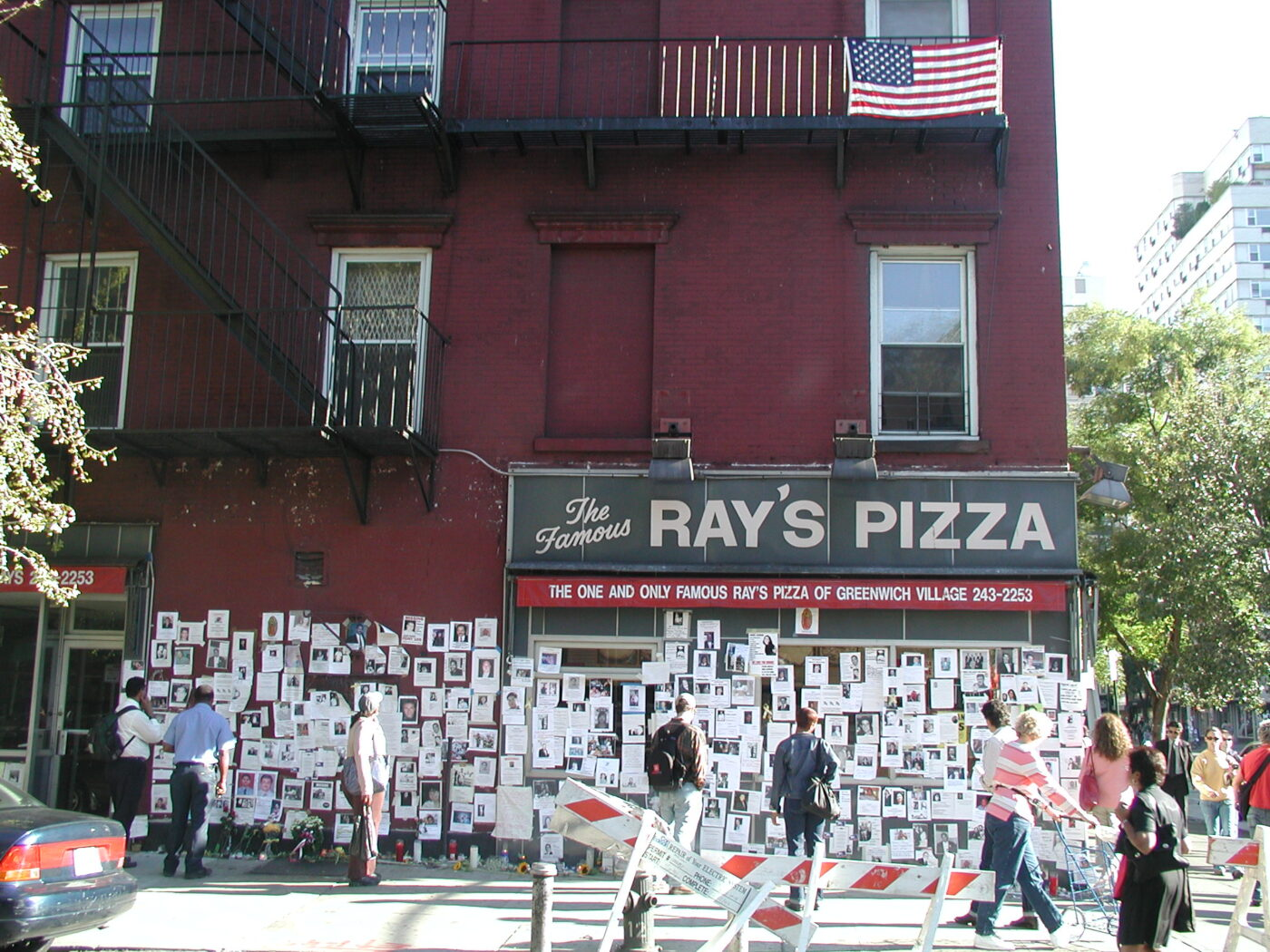
After the smoke cleared and the fires were extinguished, a new wave of harrowing devastation plagued New York. By September 3, 2015, the New York City Office of the Chief Medical Examiner (OCME) confirmed the deaths of 2,753 people in the World Trade Center attacks, including 343 New York City firefighters, 23 New York City police officers, and 37 officers at the Port Authority, alongside thousands of other civilian victims.
As of August 7, 2025, only 1,653 of those victims had been positively identified, leaving approximately 40% of the lives lost unidentified. In the days following the attacks, grief-stricken families, friends, and fellow New Yorkers clung to hope, desperately searching for their loved ones. City walls and storefronts became plastered with 8 ½ x 11 pieces of paper, each bearing a face, name, and the last known details of their missing beloved.
The image above shows one such wall: the facade of the (now defunct) Famous Ray’s Pizza of Greenwich Village at 465 Sixth Avenue, which was just one of the countless 9/11 missing persons walls. Soon, as the death toll rose and reunions became more unlikely, these walls became makeshift memorials, embodying the scale of trauma and profound impact 9/11 had on New York.
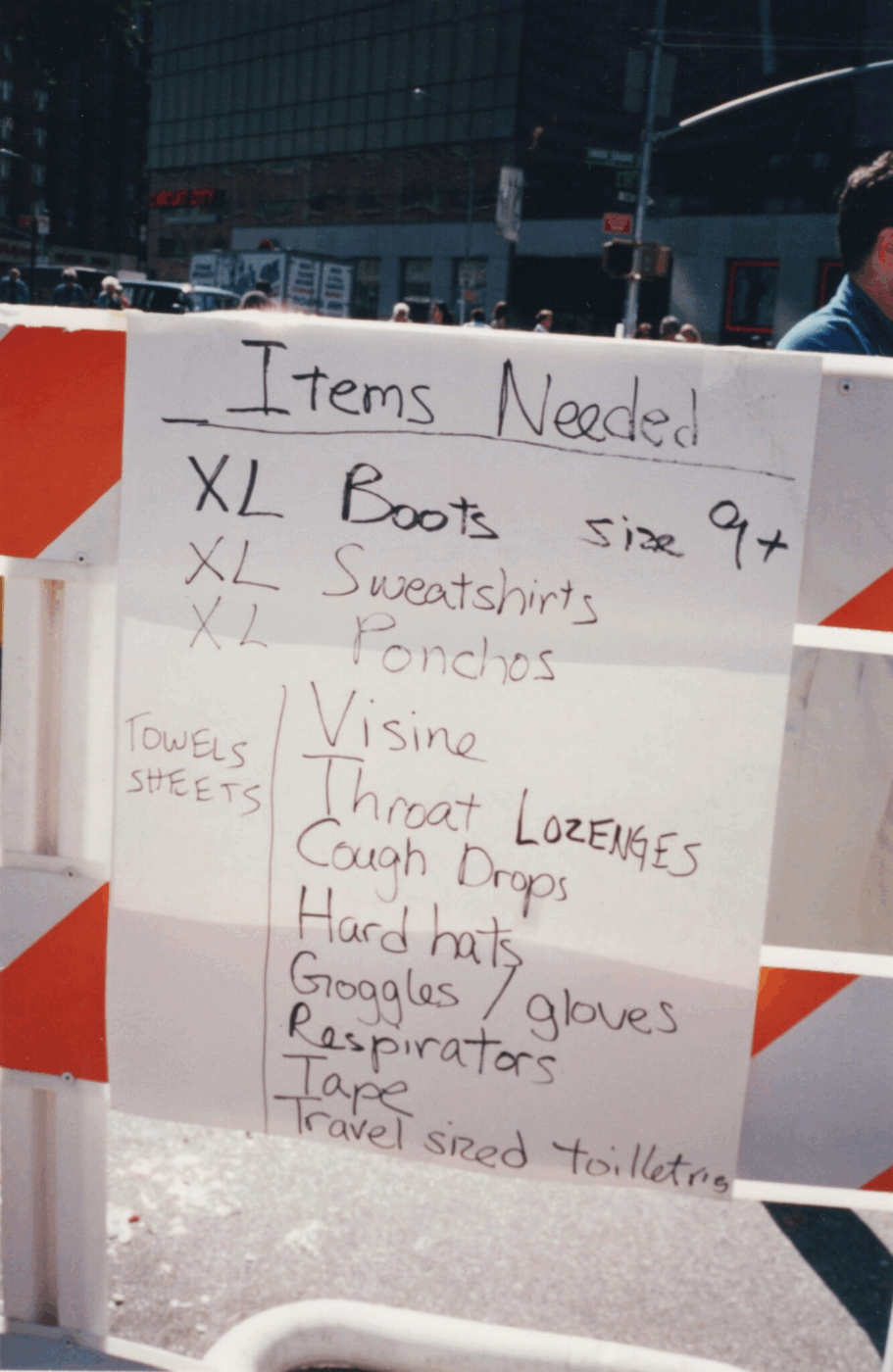
Amid the chaos and the collapse of the Twin Towers, firefighters, police officers, paramedics, and rescue workers rushed to Lower Manhattan and risked their own safety and lives to save those of others. For days and weeks, first responders returned again and again to the Financial District, often exhausting their depleting supplies while sifting through debris, dust, and remaining devastation.
Supplies quickly ran short, people across the country mobilized, collecting essentials like boots, gloves, googles—even throat lozenges—for the recovery workers stationed at Ground Zero. Longtime NoHo resident Annie Shaver-Crandell and her late husband Keith Crandell lived on Bond Street in September 2001, and captured the above handwritten sign at Union Square. Though simple and hastily written, it sheds a powerful light on the urgency of need and the ways in which communities came together to support New York’s recovery.
The events of September 11, 2001, forever altered New York City — both its skyline and its people. While the city eventually returned to its new normal, it was not without the help and sacrifice of first responders and selfless neighbors. The image archives of Danielle Sevier and Annie Shaver-Crandell preserve these moments, offering a deeply personal view of the immediate impact and the long, difficult recovery. To explore their collections or view our full historic image archive, including other World Trade Center and 9/11-related photos, click here.
Village Preservation maintains one of the largest collections in the world of crowd-sourced images of the 9/11 attacks and their aftermath in Lower Manhattan. To view them all, click here and look for collections with September 11 or World Trade Center themes, or click here and then click “Images,” and then “9/11 — World Trade Center” and “Apply.”
Most images in our historic image archive were donated by the public; to donate your images, click here.