
Discovering East Village History through a Photograph
As Director of Research and Preservation here at Village Preservation, a good portion of my time is dedicated to researching historic buildings, of which there is a treasure trove in our neighborhoods of Greenwich Village, the East Village, and NoHo. While we already know a great deal about the architectural and cultural history of many of these incredible structures, thanks to resources like the various historic district and individual landmark designation reports, and our own digital maps and tools, there’s always more to discover.
Sometimes, while researching an entirely different topic, I’ll stumble upon an historic image that clearly has a story to tell, and I’m compelled to investigate the many clues that such an image offers, and what it might reveal about the history of our neighborhoods.
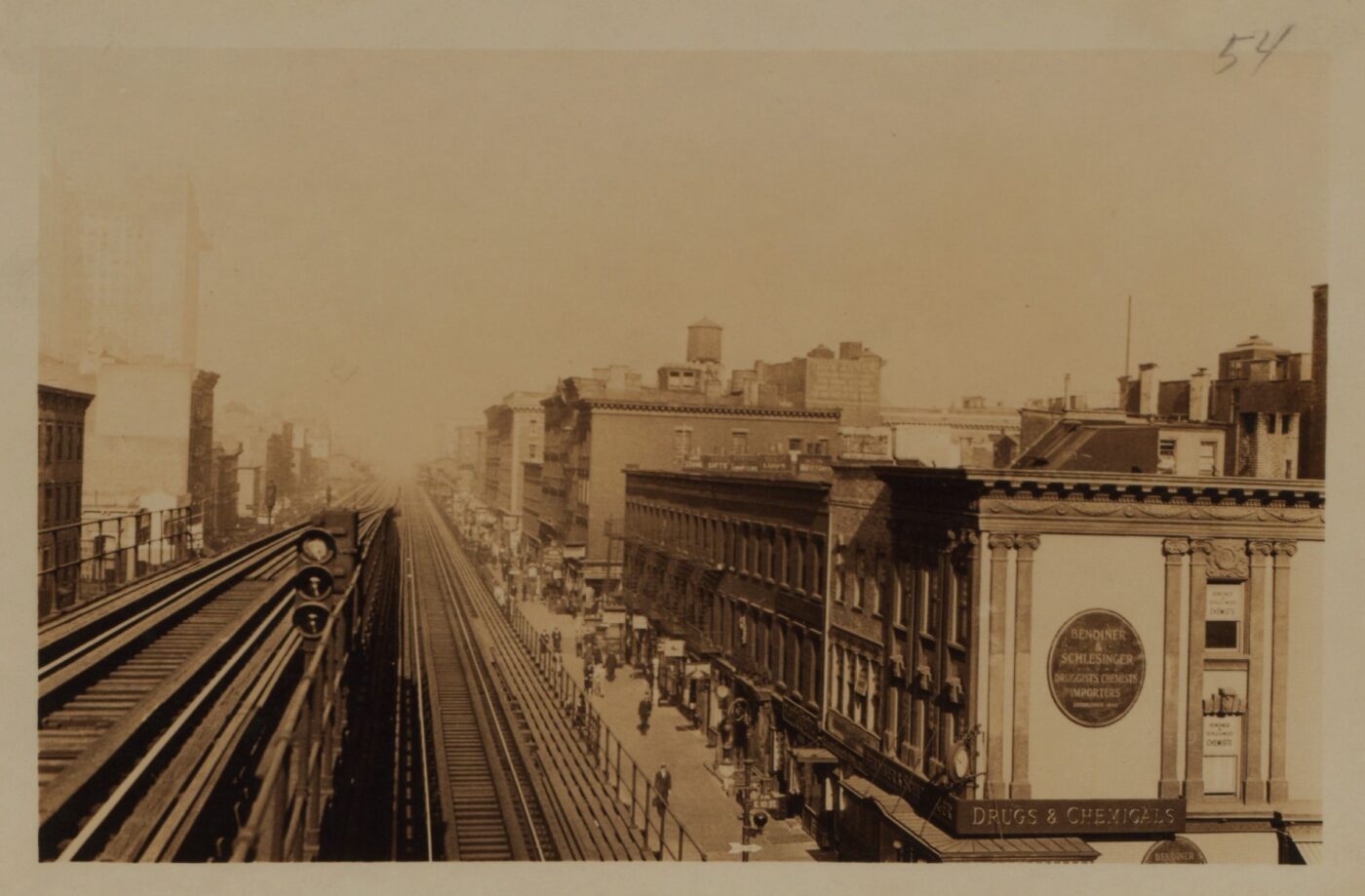
Take, for example, the 1940s tax photograph below of the former buildings at the northeast corner of Third Avenue and East 10th Street. According to our East Village Building Blocks database, which has information on every block and lot in the East Village, they were sadly demolished as recently as 2005, at which point the current building at this location was constructed.
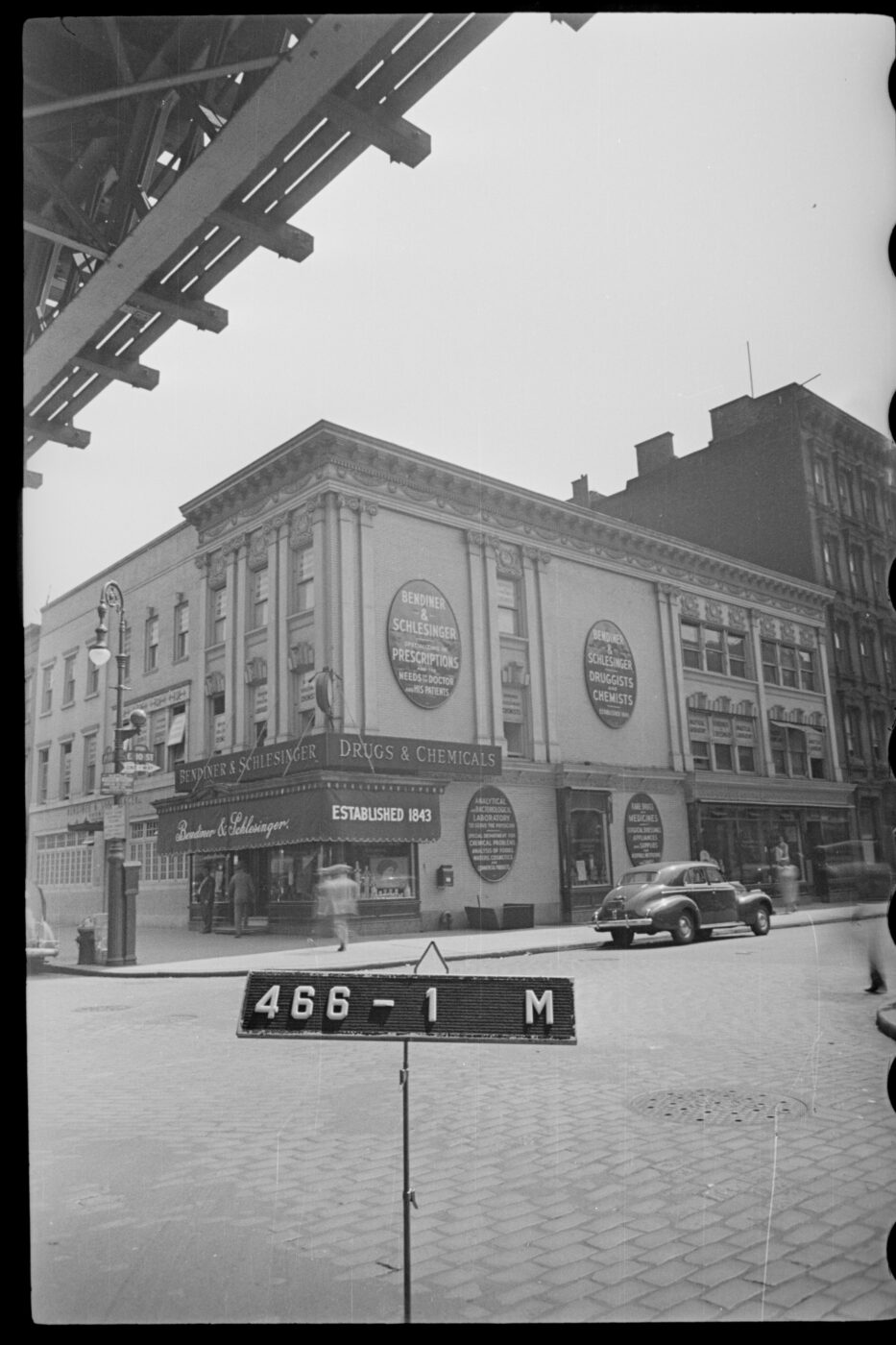
There is much to be learned from this image. The first thing I noticed is the very bold signage at the corner signband and awning: “BENDINER & SCHLESINGER DRUGS & CHEMICALS / ESTABLISHED 1843.” A Google search could tell us more about the history of the company and its presence at this location, but in this case, the photograph itself yields quite a bit of useful information.
Some of the other unusually large (and more verbose than most) signs on this building read:
“Bendiner & Schlesinger / Specializing in Prescriptions and the Needs of the Doctor and his Patients”
“Analytical and Bacteriological Laboratory to Serve the Physician / Special Department for Chemical Problems, Analysis of Foods, Waters, Cosmetics and Chemical Products”
“Rare Drugs and Medicines / Surgical Dressings, Appliances and Supplies for Hospitals ______ and _______” (Can anyone make out those two words at the bottom?)
All of these indicate that while that corner storefront on the ground floor may have hosted something akin to what we’d think of as a “drug store” today (with over-the-counter items for the typical consumer), this building was also serving as an active laboratory, and as a purveyor of more specialized products being sold to hospitals and medical professionals.
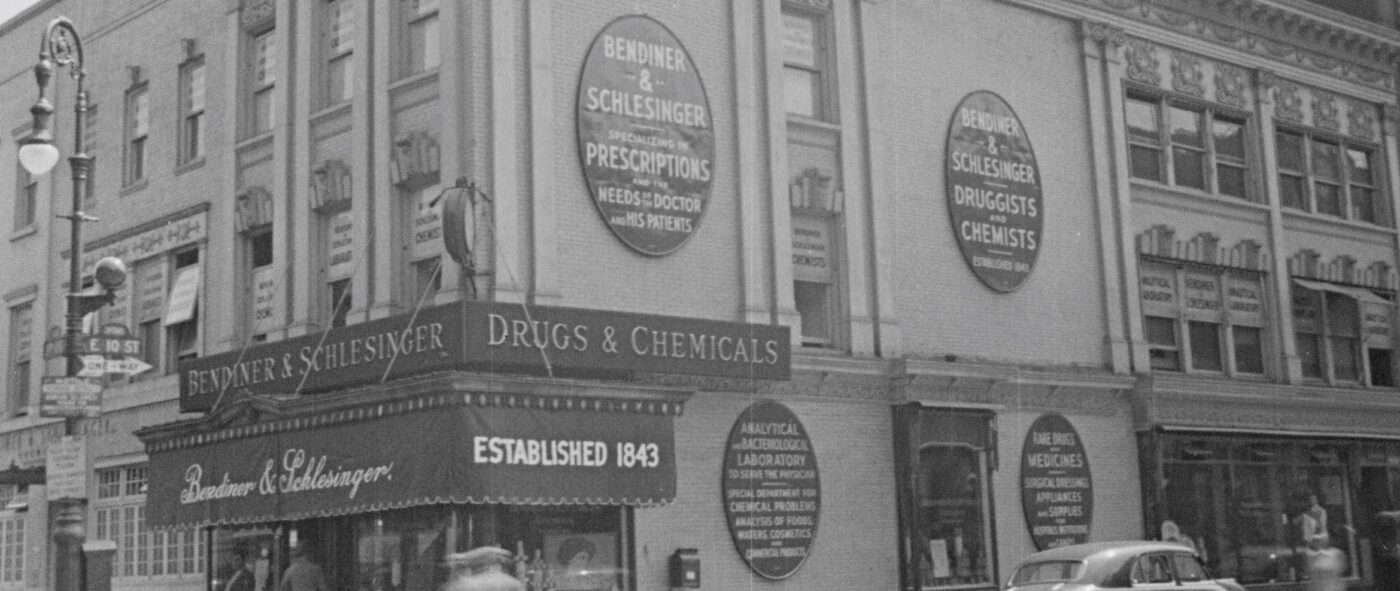
The signs on the windows clarify this further, with lettering that states “ANALYTICAL LABORATORY” and “CHEMISTS.” (Click here to view the original image source, where you can zoom in to better make out the words.) Beyond these announcements of use, the window dressings serve to cover the glass and may indicate that delicate procedures, perhaps sensitive to light or that require privacy, are taking place on the upper floors. More hints that point toward possible issues of light or temperature sensitivity are the window awnings seen open over the rightmost windows — these types of coverings were also used at residential buildings to protect interiors from excessive solar heat before the common use of air conditioning.
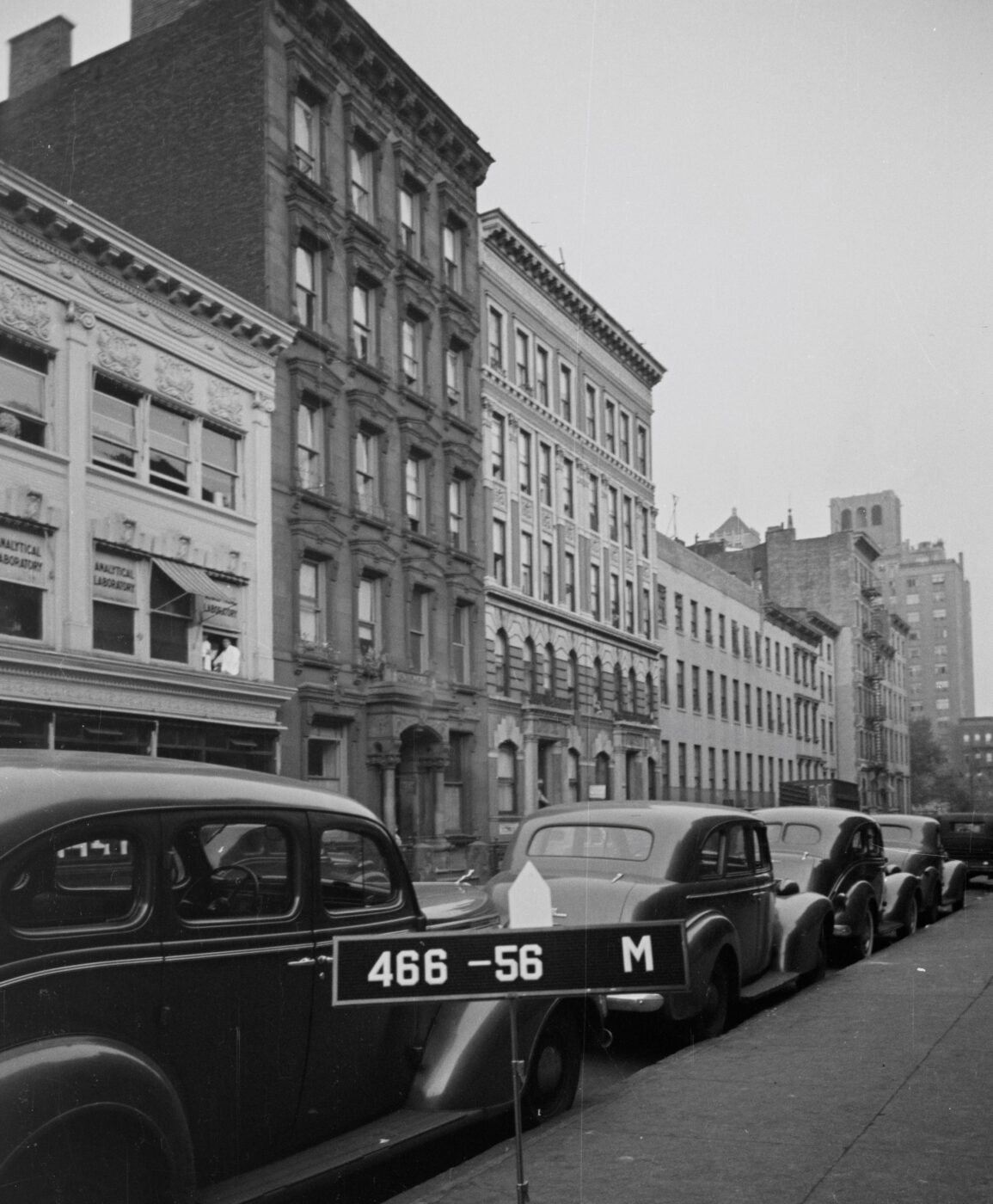
Returning to the broader view of the building, two things become apparent: First, this is a very fancy and highly ornamented building, especially for an industrial structure; and second, only a portion of the building features that ornamentation, indicating that the area seen at the left along 3rd Avenue may have been stripped of its details at some point, and/or that these were originally multiple buildings that were later combined. Were these initially built as apartment buildings, tenements, or even originally as smaller row houses? Reviewing historical maps and tax records to solve this mystery will be a task for another day!
A further observation is of the railway infrastructure in the foreground. This is the Third Avenue El, which offers us another interesting perspective of the building from the vantage point of its platform.
Check out more resources to research the history of neighborhood buildings here!
The last word looks like “CLINICS”