
‘It Was Such an Experience’: Richard Barone on Greenwich Village’s History, Artists, and Venues
Richard Barone’s vision of Greenwich Village began long before he moved here. Growing up in Florida, he was captivated by stories of its bohemian spirit and artistic ferment. That sense of the Village as an almost mythical place was reinforced when he met musician Tiny Tim as a teenager. Both eventual mentor and friend, Tiny Tim introduced Barone to older musical repertoires and planted the idea of making Greenwich Village his home. “[He] used to tell me, ‘Oh, Mr. Barone, the musicians walk the streets.’ I’m thinking, where else are they going to walk? But he meant they were like gods on Mount Olympus. Tiny Tim saw his peers as musical gods.”
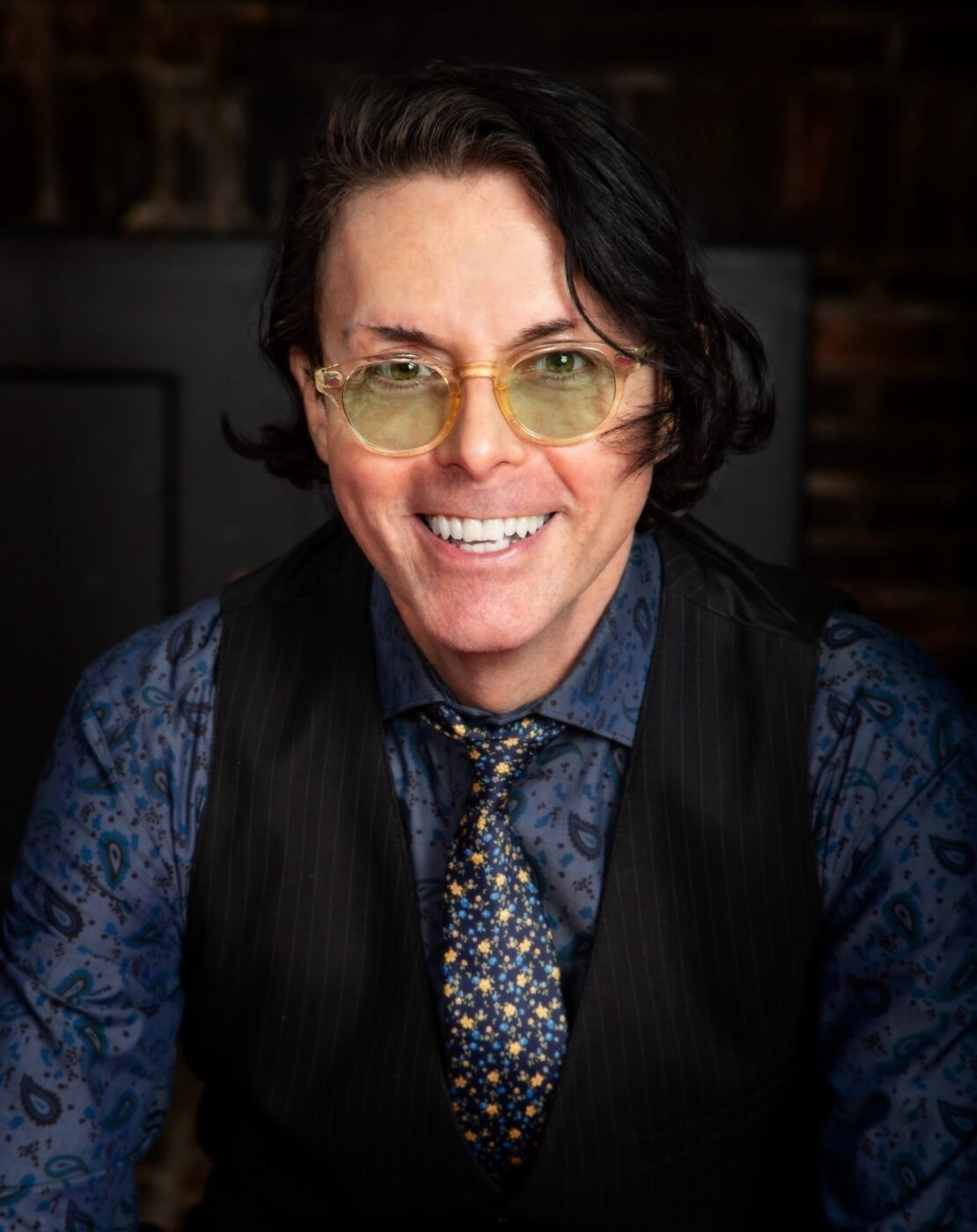
Barone talked about his journey to New York, the Village, and a lengthy musical career in Village Preservation’s latest oral history, the 72nd entry in our series designed to capture and preserve the first-person perspective of important histories from local artists, activists, business owners, community leaders, preservation pioneers, and other noteworthy residents.
Coming to the city, Barone first lived in Brooklyn, followed by Hoboken, from which his band, The Bongos, emerged in the early 1980s. But Barone felt the pull of the Village strongly, especially while working at Jimi Hendrix’s one-time studio on West 8th Street. “It was such an experience,” he said. ”But that’s so historic. That’s maybe my first like, touching and feeling the history of Greenwich Village, was recording and spending the night at Electric Lady Studios during the mid ’80s.” He’s lived in Greenwich Village since 1984, after moving to Perry Street and finding himself surrounded by the history he had long admired.

“I started meeting other Villagers,” he said, “who would start mentioning the history and be like, ‘Oh, do you know what used to be there? You know, who used to live here?’ That kind of dialogue made me love the Village more and more. As years progressed and … I realize there’s an endless amount of history to learn. And it’s all fascinating.”
Much of Barone’s fascination lay with the folk tradition and the venues that nurtured it. The opening of Gerde’s Folk City in 1960 marked a significant shift in the musical scene. “Pre-’60, there really wasn’t a legit music venue where you had to pay a little money to get in,” he said. “It was just like, you’d wander in off the street and maybe you throw some money in a hat.” Sites like the Vanguard and Cafe Society “were all basements. But the first legit, I think, folk-based club that was not a basement was Folk City.

“I think the Village never gets that credit. They never get that credit. Laurel Canyon in California gets a hell of a lot of credit for being the singer-songwriter center. Really, it’s all based on Greenwich Village. I mean, it’s almost the same people. … They transplanted what was happening in Greenwich Village and made a safer haven that they felt, I think, at the time there.”
He recalled the range of venues that flourished there: Café Wha, the Gaslight, the Bitter End, and those on MacDougal Street. These spaces became proving grounds for artists cited by Barone who would go on to shape American music. He pointed out how many began performing as teenagers, blending personal voice with political and social urgency, often hiding original songs among traditional ones until audiences were ready.
Barone is also insistent on broadening the narrative of Village music history. That story can often get reduced to Dylan and a few others, he felt, but there were many more people — Carolyn Hester, Paul Clayoton Janis Ian, Buffy Sainte-Marie, and Terri Thal, to name a few — who wrote and sang, booked gigs, recorded tapes, and launched careers. He underscored that life in the Village wasn’t glamorous for many artists: it was difficult and precarious, but it was also profoundly creative.
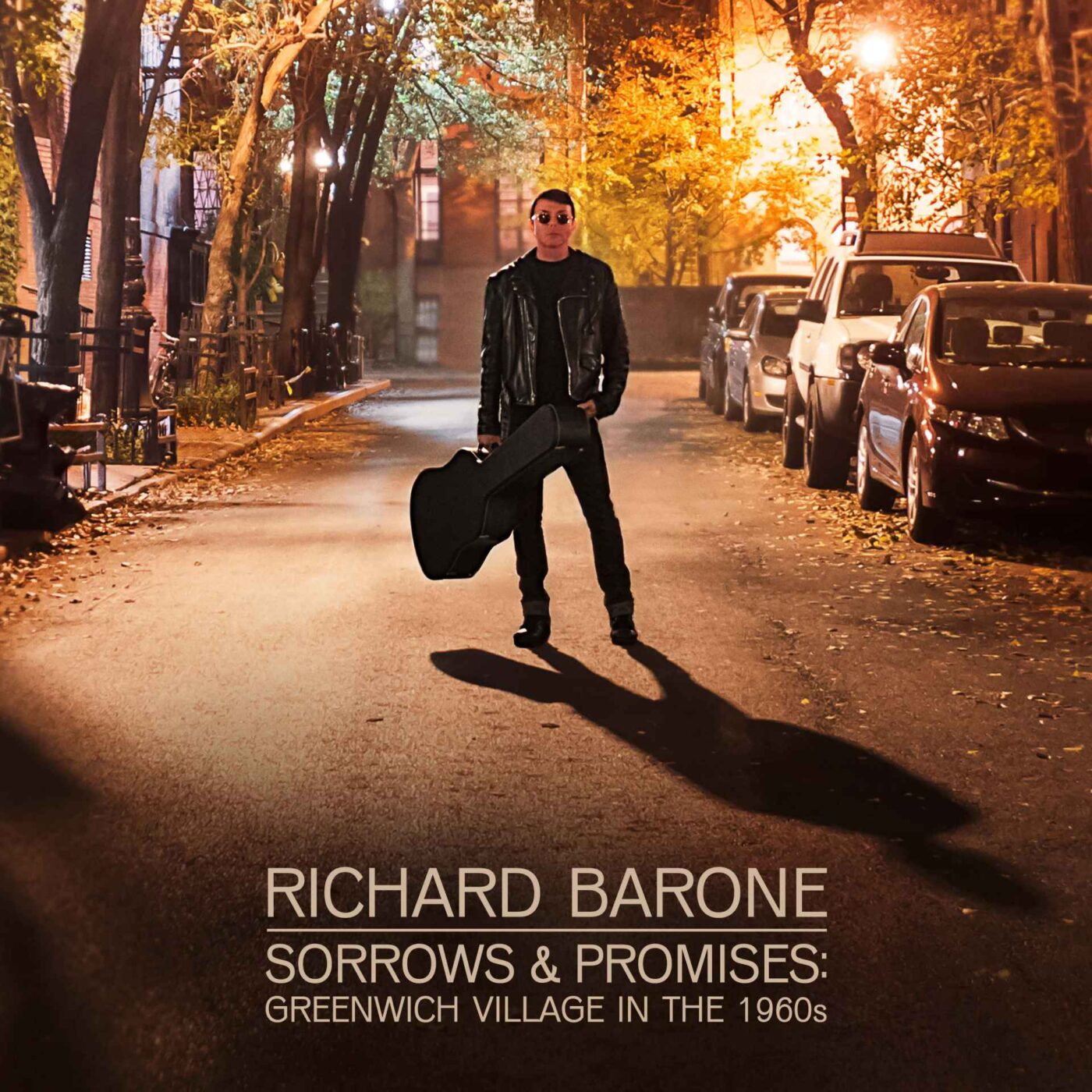
His deep immersion in this history led to his own projects. In 2016, after a performance of 1960s songs at City Winery, Barone was encouraged to record an album rooted in that era. Mitchell Cohen, a writer and A&R person at Columbia Records, said, “‘You should make a record about Greenwich Village in the 1960s.’ And I thought, oh, cool.” The result was the 2017 album Sorrows and Promises: Greenwich Village in the 1960s. His goal was to “show artists like, well, for instance, Buddy Holly living in Greenwich Village in the 1950s. Why? Because he was drawn by the art scene and poets.” In 2022 he released a book along a similar theme: Music + Revolution: Greenwich Village in the 1960s.
Barone remains reflective about how the Village continues to change. “Everything about the Village drew me in. It’s hard to say what didn’t draw me in,” he said. “The Village has a way of transforming and adapting and not losing too much. I said in the book, in my intro … it’s like a computer with an unlimited hard drive or something. It just keeps adding with very little deleting, you know, or that’s the idea. Unfortunately, people want to delete stuff.
“And that’s why Village Preservation is important to me is the idea of saving that, of not deleting too much, you know?”
Read Richard Barone’s full oral history here and see our full lineup of histories here.