
The High Line, ca. 1979
Since its opening to the public in 2009, the High Line has become an irreplaceable New York City landmark. Stretching from Gansevoort Street to 34th Street and 11th Avenue, the elevated park offers residents and visitors sweeping Hudson River views, carefully manicured landscaping, and plenty of places to lounge, sit, people watch, and take in the cityscape from an unusual vantage point. But before the flora, fauna, and fanfare, the High Line was nothing more than an above-ground freight train track line, built to carry food and cargo deliveries from uptown to downtown Manhattan.
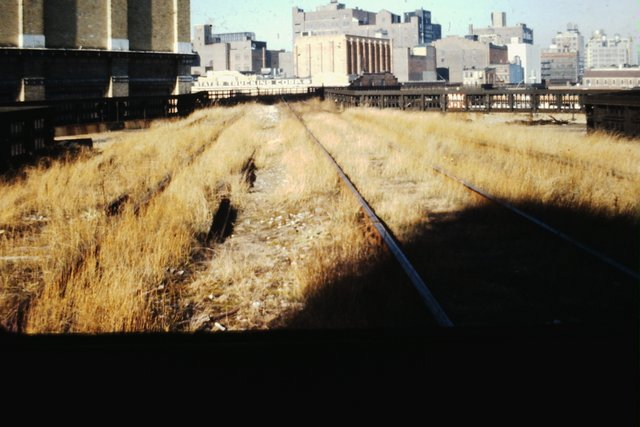
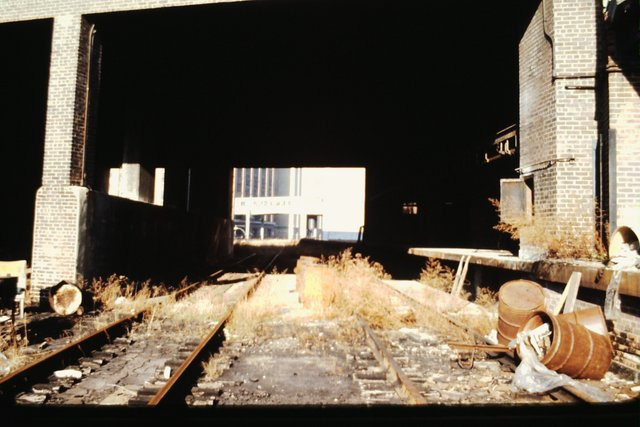
In between the two, it was a disused relic forgotten by most, considered an eyesore by many, and more than once on the verge of demolition. It was during this period that West Village architect Noah Greenberg created both an incredible photo documentation of the abandoned industrial railway that passed silently overhead and a plan for its rebirth as a public park, some 30 years before the idea came to fruition. Both that proposal and the photos that accompanied it, called “Manhattan Promenade” at the time, are now part of Village Preservation’s Historic Image Archive and our Neighborhood History Archive.
In the mid-1800s, the New York City Railroad ran freight trains down 10th Avenue. But sharing lanes with people and street traffic proved deadly, resulting in over 540 train-related deaths by 1910 (and earning 10th Avenue the grim nickname, Death Avenue). To address the danger, the city introduced the West Side Cowboys in the 1920s, a group of horsemen who trotted up and down 10th Avenue, warning people of incoming trains with red flags in the daylight and red lanterns at night.
In 1924, the city’s Transit Commission ordered the removal of street-level train tracks, thus sparking the need for the West Side Improvement Project. By 1933, the newly established West Side Elevated Line began accommodating trains above, rather than on Tenth Avenue. One year later, the line was fully operational, with trains transporting hot commodities like meat, dairy, produce, and even coal.
The line originally ran from West 35th Street (the site of today’s Jacob Javitz Convention Center) down to St. John’s Freight Terminal, located at 550 Washington Street, which extended south of Houston Street. Rather than follow the avenue directly overhead as many elevated passenger train lines did, the High Line ran alongside it, between city blocks and even through buildings, allowing for easy unloading. Notably, the High Line cut through the former Nabisco plant, now Chelsea Market, as well as the former Bell Telephone Labs, now Westbeth. In all, some 640 buildings were destroyed to make way for its construction.

As the twentieth century progressed, truck usage surged and freight transportation waned dramatically. And by the 1960s, the southern-most end of the High Line, from Spring to Bank streets, was demolished.
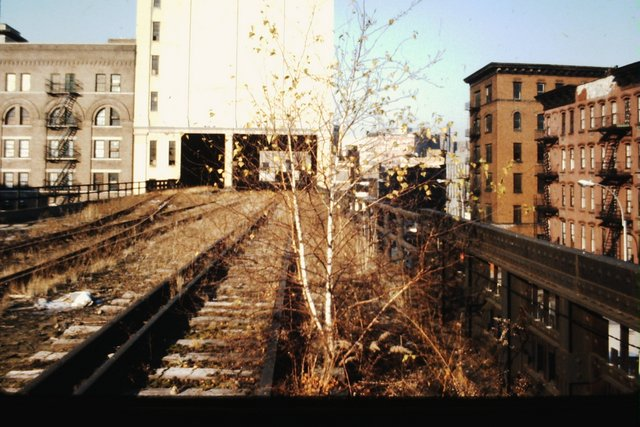
As the transition from rail to trucks for freight transportation continued, the High Line was used less and less, and by the 1980s, train traffic on its tracks ended. Plans grew for more and more of the structure’s demolition, with the segment from Bank to Gansevoort Street dismantled in 1989. But as the effort to destroy the structure grew, nature also began to reclaim the tracks, creating an accidental, unkept urban garden in the sky.
At the time of the High Line’s abandonment, Noah Greenberg lived on Hudson Street between 10th and Charles Streets with his wife Diane, her dog Dinky, and their daughter Becca.
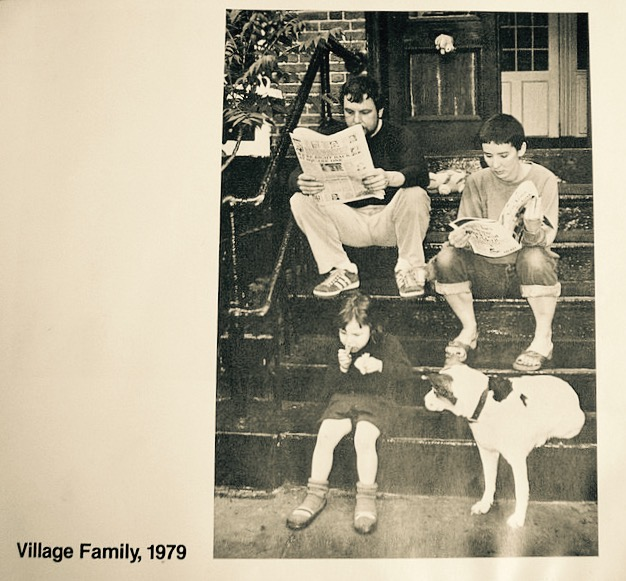
Greenberg would walk Dinky along the vacated train tracks, and found himself inspired by the unique views of both the Hudson River and Manhattan’s side streets—realizing what a quiet refuge the former freight line provided above the city bustle. Consequently, Greenberg envisioned a new future and proposed an elevated park be built upon the structural remains of the abandoned rail line, which he dubbed “the Manhattan Promenade.” This collection includes photos he took and the proposal he submitted to Ruth Wittenberg’s Greenwich Village Historic Preservation Group. To view the full original proposal, with text and map, visit our Preservation History Archive here.
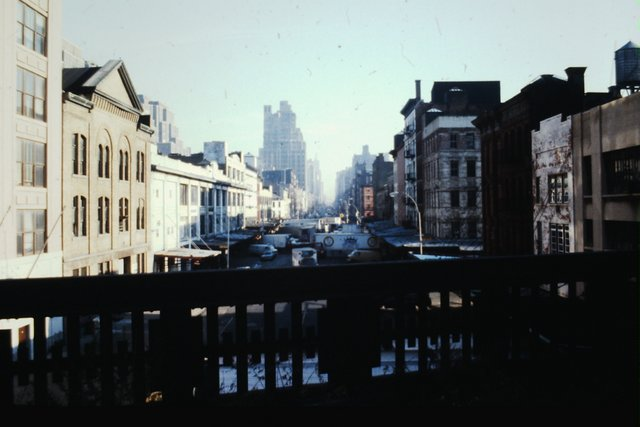
While Greenberg’s Manhattan Promenade proposal was well-received in some quarters, it never came to pass. In 1999, High Line owner CSX Transportation approved a very similar proposal to Greenberg’s, and construction of the park began in 2006.
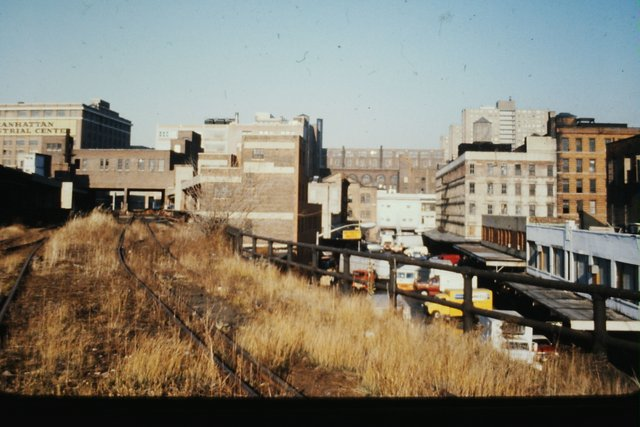
The High Line offers its visitors a unique glimpse at both Manhattan’s built and natural environment. Elevated views of our neighborhoods’ quaint side streets and the Hudson River are not necessarily available to everyone. The High Line, however, brings this perspective back to the people. Enjoy the rest of Greenberg’s image collection here, and explore the rest of our Image Archive here.