
From Stables to Studios: Carriage Houses in the Village
Before the subways, the skyscrapers, and even the cut through of Seventh Avenue South, New York was once a horse-drawn city. Little remains from that equine era, but traces of the past can still be seen through the buildings and homes of our neighborhood. In honor of Archtober, New York City’s month-long festival of architecture and design, we are diving into our collection of designation reports and focusing on a few of the carriage houses and quirky structures that remind us of this bygone age.
Carriage homes, stables, and servant quarters became popular in the early 1800s, used by the professional class who lived in the neighborhood (think of them as the equivalent of the modern-day garage). With industrialization, urbanization, and shifting cultural attitudes, the original use of these structures became obsolete. Thus, many of these carriage houses and stables were revamped into studios, lofts, or apartments.
93 Perry Street
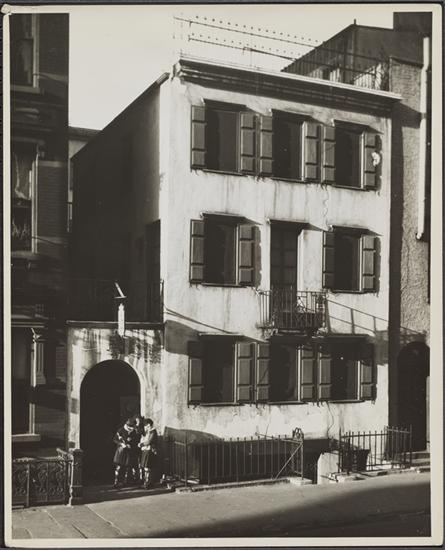
Beginning in 1811, Greenwich Village local and carpenter-builder Abraham A. Campbell leased the lot at 93 Perry Street for 21 years. In 1827, he built on the land, constructing a small structure for his woodworking business at the rear of the land plot. A year later came the front house which faces the street.
Aside from its pearl-white facade, perhaps most noticeable about 93 Perry is its arched passageway into the home’s backyard. Clients accessed Campbell’s woodworking shop by a narrow “horse walk” on the left side of the house. It was here Campbell lived and worked until 1832, when he moved not far to 12th Street. Consequently, he sold the property “and the buildings thereon.”
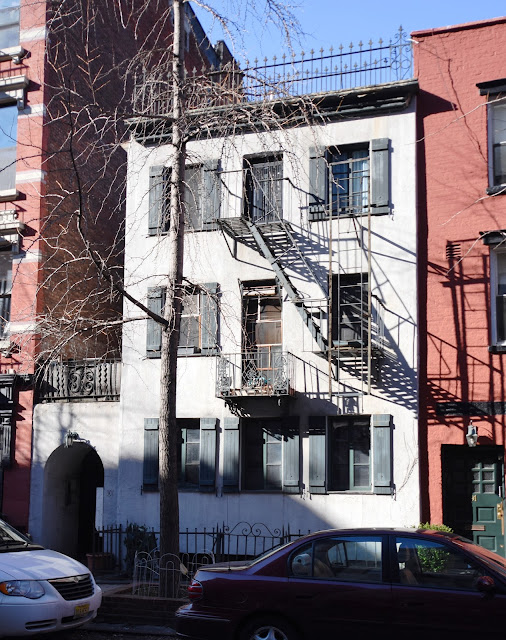
Although architecturally modest and simple, 93 Perry remains one of the West Village’s most eye-catching homes, adorned with a series of simple yet charming features. From the front, the elongated window on the second story is accompanied by a small cast-iron balcony. A high, two-tiered iron railing, above the cornice, runs along the width of the building. Through the archway to the front building’s left, crowned by an iron railing, is what’s perhaps most unique about the house — a hidden courtyard.
In August 1924, the now obsolete New York Evening Post wrote of Perry Street’s secret, in its regular column entitled “Little Sketches About Town.” Captivated by the article’s description of the quaint wooden buildings and garden, author H. P. Lovecraft took a visit to 93 Perry Street and soon after made it the setting for the end of his story, “He,” where the narrator finds himself “at the entrance of a little black court off Perry Street.”
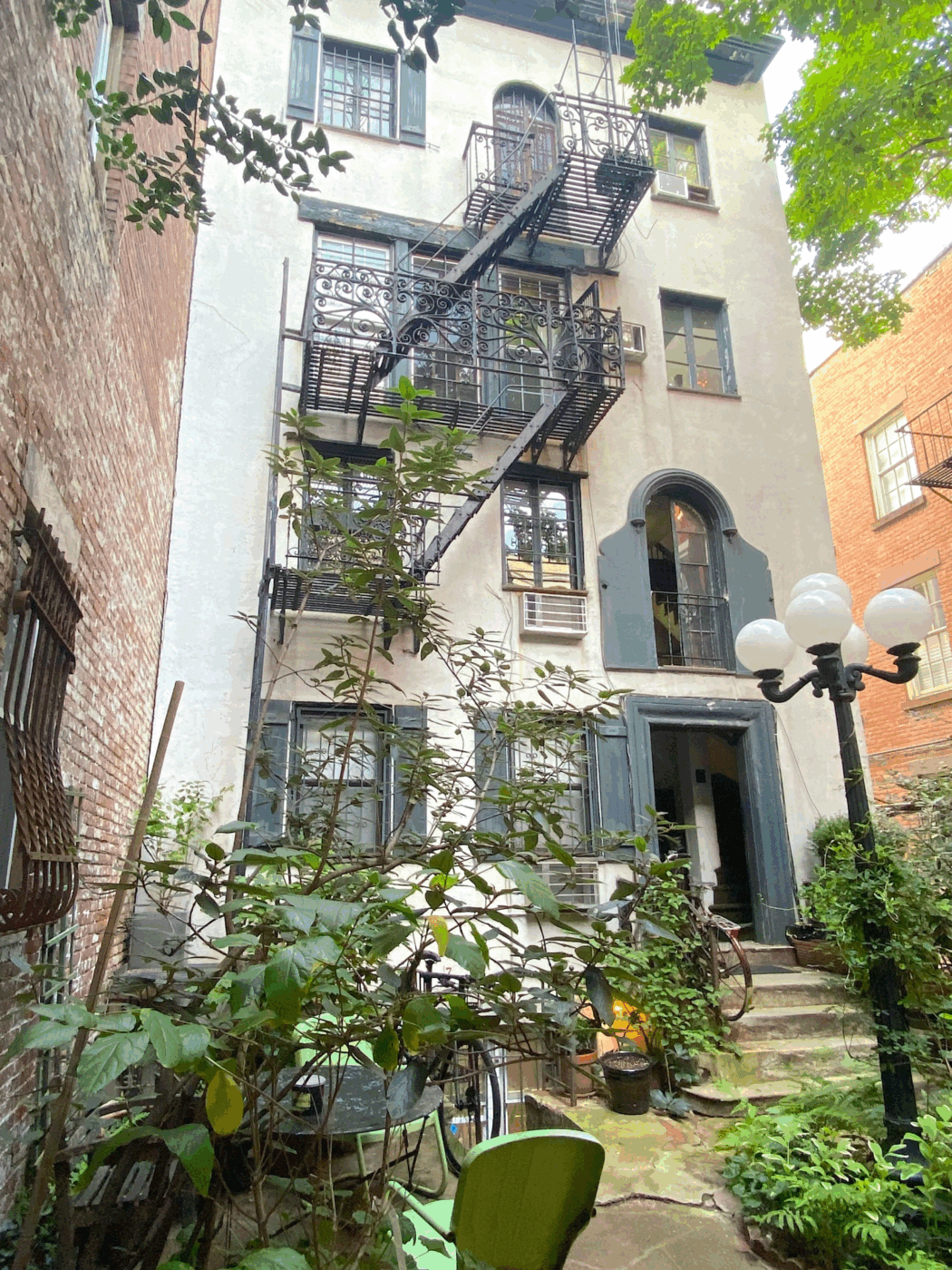
It was during this time many of the homes in Greenwich Village were remodeled into studios and renovated to have Mediterranean or Tudor facades, reflecting the artistic and creative cultural shift our neighborhood experienced in the early twentieth century. In 1927, builders MacKathryn & O’Sullivan bought 93 Perry Street and transformed Campbell’s former woodshop into a series of studio apartments. For the front main house, the entrance was moved underneath the home’s left side archway, and the building was coated in Stucco—giving it a Spanish or Mediterranean feel.
246 East 5th Street
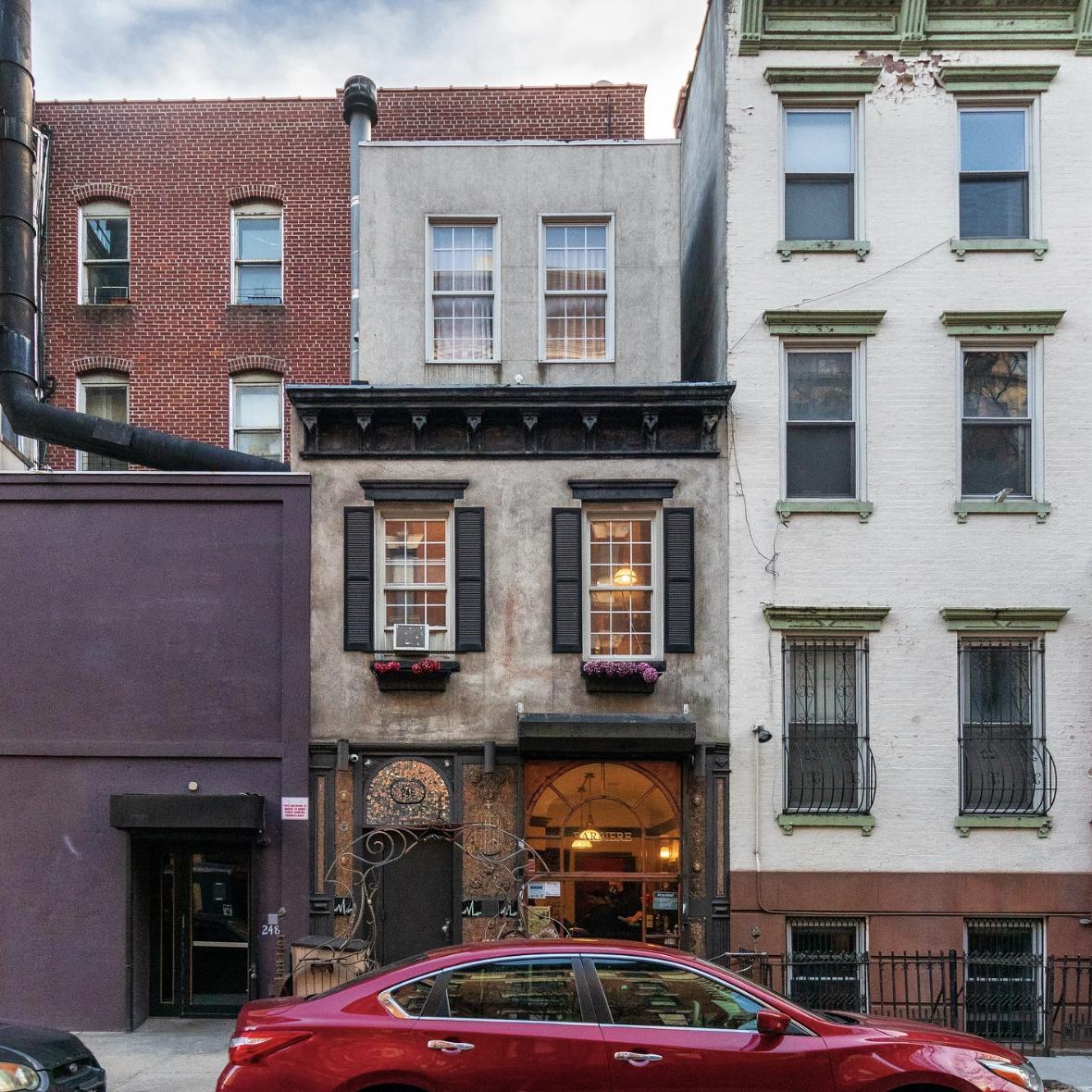
While there’s not much known about the three-story, mixed-use building at 246 East 5th Street, its unique character never fails to catch our eye. It’s speculated that the building was originally built as a carriage house for the dwelling at 85 Second Avenue, but was later separated and given its own lot number. Originally owned by Jacob Finck, the home was constructed in 1882-83 and adheres to an altered neo-Grec style, but has undergone ample renovations and transformations since being built. Most notably, a third story was added to the structure in the late twentieth century, as was a non-historic front gate.
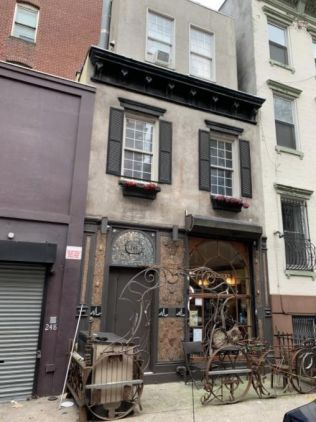
Originally a private residence, 246 East 5th Street is a tangible example of the evolution of the East Village. Now a restaurant and an art gallery, subtle hints of nineteenth-century architecture are still noticeable today as seen through the paneled, cast-iron columns that bookend the front of the building’s first story. The building was landmarked as a part of the East Village/Lower East Side Historic District on October 9th, 2012.
336 West 12th Street
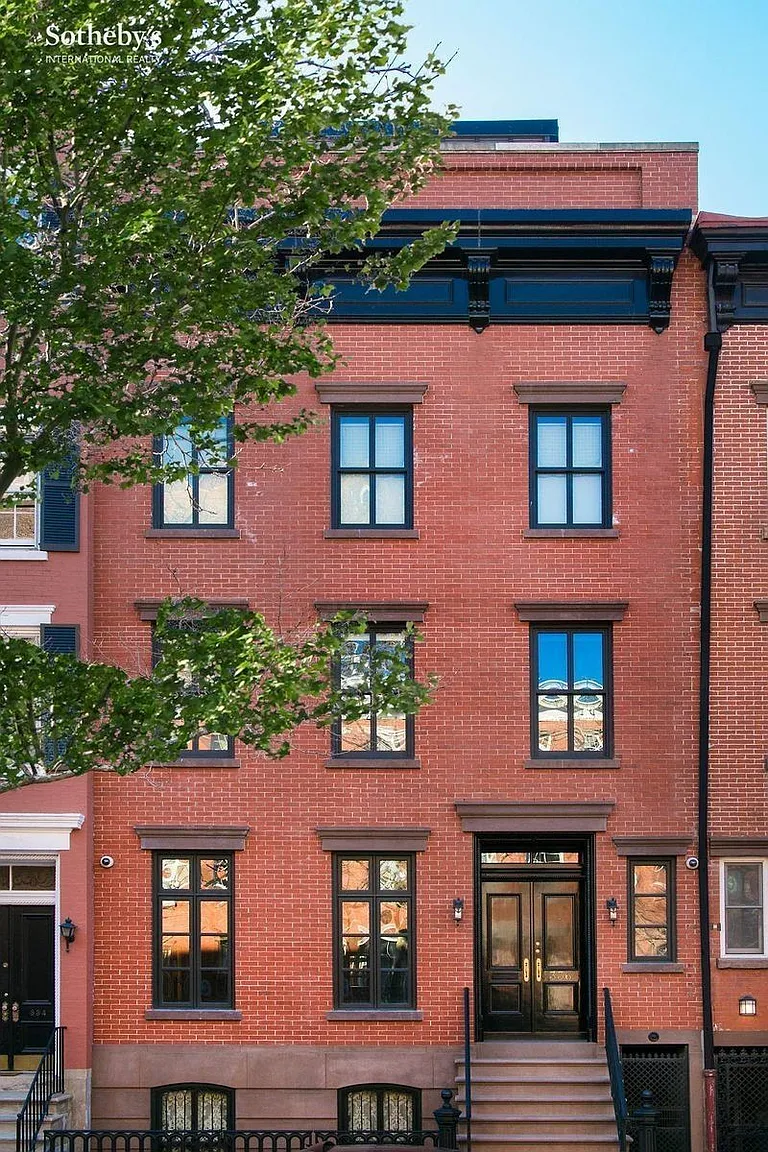
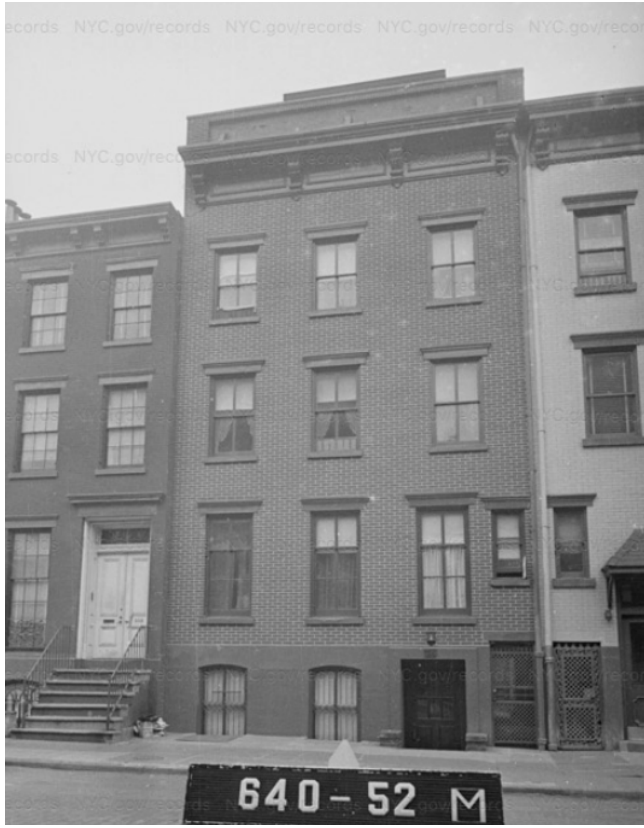
The Italianette, red-brick townhouse found at 336 West 12th Street was built concurrently with the homes at 338 and 340 West 12th Street in 1859-60. Originally the residence of Samuel B. Ferdon, 336 West 12th Street has undergone quite a bit of change over the past 150 years. For example, the original stoop at 336 was removed to allow for a basement entrance. And all three houses once had passageways leading to buildings at the rear of the lot, with the iron gates leading to the alleyways at Nos. 336 and 338 designed in an open mesh pattern—perfect for horses and buggies.
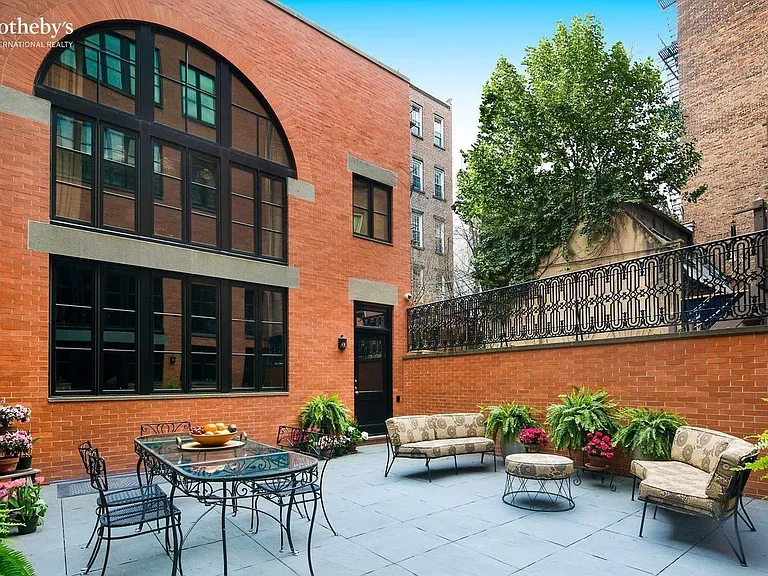
Today, Ferdon’s nineteenth-century carriage house no longer stands. In its place is a two-story structure, used as a home office (or, as we like to call it, an urban stable). Pictured below is a 1940 tax photo of the West 12th home—notice the difference in front entrance!
These carriage houses and stables, documented in landmark designation reports, serve as reminders of how our neighborhoods have evolved while retaining a connection to their past. Go on your own deep dive, exploring the architectural history of our neighborhood through our comprehensive collection of designation reports here.