
Intersecting Histories: The Corner of Second Avenue and 12th Street
A multitude of NYC histories, cultures, and architectural styles converge on the corner of Second Avenue and 12th Street in the East Village. Each building that occupies a corner of this notable intersection has a distinct aesthetic and cultural importance to the neighborhood. Today, we will take a look at these four buildings, detailing the unique narratives held within each of their histories.
To learn more about this street corner, as well as dozens of others in the East Village, check out our incredible East Village Building Blocks Website.
181-189 Second Avenue
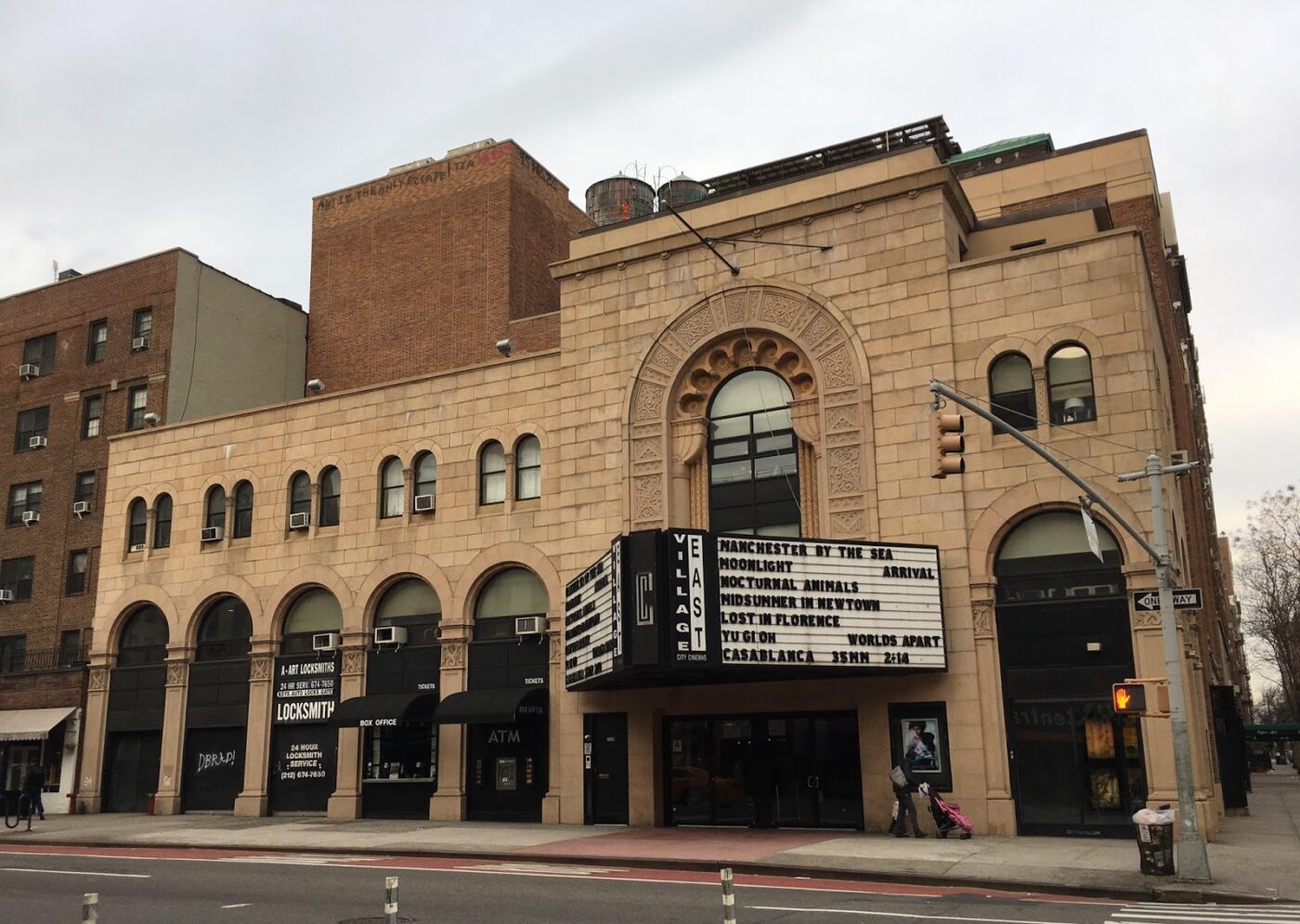
Currently housing Angelika’s Village East cinema, 181-189 Second Avenue was built in 1925 as the Yiddish Art Theater. Funded by Brooklyn lawyer and Jewish community leader Louis Jaffe, the theater was designed as an elaborate, 1,265-seat live theater for the Yiddish Art Theater company, which was directed by Maurice Schwartz. The interior was designed in the Moorish Revival style that was popular in synagogues at the time, and included a forty-foot ornamental ceiling with a spectacular Star of David in the center that is still present today.
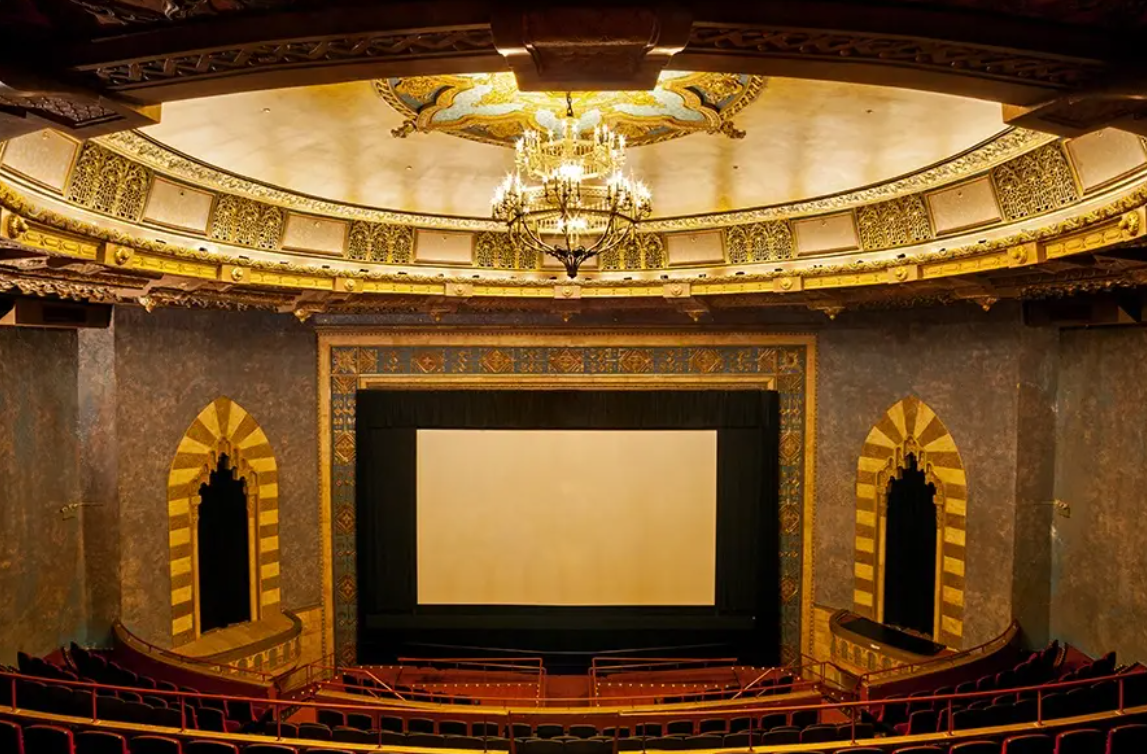
In the first few decades of the 20th century, this stretch of Second Avenue was referred to as the Jewish Rialto because of the many Yiddish language theaters and businesses connected to Jewish entertainment. The Yiddish Art Theater housed elaborate productions from Maurice Schwartz and his troupe, including The Tenth Commandment in 1928, which featured dances by Michel Fokine and sets by Tony-award-winning Boris Aronson.
Schwartz’s loyal following and festive, imaginative plays attracted renowned guests such as Albert Einstein, Charlie Chaplin, George Gershwin, and former New York City mayor Fiorello LaGuardia. In 1930, the space was occupied by Molly Picon’s Folks Theater, named for Molly Picon, one of the greatest female stars of the Yiddish stage. The building went through several names and incarnations throughout the mid-1900s, including The Stuyvesant Theater, a film exhibition house, and a stint as the East Village landmark The Phoenix Theater.
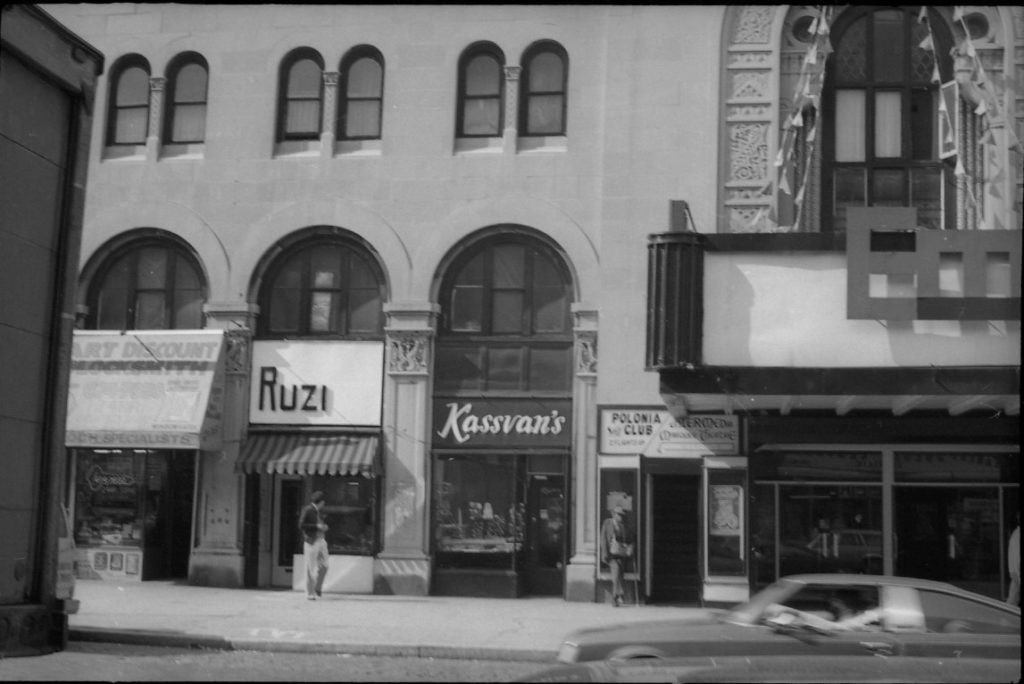
In 1991, the theater was restored and converted into the Village East Cinema, and in 1993, the interior and exterior were designated as landmarks by the New York City Landmarks Preservation Commission.
193-195 Second Avenue
North of the historic Yiddish Arts Theater along 12th Street is 193-195 Second Avenue, a unique six-story New Law tenement building, constructed in 1902.
Designed by Harde & Short Architects, this tenement originally housed 17 families over ground-floor shops. With its heavy window lintels, curved corners, and bracketed cornice, the corner building, named Onyx Court, stands out from the converted row houses and smaller tenements on the block. This nicely ornamented facade, coupled with the larger apartments in the building, attracted a higher-class tenant than the smaller buildings.
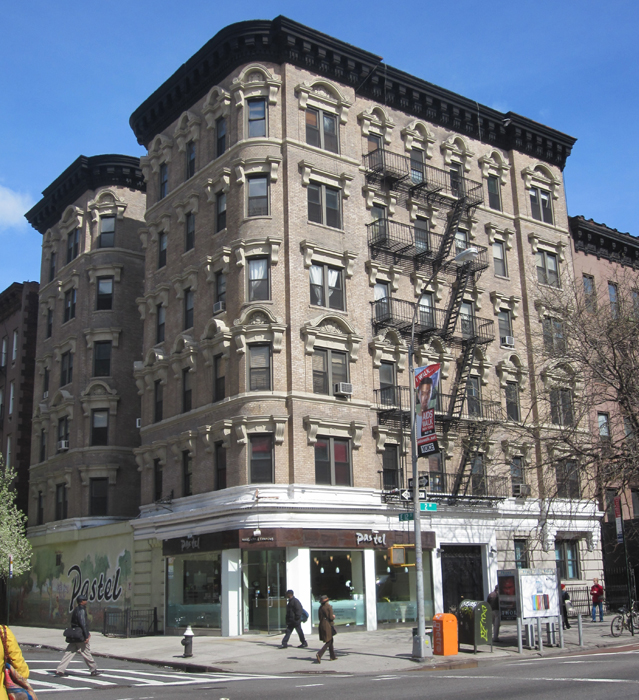
Currently, the New York chain coffee and flower shop PlantShed occupies the corner storefront of this tenement building.
192-196 Second Avenue
Just across Second Avenue from Berstein & Bernstein’s brick tenement is 192-196 Second Avenue, a building with notable nightlife history.
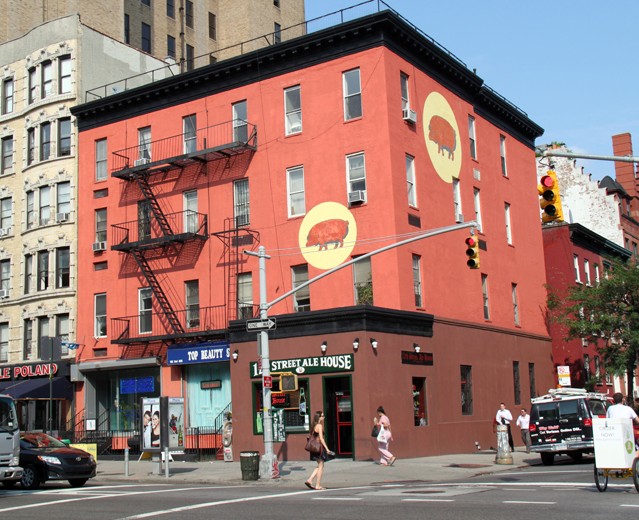
In 1852 this parcel of land, split into three buildings, was owned by James Robertson. These buildings, likely constructed as single-family row houses, were later tenementized. Each held fifteen furnished rooms in 1939. In 1967 these buildings were combined into one four-story apartment building with one staircase and new apartments throughout. The present building is four stories in height and six bays wide on its primary facade on Second Avenue. The brick cladding has been stuccoed, and the cornice is intact.
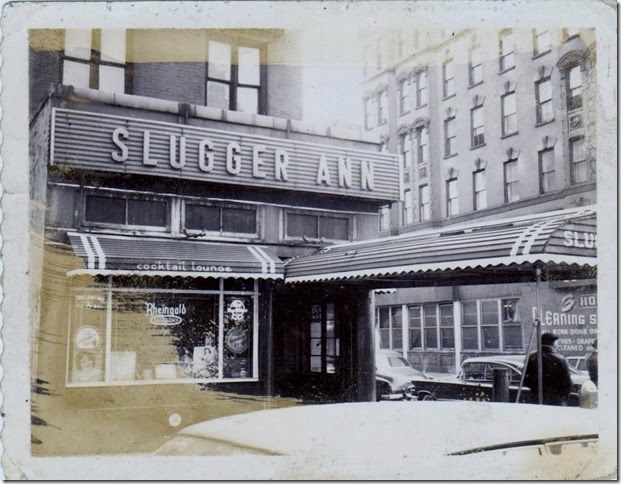
From the 1950s until 1980, this building was the home of Slugger Ann’s, a bar frequented mostly by working-class patrons, especially truck drivers and laborers. The dimly lit establishment had a few tables and was run by Slugger Ann, born Ann Uglialoro, described as a charismatic, feisty woman with bleached hair.
Slugger Ann was the grandmother of Jackie Curtis, a “superstar” in Andy Warhol films, and raised Curtis in an apartment in this same building. Later in life, Curtis, Holly Woodlawn, and Candy Darling (who were also Warhol “superstars”), would sometimes crash in a studio apartment here when they needed a place to stay.
After Ann’s death in 1980, Slugger Ann’s closed, but has continued to operate as a bar since. For many years, it was Dick’s Bar, a popular East Village gay bar, and more recently has become the 12th Street Ale House.
188 & 190 Second Avenue
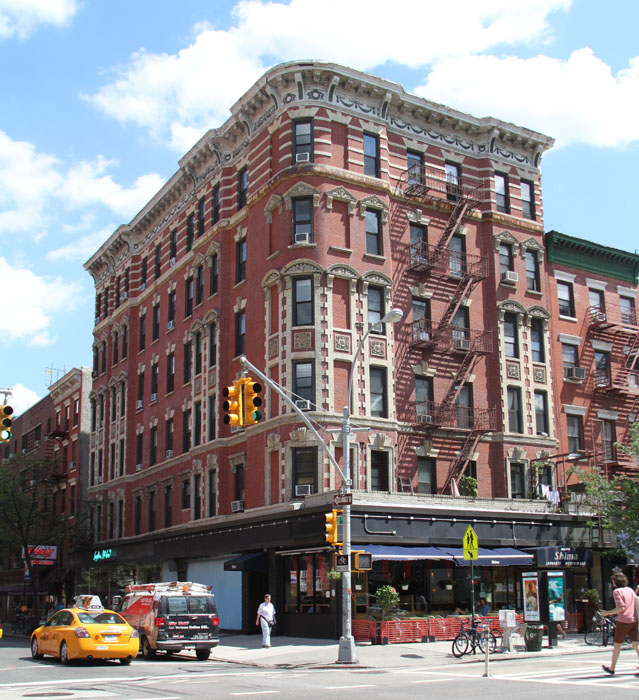
Rounding out the corner of Second Avenue and 12th Street is 188/190 Second Avenue. This six-story new law brick tenement was erected by architects Bernstein & Bernstein in 1903 for commercial and residential use. The first story was initially occupied by Café Royal, one of the most popular social venues for Yiddish theater performers, as well as other Jewish writers, celebrities, and characters during that time. Paul Muni, Jack Benny, David Sarnoff, Fannie Hurst, Eddie Cantor, Will Durant, Carl Van Vechen, and Sarah Adler were all Café Royal regulars.
The building shares many similar elements with other works by Bernstein & Bernstein. Like many other new law tenements, it sits on a corner lot. Its current facade features a curving, projecting bracketed cornice with a garlanded frieze, a chamfered corner, terra-cotta panels, belt courses, window lintels with keystones, triangular and segmental-arched pediments, decorated panels beneath fourth-story windows, brick quoins, elaborate window surrounds, and a molded cornice above the first floor. The rounded window pediments connect the third- and fourth-floor windows in continuous enframements. The storefront has been reconfigured and refaced. Currently, Five Guys occupies the ground-floor storefront.
Want to learn more about the history of every building in the East Village? Check out our incredible East Village Building Blocks Website.
I live very close to all those buildings but I’ve never looked up to see those buildings. Some of them look so wonderful as oppose to new ones particularly built in last 30 or 40 years.
Thank you for this post.