
An Artistic Way: Basquiat and Manhattan’s Newest Co-Named Street
On October 21, the stretch of Great Jones Street between Lafayette Street and the Bowery in NoHo was officially co-named Jean-Michel Basquiat Way to recognize the artist whose explosive creativity helped define downtown Manhattan in the 1980s. The honor highlights not only Basquiat’s extraordinary artistic legacy but also the profound connection between his life and the street where he lived and worked during the height of his career.
The crowd gathered in front of 57 Great Jones Street, the artist’s one-time home and studio, with a “Welcome to Jean-Michel Basquiat Way! … As Jean-Michel Basquiat once said, ‘I don’t think about art when I’m working, I try to think about life.’ Today, we honor a man whose art reflected life in all its complexity — the beauty, the struggle, the truth.”
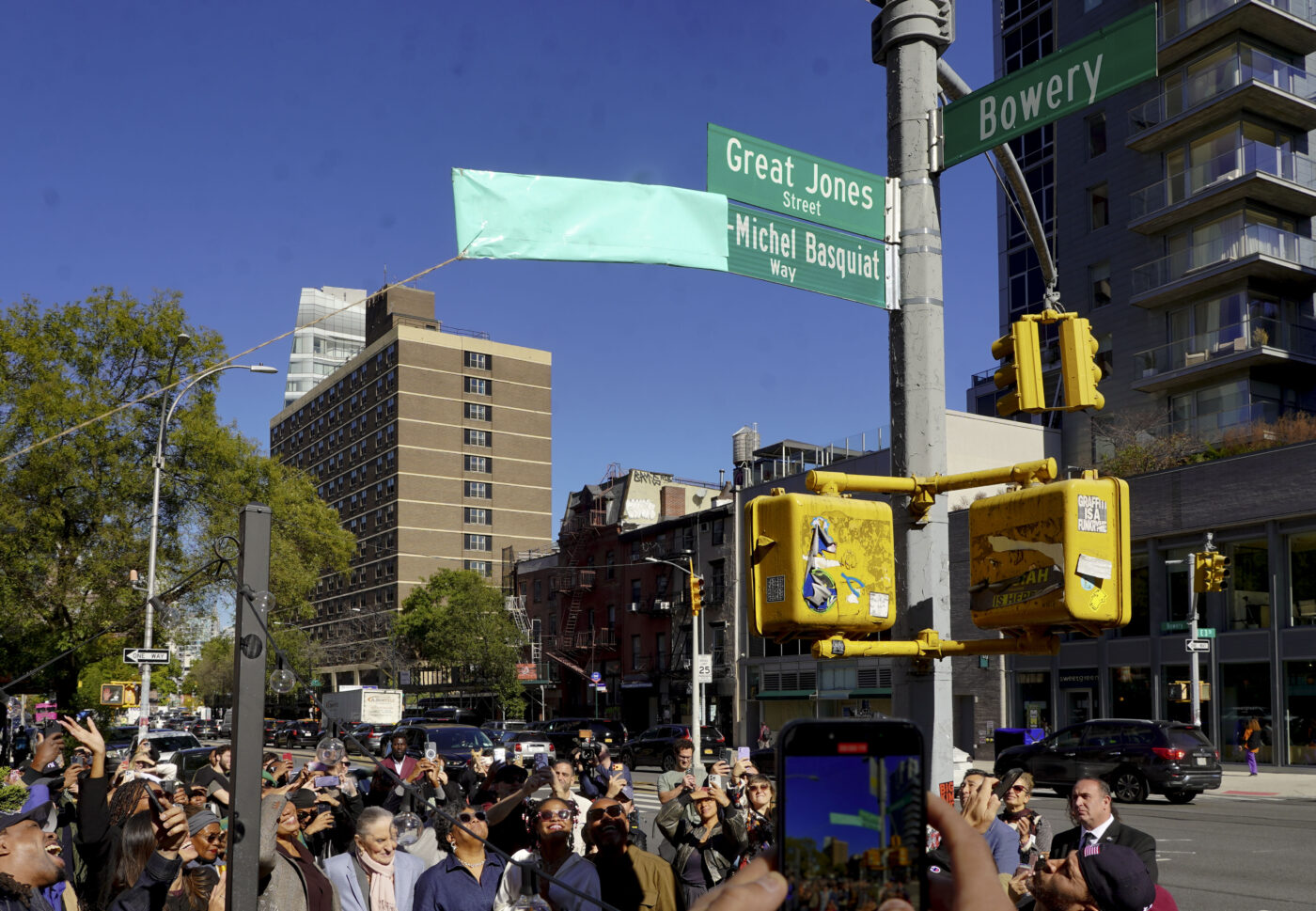
Basquait joins a long list of noteworthy residents from NoHo, Greenwich Village, and the East Village to be recognized with a co-named street — read more about those honorees here.
No. 57 Great Jones Street was owned by Andy Warhol, legendary artist, provocateur, and both friend and mentor to Basquiat. Basquiat moved into the two-story building’s loft in 1983. Within the raw, industrial space, he produced some of his most important works: paintings that bridged street art, fine art, and personal narrative in a visual language all his own, including Defacement (The Death of Michael Stewart) from 1983.
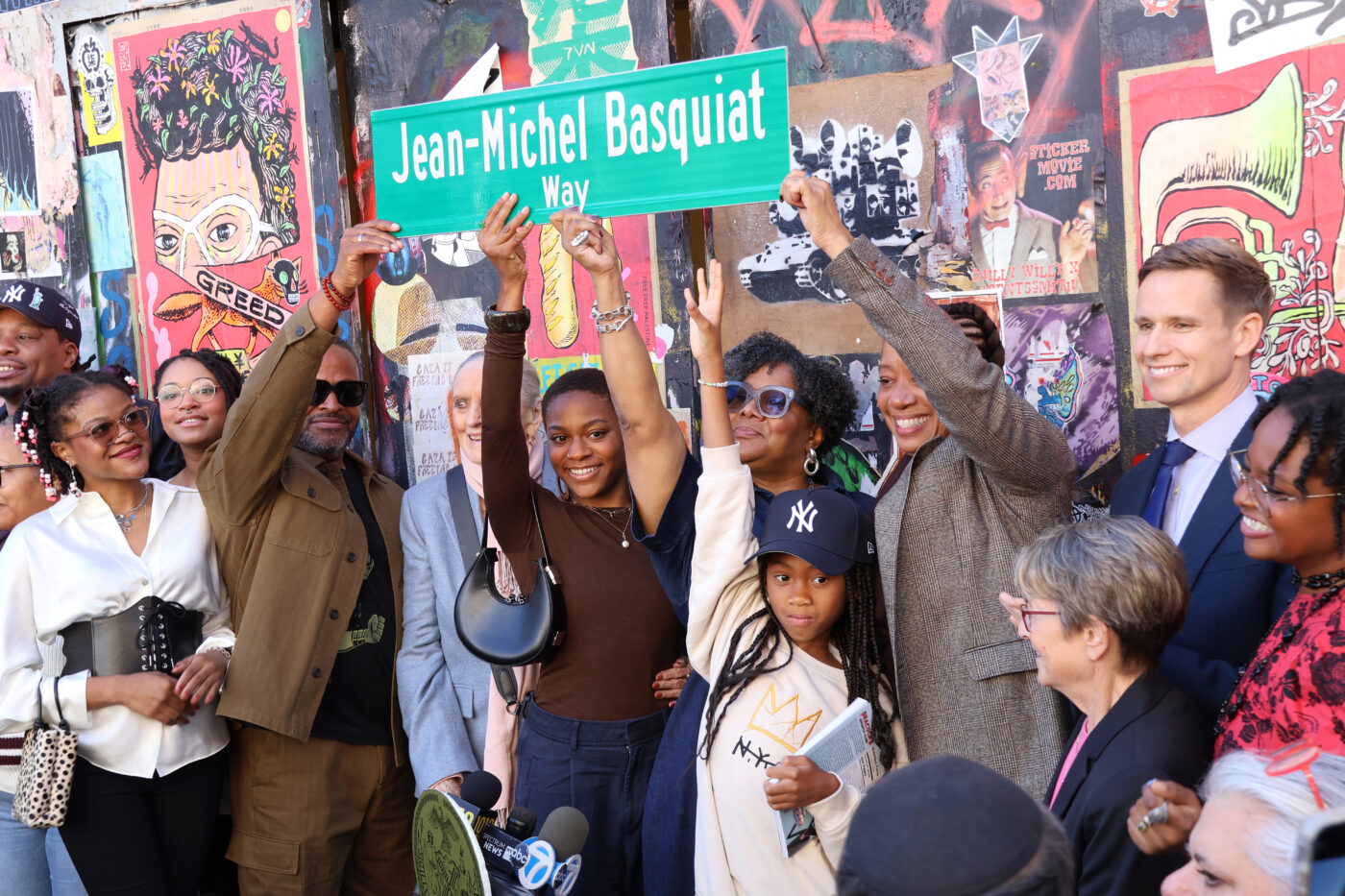
Basquiat’s work drew from every corner of the city’s cultural energy. He absorbed the rhythms of the streets, the visual language of graffiti, the sounds of hip-hop and jazz, and the urgency of social and racial commentary. In the early 1980s, he emerged from the East Village art scene, quickly becoming one of the most visible figures in contemporary art, a young Black artist who broke through a largely white, elite art establishment with uncompromising force. His paintings were filled with vitality, history, and critique, speaking to the city that shaped him and to the world beyond.
His years in that loft were a period of intense productivity, creative collaboration, and international recognition, as well as the struggles that often accompanied his rapid rise to fame. Sadly, it’s also where he died of a drug overdose at the age of just 27 in 1988.
“The fact that, in 2025, in the context of everything that’s going on, he would be honored in this way by New York City is profoundly meaningful and impactful to our family,” Lisane Basquiat told The New York Times. “We appreciate the recognition.”

The co-named street is not the first time signage on the block has highlighted Basquiat’s achievements. In July 2016, Village Preservation installed one of our 27 historic plaques on the former studio at 57 Great Jones Street. Learn more about the artist’s contributions to the 1980s downtown scene, New York’s art world, and more here and here.