
Designing an Artistic Village: Richard Morris Hunt’s Gilded Age Legacy
Richard Morris Hunt, born on on October 31, 1827, is usually remembered for the grandiose mansions, museums, and monuments of the Gilded Age such as the Lenox Library, grand Fifth Avenue homes, the pedestal of the Statue of Liberty, and the façade of the Metropolitan Museum of Art. But his fingerprints are also on a quieter, more intimate part of Manhattan: the streets and cultural life of Greenwich Village and nearby neighborhoods.
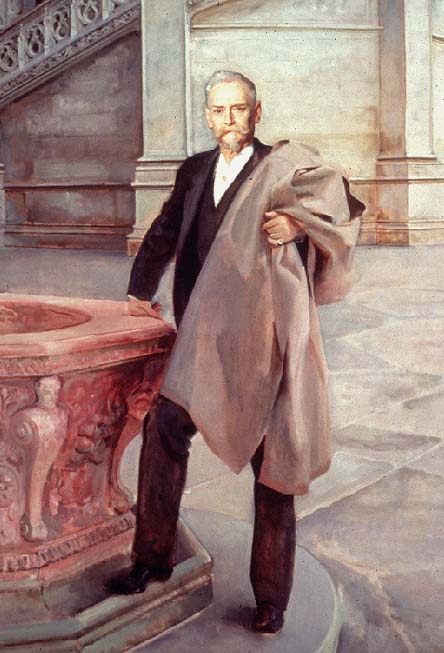
Hunt was the first American to train at the École des Beaux-Arts in Paris; on his return he became the best-known American architect of his generation, combining classical training with the ambitions of wealthy patrons. His résumé includes public monuments (he designed the pedestal for Bartholdi’s Statue of Liberty), major cultural buildings, and private châteaux for the newly affluent. That national prominence helps explain why his relatively modest Village commissions have outsized importance in the neighborhood’s history.
The single most important link between Hunt and Greenwich Village is the Tenth Street Studio Building, at 51 West 10th Street (between Fifth and Sixth Avenues). Commissioned by James Boorman Johnston and completed in 1857–58, the building was designed by Hunt specifically to house artists’ studios and a central gallery — a programmatic use that was revolutionary at the time. Its domed central gallery with radiating studios was not merely an architectural flourish: it created a social and commercial hub where artists, dealers, and collectors met, exhibited, and sold work. Within a few years the building had become the organizational center of New York’s art world, and the presence of so many artists helped push Greenwich Village from a semi-rural suburb into the city’s most important artistic neighborhood.
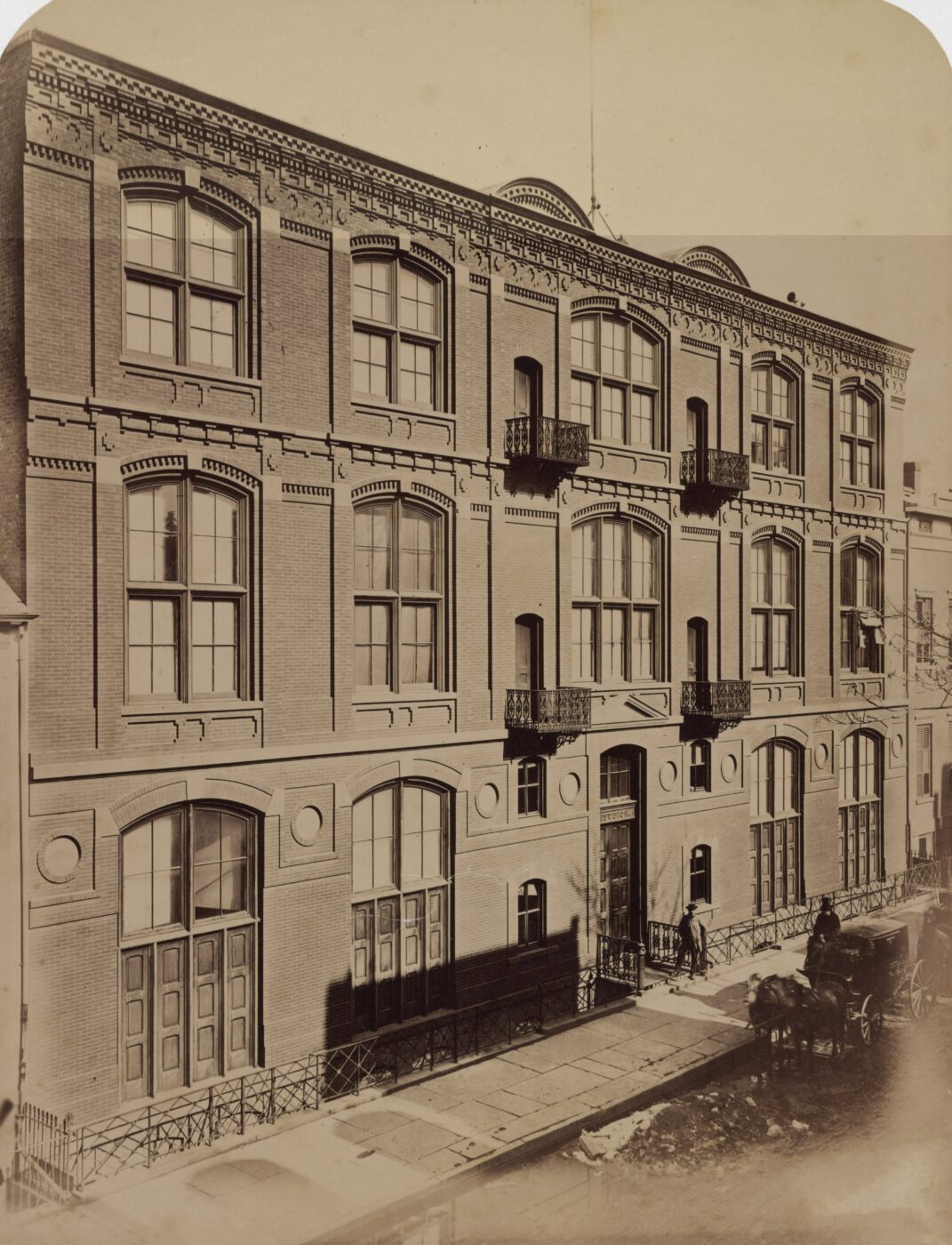
A photograph in the Library of Congress shows Hunt himself standing in front of the Tenth Street Studio Building, underlining his personal attachment to the project. The building’s image — repeatedly reproduced in 19th-century illustrated papers and later by photographers such as Berenice Abbott — testifies to its symbolic role in the cultural life of the period.
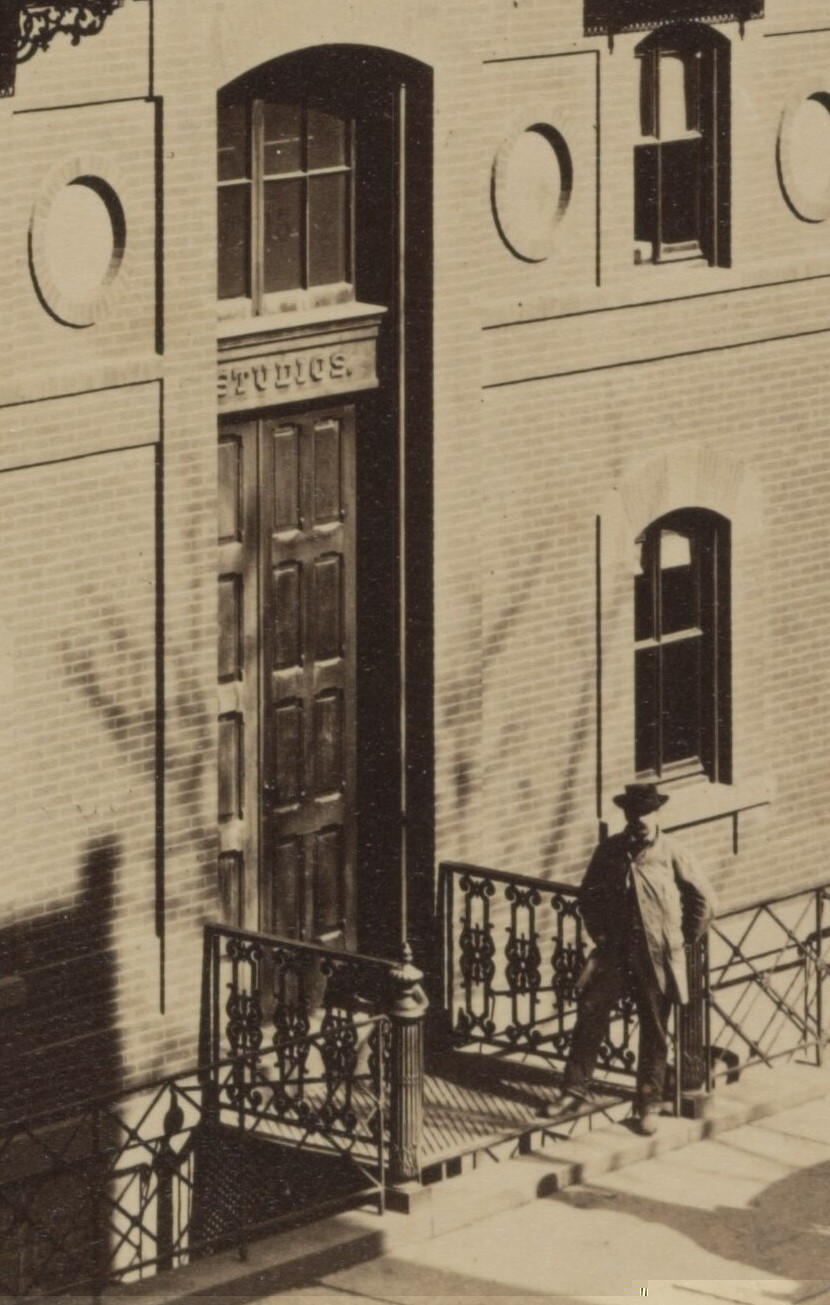
Hunt did more than design the structure: he used space within it. His studio at the Tenth Street Building became, in effect, the first American architectural atelier — a place where young architects apprenticed and learned the Beaux-Arts methods that Hunt had absorbed in Paris. That teaching role helped seed Beaux-Arts training throughout the United States, because his pupils went on to start programs, offices, and teaching traditions that shaped American architecture for decades. In other words, the Tenth Street Studio was both an artists’ incubator and a birthplace for professional architectural education in America.
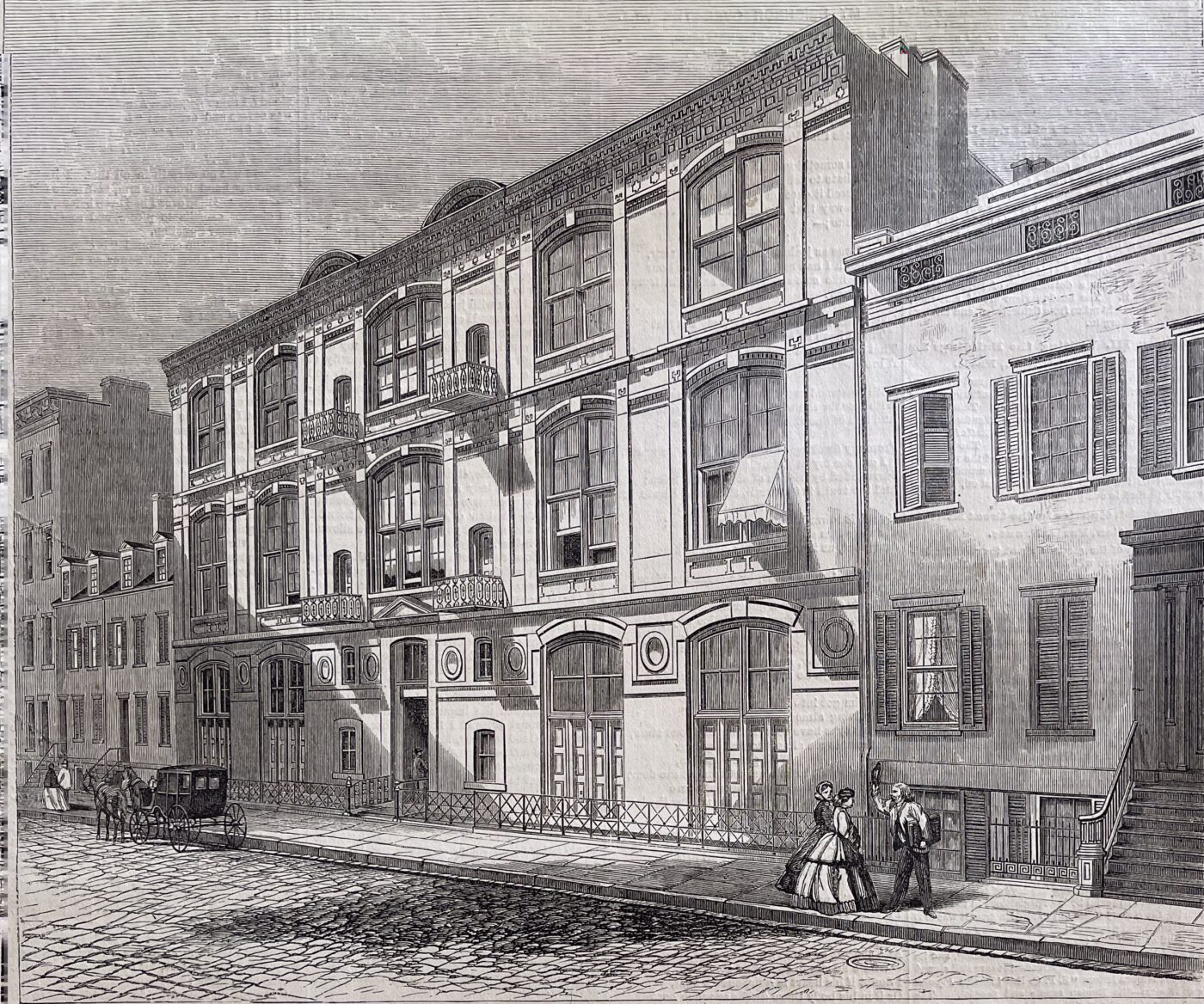
Because the Studio building concentrated painters, sculptors, and the galleries that served them, it changed the character and economy of nearby streets. Galleries, frame makers, printers, and small dealers clustered in and around the block; salons and exhibitions drew visitors; and the neighborhood developed an identity as a cultural quarter that lasted into the 20th century and through today. Even though the original building was demolished in the mid-20th century, historians consistently point to the Tenth Street Studio as critical to the Village’s emergence as an artists’ mecca.
Hunt’s work in the area wasn’t limited to artists’ housing. In the late 1880s he designed the Jackson Square Library (constructed starting in 1887 and opened around 1888) at 251 West 13th Street, a small but richly detailed brick-and-stone building commissioned by a member of the Vanderbilt circle. The library’s picturesque, Flemish-inspired façade and domestic scale made it an ornament to the block and demonstrated Hunt’s ability to work at the neighborhood scale — creating civic buildings that had charm and civic purpose without the monumental scale of his wealthy clients’ châteaux. Today the building survives (having been adapted over time) and remains one of the more tangible pieces of Hunt’s Village legacy.
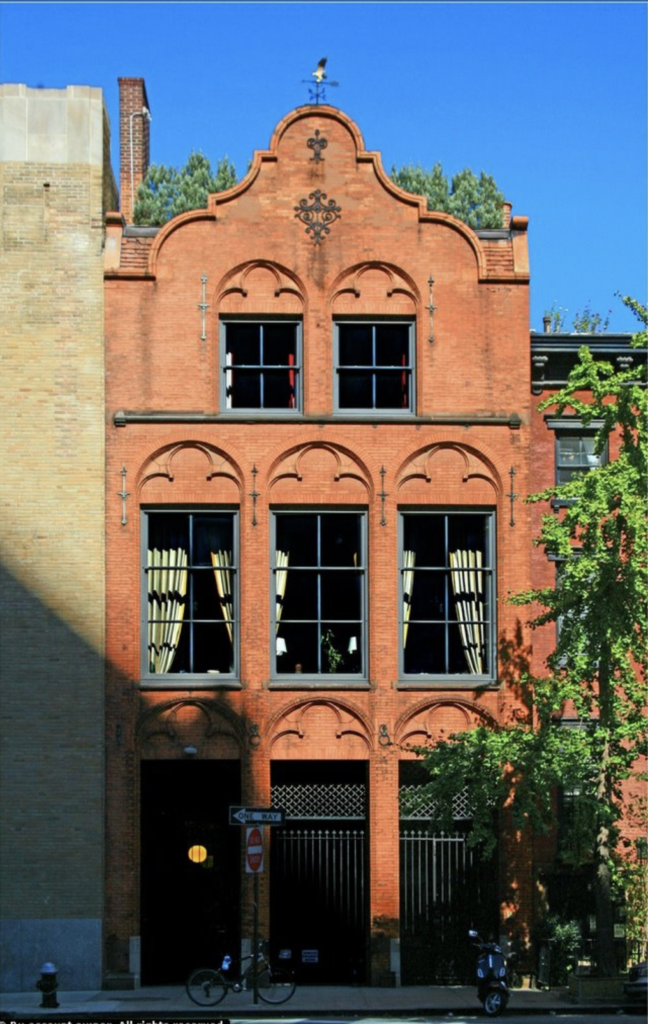
Many of Hunt’s most famous New York commissions (Lenox Library, some Fifth Avenue houses) have been lost or heavily altered, but the Tenth Street Studio Building’s documented presence and surviving photographs, and the still-standing Jackson Square building, let us read the architect’s local imprint. Even where physical fabric is gone, Hunt’s role as teacher, practitioner, and cultural entrepreneur had ripple effects: the particular mix of artists, galleries, and cultural institutions that made the Village distinct in the late 19th and early 20th centuries was, in part, engineered by spaces like the Tenth Street Studio.
Richard Morris Hunt’s name often evokes the largest monuments of the Gilded Age; yet his Village work, especially the Tenth Street Studio Building, shows a different side of architectural influence: designing spaces that shape communities, artistic practices, and educational culture. The Tenth Street Studio’s combination of architectural invention and social program helped make Greenwich Village the city’s de facto arts quarter for decades. Walking the blocks around West 10th and West 13th today, you’re walking in a landscape that Hunt helped to organize.
Discover more about Fifth Avenue, where Hunt would design several mansion’s for Gilded Age millionaires, and its 200 year legacy that began in the Village by exploring our Fifth Avenue map.