
Hidden in Plain Sight: Sixth Avenue Silhouette
Our blog series “Hidden in Plain Sight” highlights the many architectural curiosities and unique features found on buildings throughout our neighborhoods — details you might not notice on first pass, but if you’re paying attention, they tell easily overlooked and often forgotten stories.
Peeking above the one-story building at the corner of Sixth Avenue and Waverly Place, is a beige building silhouette on the side of 123 Waverly Place remaining from an earlier structure.
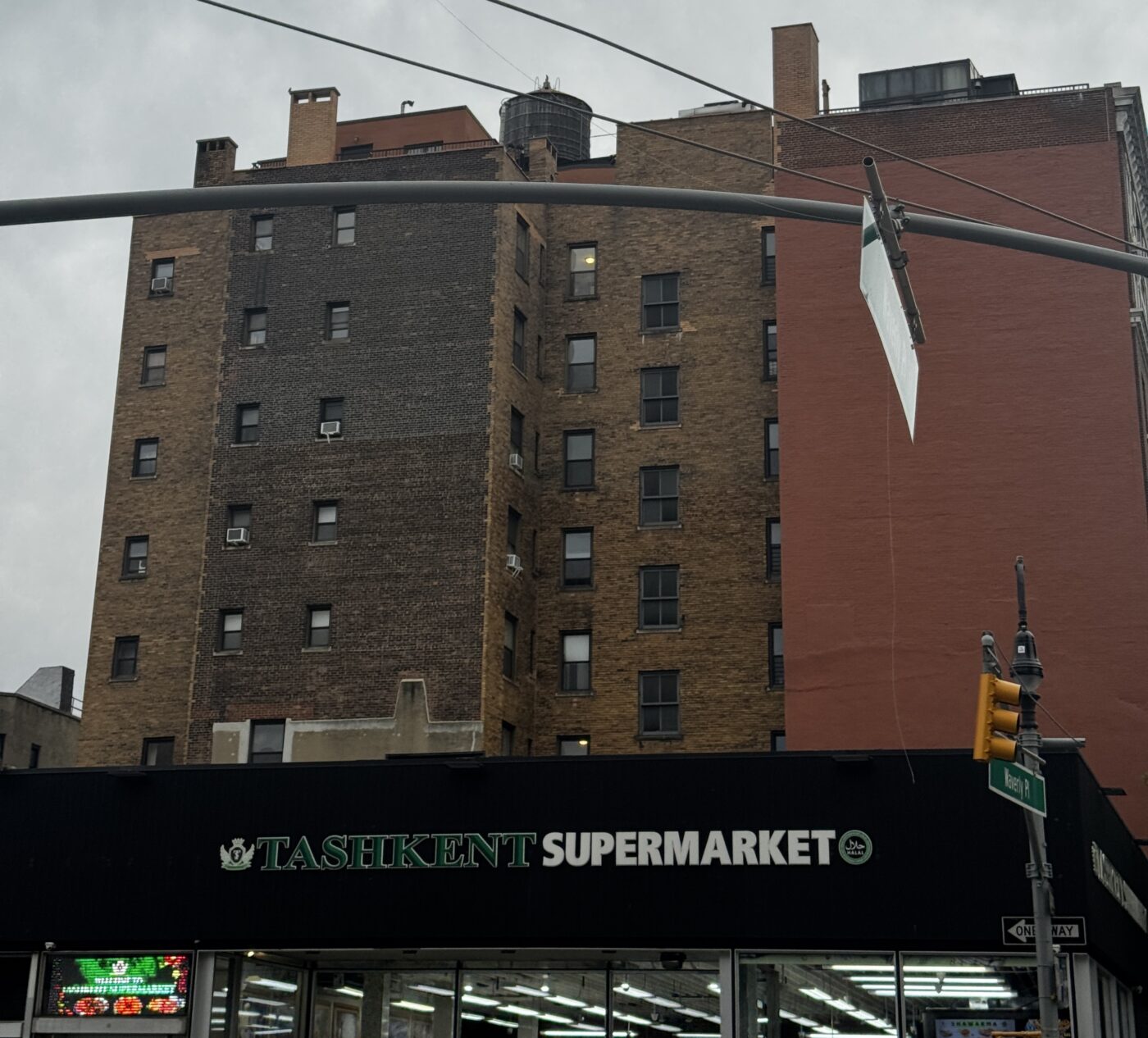
The current building, numbered 378 Sixth Avenue, was constructed ca. 1941 according to the Landmarks Preservation Commission designation report. Multiple buildings on both sides of Sixth Avenue south of 8th Street were demolished in the late 1920s and early 1930s to make way for the construction of the IND (Independent) Subway Line underneath and the extension of Sixth Avenue south of West 3rd Street (where it previously ended) to connect it with Church Street and the Financial District. The report did not give information on where the mysterious building outline may have come from, prompting further digging and giving us an opportunity to do some building history research.
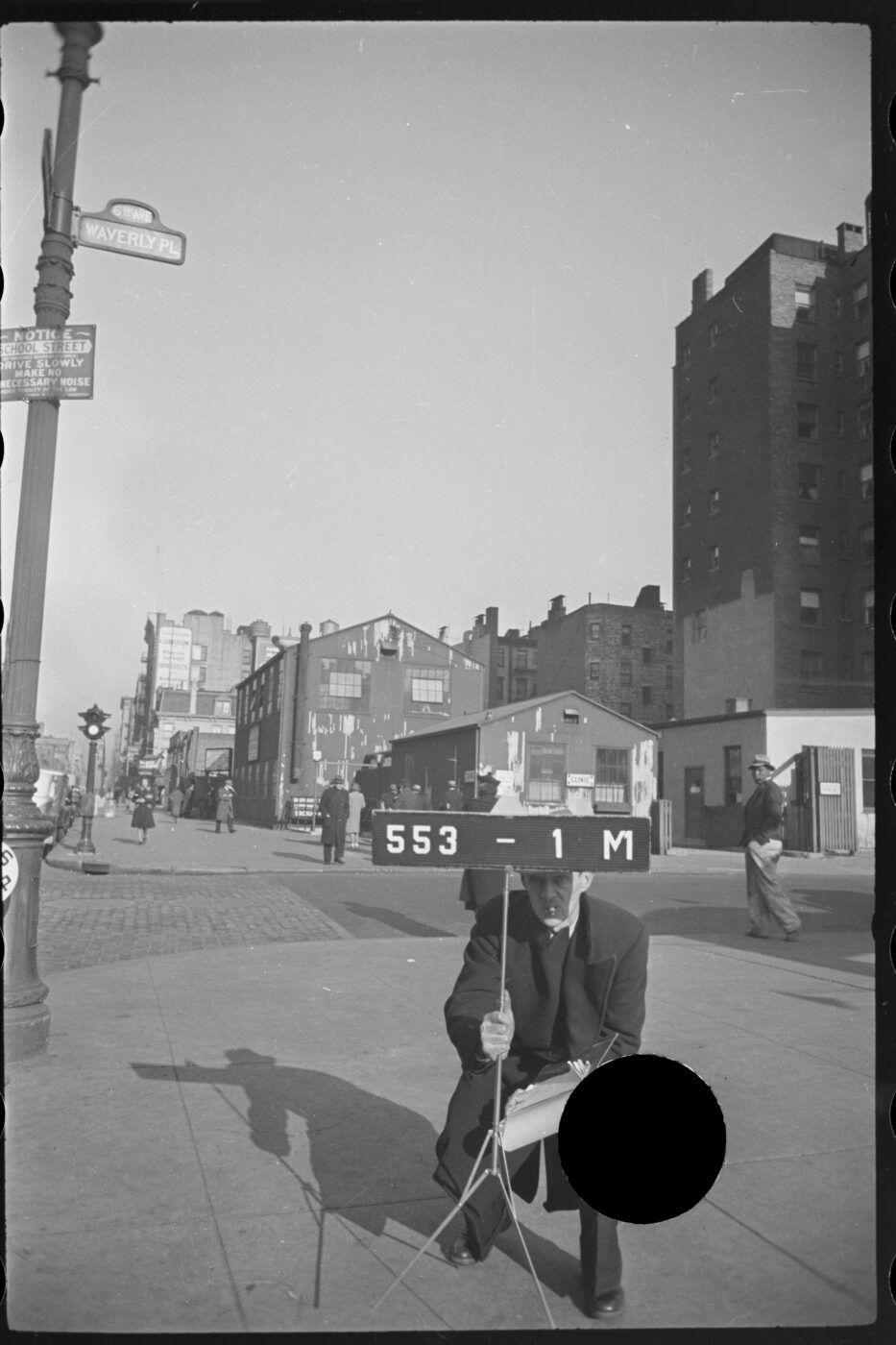
A good place to start building research in New York City is the 1940s Tax Photo collection from the Municipal Archives. Taken between 1939 and 1941, using funds provided by the WPA, the city photographed nearly every building across the city. These are now available from the New York City Department of Records and Information Services and on this map. In the case of 378 Sixth Avenue, the tax photo only further complicates things. The old building outline in question is visible, but the site is occupied by what appears to be temporary shack structures.
This prompted a search of the New York Public library’s digital collection of NYC Fire Insurance Topographic and Property Maps.
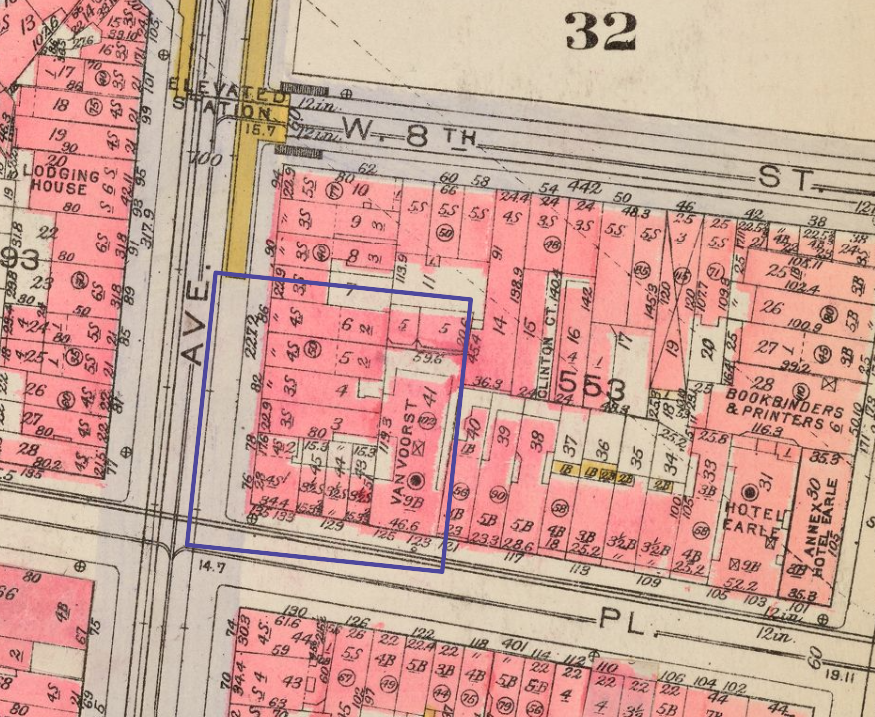
The above map from 1923 shows that a number of buildings once stood on the site, presumably where the building outline originates.
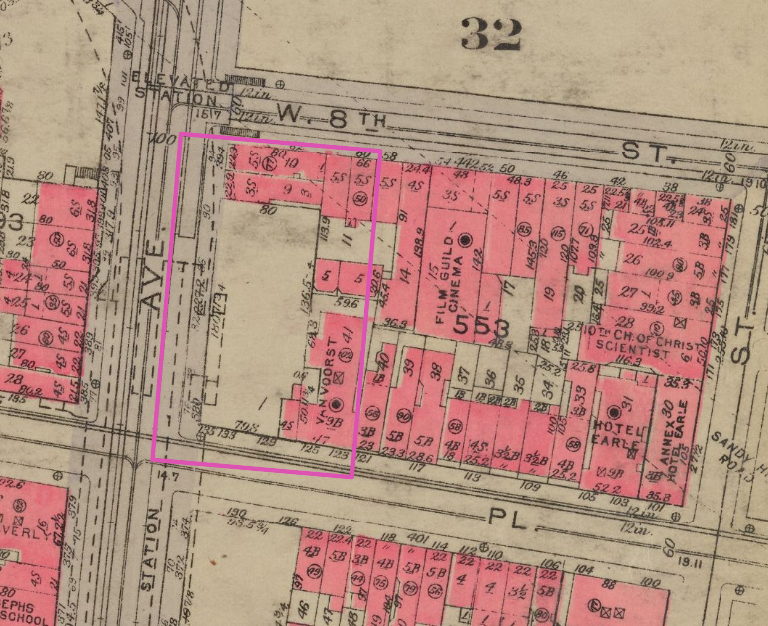
However, by 1930 these buildings were gone, as nearly all of the block frontage on the East Side of Sixth Avenue from West 3rd Street to West 8th had been cleared.
Using the OldNYC map from the New York Public Library, which maps images from their archive, other historic photos of the site were found. These photographs were taken by Percy Loomis Sperr, a photographer hired by the New York Public Library to photograph the city, who took between 30,000 and 45,000 images between the 1920s-1940s.
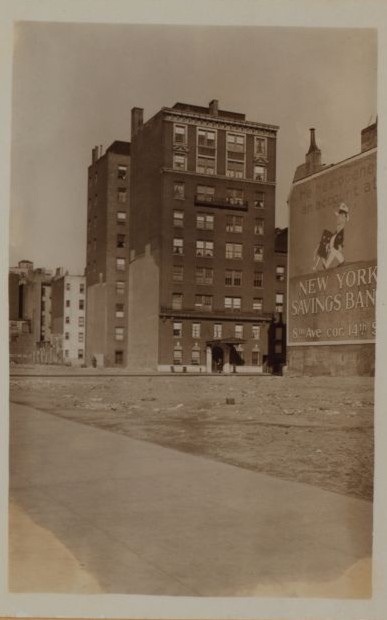
The above image was taken in 1932, showing the lot empty with the building outline on 123 Waverly Place visible. A note on the back reads: “Sixth Avenue, East Side, north from Washington Place to Waverly Place showing this frontage cleared. Subway construction necessitated same.”
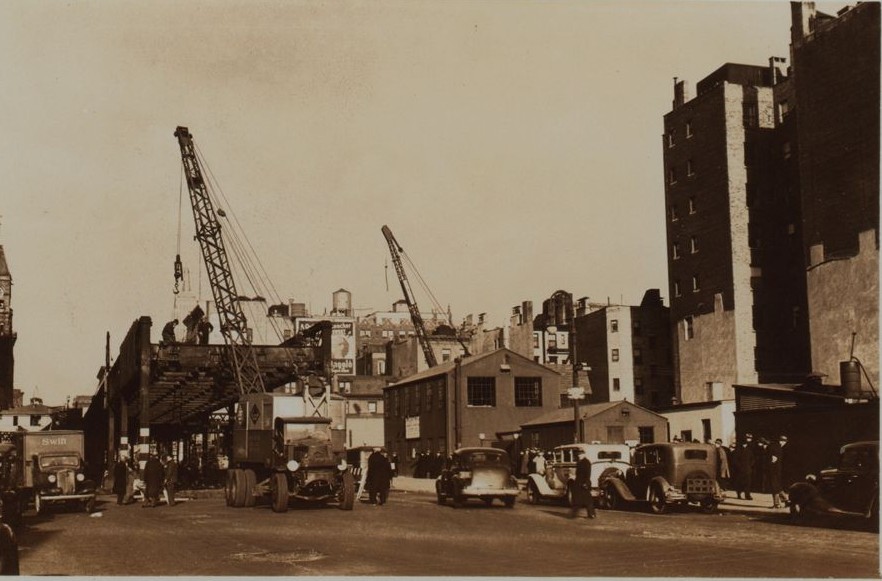
Another photo, also taken by Sperr but in 1939, shows the temporary shacks on the site, with a note that describes the shacks as being for subway construction. Overhead, the Sixth Avenue El is being demolished, and if you look closely the entrance for the West 4th Street station is visible.
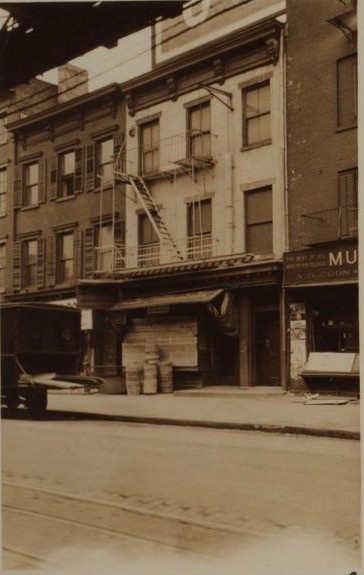
This photo was taken in 1926, prior to the construction of the 8th Avenue line and West 4th Street subway station. It captures what were then known as 80 and 82 Sixth Avenue, the mystery buildings that still have a visible silhouette seen today on the sidewall of 123 Waverly Place where their rears touched the still-extant building. These tiny houses probably dated to the 1820s, and were originally built as single family houses. In later years, they would have been given commercial ground floors and rear extensions (the outline of which survives on neighboring 123 Waverly Place) and divided into multiple units.
Read other additions of “Hidden in Plain Sight” here and explore more neighborhood history through our resources for property owners and researchers.