
The Times They Are A-Changin: The Evolution of the Washington Square Hotel
At the turn of the last century, our neighborhood was in the midst of yet another transformative era. For decades prior, a fashionable, bourgeois class resided around Washington Square Park and lower Fifth Avenue, as grandiose red-brick Greek Revival townhomes attracted the wealthy, cementing the area’s cosmopolitan population.
But with time, the neighborhood’s residents began to change. In the latter half of the 19th century and into the 20th, immigration in downtown Manhattan surged, causing the area’s population and overall atmosphere to shift quite dramatically. Commercial buildings and factories began popping up along Broadway and the Hudson River, and large numbers of immigrants from France, Spain, Ireland, and Italy called the Village home.
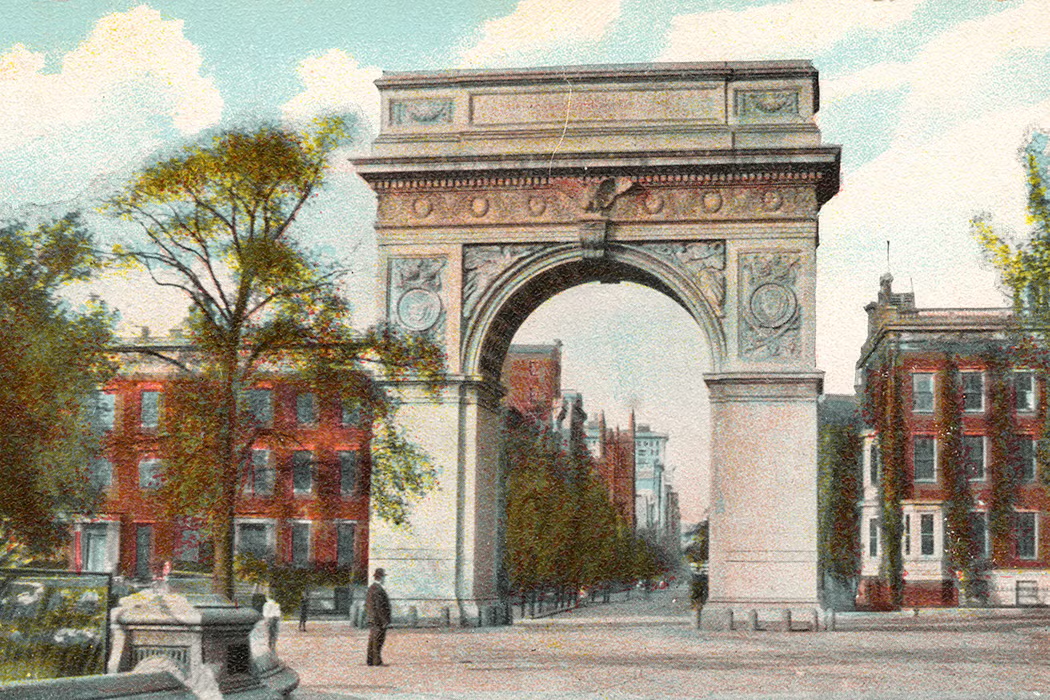
Even as the neighborhood’s population evolved, and some of the fashionable residents began moving uptown, the neighborhood’s architecture continued to reflect earlier affluence. In 1892, William Rhinelander Stewart of 17 Washington Square North commissioned architect Stanford White to design a temporary monument honoring President George Washington for the entrance to Washington Square Park. While at first the structure was temporary papier-mache and white plaster, the arch became a permanent, marble installation after garnering widespread public support.
By 1900, the Village earned itself a bohemian, ethnically diverse reputation. Rents were as low as its skyline, and artists and creatives alike flocked downtown, inspired by the neighborhood’s nonconformity and picturesque cityscapes. And while Washington Square remained refined and somewhat regal, its surrounding streets, however, exemplified this newfound energy. No better example of this can be found than the Washington Square Hotel near the corner of Waverly Place and MacDougal Street.
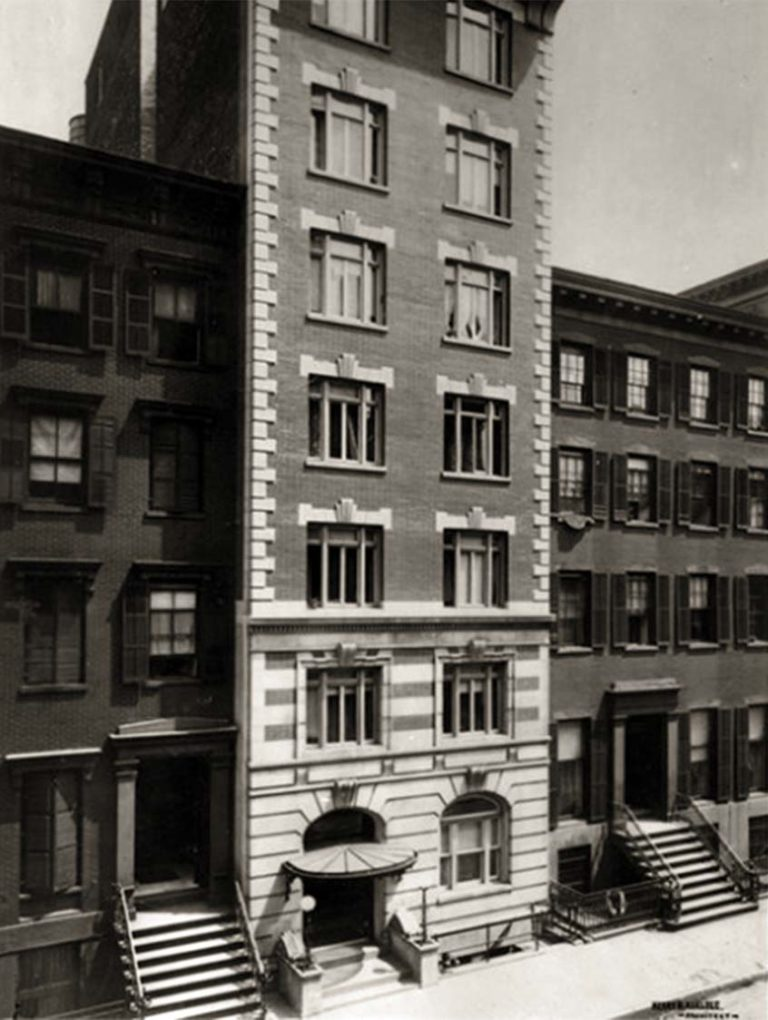
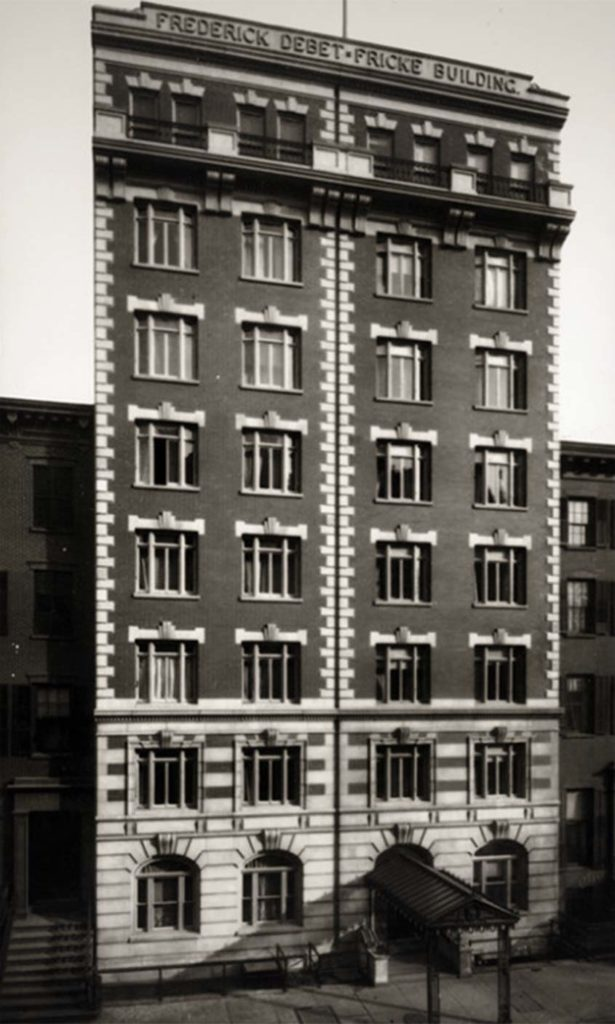
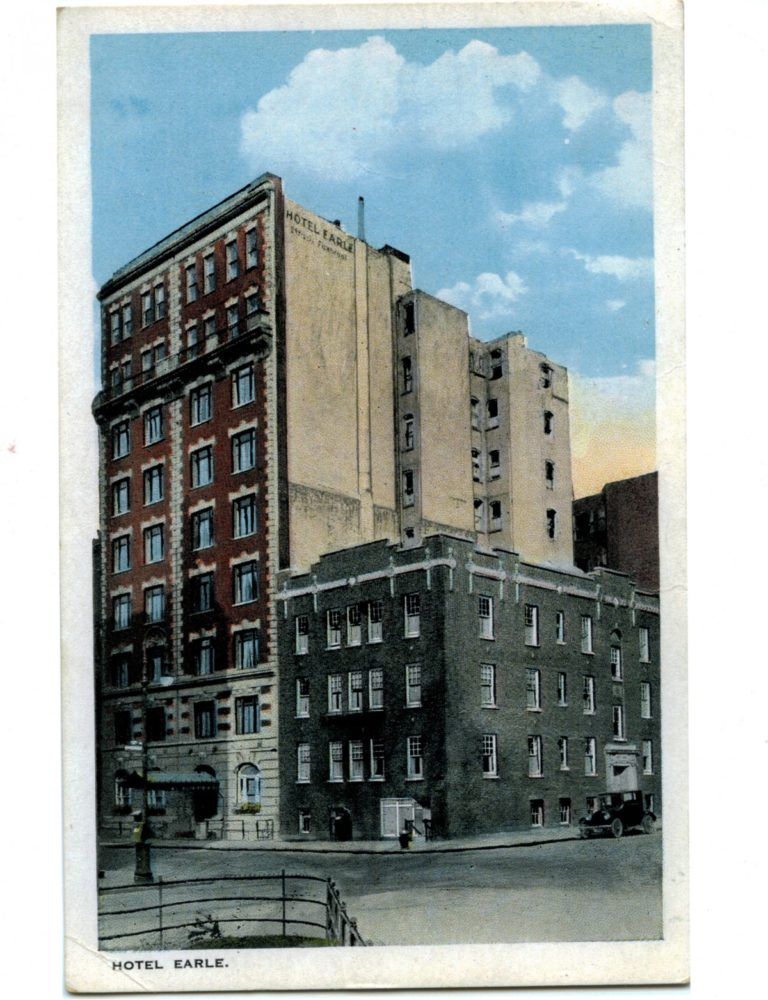
In 1902, the home at 103 Waverly Place was demolished, and the eight-story Hotel Earle was built in its place. Named for its original owner, Earle S. L’Amoureux, the red-brick building soon doubled its size in 1907 after L’Amoureux took over the property next door at 105 Waverly. L’Amoureux built an identical connecting building, creating a grand apartment hotel, complete with reading rooms, a restaurant, and banquet facilities. And expansion continued: in 1911 he added a ninth floor, and in 1916-17, the house at 101 Waverly, the Van Rensselaer mansion, was demolished to make way for the Hotel Earle’s Annex.
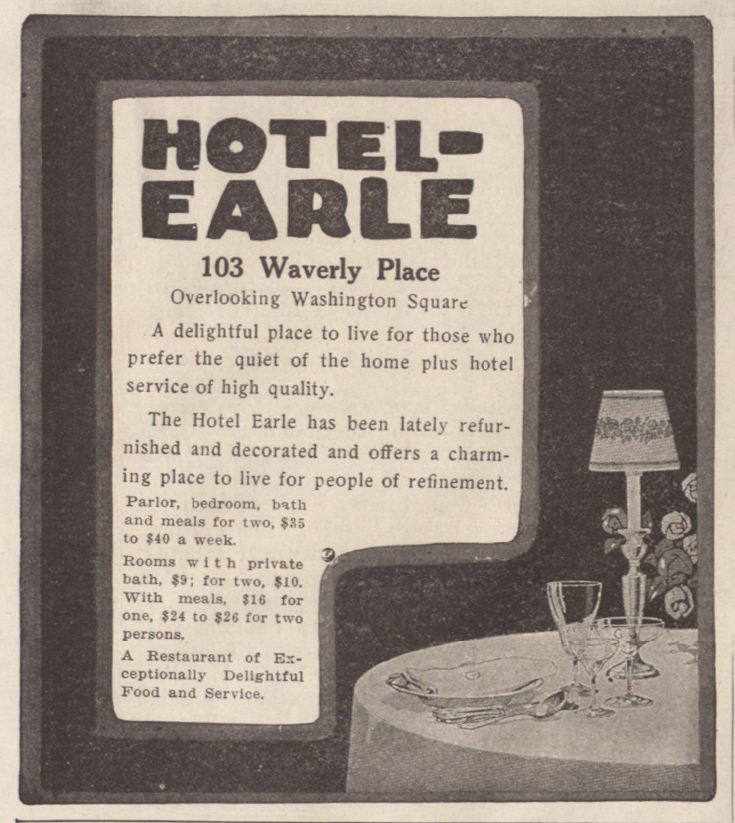
The hotel, while in the heart of the Village, always toed the line between creatives and cosmopolitans during its first few decades. Ernest Hemingway stayed at Hotel Earle for a few weeks in 1914 just before going overseas to fight in World War I. In the 1930s, Knott Hotels (one of the nation’s first chain hotels) began managing the Hotel Earle, where rooms were marketed at the following rates:
American Plan* from $3.50 single, $7.00 double
European Plan* from $2.00 single, $3.50 double
By the 1950s, the Beatniks and Bohemians took over the neighborhood in full. Young misfits spilled out of coffee houses on MacDougal and literary salons like Chumley’s on Bedford Street, and the Hotel Earle reflected this change as well. Welsh poet and writer Dylan Thomas wrote of this easygoing energy in a letter he sent to his parents, describing the Hotel Earle as “right in Washington Square, a beautiful Square, which is right in the middle of Greenwich Village, the artists’ quarter of New York.” Thomas stayed at the Hotel Earle with his wife Caitlin after being evicted from the Beekman Hotel on 1st Avenue and 49th Street. His description highlights how some of the hotel’s original formalities were stripped away as it shifted to a more affordable, easygoing, and shabby apartment-hotel, perfect for struggling artists, musicians, and creatives looking to live in the neighborhood.
The visitor log went on to include a litany of Village musical icons like Chuck Berry, Bo Diddley, John and Michelle Phillips of the Mamas and the Papas, the Rolling Stones, Barbara Streisand, and, of course, Bob Dylan. In 1961, Dylan rented a $19-a-week room at the hotel just before his first performance at Gerdes Folk City. He stayed again in 1964, this time with fellow singer-songwriter and on-and-off-again girlfriend Joan Baez. The pair shared room 305, with Baez describing their stay at Hotel Earle in Diamonds & Rust as that crummy hotel/Over Washington Square.
In 1973, the hotel saw yet another change after Daniel Paul and his wife Rita purchased the property and changed the name to the Washington Square Hotel. The Paul family bought the Earle at the height of its eclecticness, and they themselves became full-time residents as they converted the joint into an affordable, European-style boutique hotel that honors its bohemian past. Like the hotel’s guests, Rita was also an artist and filled the hotel with her work.
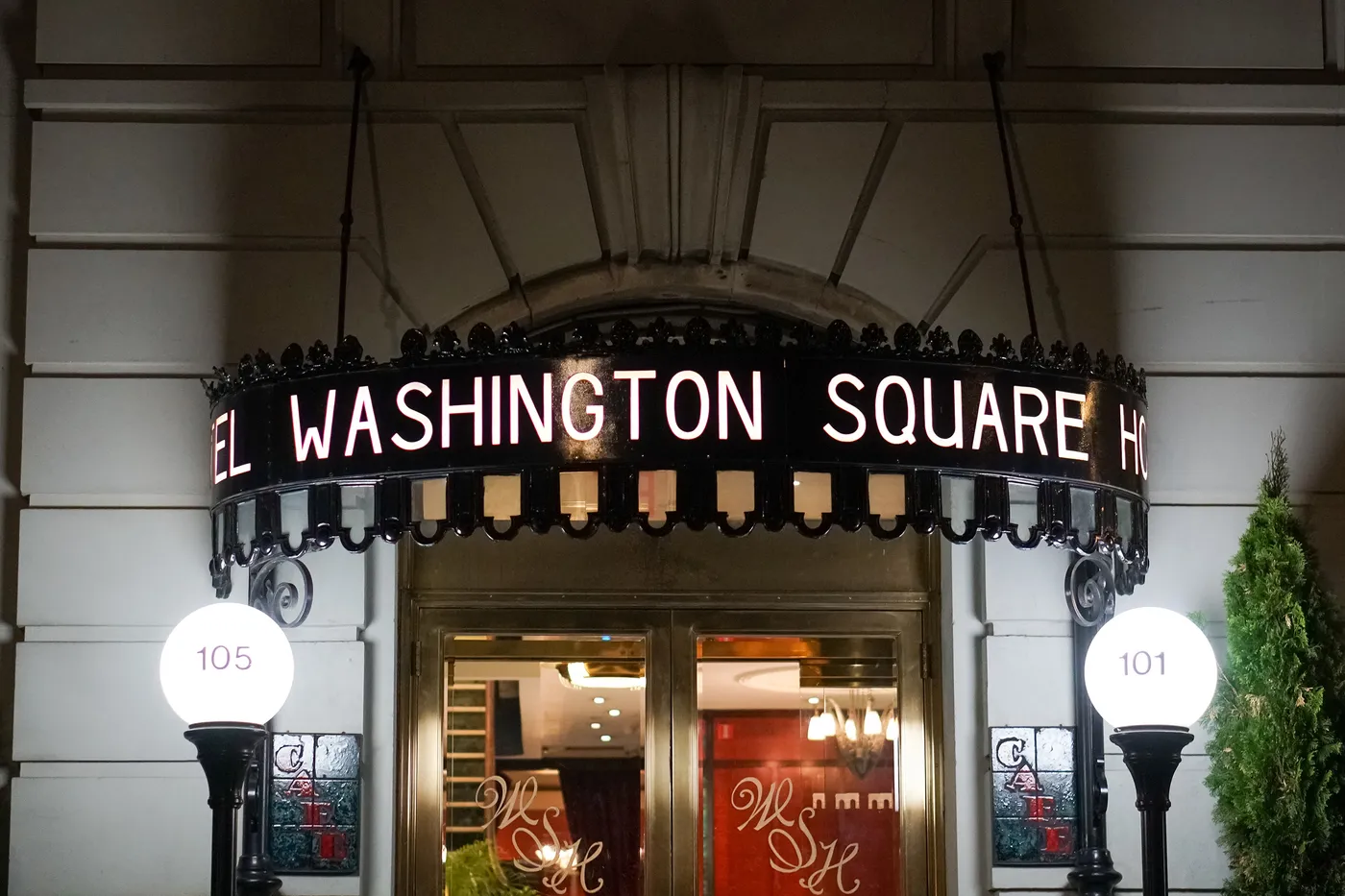
The Paul family continued to live in the hotel from 1980 to 1992, but remained attentive owners until 2025, when Sean MacPherson, the hotelier behind the current incarnations of the Hotel Chelsea, the Marlton, and the Jane, purchased the Washington Square Hotel.
The hotel at 103 Waverly Place saw many eras. In its early years, it was a stately, refined red-brick building, mirroring the affluent, developing Greenwich Village. By the second half of the twentieth century, the hotel, as did the neighborhood, evolved into a rebellious yet funky bohemian haven. While the hotel’s future remains unknown, transformation is built into its walls and, like the neighborhood, it’s ever-evolving but always true to its original spirit.