
Tasting the Village: Mimi Sheraton’s Legacy
Picking a favorite restaurant in New York City is a near-impossible task. The criteria for what constitutes a good dining experience are based on a series of entirely subjective factors, such as taste, aesthetics, location, or ambience. Few understood this better than Mimi Sheraton (February 10, 1926–April 6, 2023), the legendary food critic, writer, and longtime Village resident who helped New Yorkers (as well as tourists and transients) discover the places that would become their favorites. Today, we revisit her oral history and the Village she knew so well.

Mimi left Brooklyn after high school and traveled across bridges and rivers to attend NYU for college. When she started her freshman year, Mimi recounted that school cost merely $7.50 a point and rose to $9 by the time she graduated. Her first Manhattan apartment was at 7 East 9th Street: a one-room, basement apartment between University Place and Fifth Avenue.
In Mimi’s sophomore year, she eloped and married Bill Sheraton, who had just returned to New York after being in the Air Force. Weeks after their elopement came V-J Day, and the end of World War II brought another population boom to New York, specifically more affordable downtown areas like the Village.
While others relied on the obituaries section to find a hot lead on a new apartment, the newlyweds traveled the Village on foot and searched for their home. Their walks proved fruitful: while finding a quick afternoon respite at Ed Winston’s Tropical Bar and Grill at 21 East 8th Street, the bartender clued them onto a freshly vacant apartment on 9th Street where old man Sittinham was renting one out. Before even finishing their sandwiches, Mimi and her husband ran to 5 East 9th Street and secured a lease from Sittinham for sixty-five dollars a month.
The Fifth Avenue Hotel and Washington Square Park
A stone’s throw from Washington Square Park and all things lower Fifth Avenue, Mimi had a front row seat to the cultural explosion of Greenwich Village during the 1940s and ’50s. Today, 24 Fifth Avenue is a condominium, but during Mimi’s heyday, it was the Fifth Avenue Hotel.
Even before the Fifth Avenue Hotel, though, came the Brevoort Mansion. In 1834, A.J. Davis designed the three-story-plus-basement Greek Revival for Henry Brevoort Jr., and thereby helped establish one of the earliest mansions built along Fifth Avenue. Equipped with a private garden, balconettes at each window opening, and Ionic columns at the home’s front door, the Brevoort mansion stood proud for nearly a century, only to be demolished in 1925.
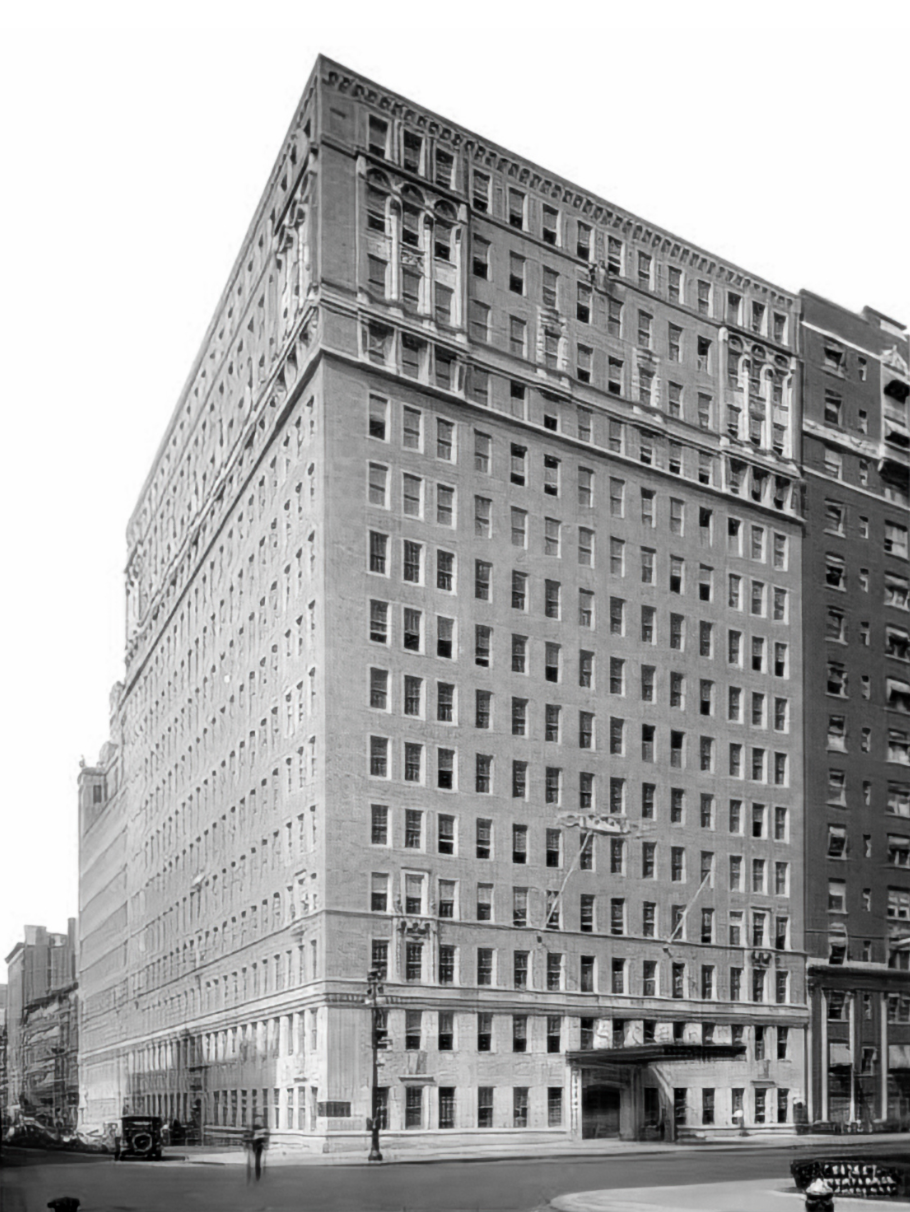
A year later came the 15-story, Fifth Avenue Hotel. Designed by Hungarian-American architect Emery Roth, the hotel is in the Spanish Renaissance style and extends 230 feet west along 9th Street. By the time Mimi lived in the neighborhood, the ground floor had been converted into a restaurant where people could dine indoors or outdoors. The hotel was also home to the Amen Corner, a bar where literary icons would congregate.
And the bohemian zest traveled down to the base of Fifth Avenue, where it crescendoed at Washington Square Park. In her oral history, Mimi remembers the victory parade commemorating the end of World War II; the park had been a staging ground for the tanks.
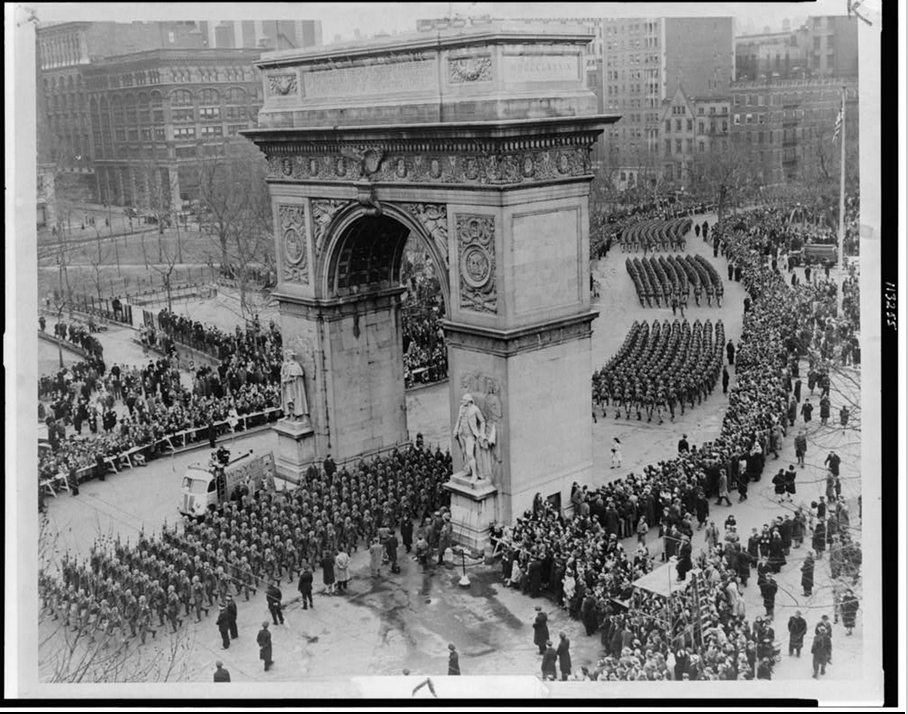
She went on to describe how every Sunday, people made their way to the park to read the paper, listen to speeches, play folk music, and make art. It was a neighborhood for the alternative class—individuals who were openly themselves.
Dining in the Village
During the twentieth century, lower Fifth Avenue evolved into a very fashionable place, home to upper and middle class residents—and its restaurants reflected this. Mimi, though, enjoyed dining out through her tried-and-true go-to order, the chopped steak (which was always the cheapest item on the menu).
After marrying her first husband at nineteen, Mimi switched to night school so she could afford to live on her own without her parents’ help. She worked as a copywriter for an advertising agency. From there, her career evolved into writing and editing for a variety of magazines like Good Housekeeping, Seventeen, and House Beautiful. She wrote mainly about interior decorating, home furnishings, and design. But food remained her passion, keeping it separate from her work, until a food editor suggested she begin critiquing restaurants.
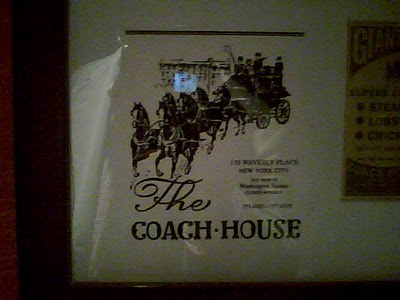
Mimi’s first review was featured in the now-defunct Village Voice, where she wrote of the Coach House at 110 Waverly (the restaurant closed in 1993). From there, Mimi’s career took shape. Starting in the 70s, Mimi reviewed restaurants under the cover of a good disguise and wrote about cuisine in New York City and beyond for New York and, more famously, for The New York Times.
Before Mimi was married and her nights were preoccupied by class, she and friends would pick one evening each week to dine at a different restaurant in the Village. It was during this time that Mimi came across SeaFare of the Aegean. Opened in 1941, it was initially located at 41 West 8th Street until 1957, when it moved across the street to 44-46 West 8th Street. While the Greenwich Village location closed in 1967, the restaurant remained vibrant and open uptown until 1984. Mimi noted that it offered some of the city’s best seafood.
Grocery Stores
After the war, accessibility had a new meaning—specifically when it came to food. No longer were people forced to ration, as they had been since the Great Depression. Now, individuals from a variety of classes could purchase almost anything from grocery stores. This cultural shift, Mimi spoke, was huge.
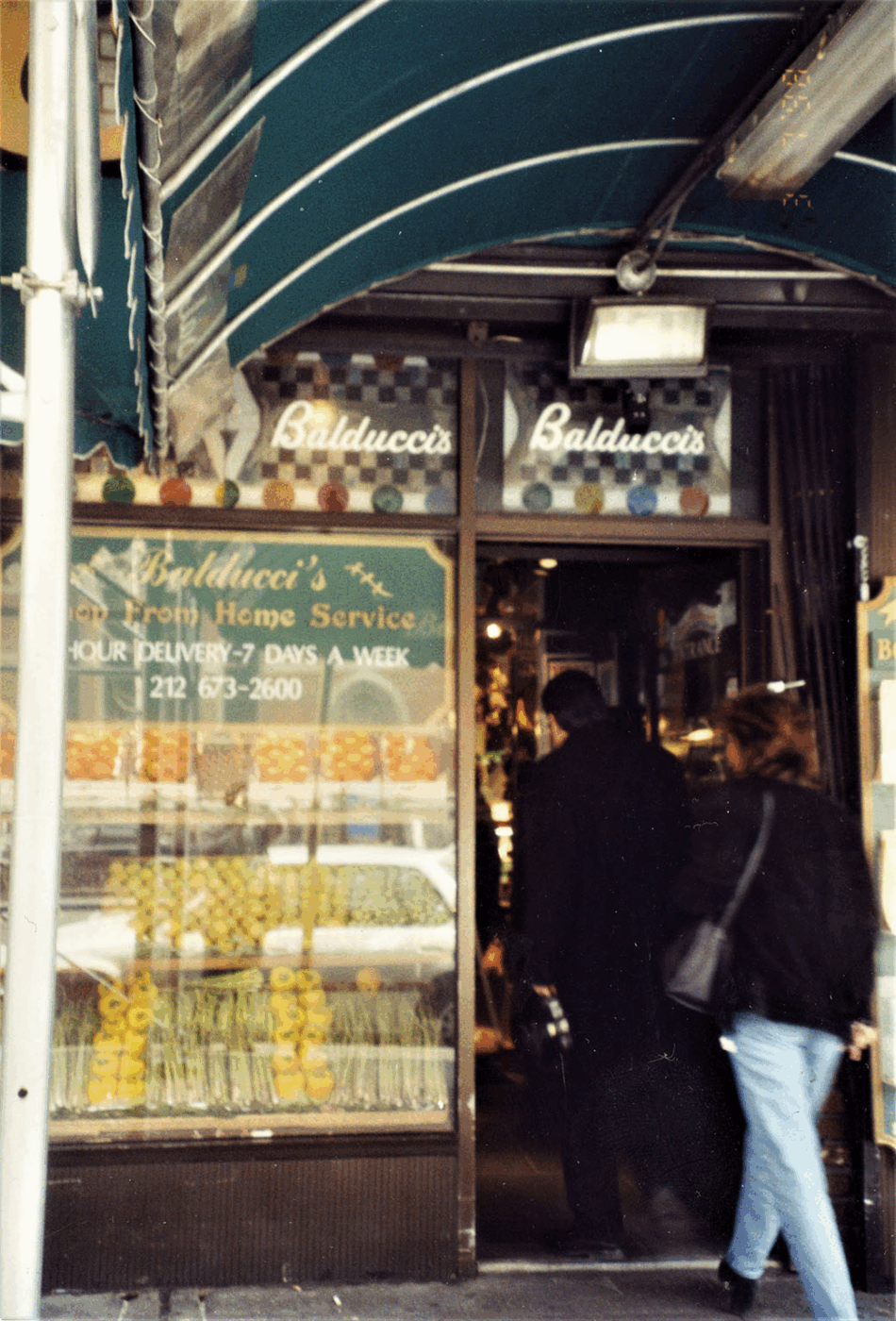
Before Citeralla and Whole Foods, there was Balducci’s, owned by Italian immigrant Louis Balducci. At first, Balducci ran a modest, sidewalk fruit and vegetable stand at the corner of Greenwich Avenue and Christopher Street, with a bathtub out back for rinsing the produce as it was delivered. Soon, Balducci’s opened their flagship store on West 9th Street and Sixth Avenue. There, Mimi remembers writing about the variety available: “you didn’t see six kinds of lettuce, or four kinds of mushrooms anywhere, and so all of these things became available, and that was great to write about.” It was a near food revolution: Dean & DeLuca opened when Mimi worked at the New York Times, offering Villagers imported goods they had never had before.
Mimi compared the Village to as close to Paris as one could get—a feeling shaped by the human-scale architecture, the cafes, and the bakeries. And Mimi discusses the businesses and institutions the neighborhood lost over the years: butcher shops, cheap eats, even St. Vincent’s Hospital. So while the neighborhood is undoubtedly different from how it looked and felt during Mimi’s prime as a food critic in the twentieth century, the Village will always have that je ne sais quoi. As Mimi put it:
I still love the Village. It’s changed a lot, but in many ways it’s relatively what it was….The houses are human scale, there are trees all down Fifth Avenue, and I see the arch and so on. I still love it, as much as I did when I moved in, in spite of the changes.
If you’d like to learn more about Mimi’s life in and around the Village, listen to or read her full oral history here. Please explore the rest of our oral history collection here, where we interview some of the great artists, activists, business owners, community leaders, and preservation pioneers of Greenwich Village, the East Village, and NoHo.