
Tracing Fifth Avenue: “The Row,” and Greenwich Village’s Architectural Legacy
From the northern edge of Washington Square Park in Greenwich Village to 143rd Street in Harlem, Fifth Avenue divides Manhattan. The centerfold of the Manhattan, it is nearly impossible to imagine New York without the seven-mile-long stretch. But, like many Manhattan streets, Fifth Avenue grew out of the original 1811 Commissioner’s Plan grid. Its development was slow, approved by the City Council in segments, beginning with the southernmost section. So, on November 1, 1824, from Washington Square North (then called Art Street), Fifth Avenue first opened to the public.
The buildings flanking the avenue were mostly row houses or free-standing mansions, custom-built for some of New York’s wealthiest residents in the early nineteenth century. By the 1840s, a schoolhouse and several places of worship had appeared on Lower Fifth Avenue. Simultaneously, Greenwich Village and the streets surrounding the avenue were increasingly fashionable and chic destinations during the 19th century.
Today, we are revisiting our Fifth Avenue Map and Greenwich Village Designation report from 1969 and turning our attention to perhaps the most important and imposing block of early Nineteenth Century townhouses in the City: 7-13 Washington Square North, so ironic that they are sometimes simply referred to as “the Row.”
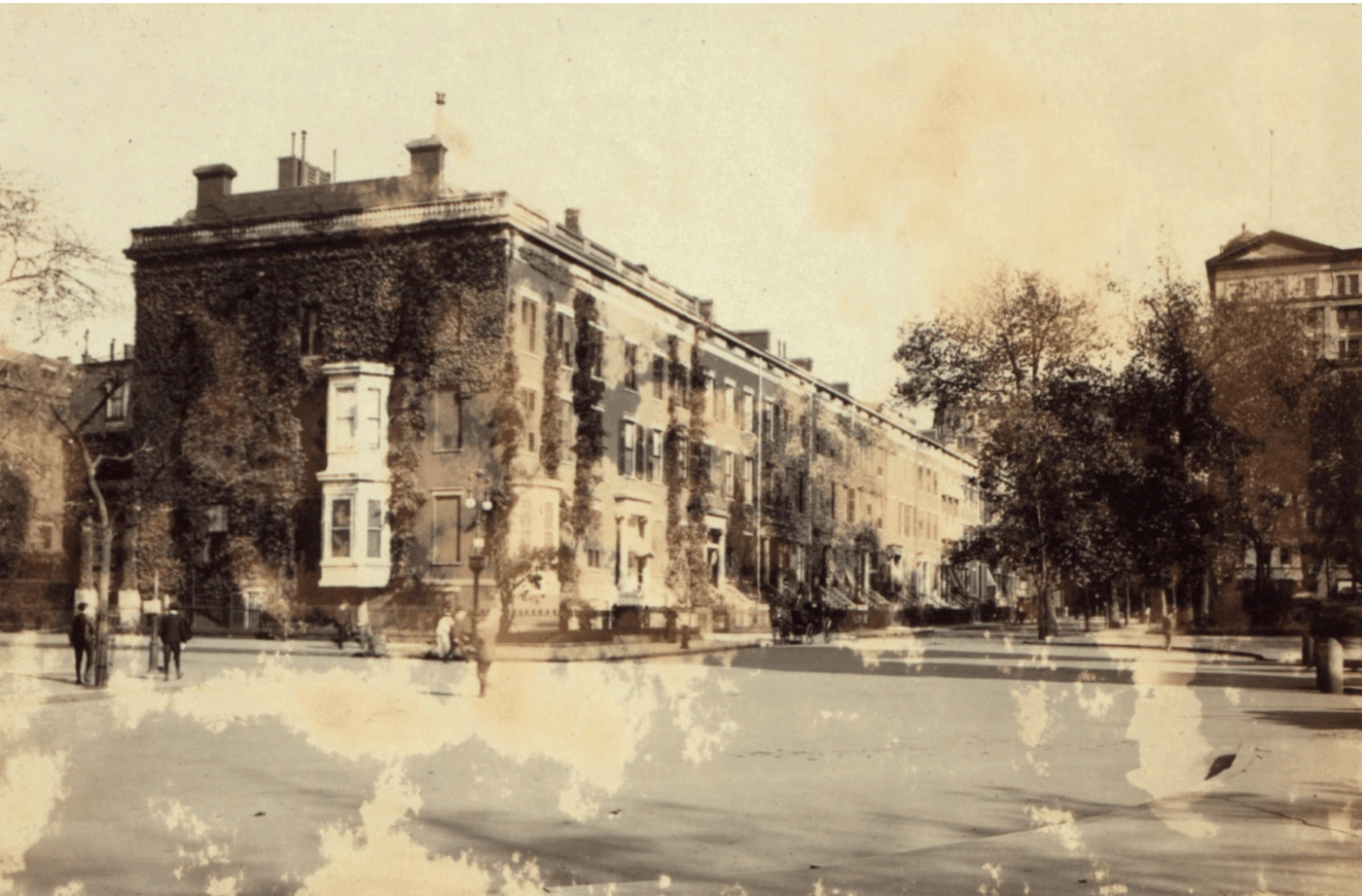
This picturesque row of Greek Revival homes runs along Washington Square North east of Fifth Avenue. But before Fifth Avenue and before Washington Square Park, much of Greenwich Village was undeveloped land. In 1826, the land just south of the Row was turned into the Washington Military Parade Ground when the City purchased the land.
Built in 1832-1833, the homes of the Row were among the earliest structures along Fifth Avenue and are among the few that still stand today. The land was leased out by the Trustees of Sailors’ Snug Harbor to support retired sailors. Subsequently, the wealthy bankers and merchants who leased the land built and owned their own homes. The uniform block was built and designed as one row, evidenced by having been taxed for the first time in 1832 or 1833.
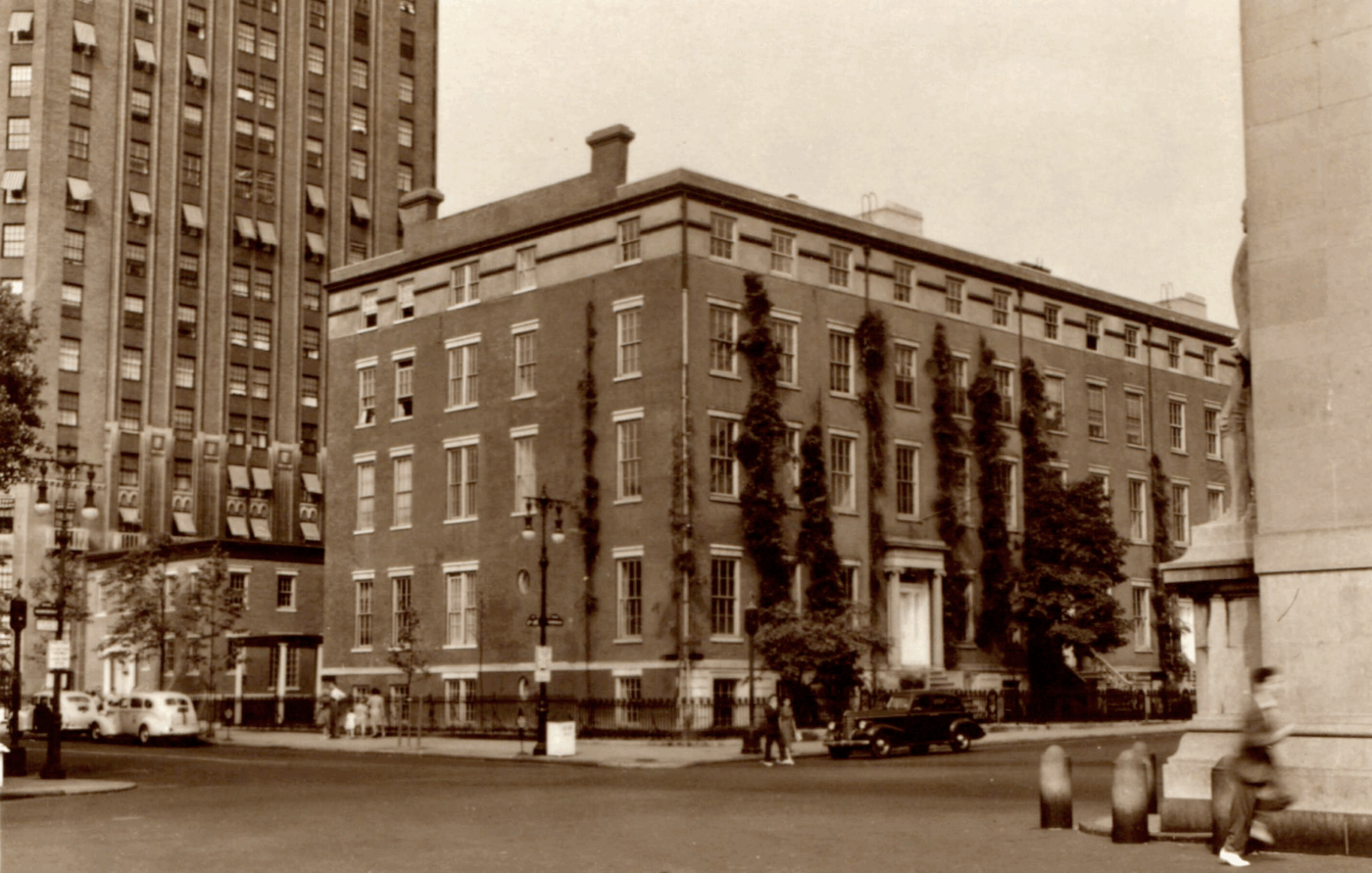
And for their first hundred years, the collection of row homes remained virtually unchanged, except for a few subtle changes. In 1872, Nos. 12 and 13 were combined at the interior for owner William Butler Duncan; number 13’s side facade originally featured a projecting bay, but was replaced with a single oriel window in 1940.
Behind the Row, on the Northern side, lies the Washington Mews. Typically, the word “mews” suggests a collection of small-scale horse stables for the nearby townhouses. In the case of the Washington Mews, this is partially true. The Washington Mews features a collection of 19th-century horse stables on the north side and 20th-century residences on the south side. The stables, built between 1829 and 1833, are set so far back from their accompanying homes on the Row as to allow ample garden space. By 1854, six stables had been built on the south side. And the 20th-century residences eventually replaced the remaining unusually deep rear gardens of the Greek Revival townhouses.
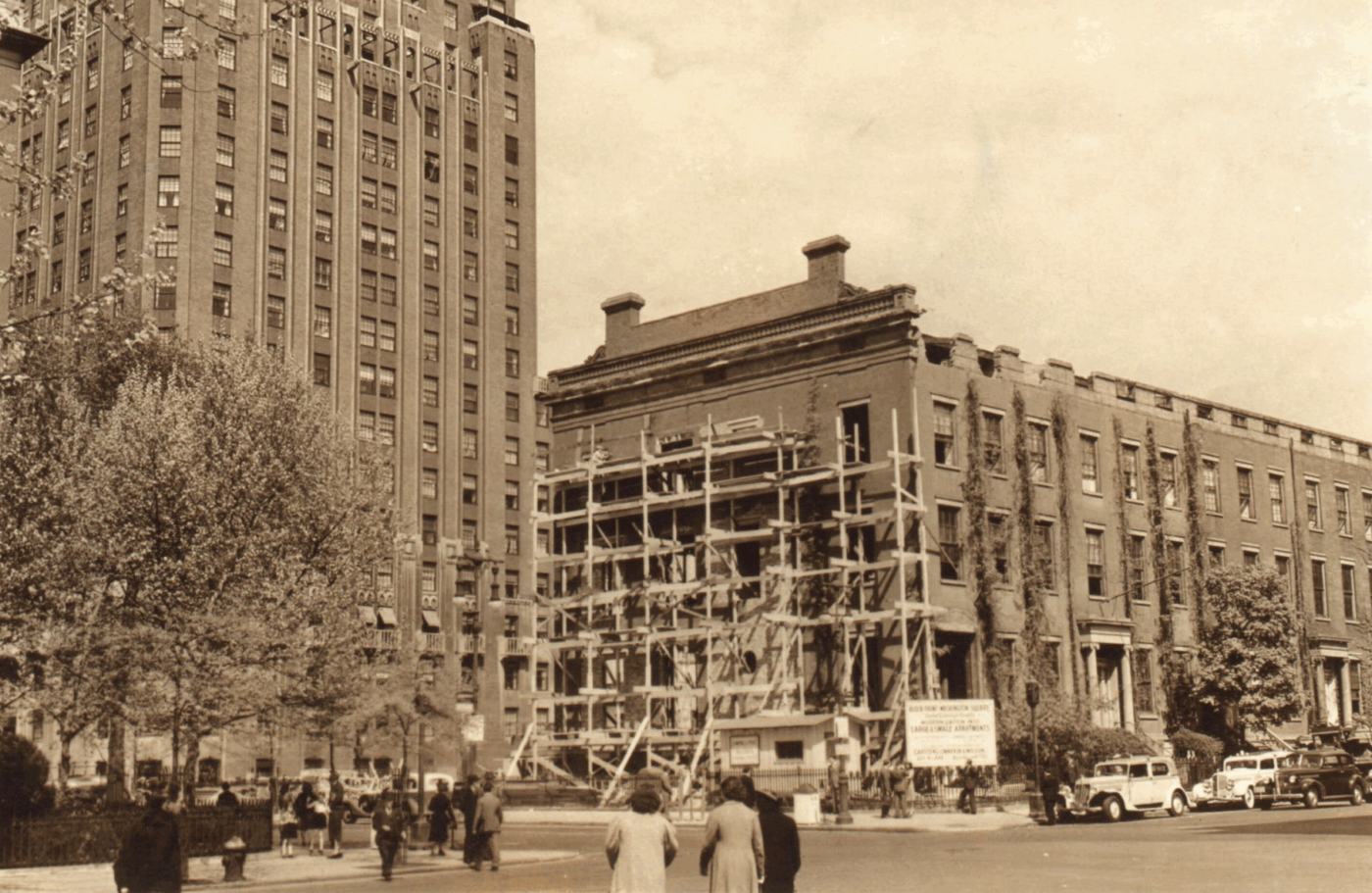
In 1939, the Trustees of Sailors’ Snug Harbor hired the architecture firm Scott & Prescott to convert 7-13 Washington Square North into a modern apartment building with multiple units. Unlike many developments, this one was predominantly internal, and the exteriors of the historic mansions were retained, with additional massing for the apartments set behind them. The only external change was the significant raising of the fourth floor, where a more modern row of square windows replaced the low windows in the fascia board.
The Row is nothing if not grand. According to the 1969 Greenwich Village Historic District Designation Report, the entrances are adorned with handsome porticoes, featuring fluted Ionic columns supporting a full entablature; the doors are framed with sidelights and simple transoms, with paneled pilasters supporting the transom bar. Most houses retain entrance doors with a pair of vertical panels, enframed by egg-and-dart moldings.
In 1940, the chancellor’s residence for New York University was moved to 5 Washington Square North, and, by the 1970s, NYU had purchased 7-13 Washington Square North for combined faculty housing and administrative/academic uses.
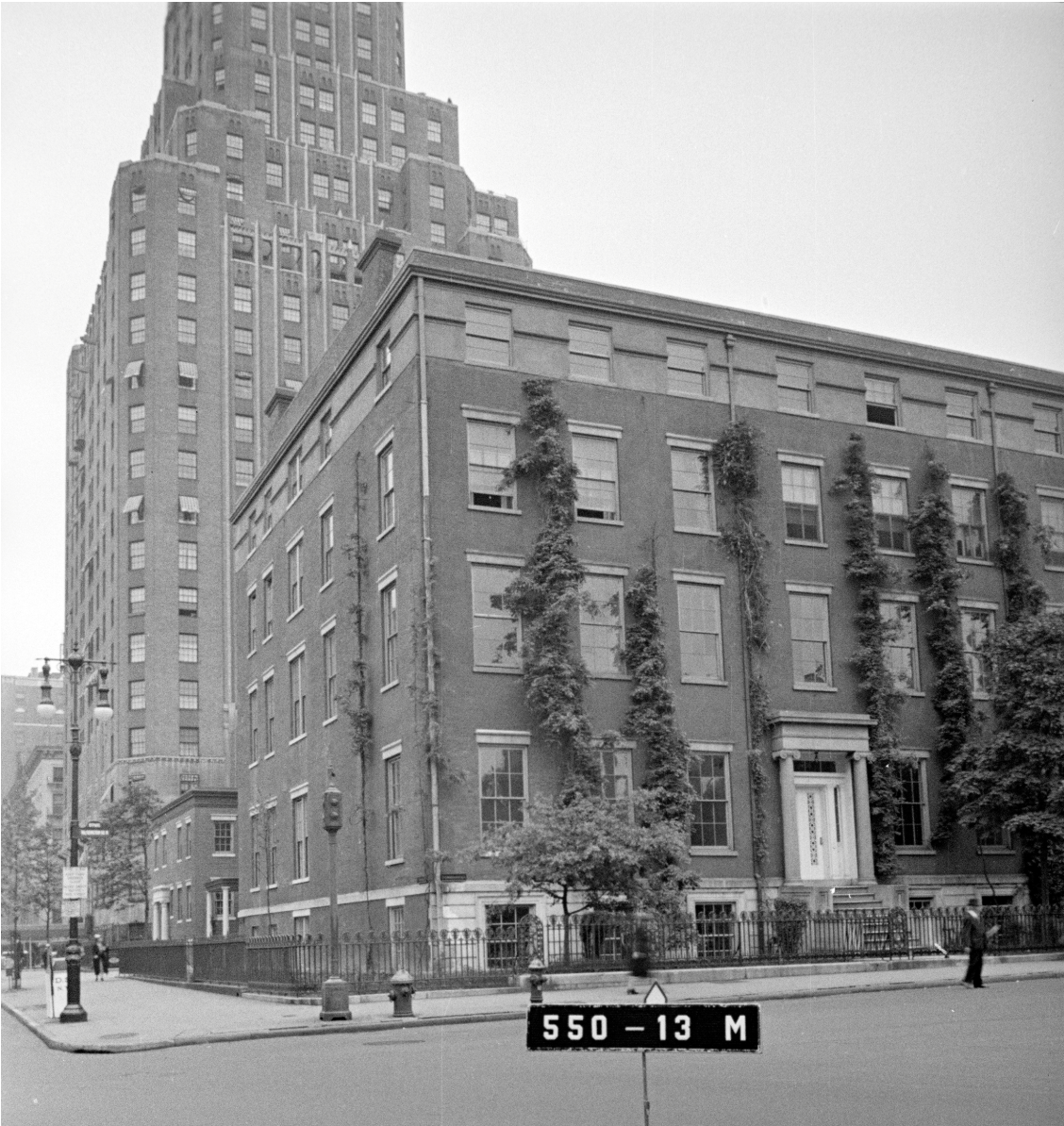
Sitting at the base of Fifth Avenue, the Row illustrates how preservation and adaptive reuse can work hand in hand, keeping historic elements intact while responding to the neighborhood’s evolving needs. Revisiting the Fifth Avenue Map and the 1969 Designation Report proves just how central this block has been in shaping our understanding of Lower Fifth Avenue’s architectural identity.