
A Hard Prize’s A-Gonna Fall: Nobel Winners in Greenwich Village
In 2016, legendary singer/songwriter and one-time Greenwich Village resident Bob Dylan received the Nobel Prize in Literature “for having created new poetic expressions within the great American song tradition.” He was unable to attend the December event in Stockholm citing pre-existing commitments, however, but did forward an acceptance speech thanking the Swedish Academy for “providing such a wonderful answer” to the question of “Are my songs literature?”
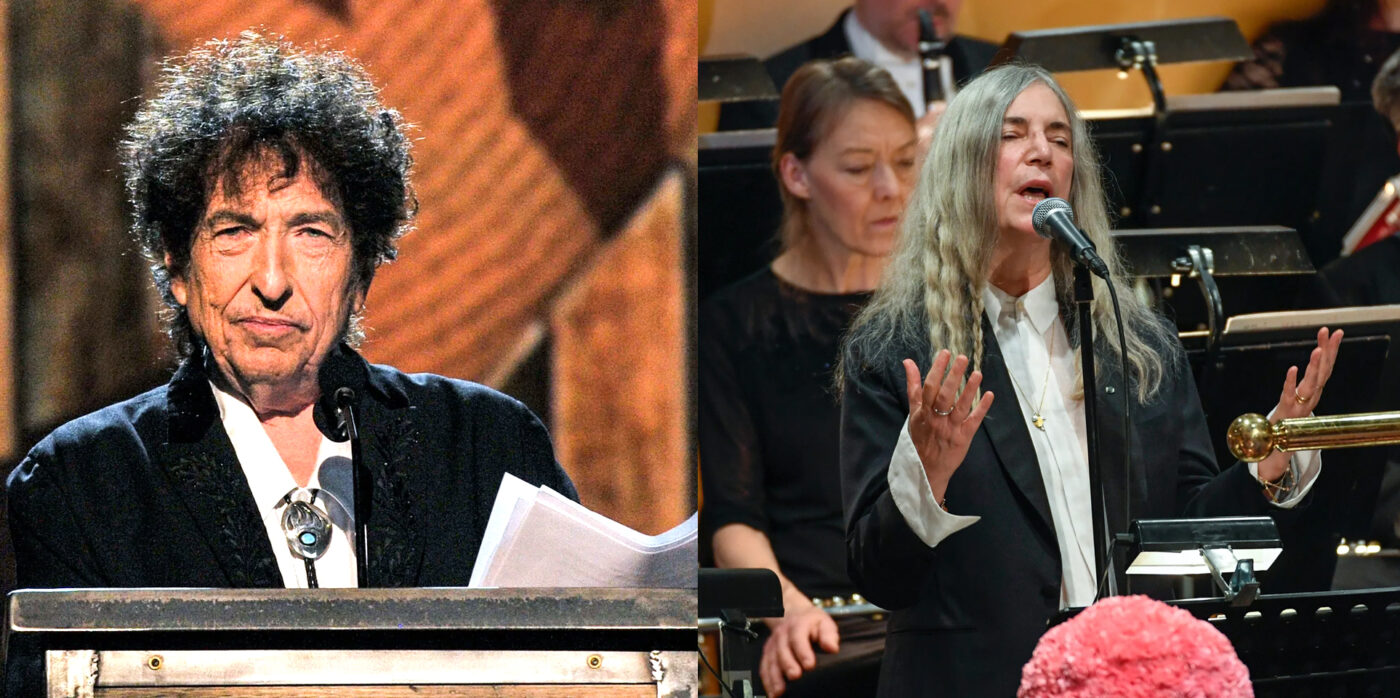
In his stead, fellow icon and Villager Patti Smith accepted the award, followed by an orchestral arrangement of “A Hard Rain’s A-Gonna Fall” in which she forgot the song’s lyrics. “I’m sorry, I’m so nervous,” she said, restarting the song with better results.
Dylan’s no stranger to Greenwich Village, of course, spending much of his early career in the neighborhood. A trip through Village Preservation’s Bob Dylan Map showcases many Dylan-focused locales, from homes at 161 West 4th Street (his first in the city) and 94 MacDougal Street to such key venues as Cafe Wha? (still standing at 115 MacDougal), Gerde’s Folk City (11 West 4th Street), and Gaslight Cafe (116 MacDougal).
And the Village is no stranger to the Nobel Prize in Literature, a neighborhood that’s been home to recipients beyond Dylan over the years.
Saul Bellow
Saul Bellow, who lived at 17 Minetta Street, was a towering figure in 20th-century American literature, celebrated for his rich characterizations and deep engagement with contemporary life. Bellow began publishing fiction in the early 1940s and went on to write a series of influential novels, including The Adventures of Augie March and Humboldt’s Gift, the latter earning him a Pulitzer Prize in 1976. Over his long career he received many other honors, capped by the Nobel Prize in Literature in 1976, awarded “for the human understanding and subtle analysis of contemporary culture that are combined in his work.”
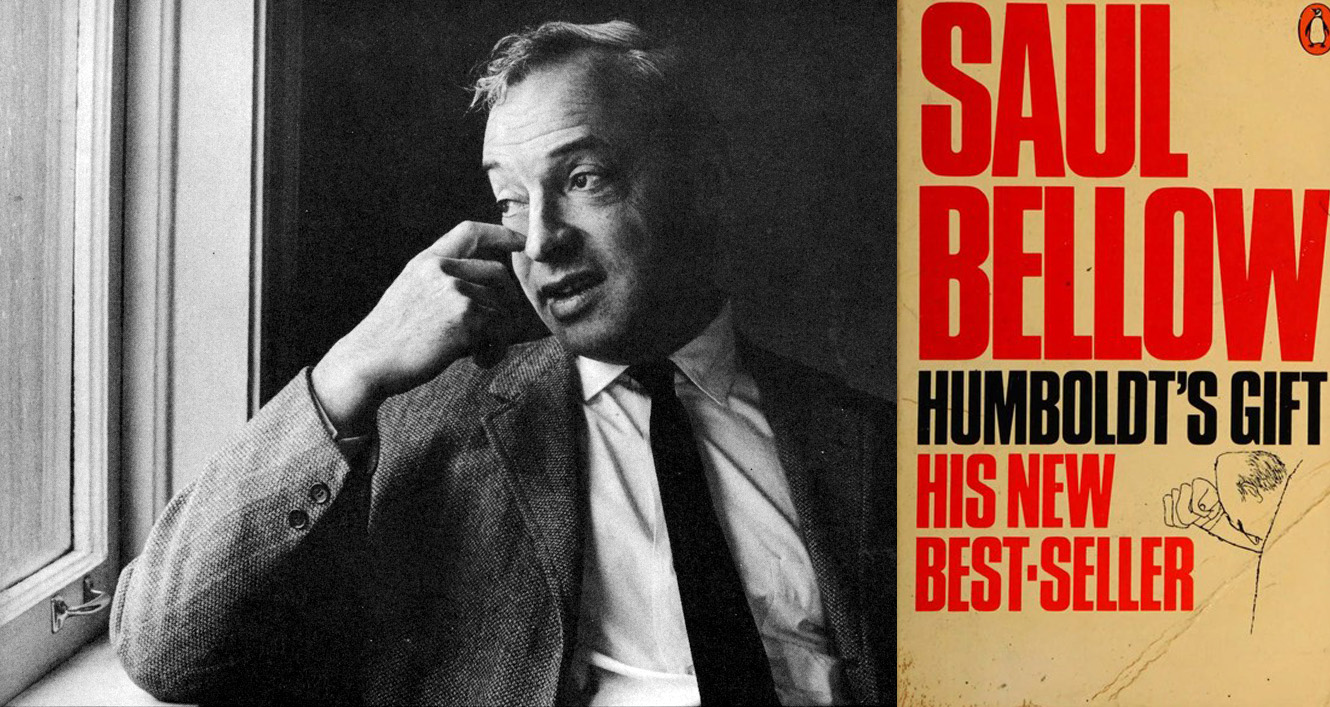
Bellow’s connection to Greenwich Village reflects the neighborhood’s mid-20th-century role as a magnet for literary and artistic talent. In 1952, when he was working on his breakthrough Augie March, Bellow moved to Minetta Street, then part of a quiet enclave in the Village that attracted writers, poets, and creatives. Although his actual writing studio was on nearby Hudson Street, living at Minetta placed Bellow within a vibrant bohemian community alongside other literary figures and contributed to the fertile cultural milieu that influenced his work during those formative years.
In 2013, Village Preservation got all of Minetta Street and adjacent Minetta Lane landmarked as part of the South Village Historic District.
Eugene O’Neill
Born in 1888 in New York City, Eugene O’Neill was a groundbreaking American playwright whose work transformed the landscape of modern drama in the early 20th century. He became the first American dramatist to treat the stage as a serious literary medium and remains the only U.S. playwright to have won the Nobel Prize in Literature, receiving the honor in 1936 “for the power, honesty and deep-felt emotions of his dramatic works, which embody an original concept of tragedy.”
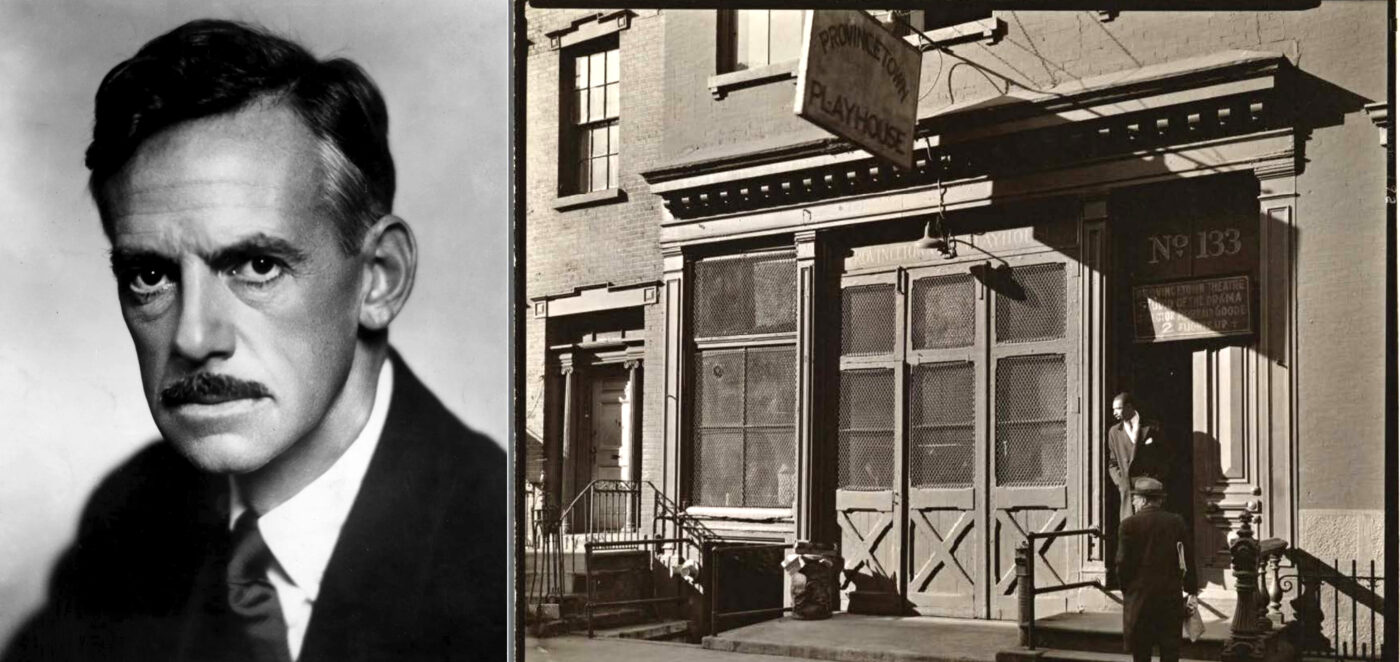
O’Neill’s connection to Greenwich Village was pivotal in his early artistic development. After recuperating from illness and beginning to write plays, he joined a group of experimental writers and artists whose summer gatherings in Provincetown, Massachusetts, evolved into a theater collective. When that company moved to Greenwich Village in 1916, they established the Playwrights’ Theater — later known as the Provincetown Playhouse — in a parlor at 139 MacDougal Street, giving O’Neill a stage for his early works such as Bound East for Cardiff. The Provincetown Playhouse became an important cultural hub, hosting performances of O’Neill’s one-act plays and helping to launch his career within the vibrant bohemian and artistic community of the Village.
Read more about O’Neill’s Greenwich Village legacy on our blog.
Sinclair Lewis
Sinclair Lewis was a prominent American novelist and social critic whose satirical portrayals of early 20th-century American life made him one of the most widely read authors of his era. He gained acclaim with such novels as Main Street (1920), Babbitt (1922), Arrowsmith (1925), and Elmer Gantry (1927), which critiqued everything from small-town parochialism to materialistic middle-class values. His incisive style and broad influence led to his becoming the first American to win the Nobel Prize in Literature, awarded in 1930 by the Swedish Academy “for his vigorous and graphic art of description and his ability to create, with wit and humour, new types of characters.”
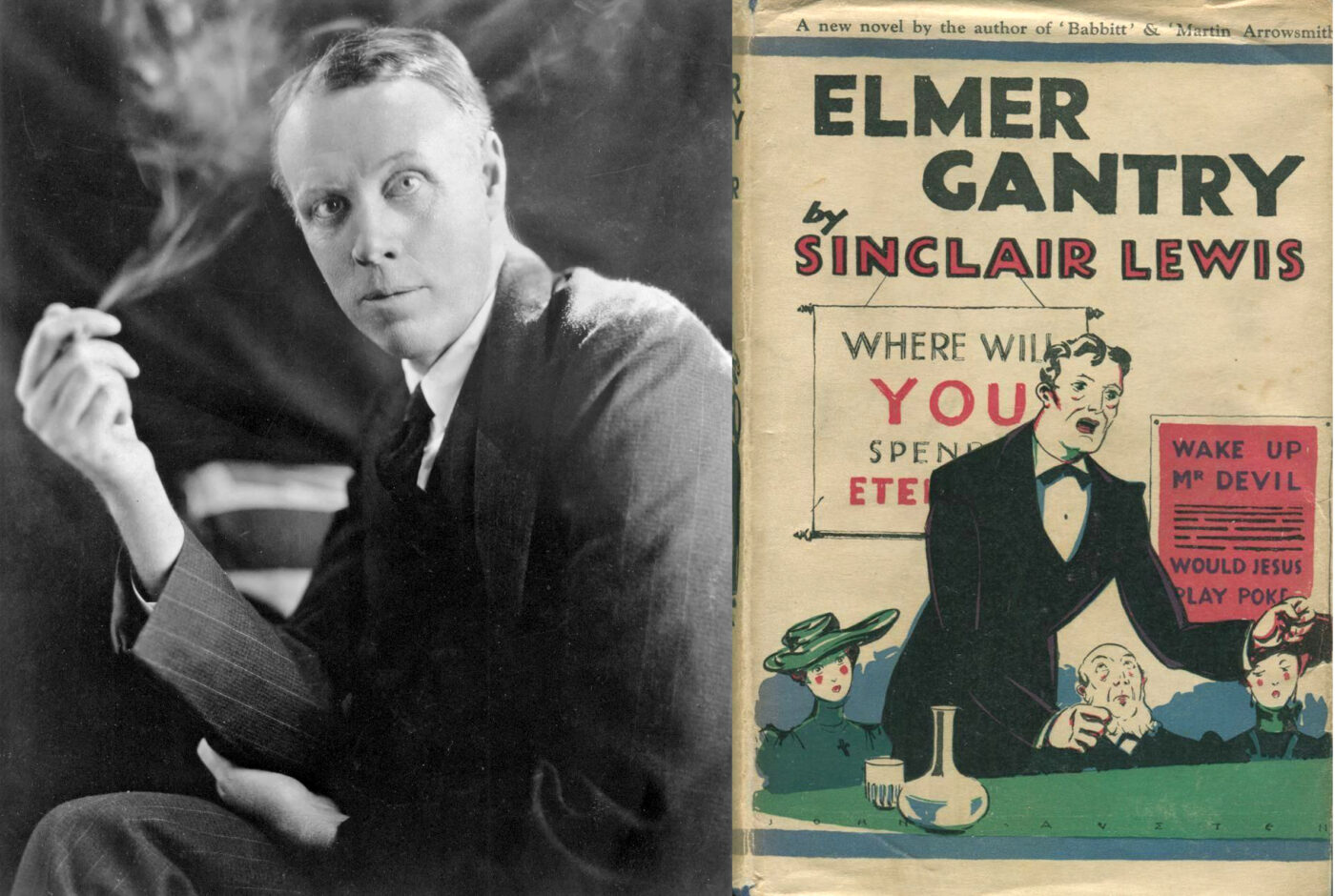
Lewis’s life took root in Greenwich Village during the late 1920s alongside his second wife, journalist Dorothy Thompson, as part of the vibrant literary community along West 10th Street. The couple lived at 37 West 10th Street beginning in 1928; Lewis was awarded the Nobel Prize during his last year of residence on the block, marking a high point personally and in the neighborhood’s cultural legacy. While this was just one of several addresses Lewis held in New York, it placed him among a distinguished roster of writers who made Greenwich Village a vital hub for American letters.
Read more about writer’s homes and haunts in the neighborhood on our recently redesigned map and tours of the Greenwich Village Historic District.