
In the Streets: A Visual History of Protest in Greenwich Village, the East Village, and NoHo
Protest has long been woven into the fabric of Greenwich Village, the East Village, and NoHo. From Washington Square to Tompkins Square and along countless main thoroughfares, side streets, and parks, our public spaces have served as a forum for dissent and debate.
Village Preservation’s Historic Image Archive captures this legacy with remarkable clarity. Through the lenses of photographers like Fred W. McDarrah and Marjorie Zien, we can trace how protest has shaped and been shaped by the streets, parks, and people of our neighborhoods and New York across decades.
The Village as a Stage for Dissent
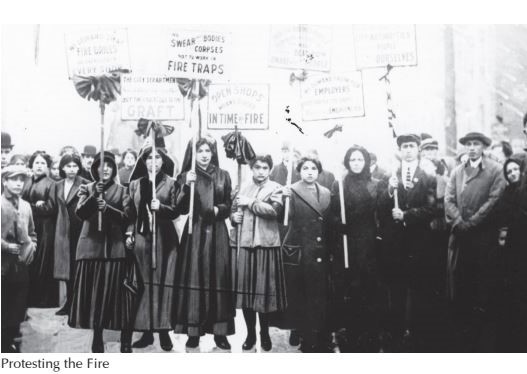
Our First Amendment rights have been exercised loudly and frequently in our neighborhoods over the decades, as protests have unfolded face-to-face on Village sidewalks and in public squares. Washington Square Park, Tompkins Square Park, Union Square’s southern edges, and countless narrow streets have served as gathering places where residents, artists, students, and activists have come together to demand change.
These spaces mattered, and still do, because they are deeply human in scale. Protest in our neighborhoods has always been visible, intimate, and unavoidable.
Fred W. McDarrah: Bearing Witness to a Movement Culture
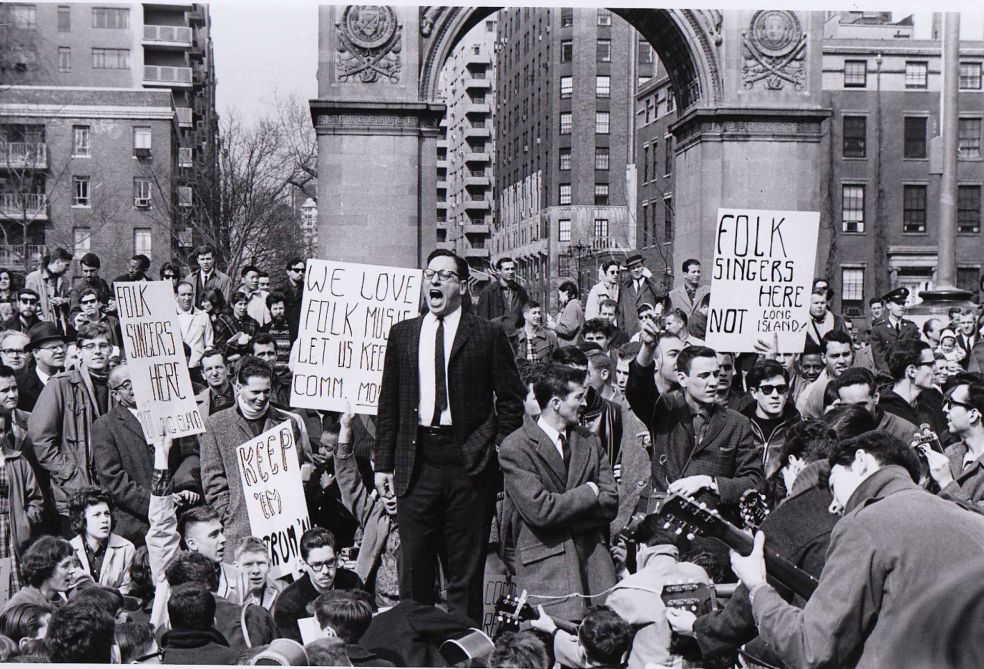
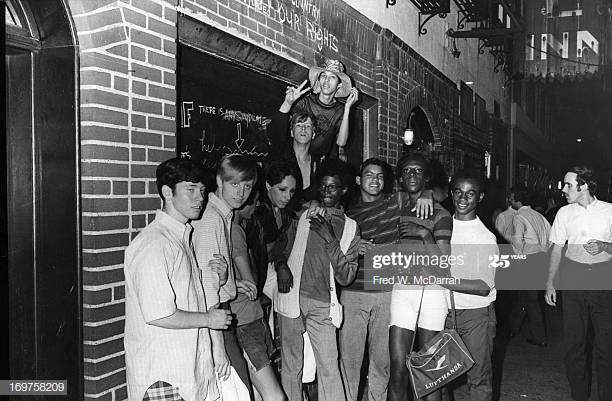
Few photographers documented this spirit more extensively than Fred W. McDarrah, a longtime photographer for The Village Voice. McDarrah’s images from the 1950s through the 1980s capture a downtown alive with resistance; from anti–Vietnam War demonstrations to civil rights marches, and women’s liberation protests to the Stonewall Riots, Fred W. McDarrah was on the scene to document so much of the unrest of the mid-20th-century.
McDarrah’s photographs show protest not as spectacle, but as community life: handmade signs, determined faces, moments of confrontation and camaraderie unfolding against familiar Village streetscapes. Buildings that still stand today appear behind marchers and speakers, anchoring movements in place and reminding us that these struggles were rooted in lived neighborhoods.
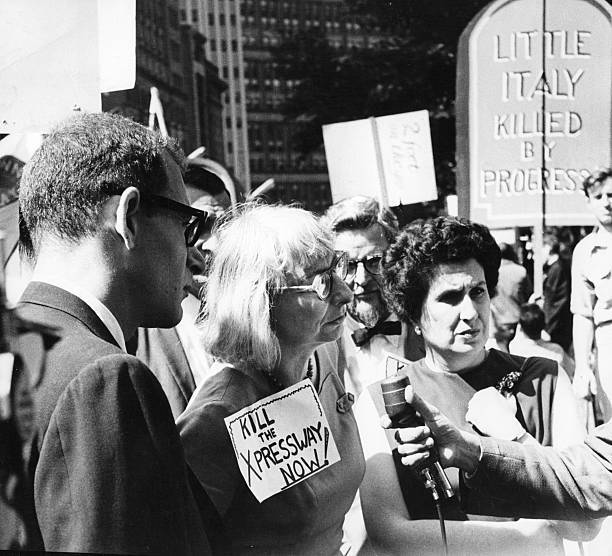
From One Generation to the Next
What makes McDarrah’s images especially powerful is how recognizable the settings remain. The streets may have changed, the trees in Washington Square Park may have grown taller and fuller, but the neighborhood’s history of change has endured. The impulse to gather, to resist, and to speak out lives on..
That continuity becomes even more striking when placed alongside the work of Marjorie Zien.
Marjorie Zien: Protest in Our Own Time
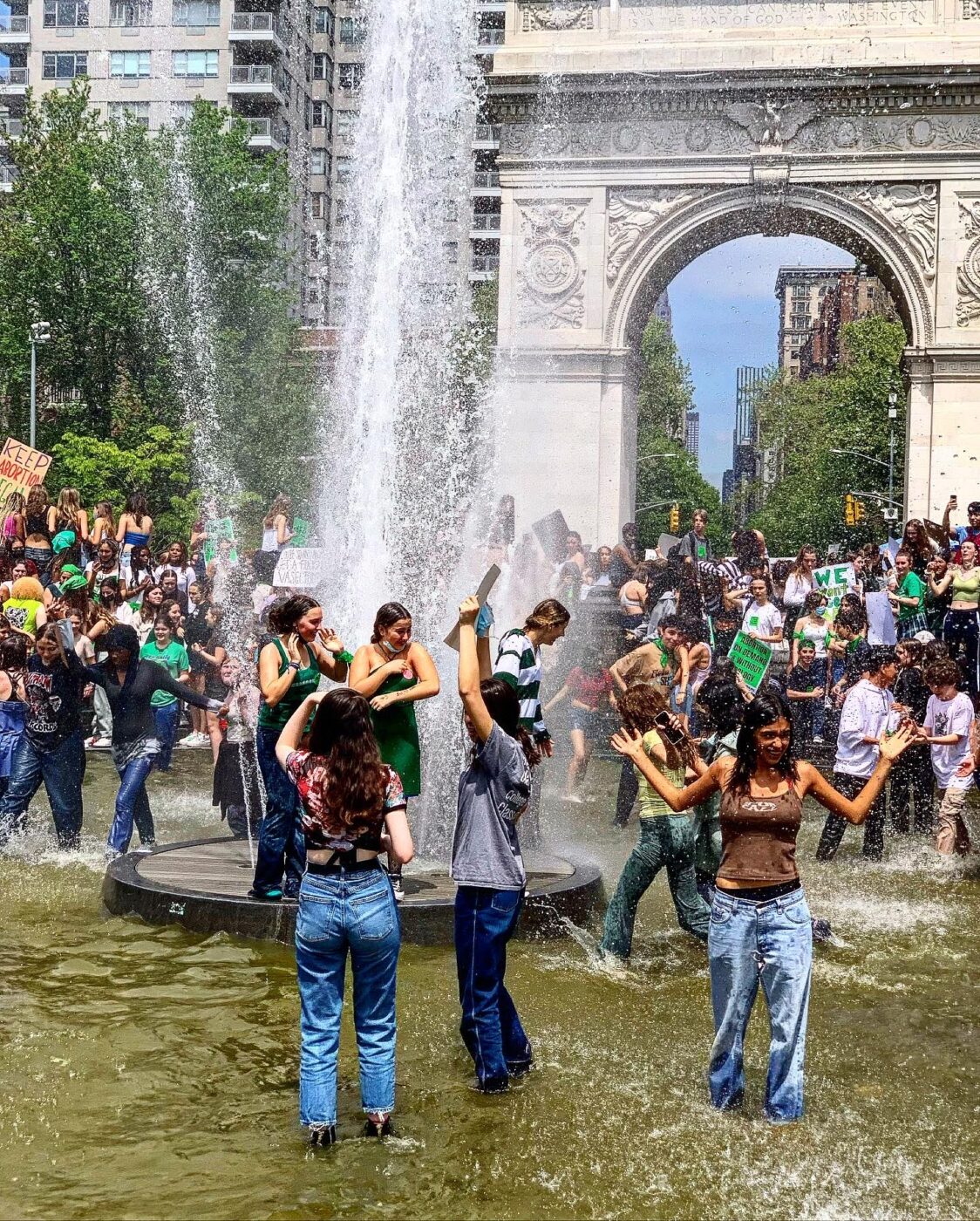
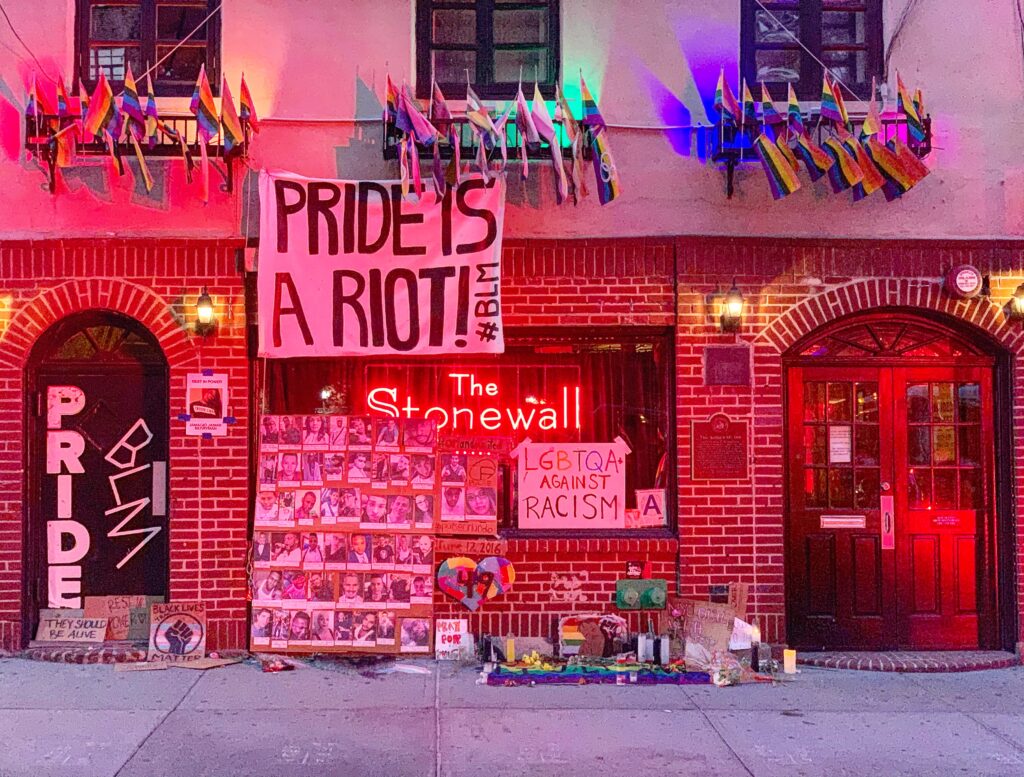
Marjorie Zien’s photographs from the turbulent recent times of 2020 to 2022, also part of Village Preservation’s Historic Image Archive, document protests responding to racial injustice, women’s rights, threats to democracy, LGBTQ+ rights, public health crises, and more. Her images capture a different era, but a familiar rhythm: crowds assembling, voices raised, streets temporarily transformed into forums for civic expression.
Seen alongside McDarrah’s work, Zien’s photographs reveal how protest has evolved, becoming more diverse, often more explicitly intersectional, while remaining rooted in the same neighborhoods. The signs change. The causes shift. The streets remain.
Place Matters
Together, these photographs underscore a central truth: protest in Greenwich Village, the East Village, and NoHo is inseparable from place. These are neighborhoods where public space invites engagement, and where activism has long been part of daily life.
Village Preservation’s work to document and protect these neighborhoods ensures that the physical settings of protest — the parks, streets, and buildings that framed these moments — are not lost. Preservation, in this sense, is itself an act of respect for civic history.
A Living Archive of Resistance
Village Preservation’s Historic Image Archive offers hundreds of images documenting protest, community life, and cultural change in Greenwich Village, the East Village, and NoHo — a visual record of how ordinary streets have repeatedly become sites of extraordinary civic action.
The Historic Image Archive allows us to see protest not as isolated events, but as a continuous thread running through downtown history. From Fred W. McDarrah’s mid-20th-century images to Marjorie Zien’s more recent photographs of protest and dissent, the message is clear: these neighborhoods have always been places where people show up.
And they still are…
Please contact us at info@villagepreservation if you would like to donate historic images of protests, or any other facet of life, throughout Greenwich Village, the East Village, and NoHo.