
Business of the Month: Tribes of Morocco, 346 East 9th Street
Your input is needed! Today we feature our latest Business of the Month — help us to select the next. Tell us which independent store you love in Greenwich Village, the East Village, or NoHo: click here to nominate your favorite. Want to help support small businesses? Share this post with friends.3
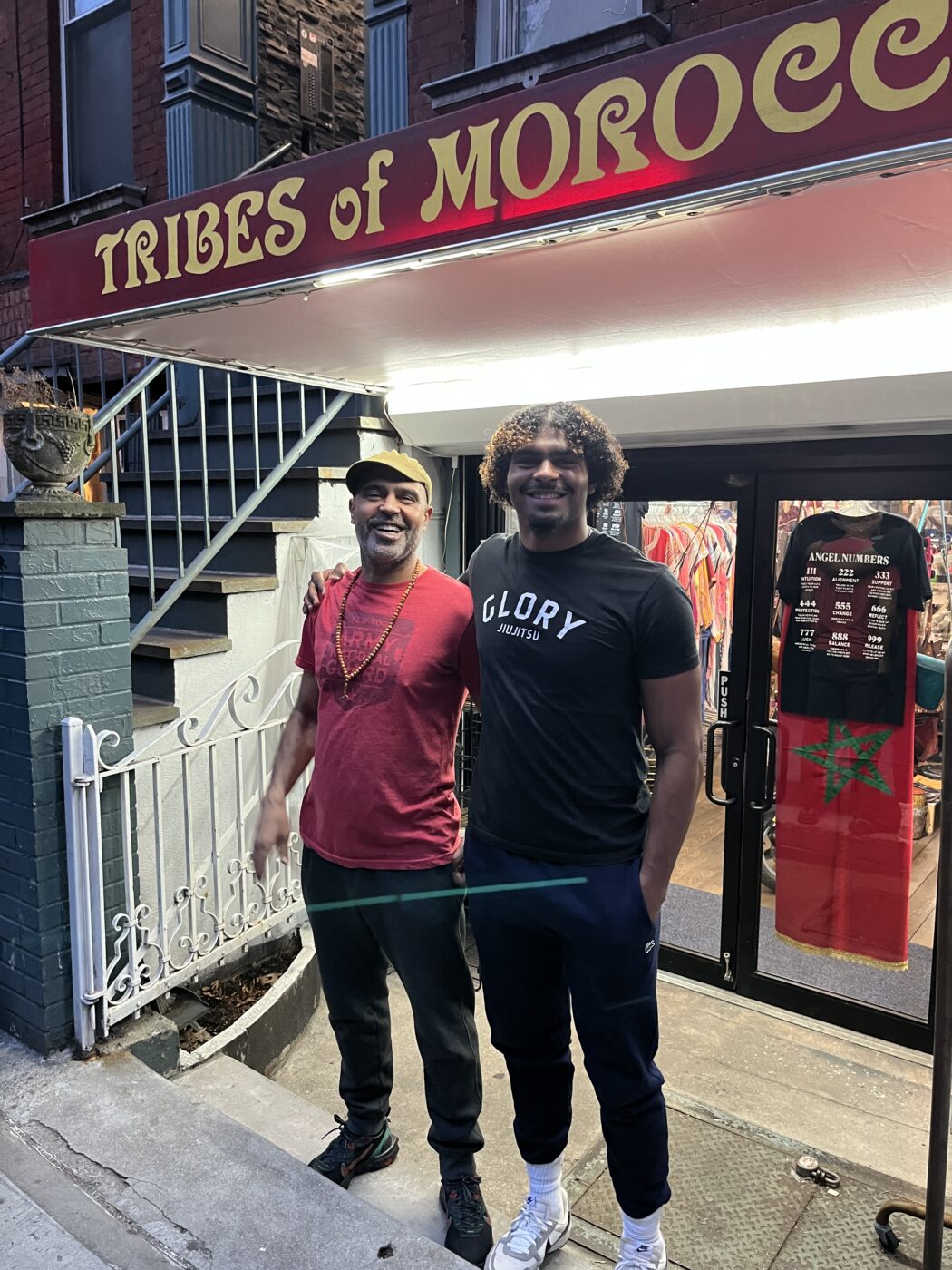
You should visit Morocco. It offers a remarkable variety of landscapes—desert, mountain, and coastline—beautiful architecture, and delicious cuisine. Its intoxicating souks reflect the blend of Arab, Berber, and European influences that has shaped the local culture. And many of its towns offer distinctive takes on traditional crafts. Until you make it there, however—or in between visits—you can find a distillation of Morocco at our January Business of the Month, Tribes of Morocco, at 346 East 9th Street; between 1st and 2nd Avenue — an eclectic store that offers specialties from throughout the country, allowing you the experience of a bazaar within the footprint of a neighborhood storefront.
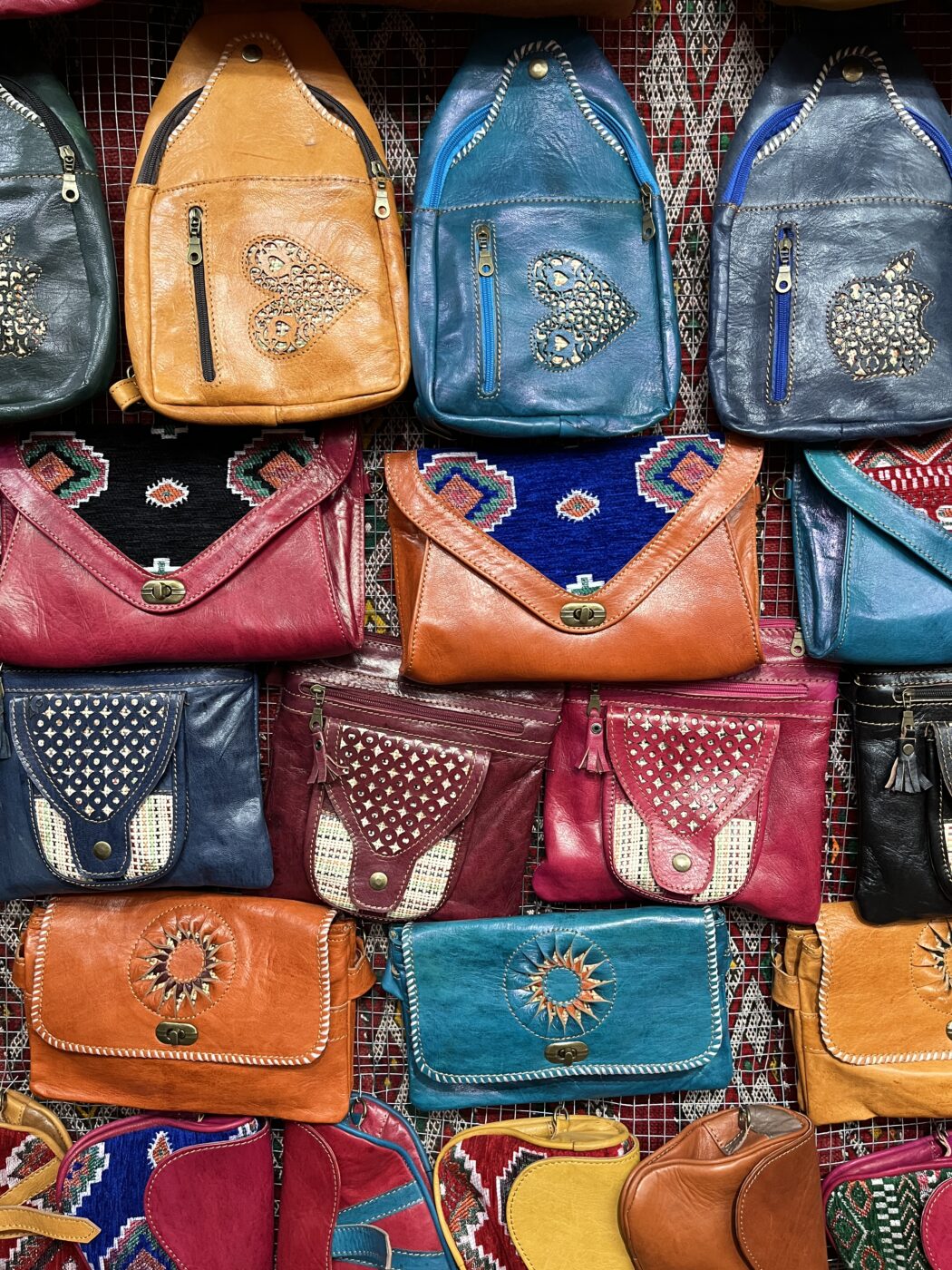
Khalil Hafdy came to New York from his native Casablanca during the 1980s to study. He settled in the East Village, where he still lives, and started selling Moroccan products in flea markets. Even then they were in demand, because of Morocco’s reputation for its traditional crafts. By 1992, his business had grown enough for Khalil to open a storefront on 7th Street. This move allowed him to expand his selection and take a step toward realizing his vision for the store: a bazaar of bazaars, an assembly in one place of items for which you would otherwise need to travel to multiple towns and markets throughout Morocco. To achieve this goal, Khalil gradually sought out artisans from all over the country, bypassing the middleman and bringing to his store hand-crafted products direct from the source. Before long, he had amassed a wide variety of merchandise and a following to go with it. The store became a destination for people wanting to learn more about Moroccan culture, or those who had visited the country and wanted to in some small way relive that experience.
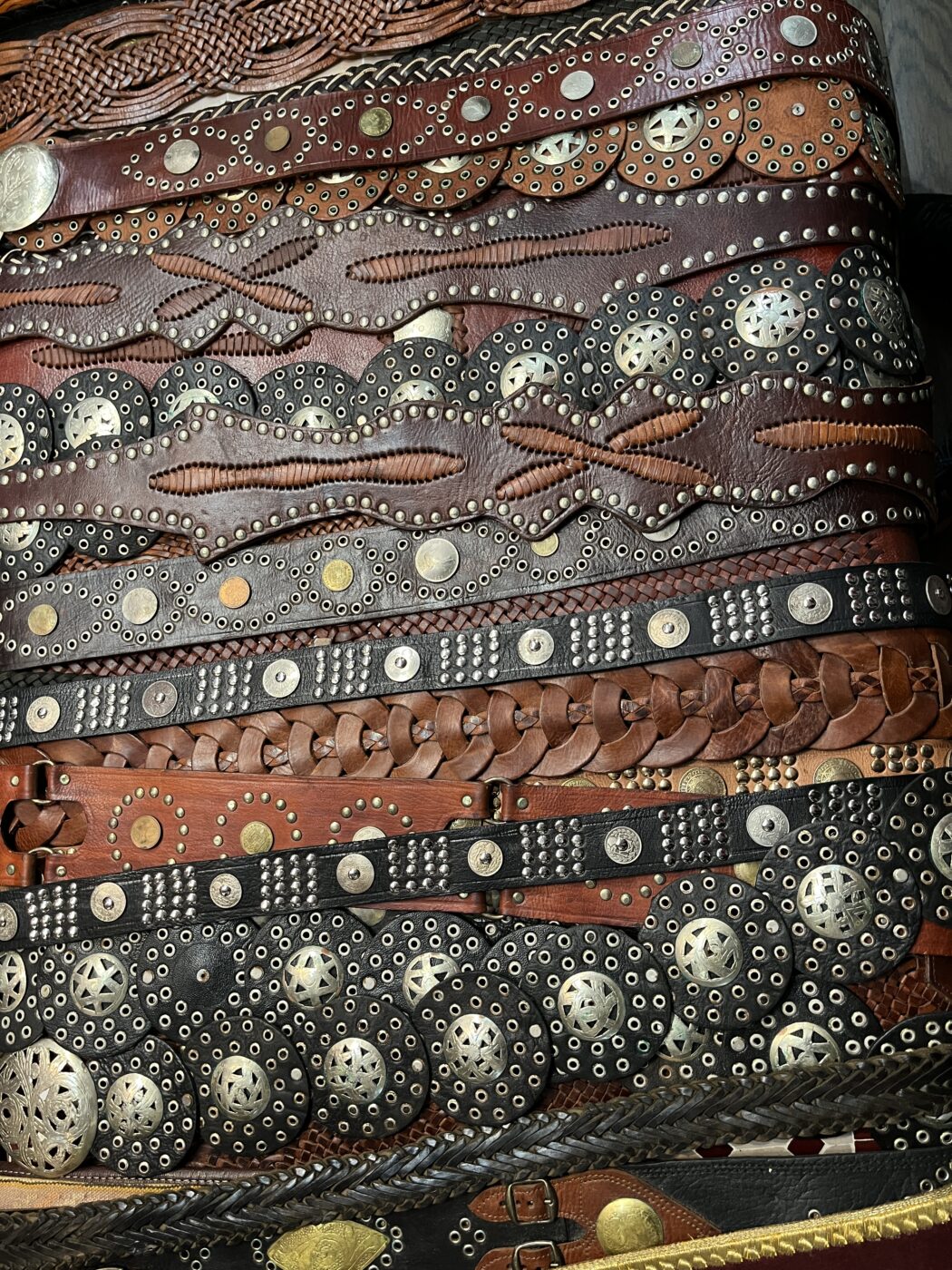
The products at Tribes of Morocco range from the primarily utilitarian to the primarily decorative. But it is one of the great virtues of traditional Moroccan crafts that they blur the distinction between the two. And that’s true across many of the store’s product categories.
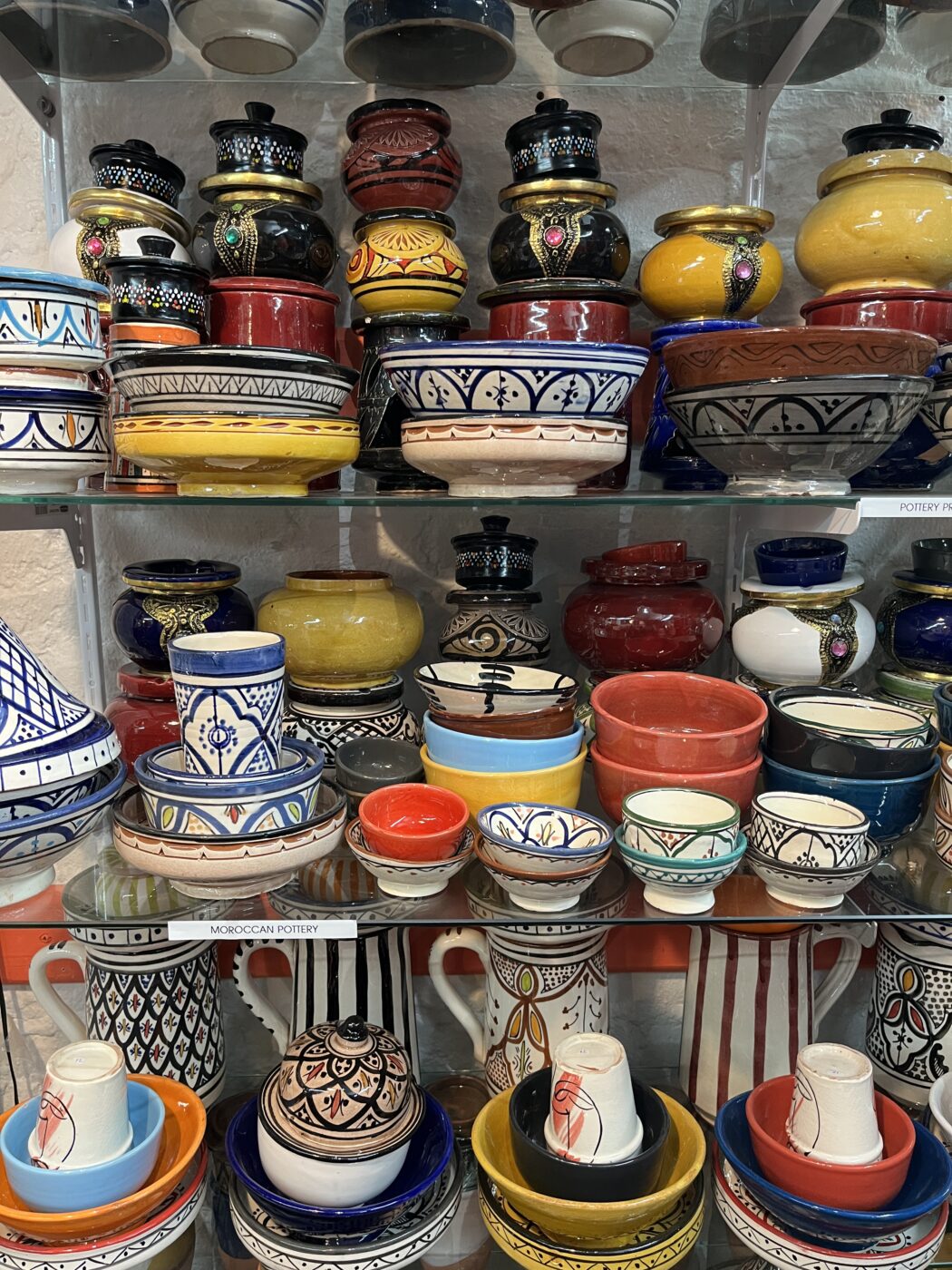
The pottery comes in a variety of styles, depending on the town of origin, and is both eminently functional (how else would you make tagine?) and ornamental, embellished as it is with hand-painted, vibrant-hued geometric and biomorphic patterns.
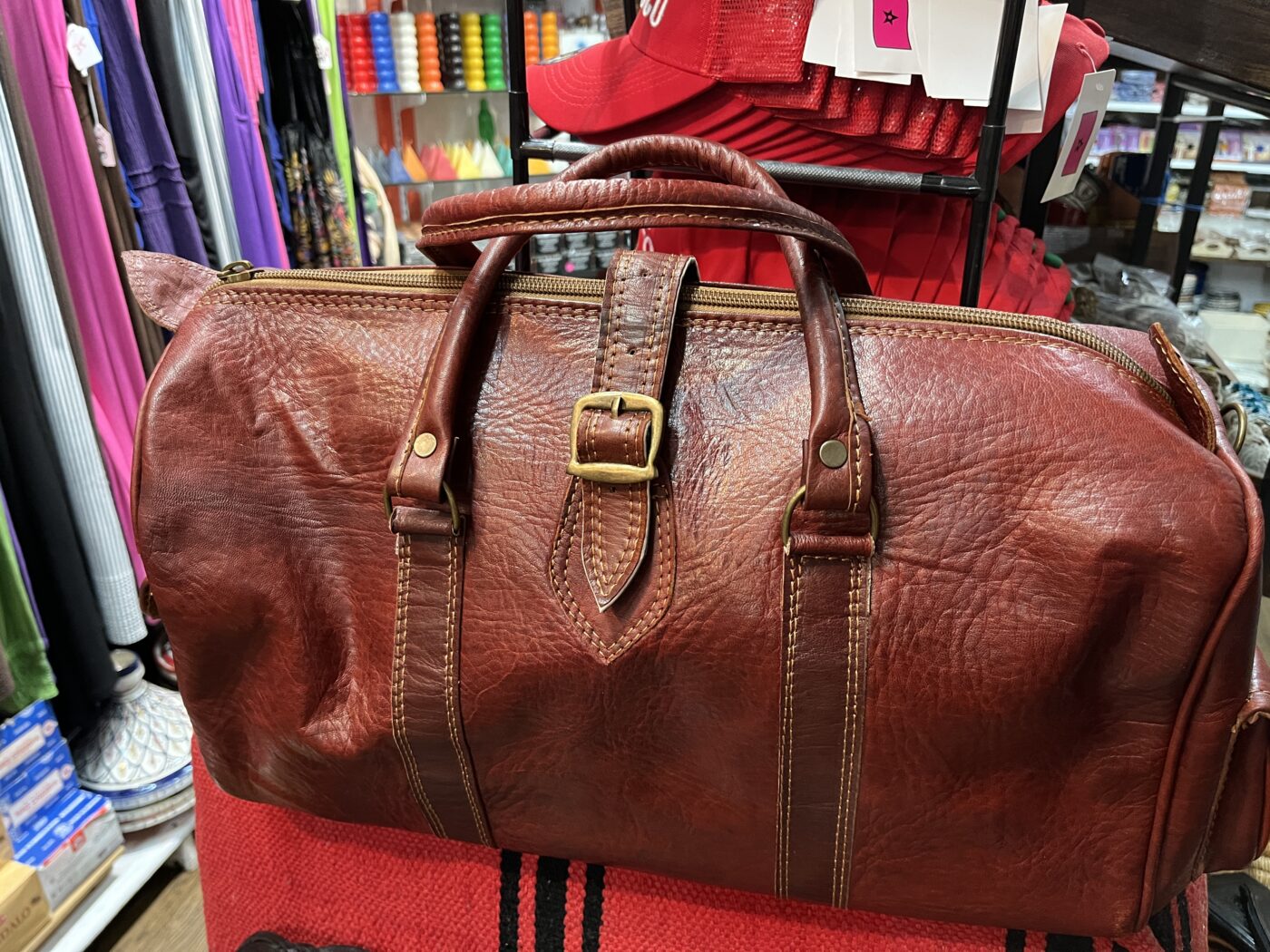
The leatherwork is as famous for its suppleness and natural grain as for its handcarved designs and colorful, natural dyes.
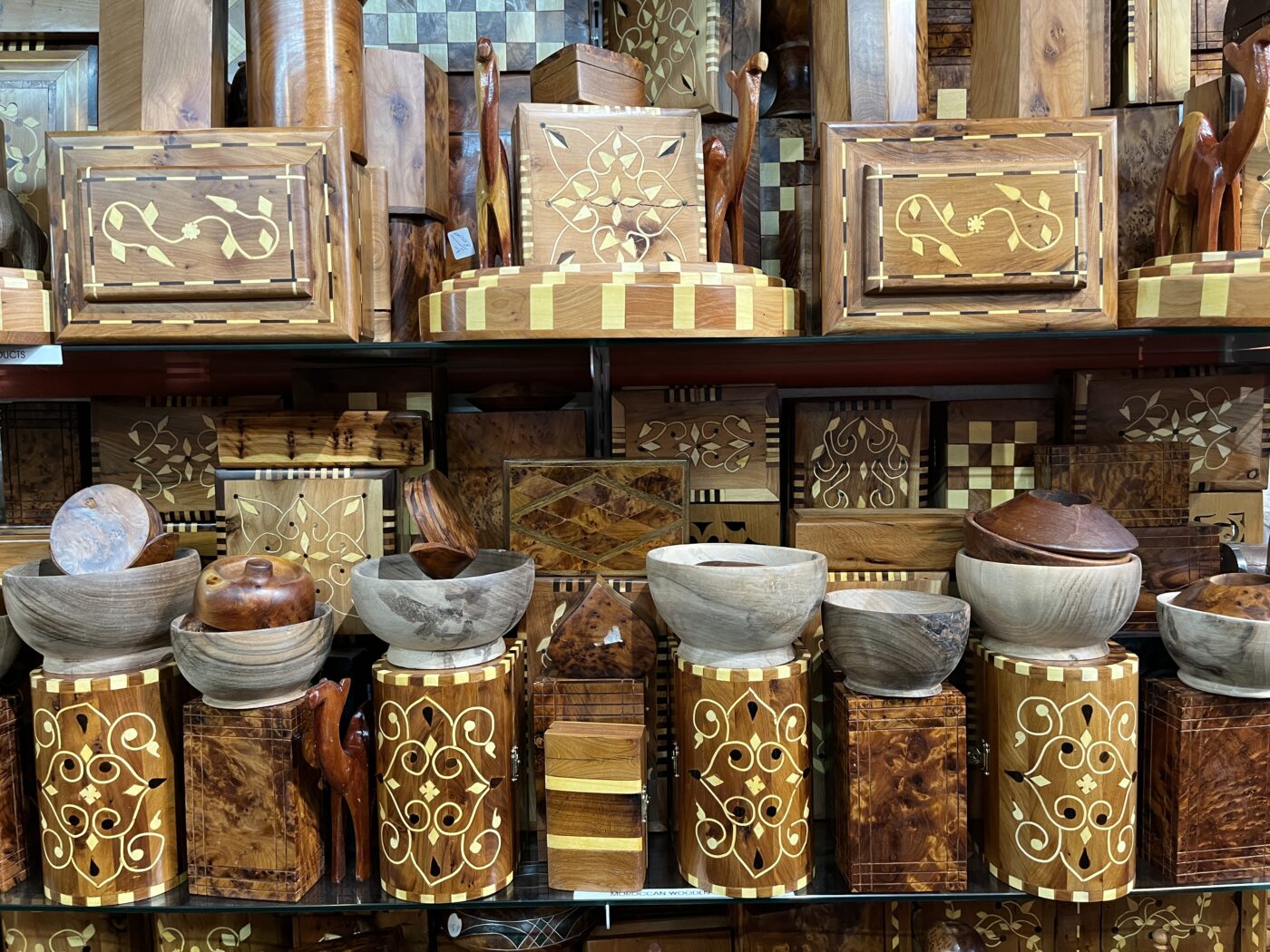
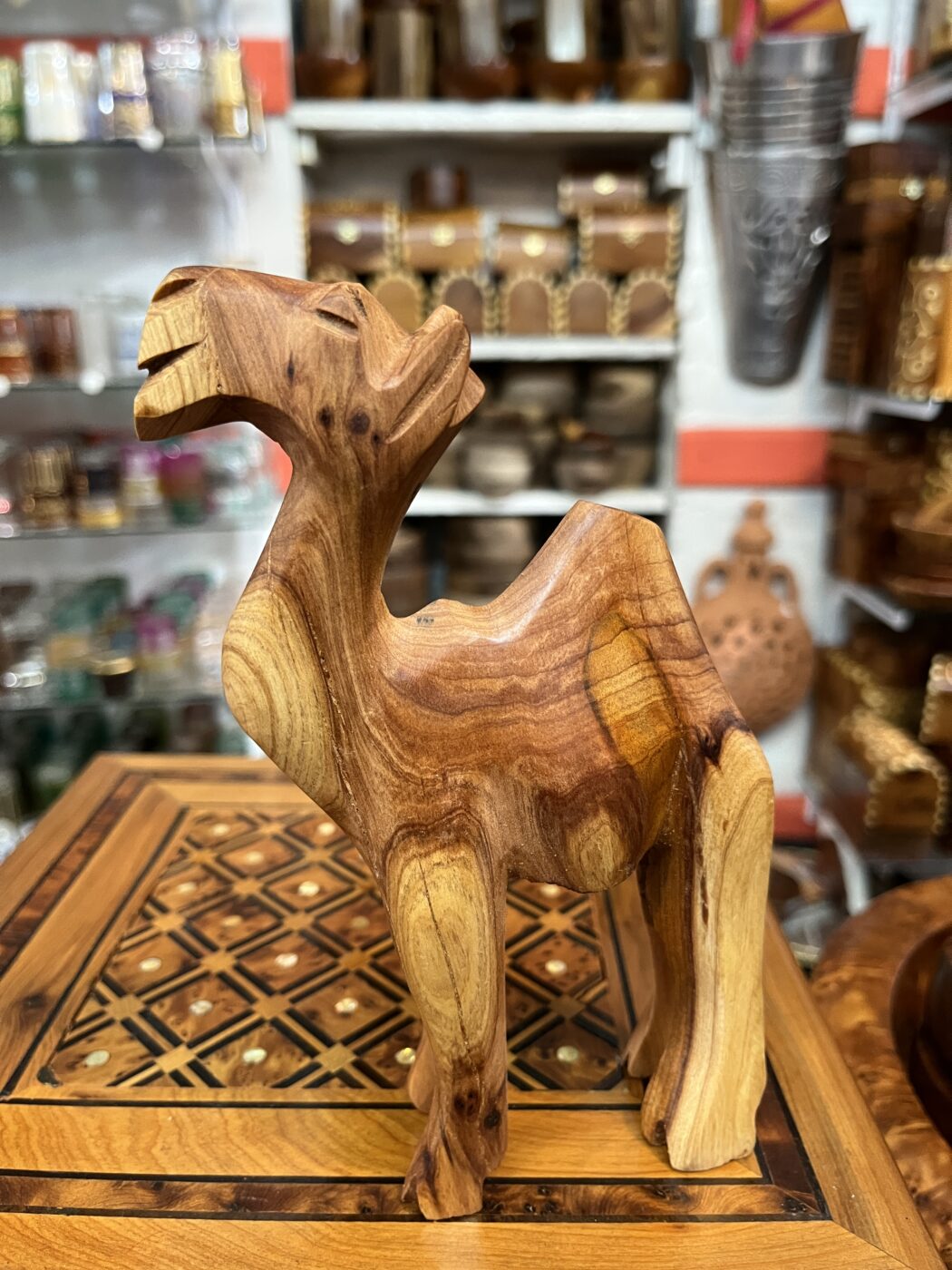
The woodwork features intricate geometric carvings and marquetry inlays, as well as hand painted decorative motifs (i.e. Zouak).
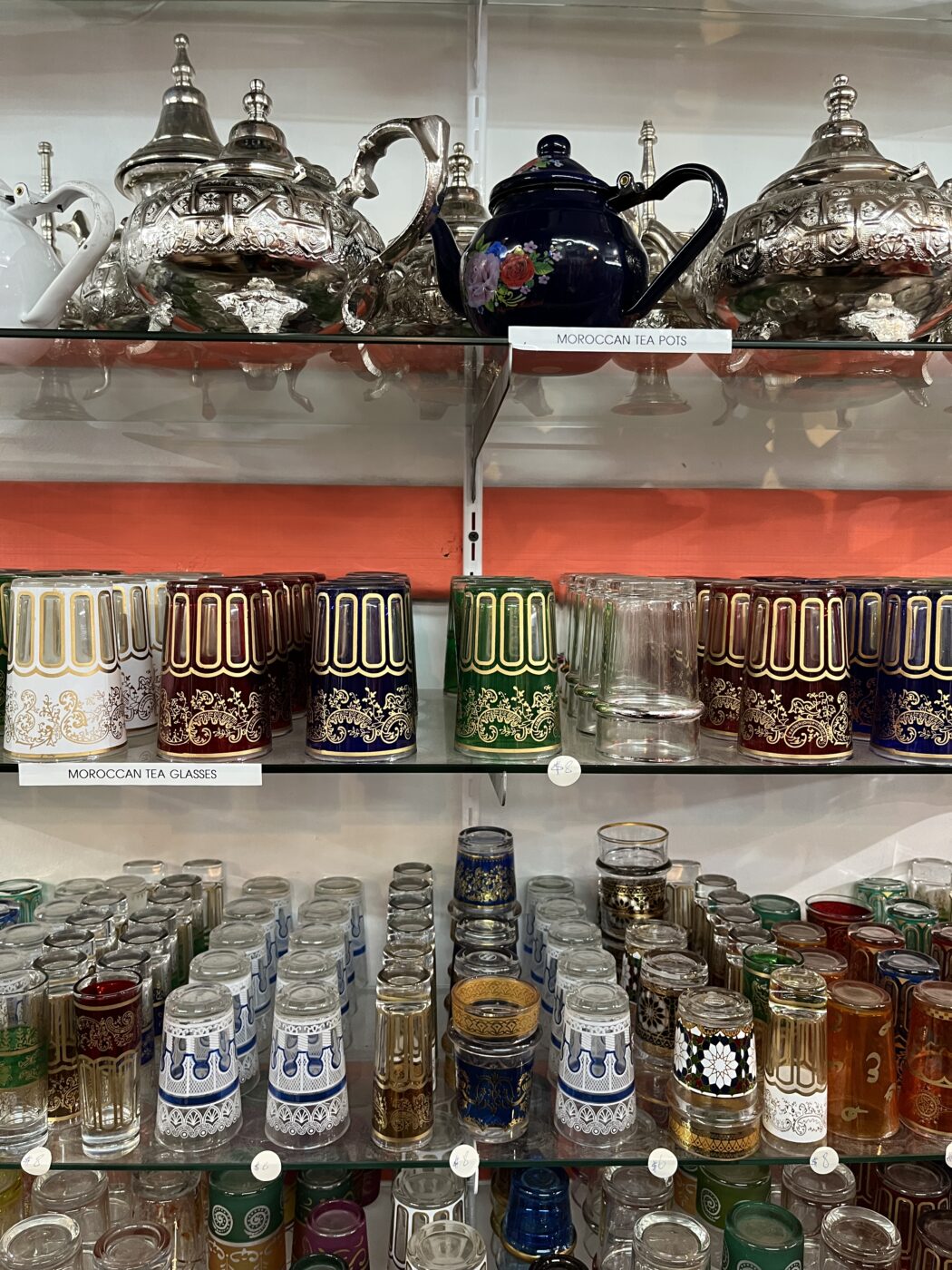
The glassware is not only intricately decorated, durable, and sustainably made from recycled locally-sourced materials, it also plays a central role in the Moroccan culture of hospitality. It’s what you use for serving mint tea. The store also carries handmade brass teapots in which you can brew it!
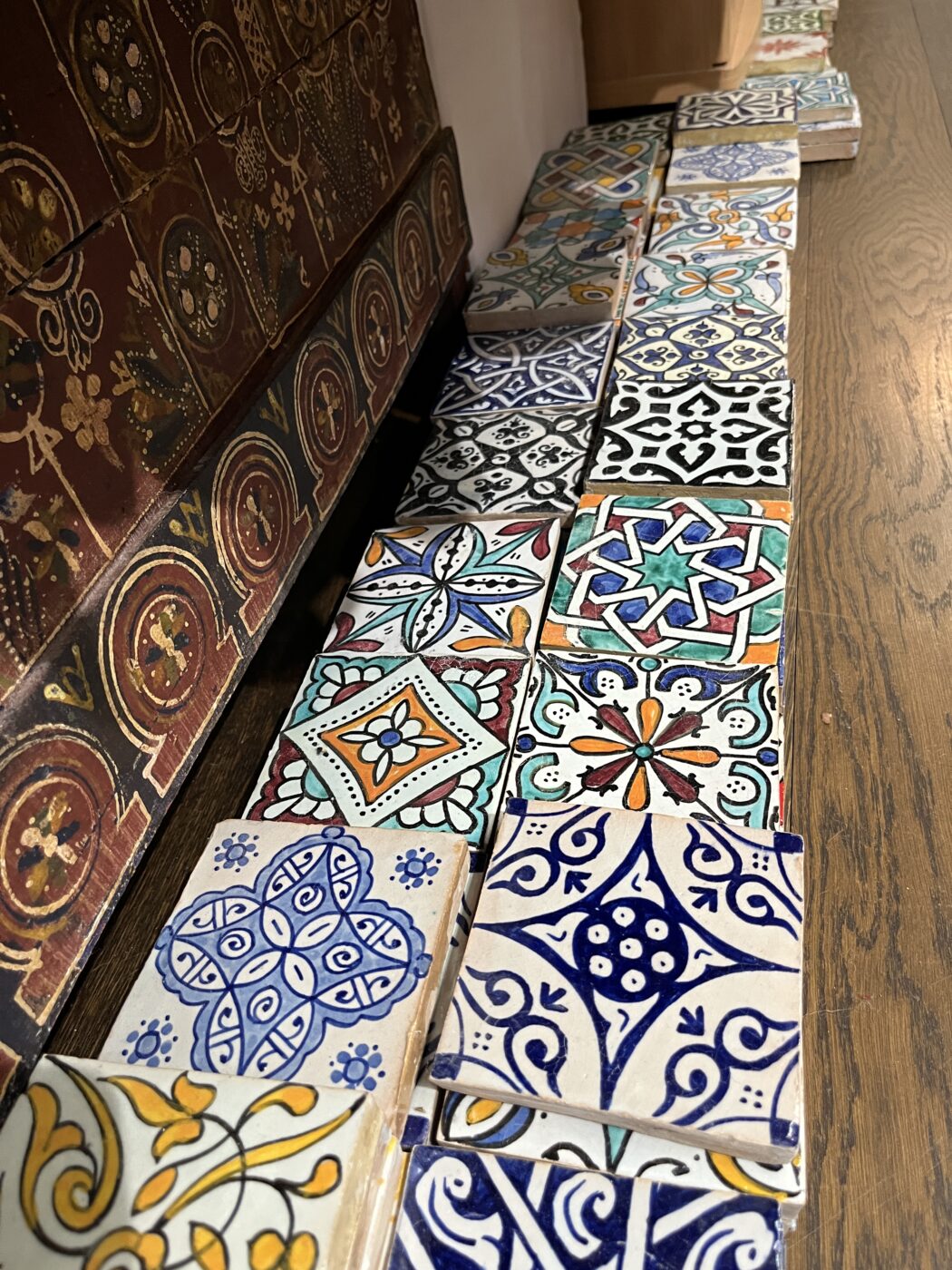
The tiles, which reflect the influence of Islamic art in its handpainted patterns, are at once rustic and elegant.
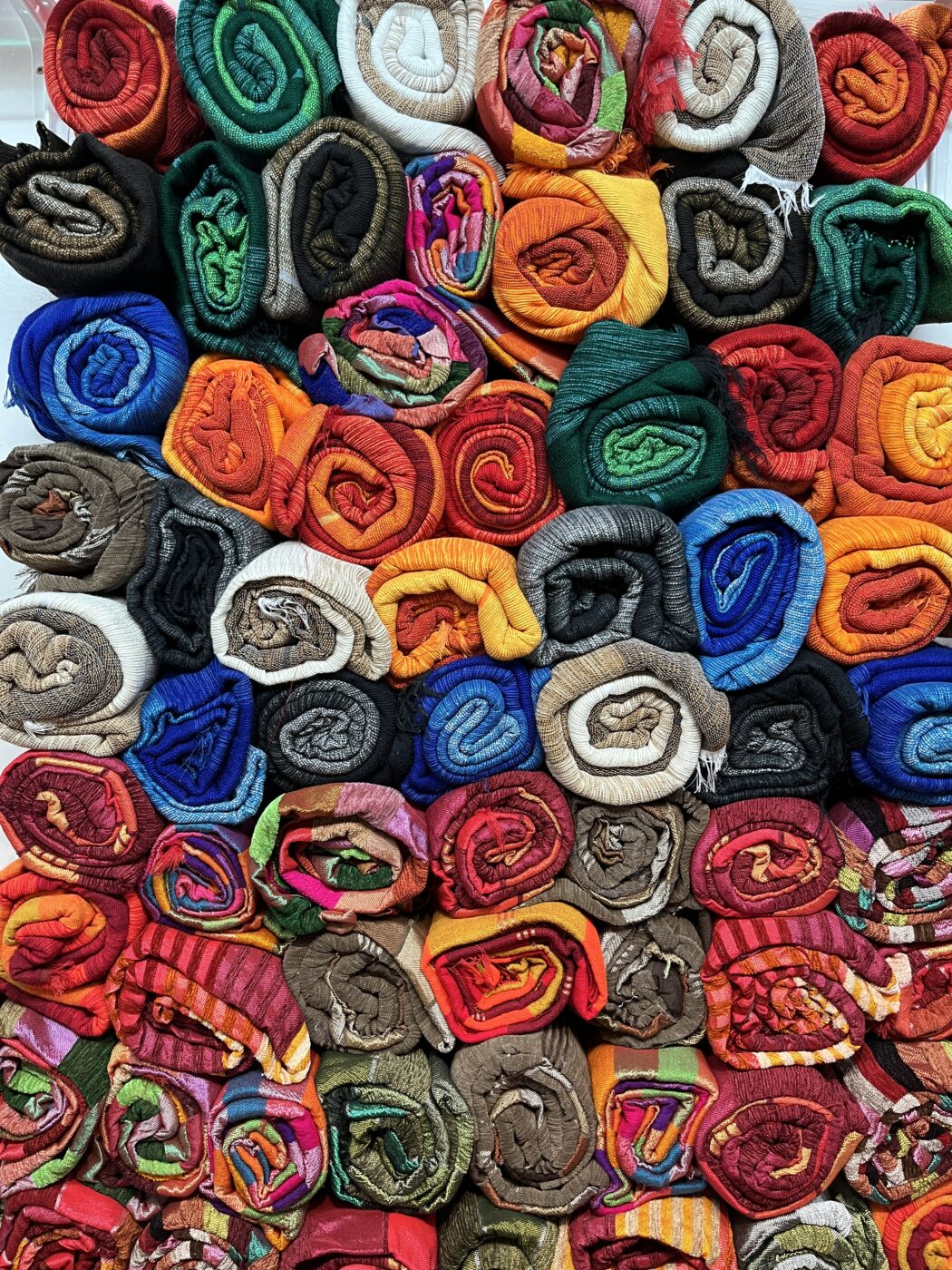
Eye-grabbing hand-dyed fabrics.
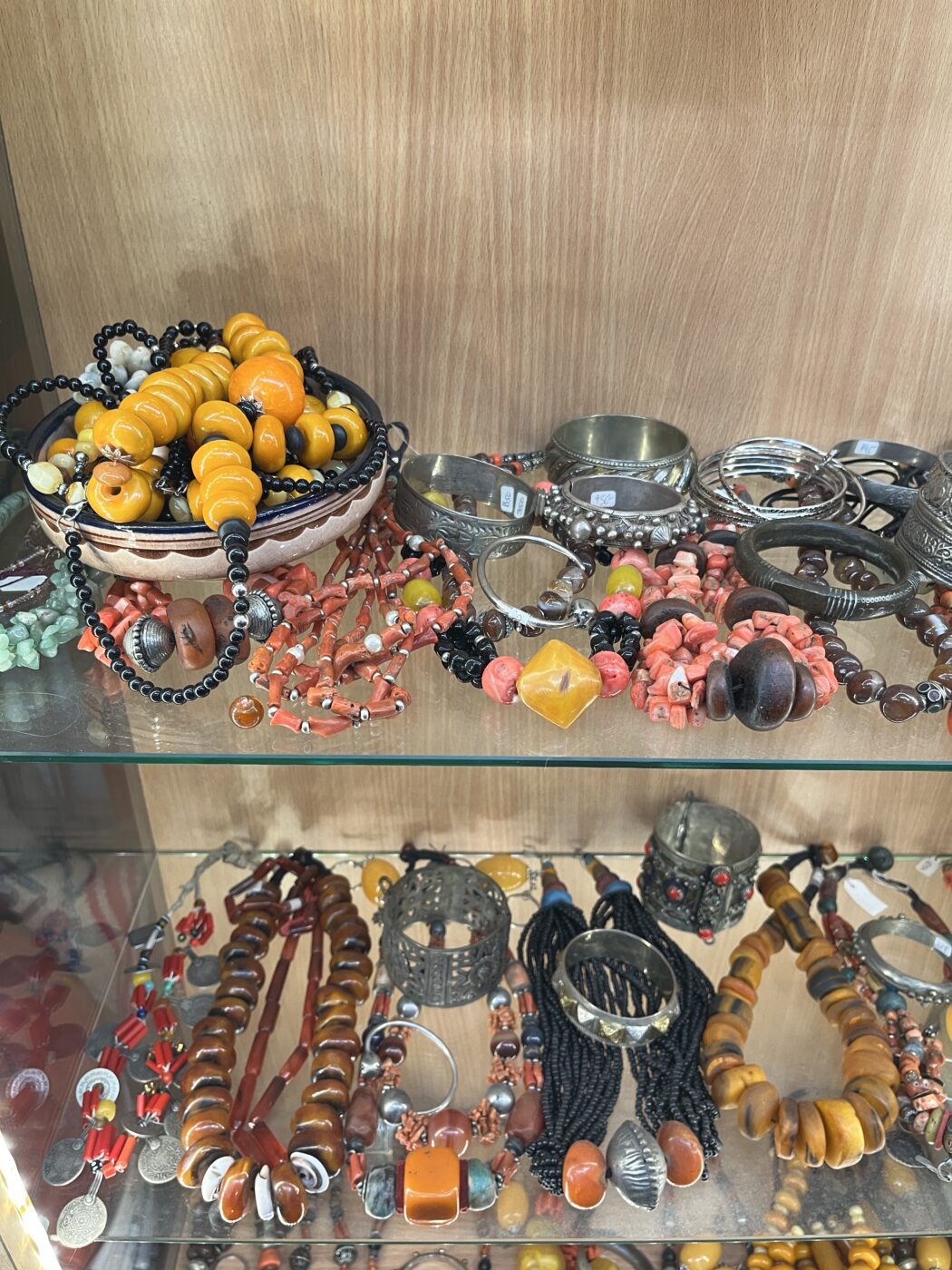
Jewelry from different tribes.
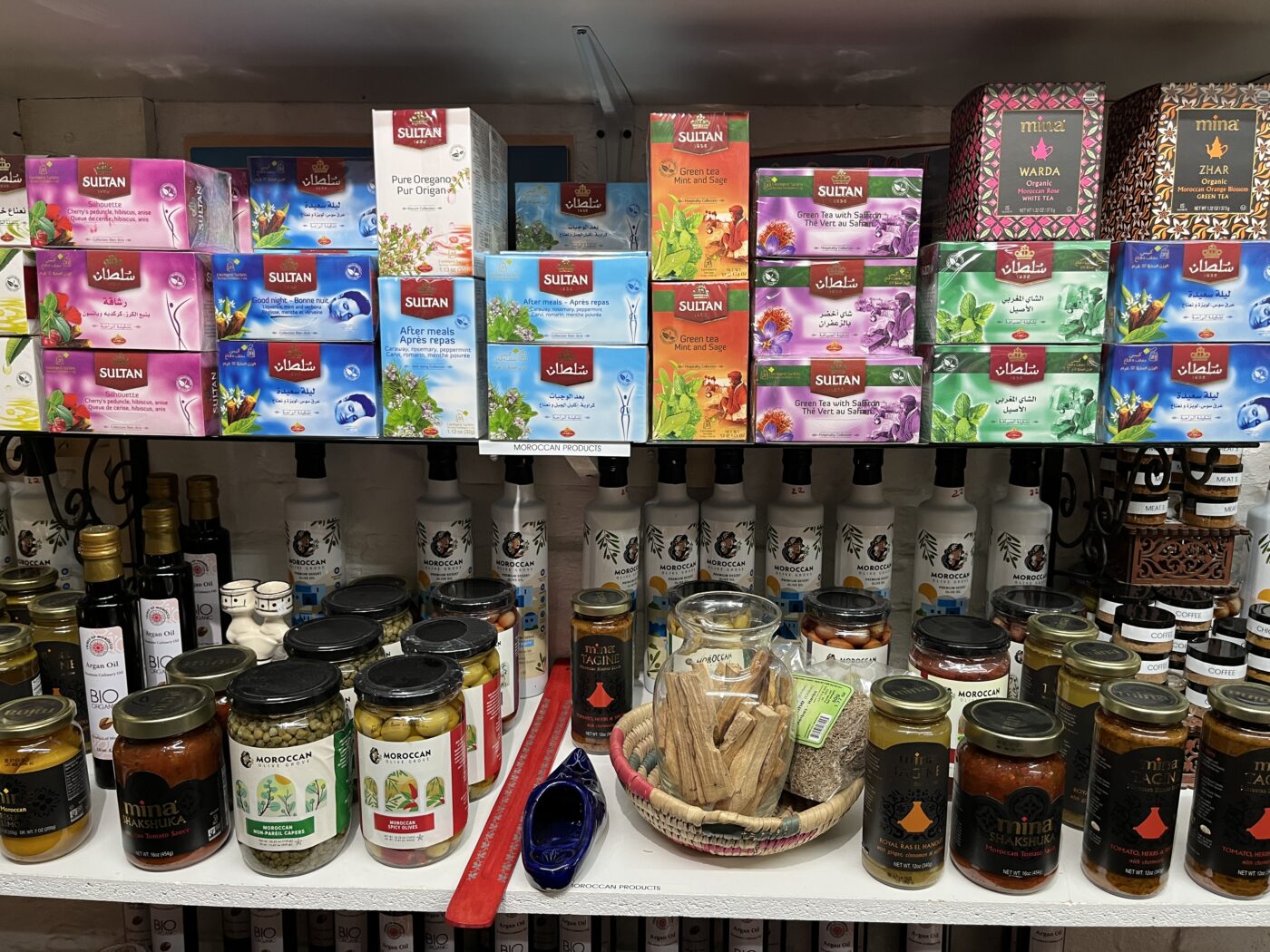
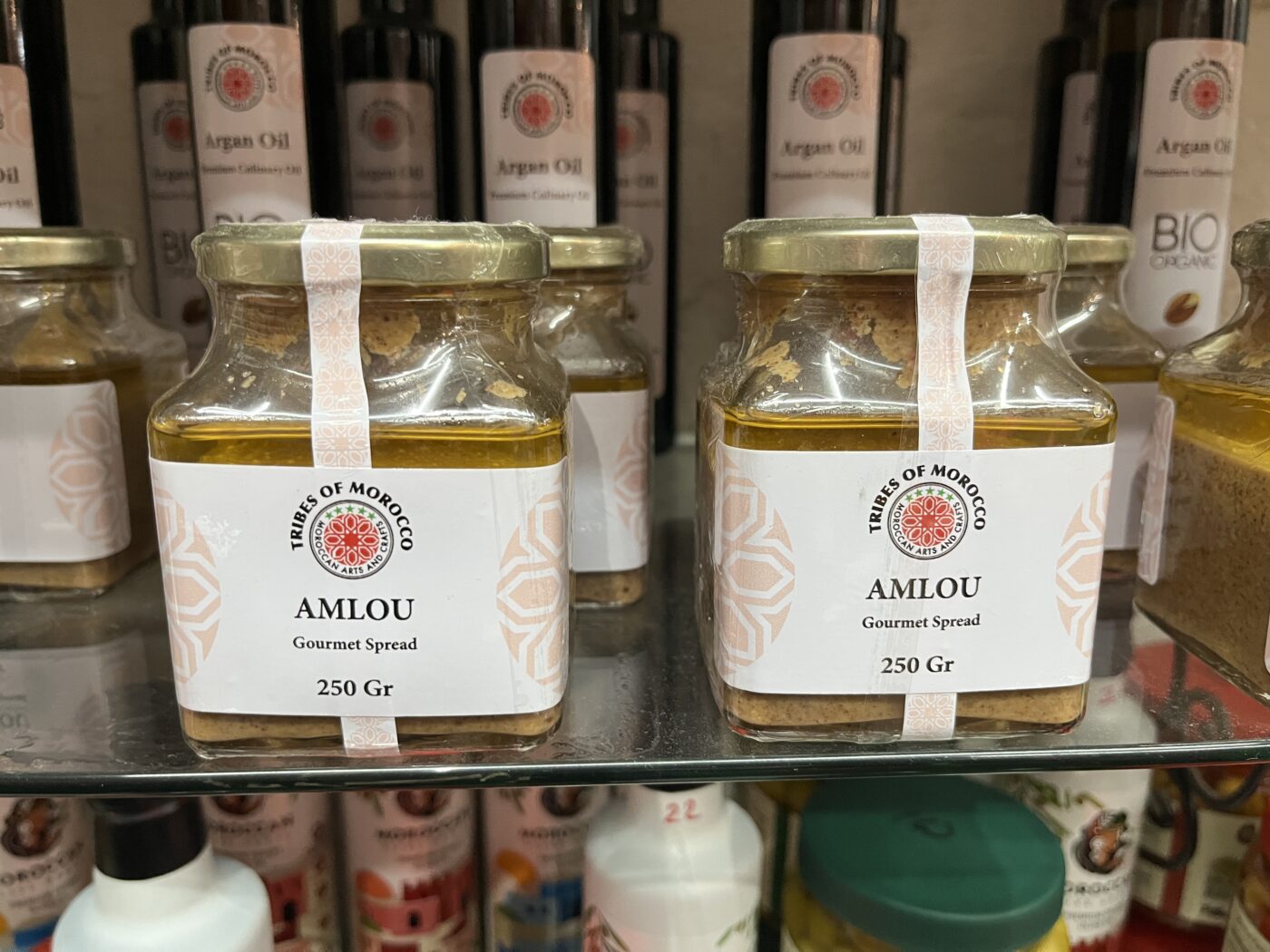
A couple of years ago, rising rents forced Khalil to relocate from his location at East 7th Street to his current, more spacious storefront. This afforded him the opportunity to once more expand his product selection, which now includes a wider array of Moroccan foods and cosmetics. You can now come here to shop for Moroccan tea, preserved lemons, olive oil, and olives, as well as for the rightly celebrated amlou, a traditional spread made from toasted almonds, argan oil, and honey.
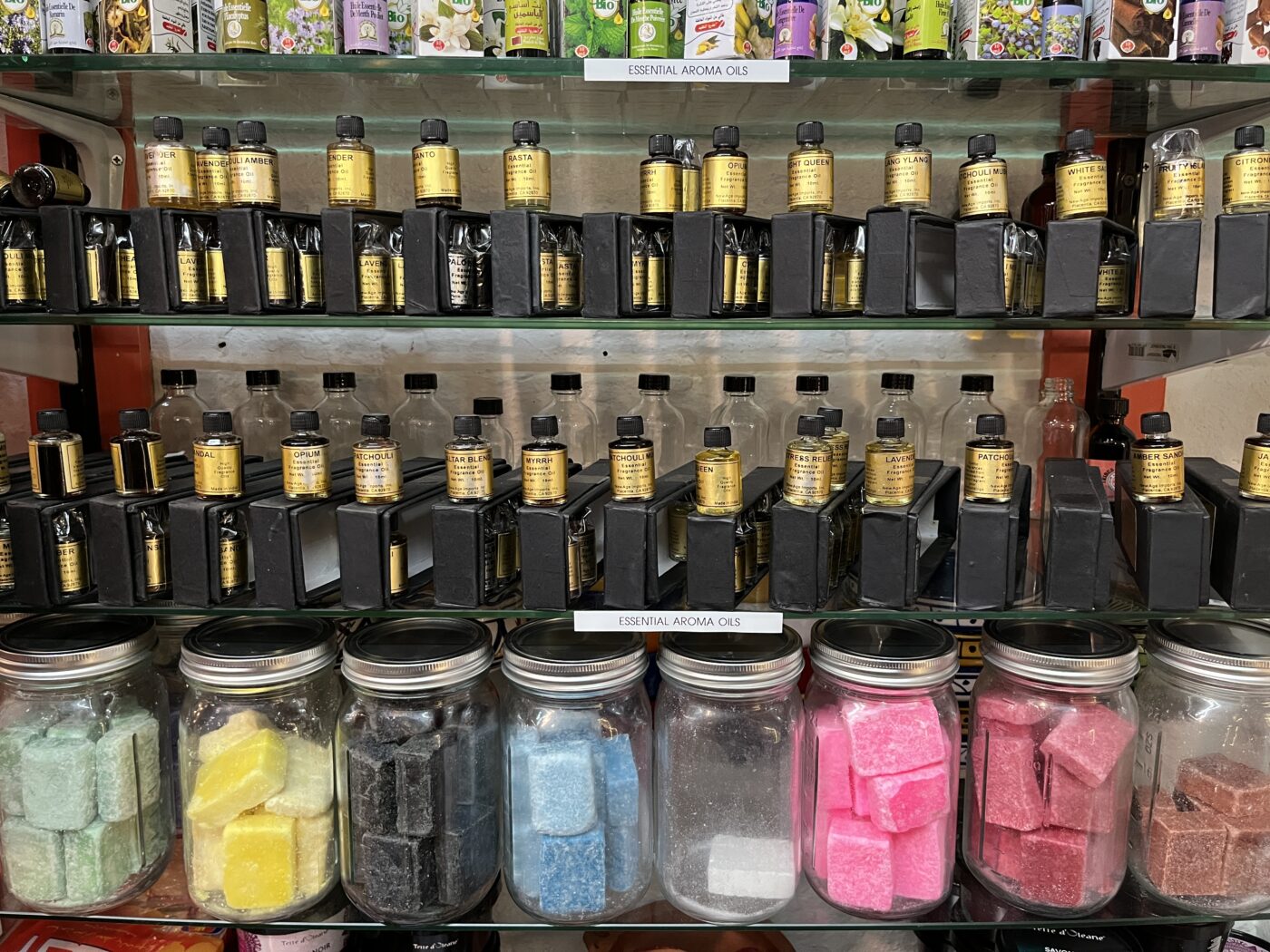
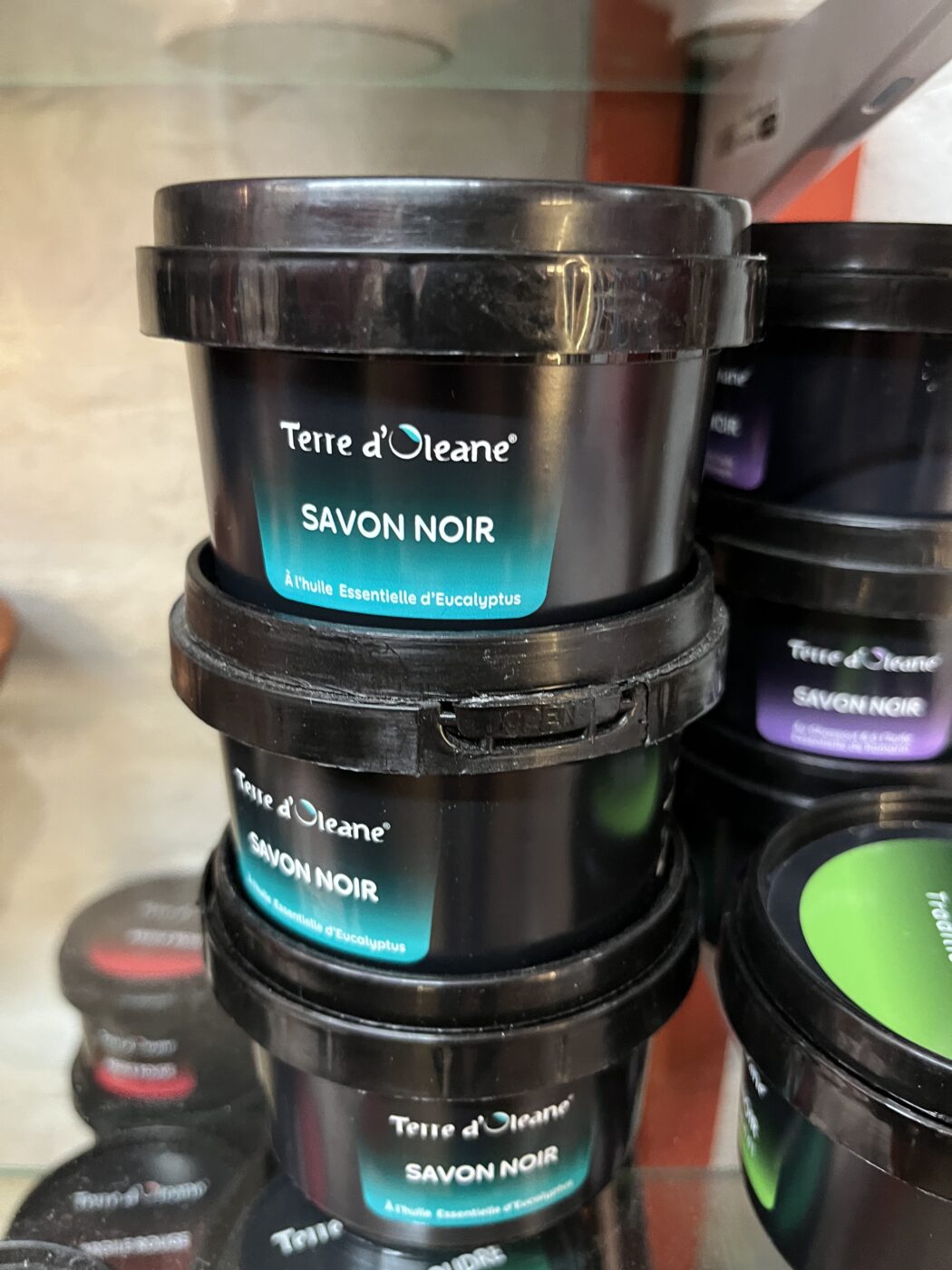
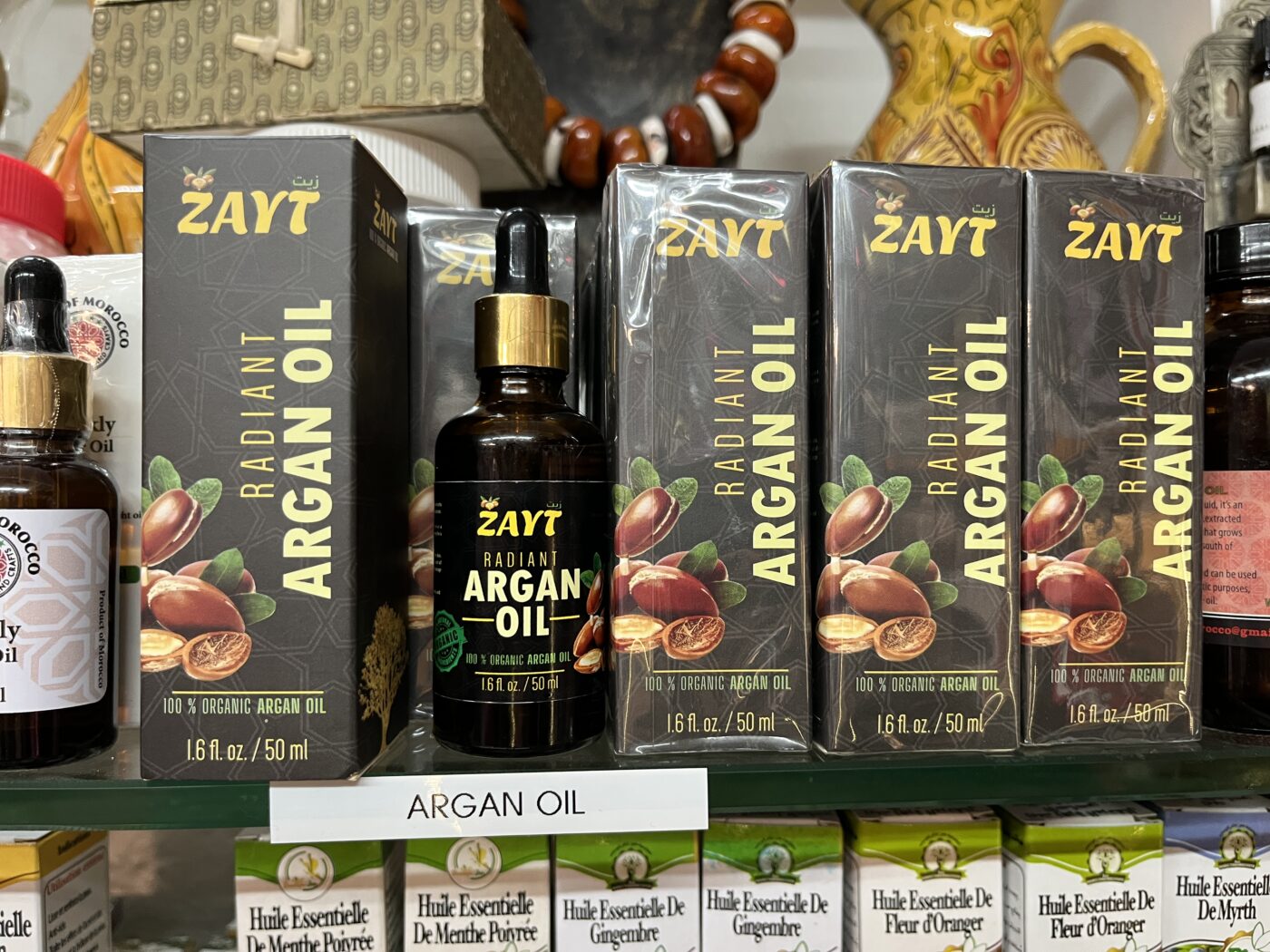
Speaking of argan oil, you will find more of it in the cosmetic sections, right next to the famous Moroccan savon noir. The latter is a plant-based, lye-free, soap paste that moisturizes as it cleans. The former, a plant-based Moroccan oil, is not just edible, it also does wonders for your hair and skin. We sampled some and, while modesty prevents us from reporting on comments we might have later received about our radiant appearance, suffice it to say that we’ll be back for more.
For its decades serving as a Moroccan cultural ambassador and bringing a souk of souks to our neighborhood, we are thrilled to name Tribes of Morocco our January 2026 Business of the Month.
What special small business would you like to see featured next? Just click here to nominate our next one. Thank you! #shoplocalnyc
Here is a map of all our Businesses of the in Month: