
Trailblazers of the Village – Black Women Who Called Our Neighborhood Home
In celebration of Black History Month, and in recognition of the often-overlooked figures in our collective story, today we take a look at the life and work of a few of the incredible Black women who have called our neighborhood home.
Whether activists, artists, or teachers, these women’s legacies have impacted the course of history in NYC, the country, and beyond. Pushing up against both gender and race-based discrimination, they persevered and thrived through passion, smarts, and sheer determination.
To learn more about these impactful figures, and many more, visit Village Preservation’s Civil Rights and Social Justice Map and Women’s Suffrage History Map.
Sarah Smith Garnet – 175 Macdougal Street
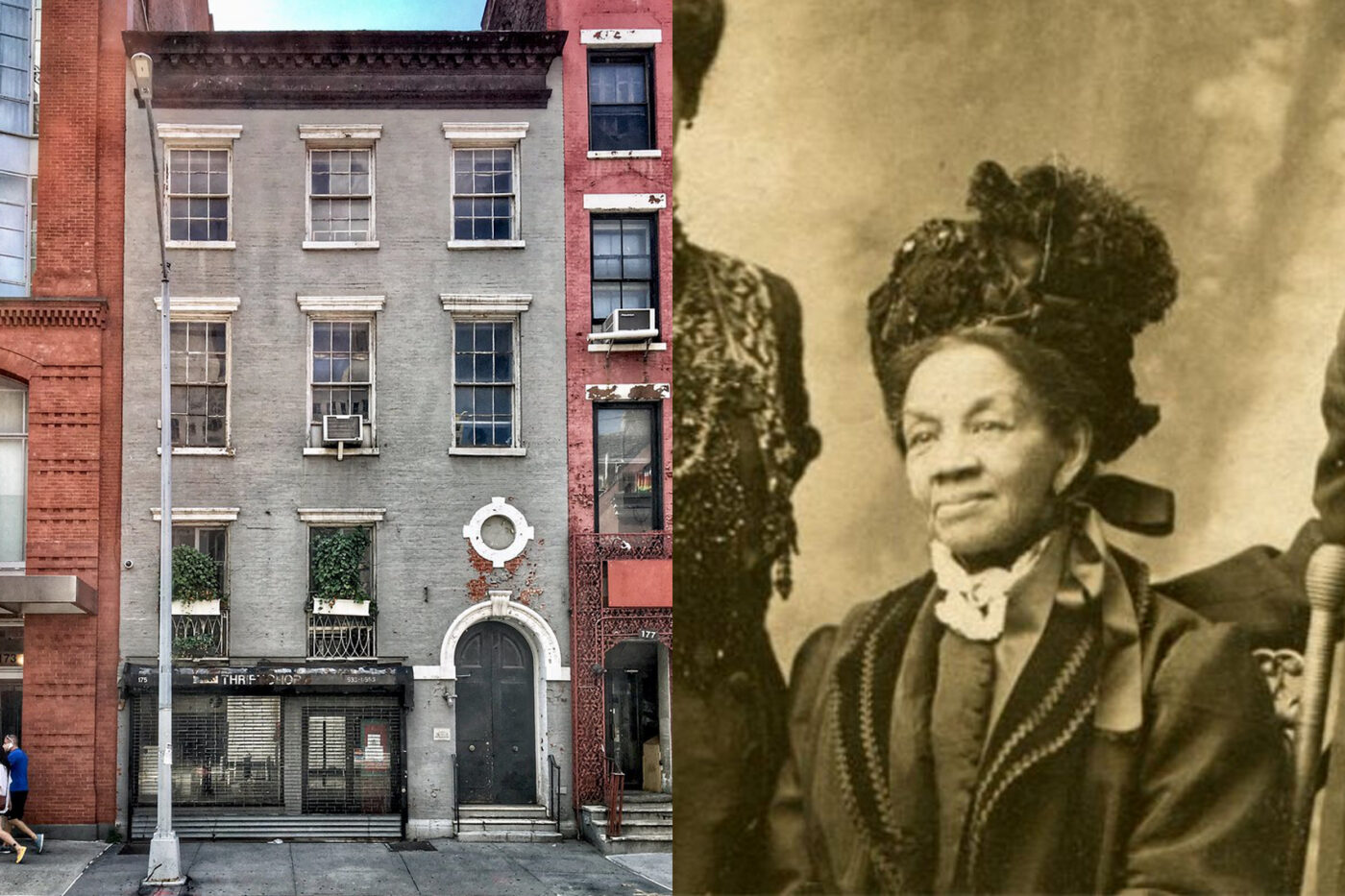
Suffragist Sarah Smith Garnet was born on July 31, 1831. She made history on many fronts and is most well known for becoming one of the first female African American principals in the New York City school system.
Smith Garnet came from a family of trailblazers. Her father, Sylvanus Smith, was a founder of the free African American community of Weeksville, located in present-day Crown Heights, Brooklyn, and her sister, Susan Smith McKinney Steward, was the first female African American physician in New York.
In addition to her work as a school principal, Smith Garnet founded the Equal Suffrage League, the first suffrage organization established by and dedicated to the suffrage of black women, in the late 1880s. The Equal Suffrage League was a predecessor to the NAACP. For its first few years, the organization met in Garnet’s seamstress shop in Brooklyn, then moved to the YMCA on Carlton Avenue, and later merged with the National Association of Colored Women’s Clubs. From 1880 to 1881, Garnet lived with her husband, the abolitionist, minister, educator, and orator Henry Highland Garnet at 175 MacDougal Street. Garnet is still listed at this address through 1883, though Henry is not.
In 1892, Garnet helped establish the Women’s Loyal League of New York and Brooklyn with Ida B. Wells, Susan McKinney, Maritcha Lyons, and Victoria Earle Matthews. In July 1904, she spoke at the fourth convention of the National Association of Colored Women in St. Louis, Missouri. Garnet was also elected superintendent of the suffrage department of the organization, which, in 1905, joined forces with the National Council of Women. She died on September 17, 1911.
Lorraine Hansberry – 337 Bleecker Street & 112 Waverly Place
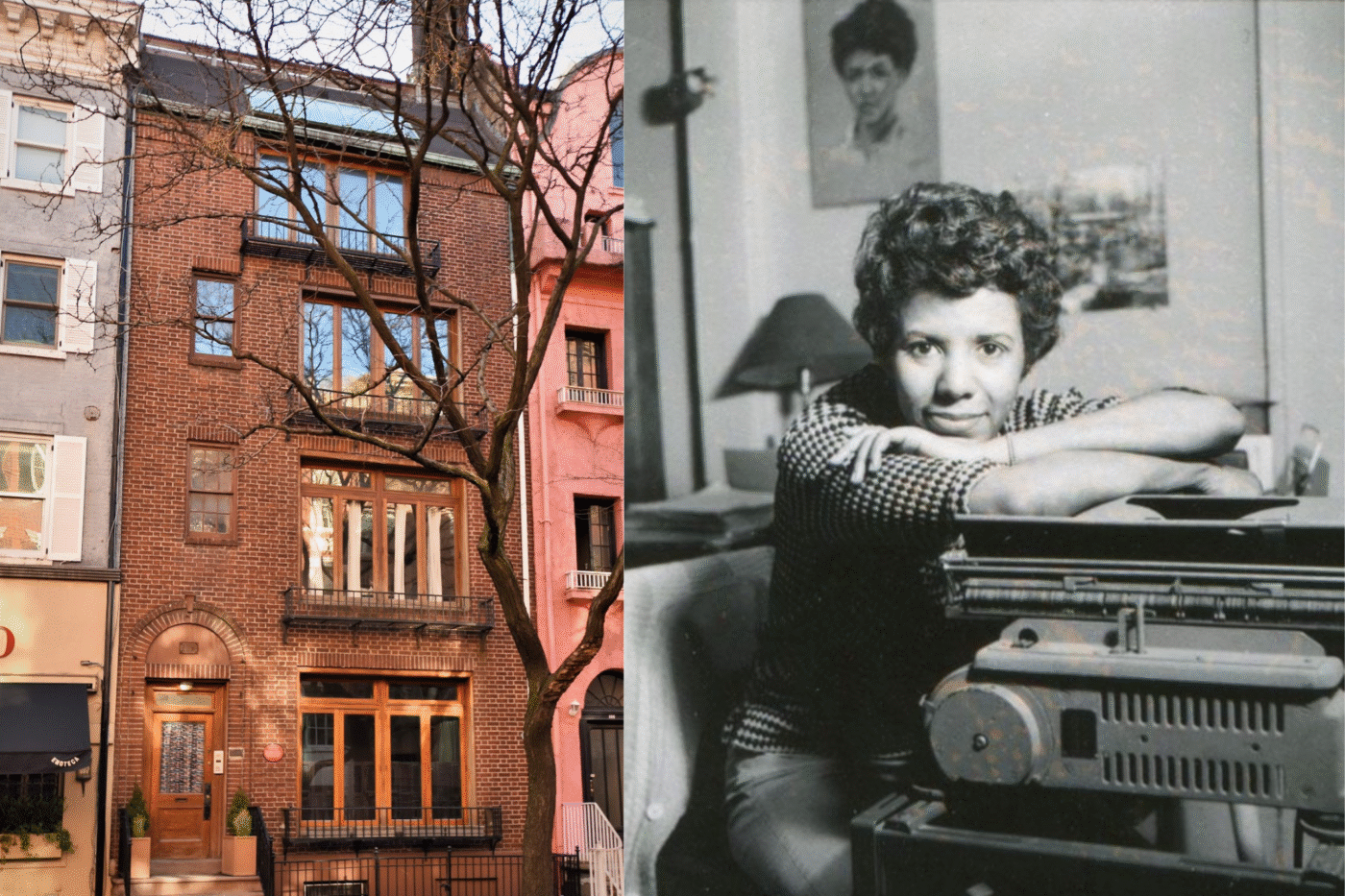
Born in 1930, Lorraine Hansberry was a playwright and activist most commonly associated with Chicago, despite the fact that she attended school and lived much of her adult life in Greenwich Village.
Hansberry first attended the University of Wisconsin-Madison but left in 1950 to pursue her career as a writer in New York City. She moved to Harlem in 1951, attended the New School in the Village, and began writing for the Black newspaper “Freedom.” In 1953, she married Robert Nemiroff, and they moved to Greenwich Village.
It was during this time that she wrote “A Raisin in the Sun,” the first play written by a Black woman to be performed on Broadway. The play brought to life the challenges of growing up on the segregated South Side of Chicago, telling the story of a Black family’s challenges in trying to buy a house in an all-white neighborhood. Hansberry’s first apartment in the Village was at 337 Bleecker Street, where she lived from 1953 to 1960. After that, with the success of A Raisin in the Sun, she bought and moved to 112 Waverly Place. Village Preservation unveiled a historic plaque at 112 Waverly Place in celebration of Hansberry’s time there.
Hansberry separated from Nemiroff in 1957 and they divorced in 1964, though they remained close until her death. It was revealed in later years that Hansberry was a lesbian and had written several anonymously published letters to a lesbian magazine, “The Ladder,” discussing the struggles of a closeted lesbian. She was also an early member of Daughters of Bilitis. According to the LGBT Historic Sites Project, “Hansberry lived parallel lives: one as the celebrated playwright of A Raisin in the Sun, the first play by a black woman to appear on Broadway, and the other, as a woman who privately explored her homosexuality through her writing, relationships, and social circle.” Sadly, she died of pancreatic cancer at the age of 34.
Selma Hortense Burke – 88 East 10th Street
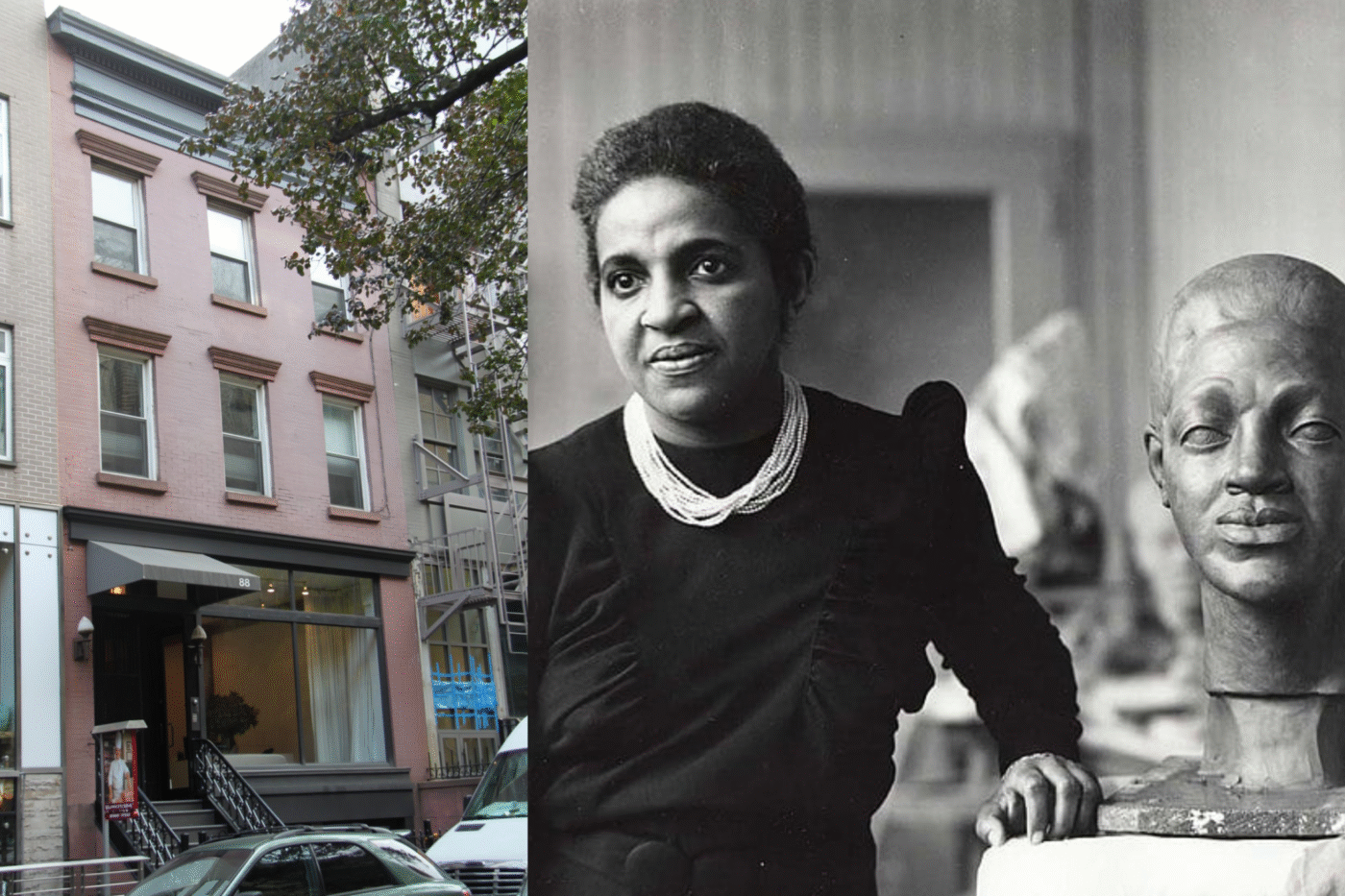
“One of the most notable sculptors of the twentieth century,” according to the National Women’s History Museum, the celebrated artist, educator, and self-described “people’s sculptor” Selma Hortense Burke lived and worked at 88 East 10th Street from 1944 until at least 1949. While here, Burke completed “The Four Freedoms,” a 2 ½ by 3 ½ foot relief plaque commemorating President Franklin Delano Roosevelt, which was used as a model for his image on the U.S. dime coin.
Burke is celebrated for her lifelong commitment to the art of sculpture and to art education, for her highly regarded portrayals of towering Black figures such as Martin Luther King Jr., Booker T. Washington, and Mary McLeod Bethune, for her significance in the Harlem Renaissance, for her unabashed drawing upon African models for her art, and for achieving success as a Black woman sculptor at a time when few female or Black artists, and even fewer Black female artists, were able to achieve any success or recognition in the United States.
Burke was born in Mooresville, North Carolina on December 31, 1900. Her father, Neal Burke, was a minister, and her mother, Mary Jackson Burke, was a homemaker and teacher. At a young age, Burke developed an interest in sculpture, and would fashion figures out of clay from the riverbank. She was surrounded by sculptural objects growing up, which had come from her father’s and uncles’ travels in Africa, the Caribbean, and Europe.
Burke moved to New York City in the midst of the Harlem Renaissance, and began working as an artist’s model and studying at Sarah Lawrence College. She received a Boehler Foundation Fellowship in the 1930s, which gave her the opportunity to study in Europe with sculptor Aristide Maillol and painter Henri Matisse. Upon her return to New York City, Burke taught sculpture at the Work Progress Administration-sponsored Harlem Community Art Center, one of the most influential art centers to emerge during the Harlem Renaissance.
Also during the 1930s, Burke met and started a relationship with the renowned Harlem Renaissance author Claude McKay, who introduced Burke to many of the most significant writers and artists of the period (there is some discrepancy among different sources about whether the couple married or not). Meanwhile, Burke received a scholarship to study art at Columbia University, from which she graduated in 1941.
When the United States entered World War II, Burke was one of the first African American women to enlist in the Navy, working as a truck driver until an injury prevented her from continuing. Shortly after, Burke joined a competition — alternately described as coordinated by the Section of Fine Arts, the District Commissioners, or the Commission on Fine Arts — to create a profile portrait of President Franklin Delano Roosevelt. In 1943, Burke’s portrait won, and she was commissioned to produce a relief plaque of the President. She then had two sittings to sketch him in person, and completed the plaque while living at 88 East 10th Street.
In 1949, while Burke was still living at 88 East 10th Street, she married architect Herman Kobbe. The couple then moved to Bucks County, Pennsylvania, and Burke opened the Selma Burke Art Center in Pittsburgh, which operated from 1968 until 1981. While here, Burke also worked for the Pennsylvania Council on the Arts.
In 1979, President Jimmy Carter awarded Burke the Women’s Caucus for Art Lifetime Achievement award. She also received an Essence Magazine award and a number of honorary doctorates. Furthermore, Pennsylvania Governor Milton Shapp created Selma Burke Day on July 20, 1975. After a long and profoundly significant career, Burke passed away on August 29, 1995, at the age of 94.
Ernestine Eckstein – 437-439 East 12th Street
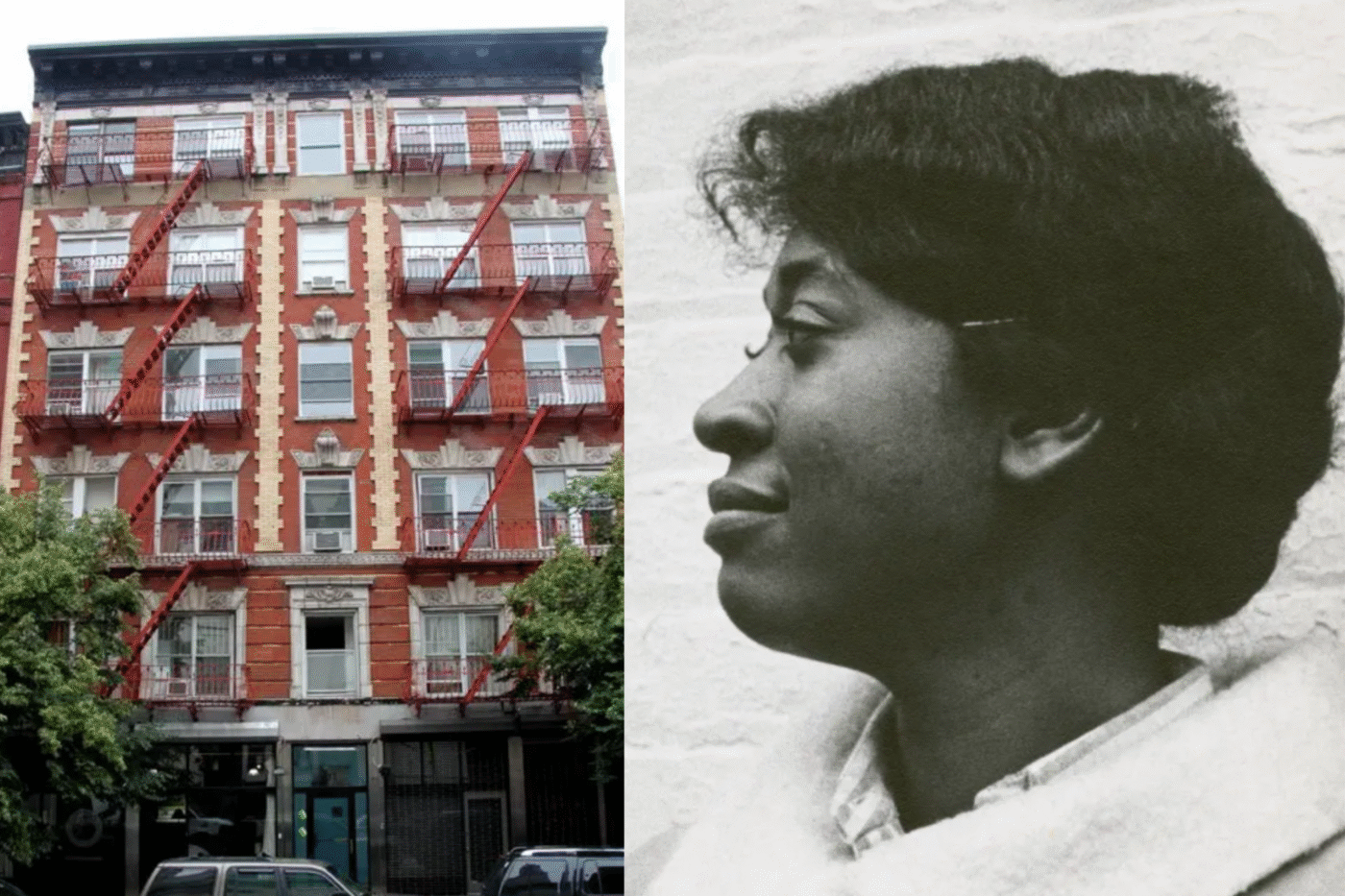
A prominent activist and lesbian of color, Ernestine Eckstein had worked with the NAACP in her native Indiana and later the Congress for Racial Equality (CORE) in New York City before becoming the vice president of the New York Chapter of the Daughters of Bilitis (DOB), the first lesbian-rights organization in America, during the time she lived at 437-439 East 12th Street in the East Village.
She took part in two of the earliest pickets for gay rights in the country, both in 1965: a July 4 picket of Independence Hall in Philadelphia, and an October 23 picket in front of the White House, both designed to call attention to the discrimination faced by lesbian and gay people. Eckstein was the first lesbian of color to appear on the cover of the Daughters of Bilitis magazine, The Ladder, which she became the editor of in 1963.
Under Eckstein’s leadership, the magazine began to feature pictures of actual self-identified lesbians on the cover, rather than line drawings that had previously been used to preserve anonymity. Eckstein tried to push the DOB, a relatively conservative “homophile” organization, in a more progressive direction, but felt stymied; she stepped down as vice president in 1966 and left for the Bay Area, where she continued her work with black feminist and lesbian issues.
Learn more about these incredible women and many more in our Civil Rights and Social Justice Map and Women’s Suffrage History Map. Celebrate Black History Month with Village Preservation and learn more about Black history in our neighborhoods HERE.