
Mabel Dwight: Art as a Living Influence on the World
Keeping “a cool head and a warm heart,” artist Mabel Dwight (January 31, 1875–September 4, 1955) once wrote, was essential to making art that would be a “living influence on the world.” Her lifetime of artistic observations of urban life that helped define a distinctly American modernism, as well as that statement, form the inspiration behind “Mabel Dwight: Cool Head, Warm Heart,” on display at the Whitney Museum of American Art through September.
This first solo museum show devoted to Dwight traces her evolution as a pioneering printmaker in the 1920s and ’30s, highlighting her vivid portrayals of New York’s streets, theaters, and everyday rituals. Through lithography — a medium she embraced in her fifties — Dwight captured the humor, resilience, and humanity of city life, producing works that were both aesthetically compelling and accessible to a broad public.
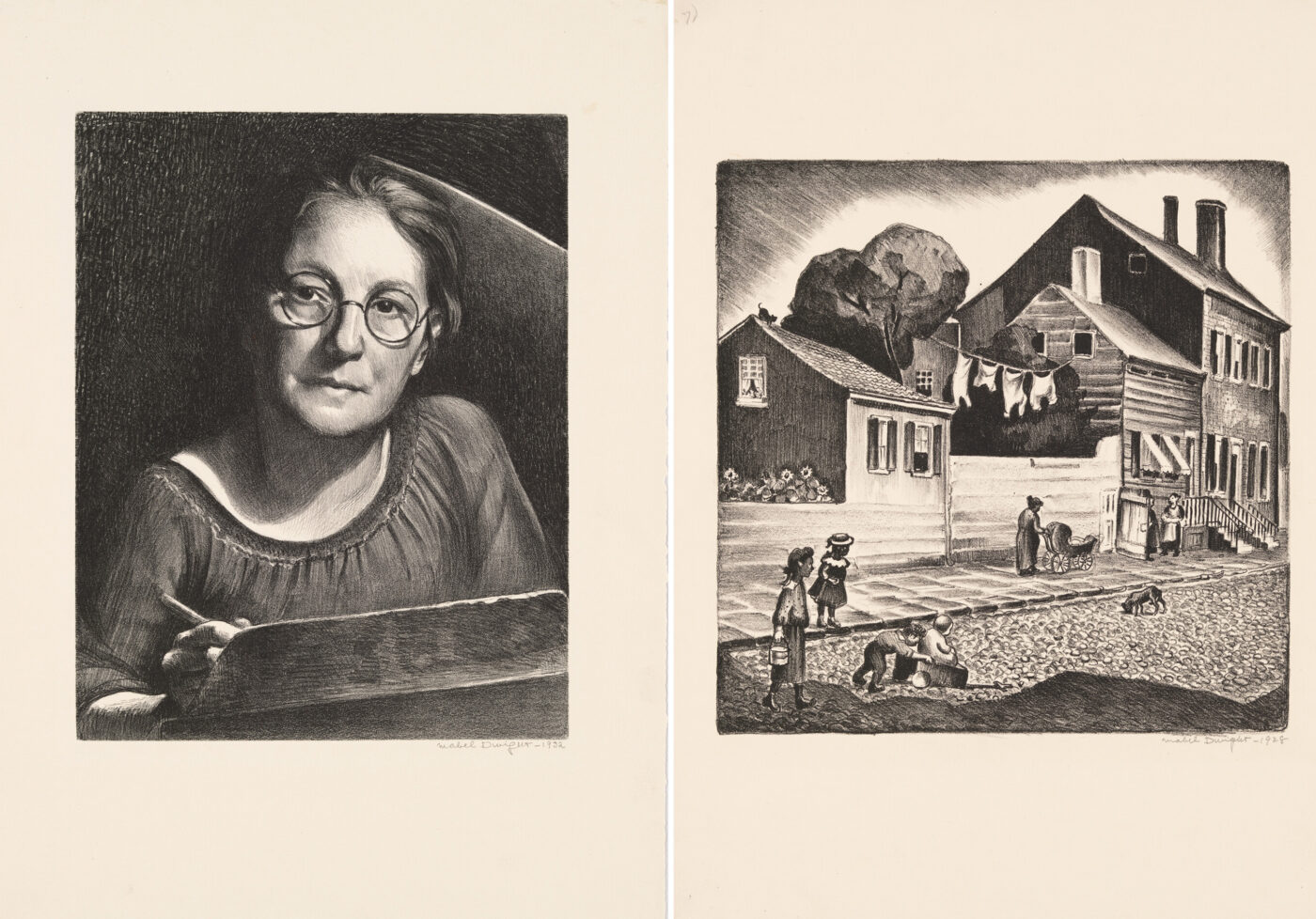
Dwight’s connection to Greenwich Village was foundational to her career and to the institution now celebrating her. An active member and the first secretary of the Whitney Studio Club at West 8th Street in the 1910s, she was deeply embedded in the artistic networks that gave rise to the museum itself. (Village Preservation honored the club’s founder, Gertrude Vanderbilt Whitney, with a plaque installation on the site in 2025.) Her work has remained part of the Whitney’s story ever since, with the institution now holding a significant portion of her lithographs. The exhibition thus serves as both retrospective and homecoming, placing Dwight within the lineage of artists who helped shape the Whitney’s mission and identity.
What distinguishes Dwight’s work is her ability to balance sharp observation with empathy, a combination that guided her depictions of New Yorkers across class and circumstance. Her prints — whether of crowded subway cars, bustling parks, or attentive theater audiences — render individuals with dignity and specificity while emphasizing their place within a larger social fabric. Rather than caricature or exaggeration, Dwight favored a gentler but incisive approach, using rounded forms, dramatic lighting, and subtle detail to convey what she called “the stuff of life.”
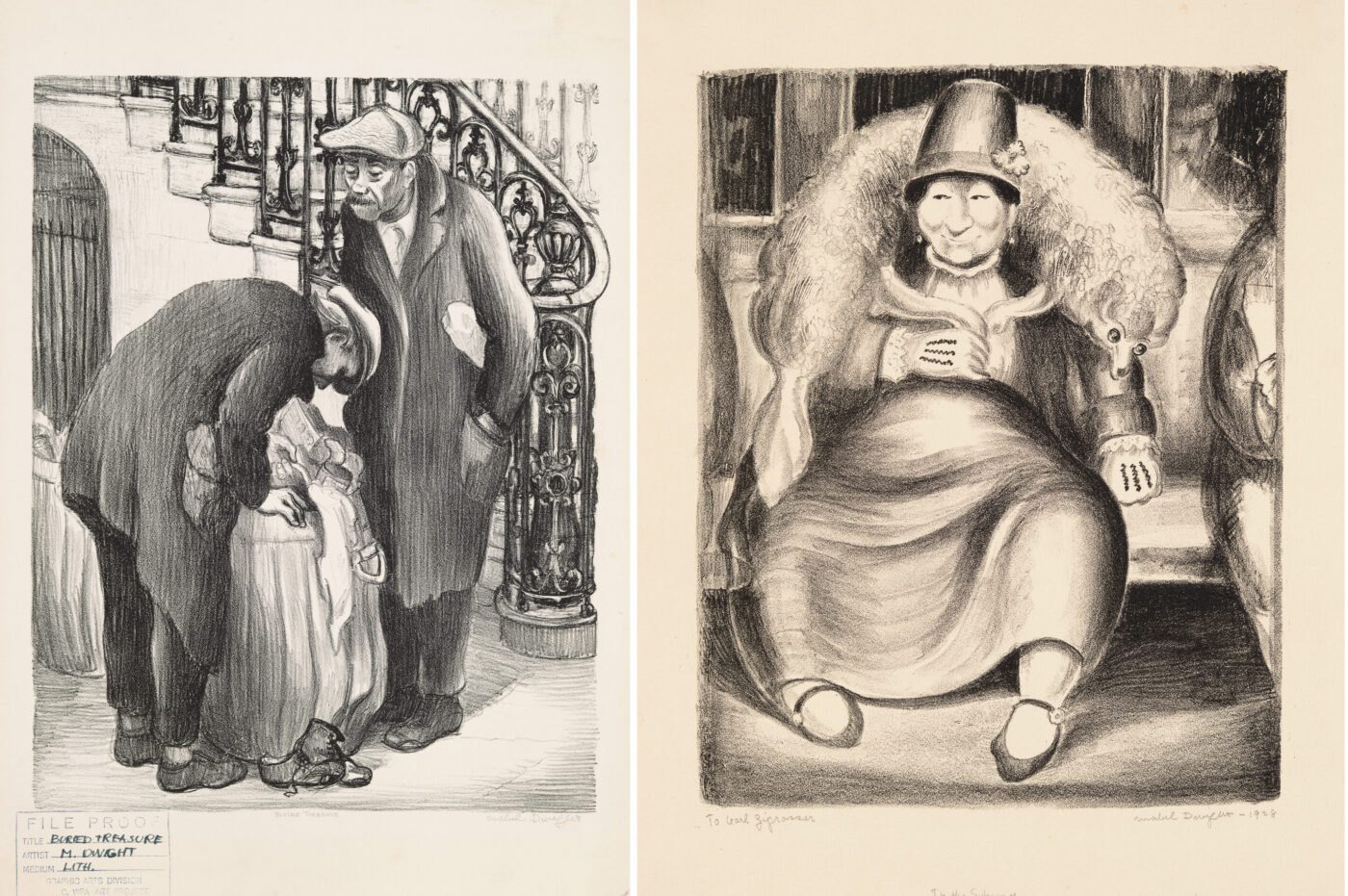
This vision was shaped in part by her deep engagement with the area South of Union Square, a neighborhood Village Preservation is today working to protect as a historic district. The area was a veritable “mecca” for artists that served as a crucible for American modernism in the early 20th century. Dwight was among these figures, moving through these streets with a sketchbook often hidden in her jacket, observing and recording the rhythms of daily life. Her work reflects the energy and diversity of this milieu, capturing both its theatricality and its intimacy.
“Dwight was always careful to avoid the grotesque,” noted Dan Nadel, the Steven and Ann Ames Curator of Drawings and Prints at the Whitney Museum, “preferring a gentler but no less sharp approach, rendering her subjects in rounded, solid forms, dignified and individual.”
Like many artists associated with this neighborhood, Dwight was committed to bridging art and social reality. Her embrace of lithography was both an artistic and political decision, allowing her images to circulate widely and affordably. Identifying as a socialist, she sought to create work that spoke across class divides, offering a vision of shared humanity grounded in everyday experience. Her prints appeared in such publications as Vanity Fair and The New Masses, reaching audiences far beyond the gallery and reinforcing her belief in art as a democratic force.
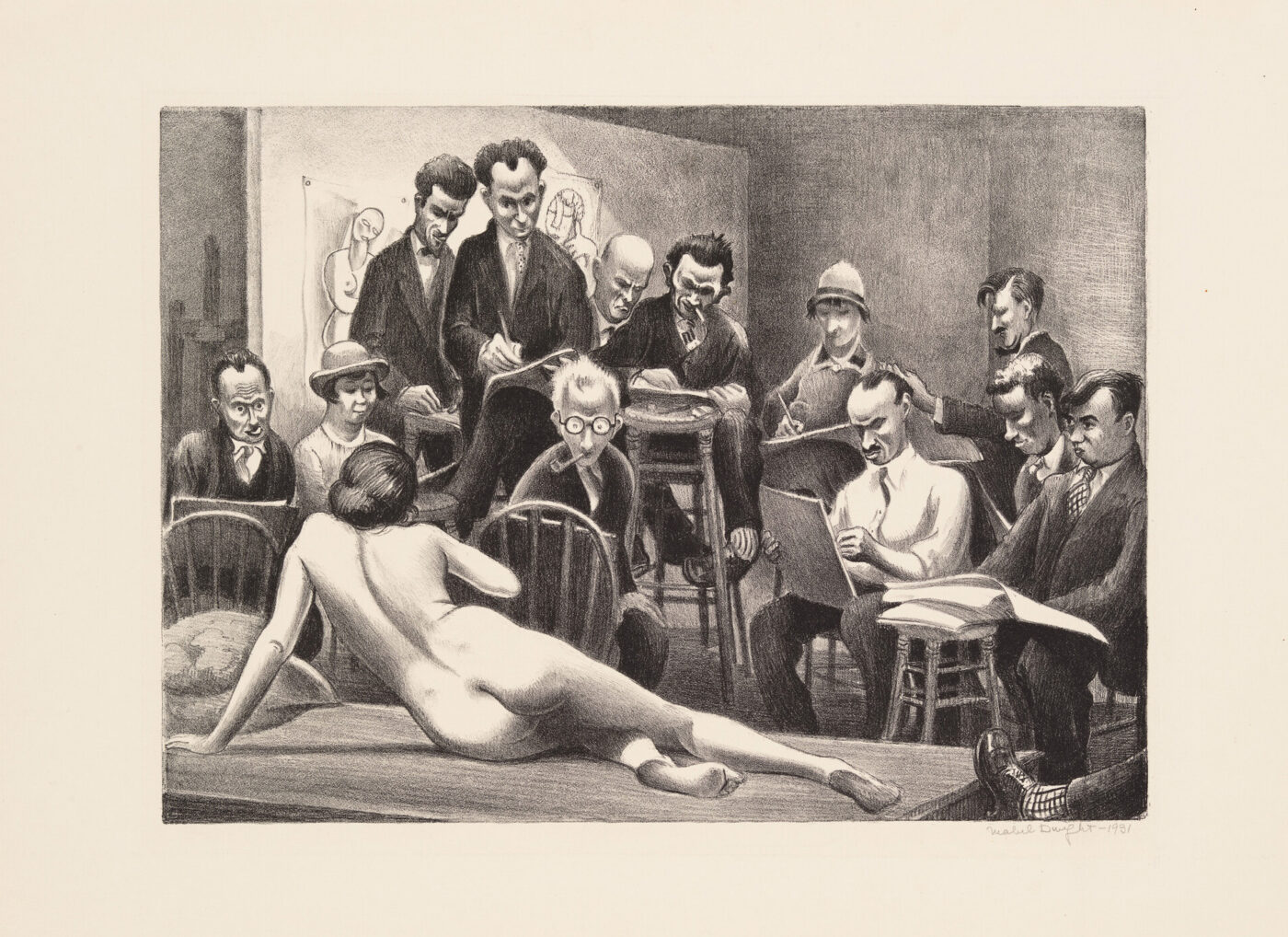
The Whitney exhibition underscores how timely Dwight’s work remains. Her scenes of people at work, at leisure, and in moments of collective gathering resonate with contemporary viewers, reminding us of the enduring dynamics of urban life. As the show suggests, Dwight’s New York is not so different from today’s: a place of constant motion, layered identities, and shared spaces where individual stories unfold within a larger whole.
“Mabel Dwight: Cool Head, Warm Heart” ultimately reveals an artist who transformed fleeting moments into enduring images, capturing the complexity of city life with clarity, compassion, and quiet wit. In doing so, she secured her place not only in the history of the Whitney Museum but also in the broader story of New York as a center of artistic innovation.
Read more about our South of Union Square campaign here, Dwight’s life in the community here, and our letter documenting decades of artistic achievement in the proposed historic district here.
Learn more about the exhibit and plan a visit to the Whitney Museum, at 99 Gansevoort Street, here.