
A Life in Place: Tony Hiss and the Layers of Greenwich Village
For nearly eight decades, Tony Hiss has observed Greenwich Village not simply as a neighborhood, but as a living continuum of history, memory, and change. In our latest oral history, Hiss offers a deeply reflective account of how place is experienced, remembered, and carried forward across generations.
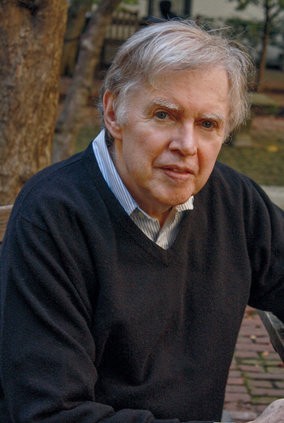
An author of fifteen books and a longtime staff writer for The New Yorker, Hiss brings both a journalist’s precision and a philosopher’s sensibility to his recollections. But perhaps most remarkable is his vantage point: he has lived in the same Greenwich Village apartment since 1947, watching the neighborhood evolve from his window over the course of nearly eighty years.
For Hiss, his Village apartment is not just a place, it is what he describes as a kind of “time funnel,” where the views out his windows allow past and present coexist. From the front of his apartment, modern high-rises signal the city’s constant evolution. But from the back, something different appears: a continuity of space that connects directly to earlier eras of Village life.
Through this lens, Hiss evokes a striking image, one in which the view behind his home remains largely unchanged for generations, allowing glimpses of the same skyline and atmosphere once seen by artists like Edward Hopper.
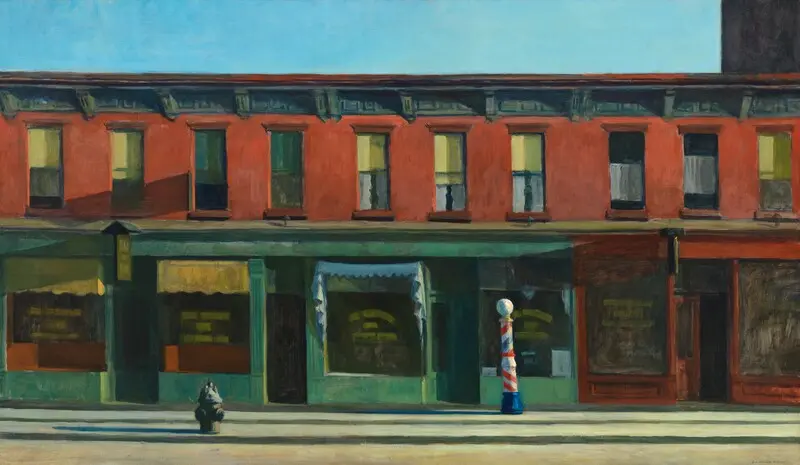
This duality between simultaneous change and continuity forms the core of his understanding of urban life.
Hiss’s reflections extend far beyond his own lifetime. He situates his home within a much longer historical narrative, tracing the land back to the Minto Farm, an early property that once occupied the area. He recounts how this land was connected to the creation of Sailors’ Snug Harbor, founded to provide for aging seamen long before modern social services existed.
Even the geography of the neighborhood carries these traces: the long-buried Minetta Brook or Creek still echoes in the names of nearby streets, quietly preserving the memory of the Village’s rural past.
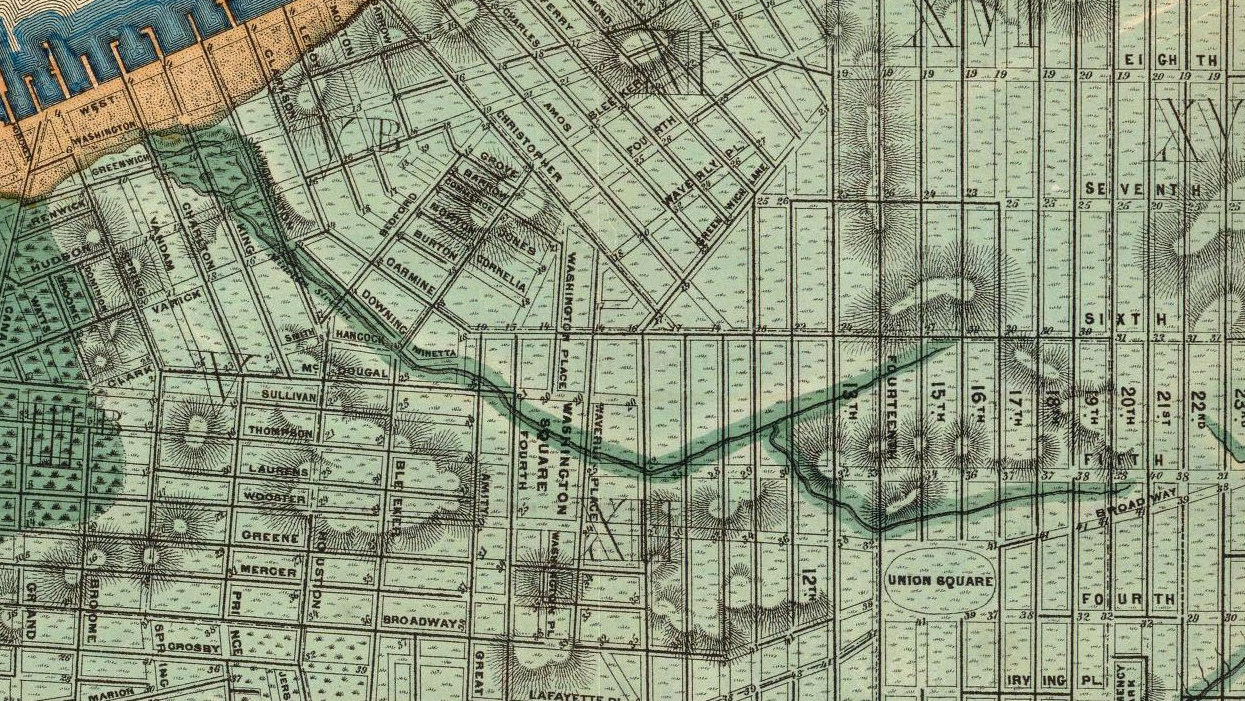
For Hiss, these layers are not abstract, but are tangible, embedded in the very ground beneath the city. To live in the Village is to inhabit all of these histories at once.
Hiss also recalls a mid-20th century Greenwich Village that was remarkably self-contained and culturally rich. It was a neighborhood of hotels, department stores, and institutions that gave it a distinct identity beyond its reputation as a bohemian enclave.
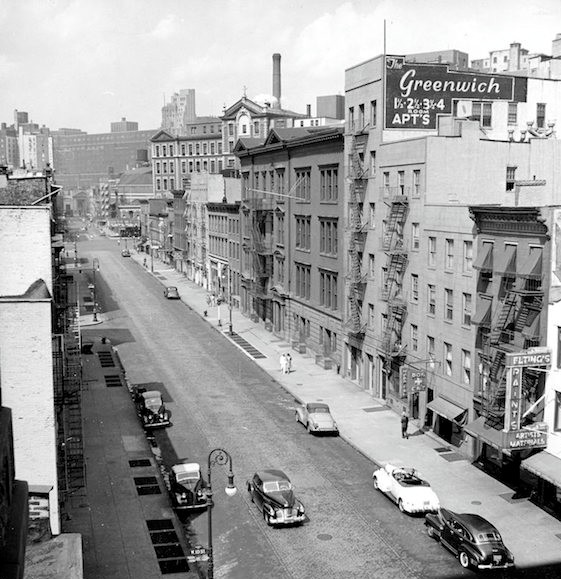
He describes places like the long-gone Brevoort Hotel and The Lafayette, alongside major commercial and cultural anchors such as John Wanamaker and the early home of the Whitney Museum of American Art on West 8th Street.
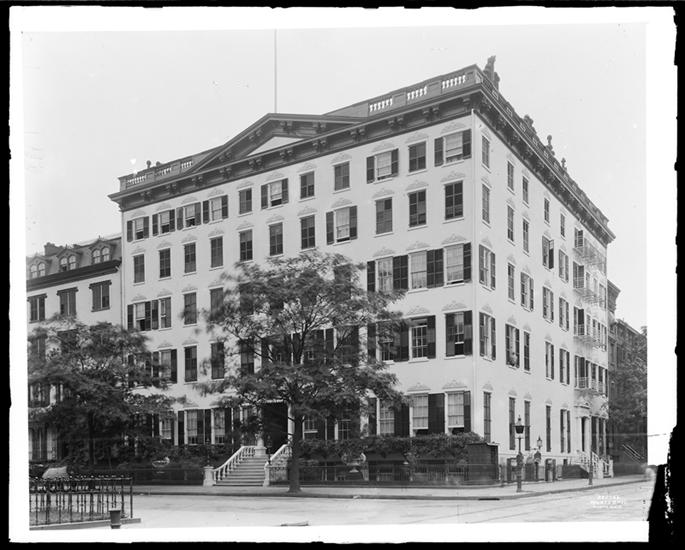
This was, in Hiss’s words, a neighborhood with “strength”—not just artistically vibrant, but economically and socially cohesive.
One of the most compelling aspects of Hiss’s oral history is his philosophy of preservation. Rather than seeing it as an effort to freeze the past, he reframes it as something far more dynamic:
Preservation, he argues, is truly about safeguarding what has survived into the present and ensuring that it remains meaningful and accessible for future generations.
Underlying Hiss’s reflections is a broader meditation on time and responsibility. He suggests that each generation risks believing history begins with them—a mindset that disconnects people from the deeper context needed to make thoughtful decisions about the future.
Instead, he advocates for carrying forward an awareness of the past, not as nostalgia, but as a practical tool. Understanding where we come from, he suggests, allows us to navigate change more intelligently and responsibly, but also with an eye to the needs of other living things that inhabit the same spaces we do. As he says “there’s no empty land.”
Tony Hiss’s story adds another vital perspective to our growing oral history archive, capturing not just events, but ways of seeing.
Hiss reminds us that Greenwich Village is more than a collection of streets and buildings. It is a layered, evolving narrative shaped by those who live there, observe it, and reflect on its meaning. And through voices like his, that narrative continues connecting past, present, and future in ways that make the Village not just a place on a map, but a place in time.
You can explore over 75 different oral histories in our Oral History Collection HERE.
Explore our collection of over 5,500 images of our neighborhoods in our Historic Image Archive HERE.
As a child in the fifties, I would always get my parents to show me a bar that had strands of dangling dust hanging from the ceiling.
Does anyone know of this place and where it actually was?