
Isamu Noguchi’s New York
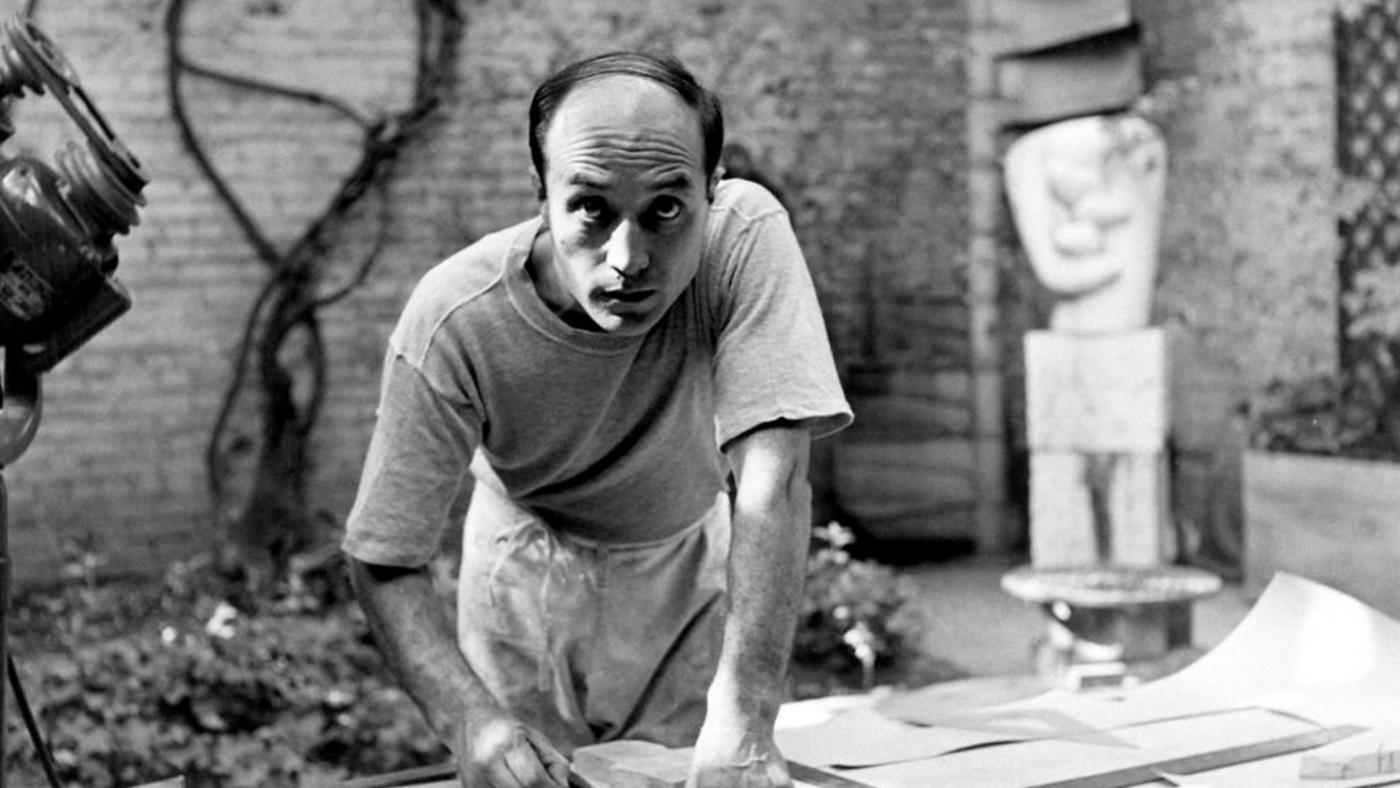
Though he spent time in many cities, from Los Angeles to Tokyo to Mexico City, Isamu Noguchi always viewed New York as his home. “I’m really a New Yorker,” the famed sculptor said, “Not Japanese, not a citizen of the world”.
The city informed all aspects of his career. It provided him with a creative home, with many of his most important studios located in the city. It fostered many important collaborations, including with notable dancers and choreographers, visual artists, and designers. Noguchi also influenced New York’s appearance, completing many designs and pieces of public art in the city, some fully realized, and others only imagined.
Today we will take a look at some of Noguchi’s homes, designs, and imagined pieces that exist in or were intended for New York City. This blog is inspired by The Isamu Noguchi Foundation and Garden Museum’s current exhibit, “Noguchi’s New York”. To learn more and to view the accompanying interactive map, click here.
A Home in Greenwich Village
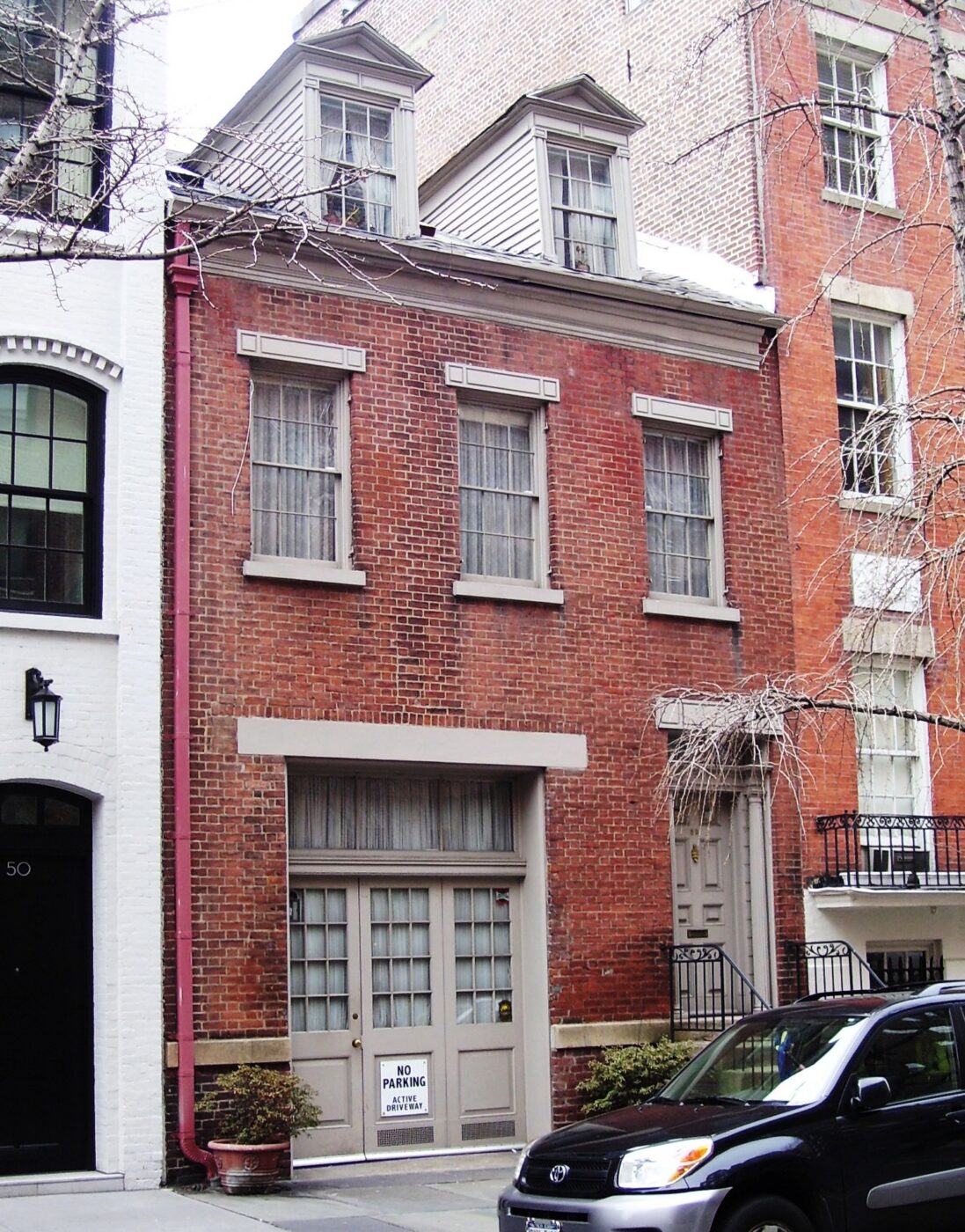
In 1939, Noguchi set up one of his first New York studios at 52 West 10th Street. Living and working in the Village allowed him to mingle with the countless other creatives that spent time in the neighborhood, including artists Arshile Gorky and De Hirsh Margules.
Village Preservation will be unveiling a new plaque for Noguchi at this site on April 16, 2026. To register for this special event and to learn more, click here.
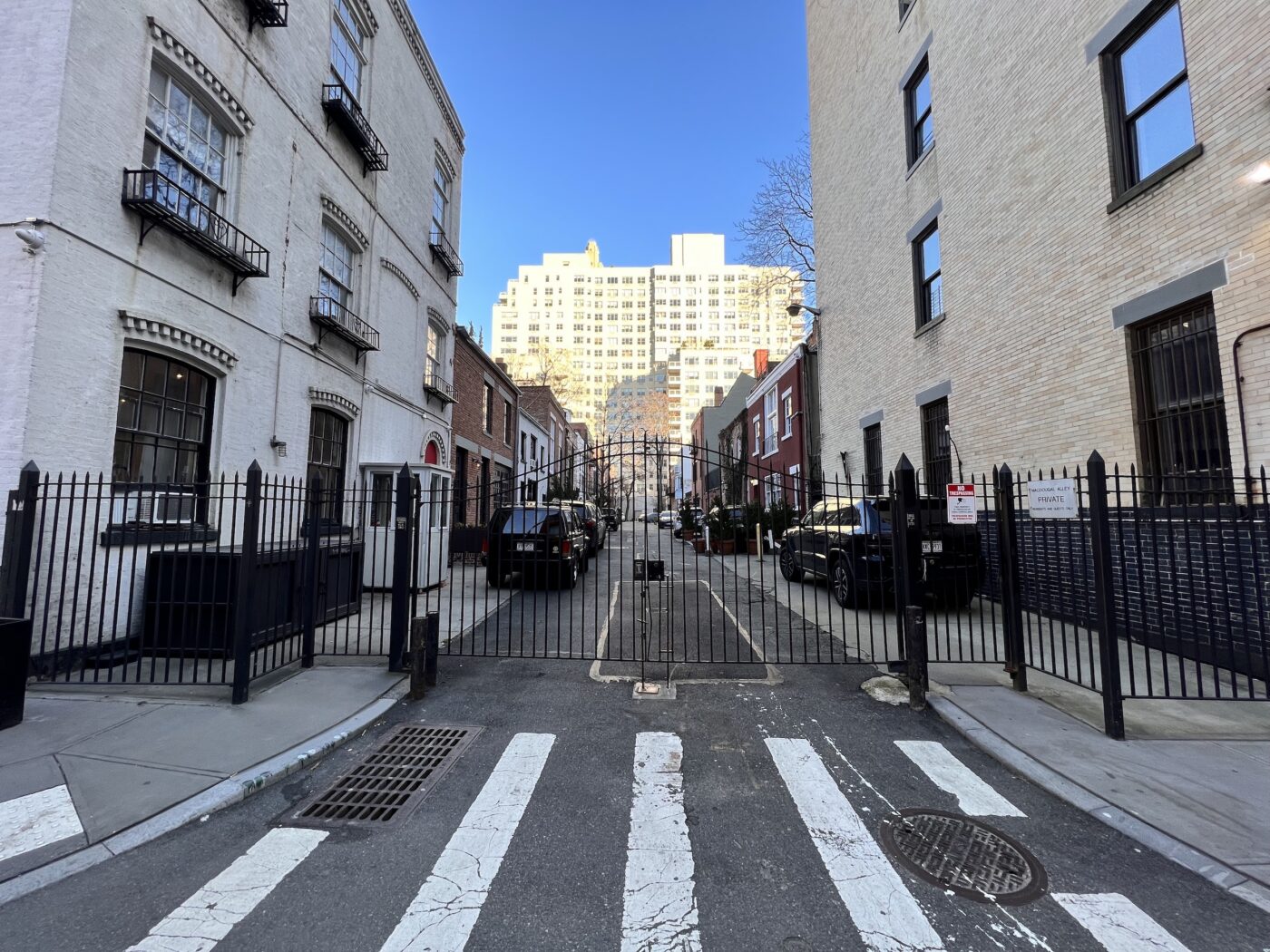
Noguchi then moved a few blocks away, and from 1942 to 1949, his art studio was located at 33 MacDougal Alley. There he created countless works of art that helped establish his career. Some of his best-known pieces, including his interlocking sculpture Kouros, were conceived here.
Architecture and Public Art
Over his career, Noguchi created many sculptures and designs throughout New York City.
News – Associated Press Building Plaque (50 Rockefeller Plaza)
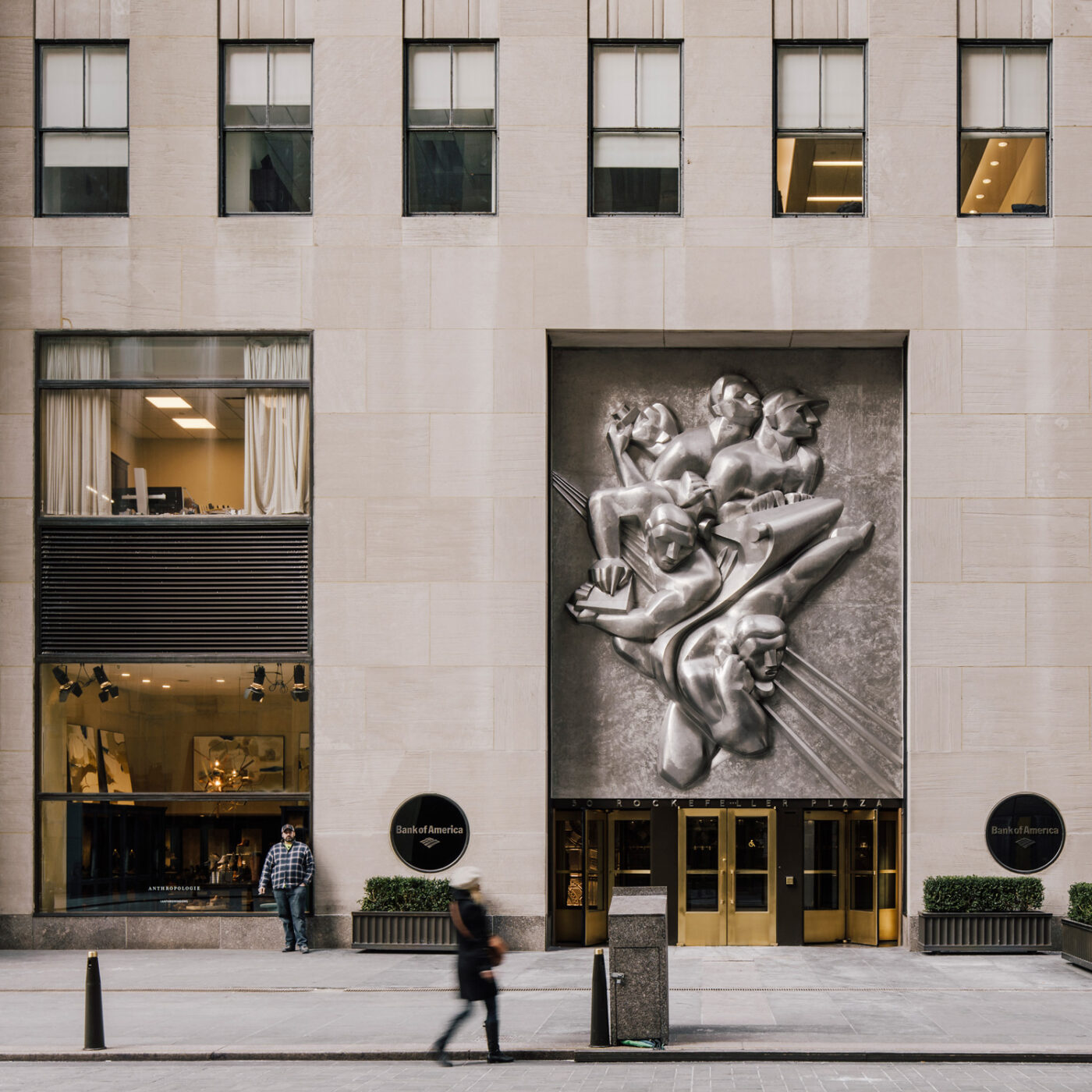
Noguchi’s first public work in the United States, News, is a magnificent stainless steel plaque adorning the entrance of the Associated Press Building. He secured this design job by winning a Rockefeller-sponsored design competition.
The plaque depicts five abstracted newspapermen carrying out their work. He spent almost a year welding, grinding, and polishing the sculpture.
Sunken Garden – Chase Manhattan Bank Plaza (28 Liberty Street)
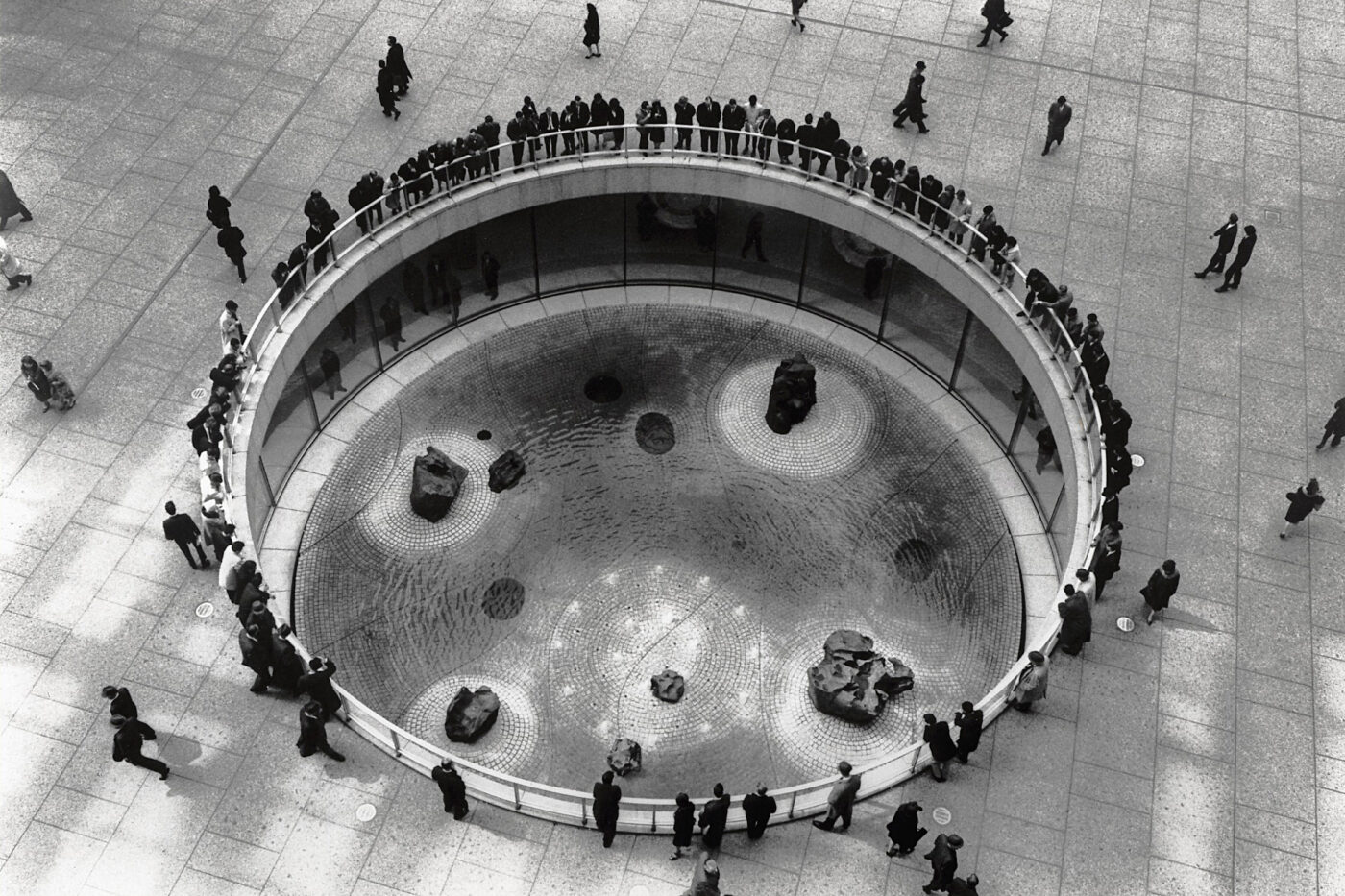
In 1964, Noguchi finished his first environmental design for New York City: a glass-enclosed sunken garden set in the Financial District of Manhattan. Located in the plaza of Chase’s headquarters building, a skyscraper that was designed by architects Skidmore, Owings & Merrill, Noguchi aimed to bring calming elements from nature into the bustling city.
Seven stones were transported from Kyoto’s Uji River, which were placed on granite pavers to evoke a Zen garden’s raked sand. These rocks are interspersed with gently flowing fountains.
Red Cube (140 Broadway)
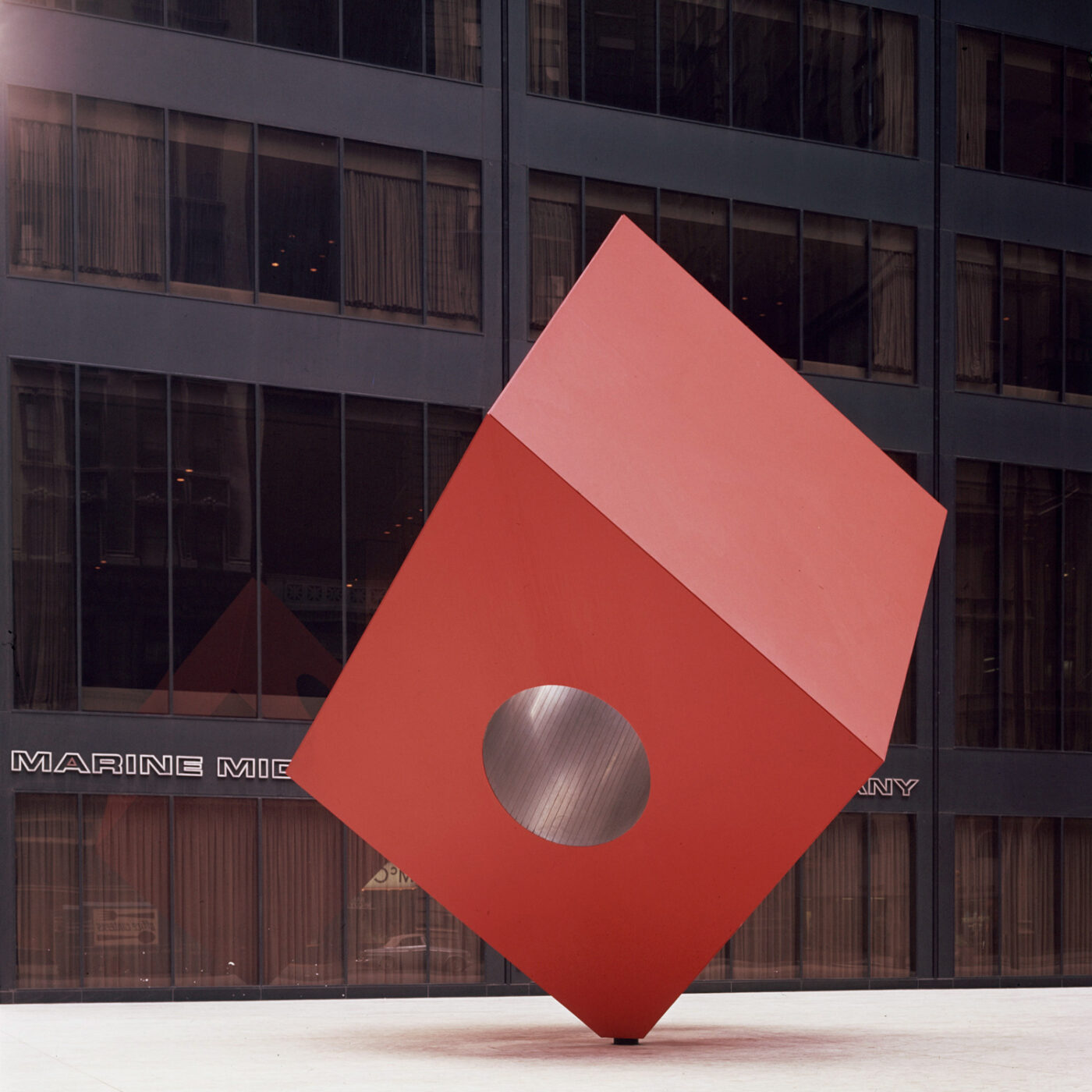
Just a block away from Sunken Garden, Red Cube was unveiled in 1968. This public sculpture consists of a 24-foot structure in a striking red that balances precariously on one of its corners.
Noguchi talked about his inspiration for the piece, saying, “The Red Cube, which is a rhomboid, came from study of the rhomboid building and an enclosed site which pleased me. But this containment was soon lost with the removal of two buildings to expose a park in front.” (Isamu Noguchi, The Isamu Noguchi Garden Museum, New York: Harry N. Abrams, 1987, 192.)
Noguchi’s Imagined New York
In addition to his realized designs, Noguchi created many plans for sculptures, playgrounds, and other environmental elements that never came to fruition.
Play Mountain
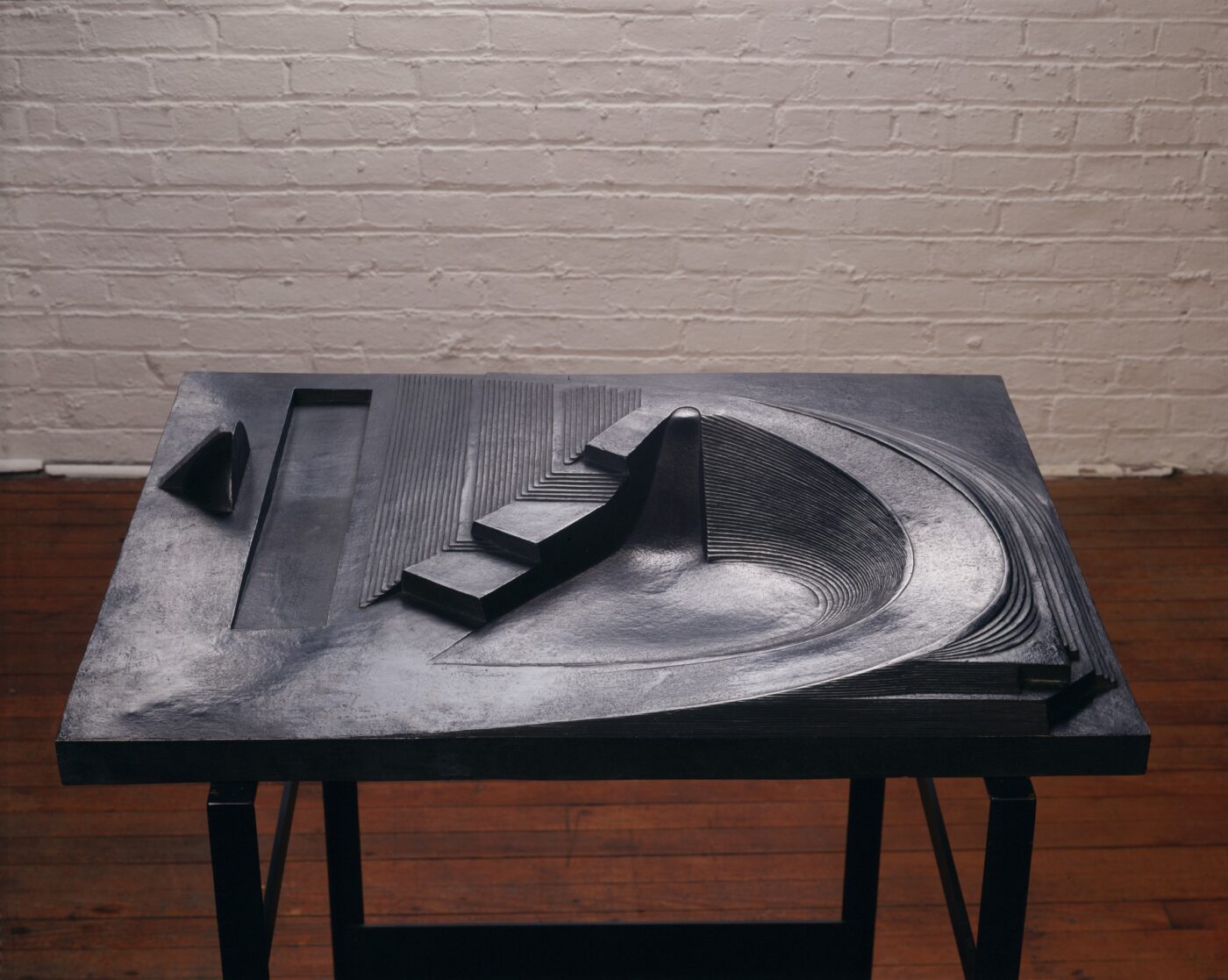
Noguchi’s first major proposal for New York City was Play Mountain (1933), an ultimately unrealized design for a “mountain” playground intended to occupy a full city block or a section of Central Park.
Complete with graded steps for climbing, a water slide, a slope for sledding in winter, a bandshell, and an indoor family center, Play Mountain was envisioned as a multifunctional space for play, exploration, and gathering. Noguchi unsuccessfully pitched Play Mountain to the Public Works of Art Project, a New Deal federal work-relief program.
Memorial to the Atomic Dead
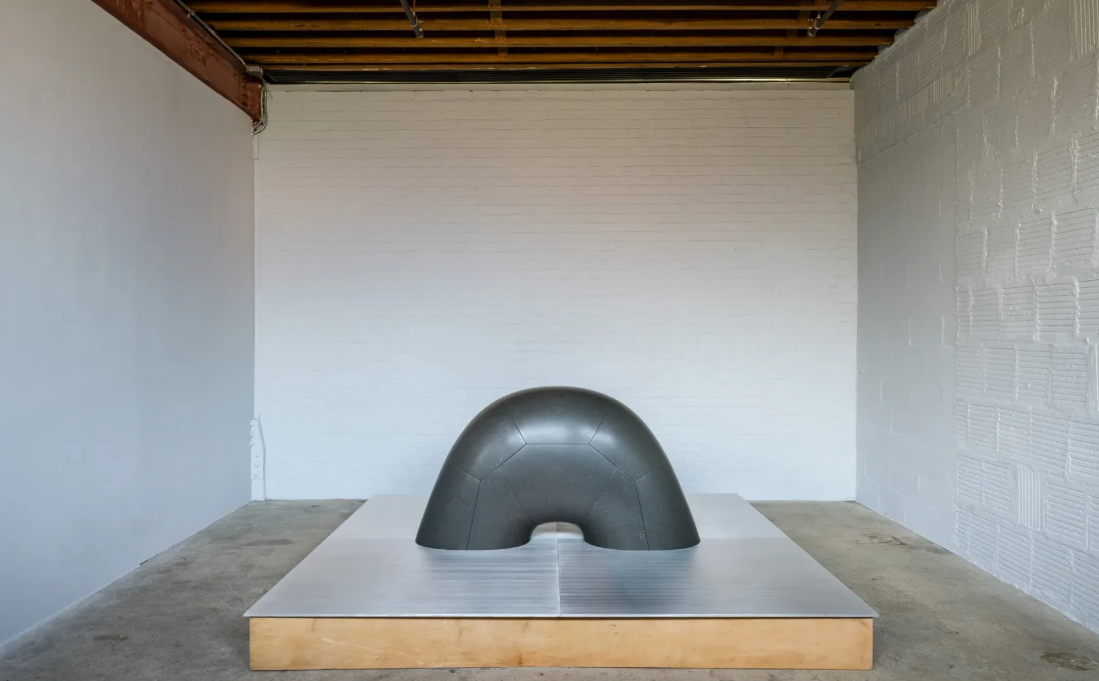
In 1951, Kenzo Tange, the architect of Hiroshima Peace Memorial Park, invited Noguchi to design a memorial honoring victims of the United States’ atomic bomb. Noguchi’s proposal envisioned the massive legs of this curved form plunging through the plaza’s surface into an underground room, where a framed box housing the ashes of Hiroshima’s dead would be placed. Noguchi’s proposal was ultimately rejected.
In 1982, Noguchi reworked his concept for Washington, DC, where the plans also fell through. Committed to realizing his vision, Noguchi proposed similar projects for many other sites in New York, to no avail. A model of the design can be seen in the Noguchi Museum’s galleries.
To learn more about the life and work of Isamu Noguchi, read one of our previous blogs here.