
Jimmy, Jimi, and Jean-Michel: New Co-Named Streets in Our Communities
We’ve all seen them: signs tucked under the official names of local streets, honoring a neighborhood notable with a “Way,” “Place,” or “Corner.” Unfortunately, more often than not, the people on these “co-named” street signs are often unknown to most passers-by. But a New York City agency has offered a way for those who are interested to get to know these local heroes and institutions a little better.
The New York City Department of Records and Information Services has assembled an interactive map to help people decipher the signs and connect with the stories behind nearly 2,500 co-named streets, intersections, parks, and other locations across the city. Our own communities feature a number of sites co-named for those who lived, worked, or created in our midst, including three that received honors in our communities over the last year. (Read about other such street honors over the past few decades here.)
Jimmy Carter Way, East 6th Street between Avenues C and D
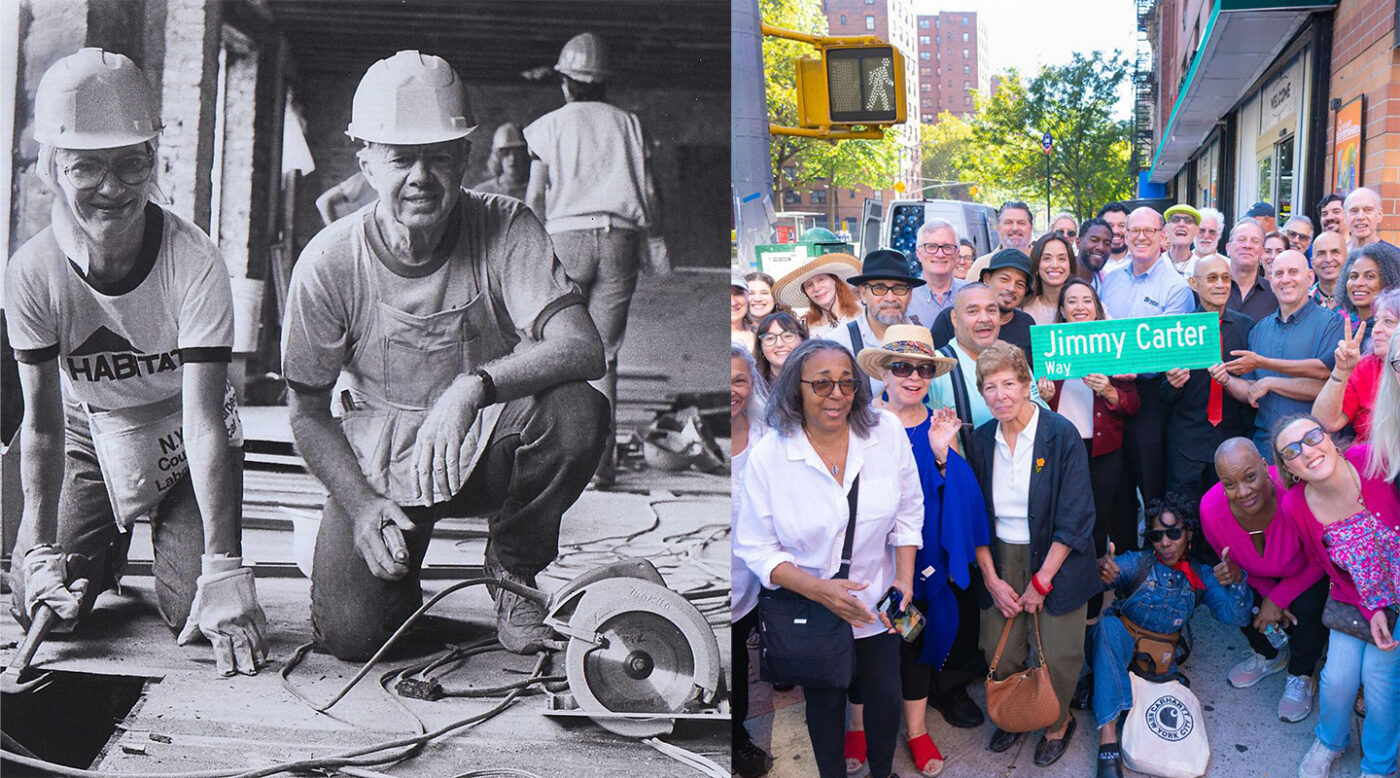
Just a few short years after his term in office ended in 1980, President Jimmy Carter began to play a pivotal role in shaping the nonprofit organization Habitat for Humanity and in the history of the East Village. In the late 1970s and early 1980s, much of Alphabet City was marked by abandonment and severe disinvestment, with many buildings left gutted or uninhabitable. One such structure was Mascot Flats at 742 East 6th Street (between Avenues C and D), a once-thriving tenement that had fallen into extreme disrepair. In 1983, Habitat for Humanity acquired the building as its first major inner-city rehabilitation project, aiming to create affordable, resident-owned housing for low-income New Yorkers willing to contribute significant labor to its restoration.
Carter’s involvement began the following year, when he and former First Lady Rosalynn Carter joined volunteers on site to rebuild the devastated structure. Our 39th president spent days laboring alongside community members, helping to transform the building into safe, affordable homes. This project became the inaugural “Carter Work Project,” propelling Habitat for Humanity into national prominence and establishing a model of volunteer-driven, community-based housing activism that would expand globally. Over the following decades, the Carters’ efforts inspired thousands of volunteers and contributed to the construction and rehabilitation of thousands of homes worldwide.
In recognition of this legacy, the stretch of East 6th Street where the original Mascot Flats sits was officially co-named “Jimmy Carter Way” on October 6, 2025, coinciding with World Habitat Day. The unveiling ceremony brought together local officials, Habitat for Humanity leaders, and community members to honor Carter’s enduring impact on affordable housing. The honor serves not only as a tribute to Carter’s personal, hands-on commitment to this invaluable cause but also as a lasting reminder of the transformative power of grassroots housing efforts in New York City.
Read more about Carter’s and Habitat for Humanity’s local efforts here.
Jimi Hendrix Way, West 8th Street between MacDougal Street and Sixth Avenue
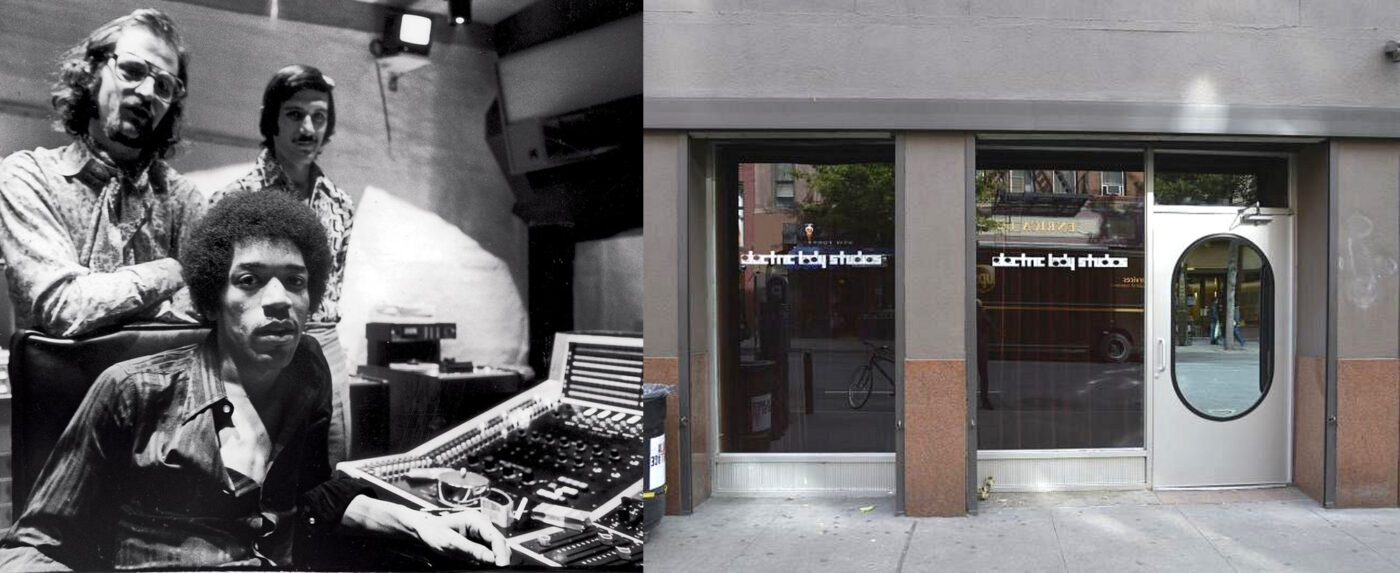
Jimi Hendrix left an indelible mark in Greenwich Village and on rock through the creation of Electric Lady Studios, a groundbreaking space that reshaped how music was made. Frustrated by the high cost and rigid constraints of commercial recording studios, Hendrix purchased a former nightclub at 52 West 8th Street in 1968 and envisioned something radically different: a studio designed by and for artists. Working with engineer Eddie Kramer and architect John Storyk, he helped create an environment with flowing, curved forms, ambient lighting, and a welcoming atmosphere meant to foster creativity rather than constrain it.
When Electric Lady Studios opened on August 26, 1970, it became the first artist-owned commercial recording studio of its kind and a major cultural milestone in the Village. Though Hendrix only had about ten weeks to work there before his death, the studio quickly became legendary, hosting generations of musicians and yielding countless influential recordings — among them The Clash’s Combat Rock, Blondie’s Eat to the Beat, Prince’s Graffiti Bridge, and Run-DMC’s Tougher Than Leather.
The studio’s origins in Hendrix’s desire for artistic freedom and its continued use by major artists cemented its place as one of New York City’s most important musical landmarks, deeply tied to the creative spirit of Greenwich Village. In recognition of that legacy, the street in front of the studios, West 8th Street between MacDougal Street and Sixth Avenue, was officially co-named “Jimi Hendrix Way” in 2025. The unveiling ceremony had been scheduled for February 24, 2026, but was postponed due to blizzard conditions; a new date has yet to be scheduled. Once officially installed, the sign will help enshrine Hendrix’s legacy as a revolutionary musician here in the Village and in the musical world beyond.
Read more about Jimi Hendrix and Electric Lady Studios here.
Jean-Michel Basquiat Way, Great Jones Street between the Bowery and Lafayette Street
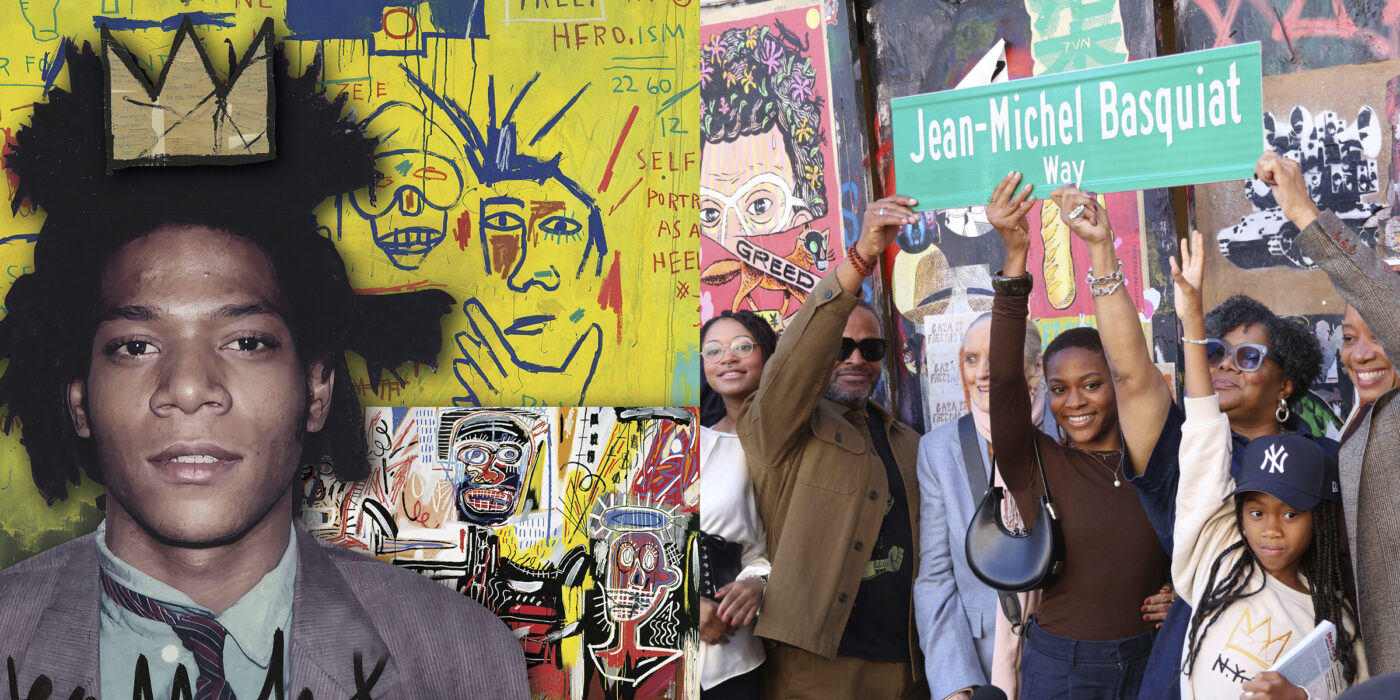
Jean-Michel Basquiat emerged from the late 1970s downtown scene to become one of the defining figures of the East Village art world in the 1980s. Beginning as part of the graffiti duo SAMO, he helped transform the visual language of the neighborhood, bringing street art into dialogue with galleries, music, and performance spaces that flourished in the East Village at the time. His work, infused with commentary on race, power, and identity, captured the energy of a neighborhood where punk, hip-hop, and experimental art intersected. As his career rapidly ascended, Basquiat remained deeply tied to the downtown scene, collaborating with figures like Andy Warhol and helping to elevate the East Village from a marginal arts district to a global cultural epicenter.
Basquiat’s presence in Lower Manhattan, particularly around Great Jones Street and the broader East Village/NoHo area, symbolized the era’s creative intensity. From 1983 until his death in 1988, he lived and worked at 57 Great Jones Street, in a building owned by Warhol, producing some of his most important work while remaining connected to the neighborhood’s artistic community. His rise from street artist to international art star mirrored the transformation of the East Village itself during the 1980s, as it became a hub for avant-garde galleries and a new generation of artists challenging the boundaries of contemporary art.
In recognition of this legacy, on October 21, 2025, New York City officially co-named the stretch of Great Jones Street between the Bowery and Lafayette Street “Jean-Michel Basquiat Way.” The ceremony took place directly outside his former home and studio, with city officials, family members, and community figures gathering to honor his enduring impact on both the neighborhood and the global art world.
Read more about Basquiat and Basquiat Way here, our historic plaque honoring the artist (placed 2016, stolen 2026), and our work to include the building in the 2008 NoHo Historic District extension.