
When the Rolling Stones Shook 14th Street
Before it became the Palladium, before it became one of New York’s most famous nightclubs, before it was demolished and replaced by an NYU dorm, the old Academy of Music at 126 East 14th Street had another life.
For one loud, electric moment in 1965, it helped introduce New York to the Rolling Stones.
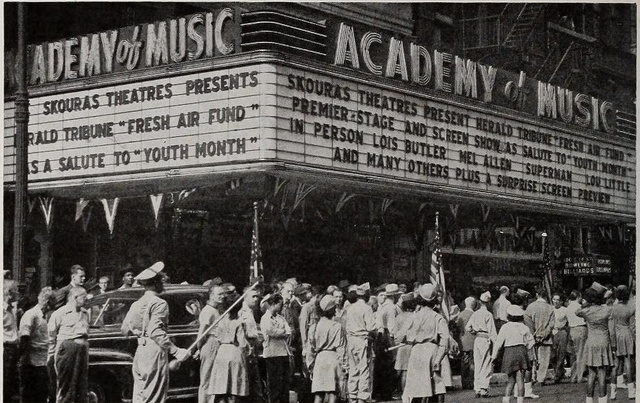
The Academy of Music opened in 1926 on East 14th Street, between Third Avenue and Irving Place. Despite its name, it was not built primarily as a concert hall. It was a grand movie palace, named after the earlier Academy of Music opera house that had stood across the street.
But New York buildings rarely live only one life.
For decades, the Academy showed movies. It hosted boxing matches and other events. Then, by the 1960s, as the city’s culture shifted and rock and roll began moving from radio speakers into theaters, the Academy became something else: a place where young people came to hear the future arrive at full volume.
On May 1, 1965, the Rolling Stones played the Academy of Music.
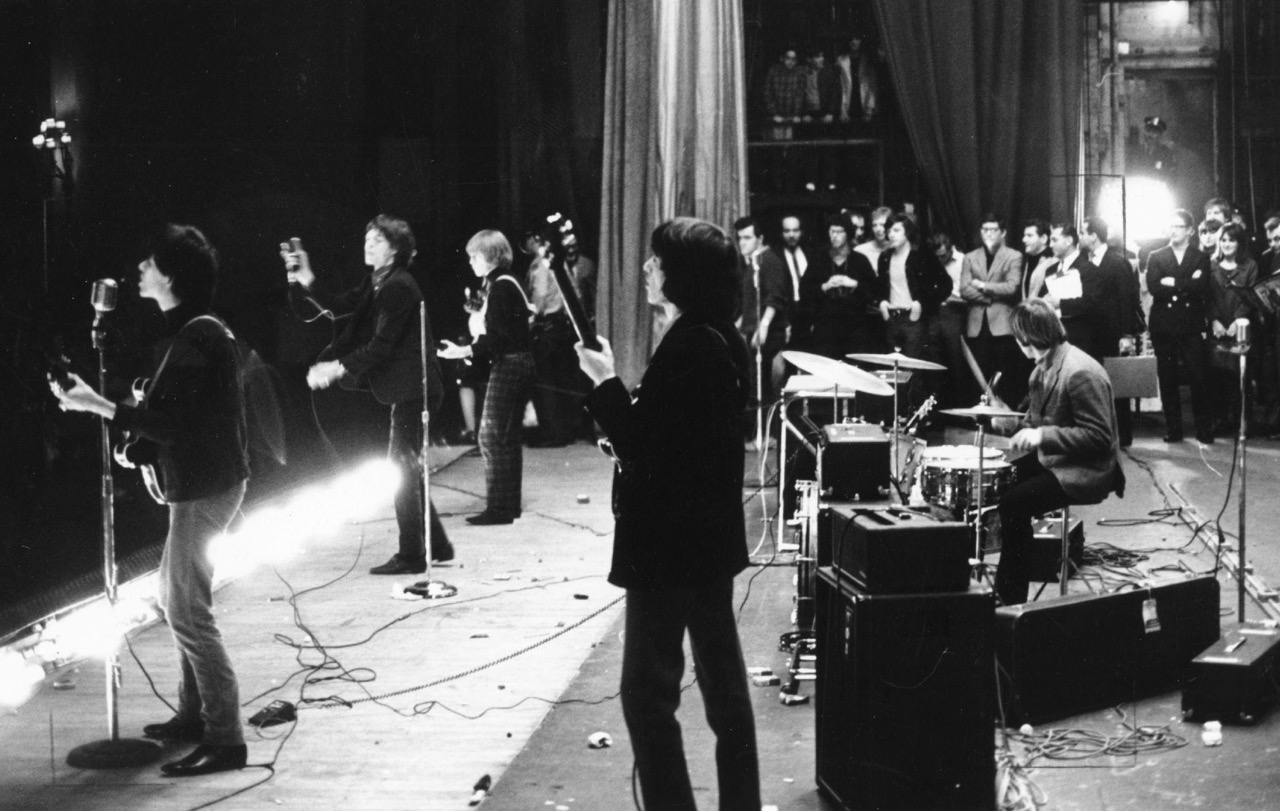
This was not yet the stadium-sized Rolling Stones of later years. This was still the young band, sharp-suited and dangerous, carrying American blues and R&B back across the Atlantic with a British snarl. Mick Jagger, Keith Richards, Brian Jones, Bill Wyman, and Charlie Watts were already famous, but they were not yet myth.
That is what makes this moment so powerful.
“Satisfaction” had not yet been released in the United States. That single would arrive in June 1965 and change everything. So when the Stones stepped onto the stage at the Academy that May, New York was seeing them at the edge of the cliff, right before the world opened underneath them.
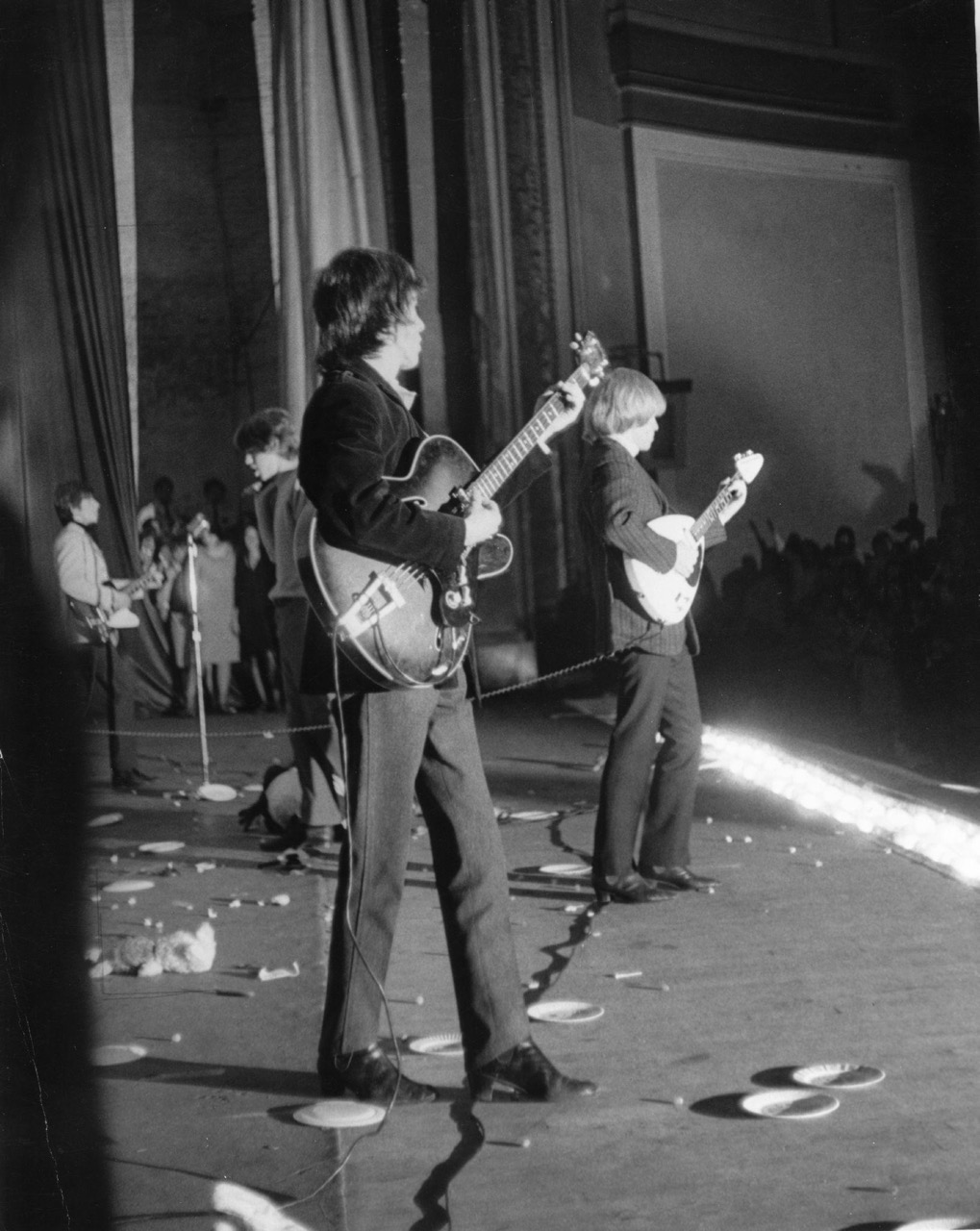
They returned later that month, on May 29, for three more shows at the Academy of Music. By November 6, 1965, they were back again, now touring behind Out of Our Heads, with “Satisfaction” and “Get Off of My Cloud” already part of the storm.
The reported November setlist tells the story of who the Stones were at that moment. They performed songs by Solomon Burke, Don Covay, Chuck Berry, Bo Diddley, O.V. Wright, and Alvin Robinson, alongside their own originals. In other words, they were still deeply rooted in Black American music, but beginning to write themselves into rock history.
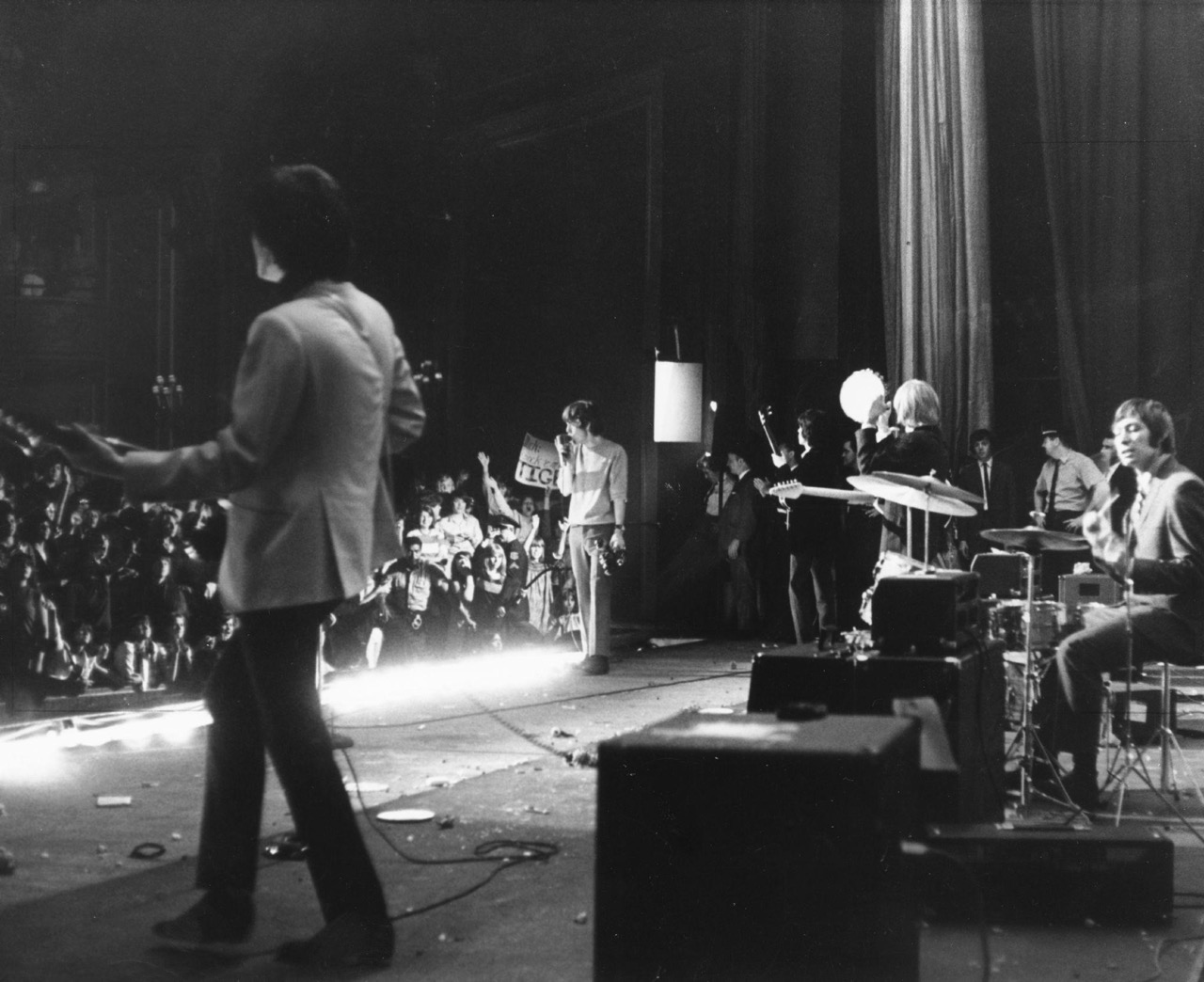
That is part of the strange beauty of this story. A British band, obsessed with American blues and soul, came to a fading movie palace on 14th Street and helped turn it into a rock and roll landmark.
The Academy itself would keep changing.
After the Fillmore East closed in 1971, the Academy became an even more important rock venue. In 1976, it reopened as the Palladium. The building would go on to host The Band, Patti Smith, the Ramones, Bruce Springsteen, The Clash, and countless others. Later, in the 1980s, it became the Palladium nightclub, redesigned by Studio 54’s Steve Rubell and Ian Schrager, with art by Keith Haring, Jean-Michel Basquiat, and Francesco Clemente.
But before all that, there was 1965.
There was East 14th Street.
There was a crowd inside an old theater, waiting for a band that sounded like trouble and youth and escape. There was paper on the stage, lights cutting through the dark, girls screaming from the seats, and five young men from England playing American music back to New York with a new kind of force.
The building is gone now. The Academy of Music closed in 1997 and was demolished soon after. Today, NYU’s Palladium Hall occupies the site.
But buildings leave ghosts.
At 126 East 14th Street, the ghosts are loud. They sound like a movie palace becoming a concert hall. They sound like 14th Street before the glass and concrete dorms and Tech Hubs. They sound like the Rolling Stones, before “Satisfaction” fully conquered America, stepping onto a New York stage and shaking the room awake.
The Rolling Stones’ 1965 performances at the Academy of Music are just one chapter in the long musical life of our neighborhoods. To explore more of that history, read about the many lives of the Academy of Music and Palladium on East 14th Street, the legendary Fillmore East at 105 Second Avenue, the East Village Rock Tour, and the Village Preservation Jazz Map, which traces more than a century of music across Greenwich Village, the East Village, and NoHo.