
Becoming a Park: A Look at the Hudson River Waterfront in our Archives
On September 8, 1998, then-Governor George E. Pataki Signed the Hudson River Park act in law. Approved by the State Legislature in June of that year, this milestone legislation formally designated the waterfront area as a park and established the Hudson River Park Trust to continue the park’s planning, construction, management, and operation. The legislation followed years of community advocacy and would help transform the underutilized Greenwich Village Waterfront into the prized public space it is today.
From the early twentieth century through the 1950s, the West Village piers were a hub for maritime shipping. As new transportation technologies emerged and local industries slowed, the piers became obsolete and the area fell into a decades-long period of blight. Many images and several collections in our Historic Image Archive document the waterfront’s transformation. Some prime examples follow:
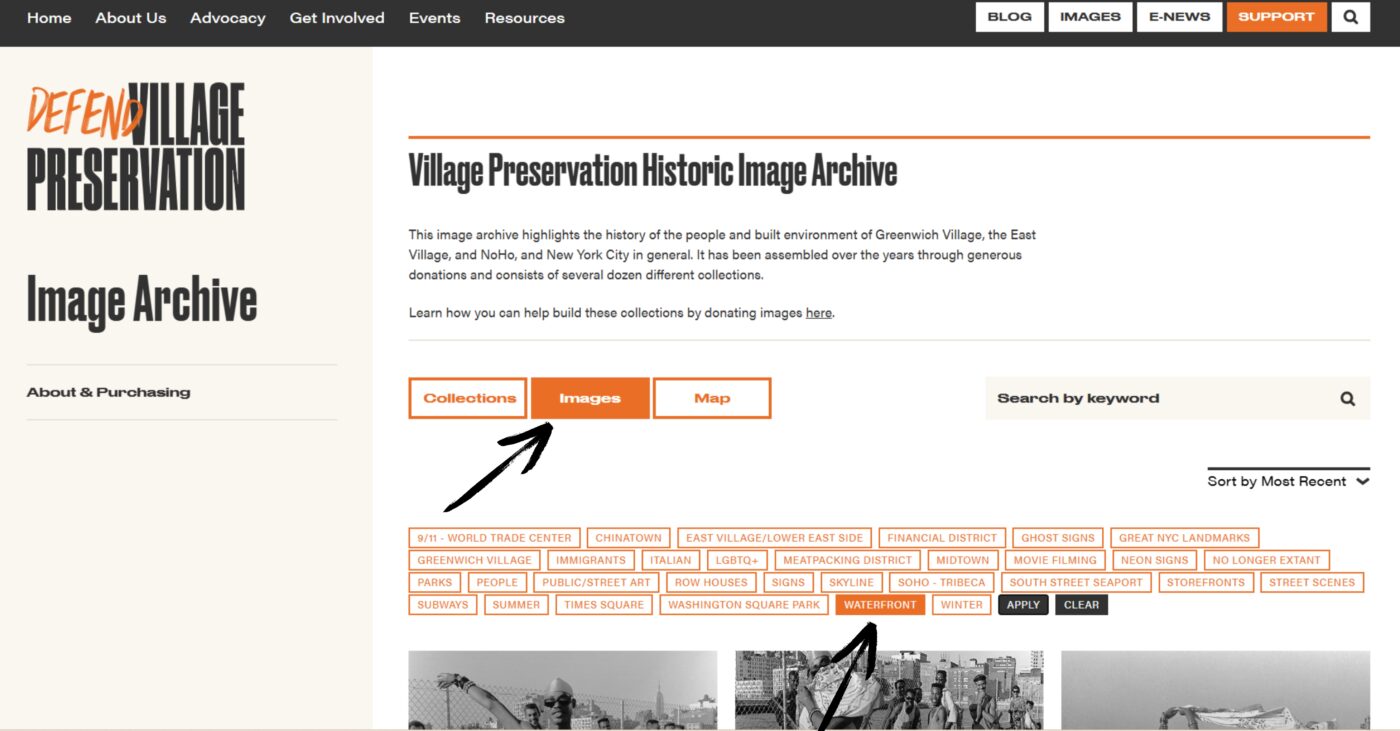
PRO TIP: Click the “Images” button on the Historic Image Archive page to use tags to search the images. In this case, I used the “Waterfront” tag to only view images of or taken along the waterfront.
Jack Dowling Collection: Decay and Rebirth Along the Greenwich Village Waterfront in the 1970s
Jack Dowling was an artist and writer who lived in the West Village from 1951 until his passing in 2021 from COVID-19. He attended Cooper Union from 1953 to 1957, and moved into Westbeth in 1971. Living close to the Hudson River waterfront, his images capture the crumbling piers in the mid-1970s after the collapse of the West Side Highway at Gansevoort Street and its closure in 1973.

James Cuebas Collection
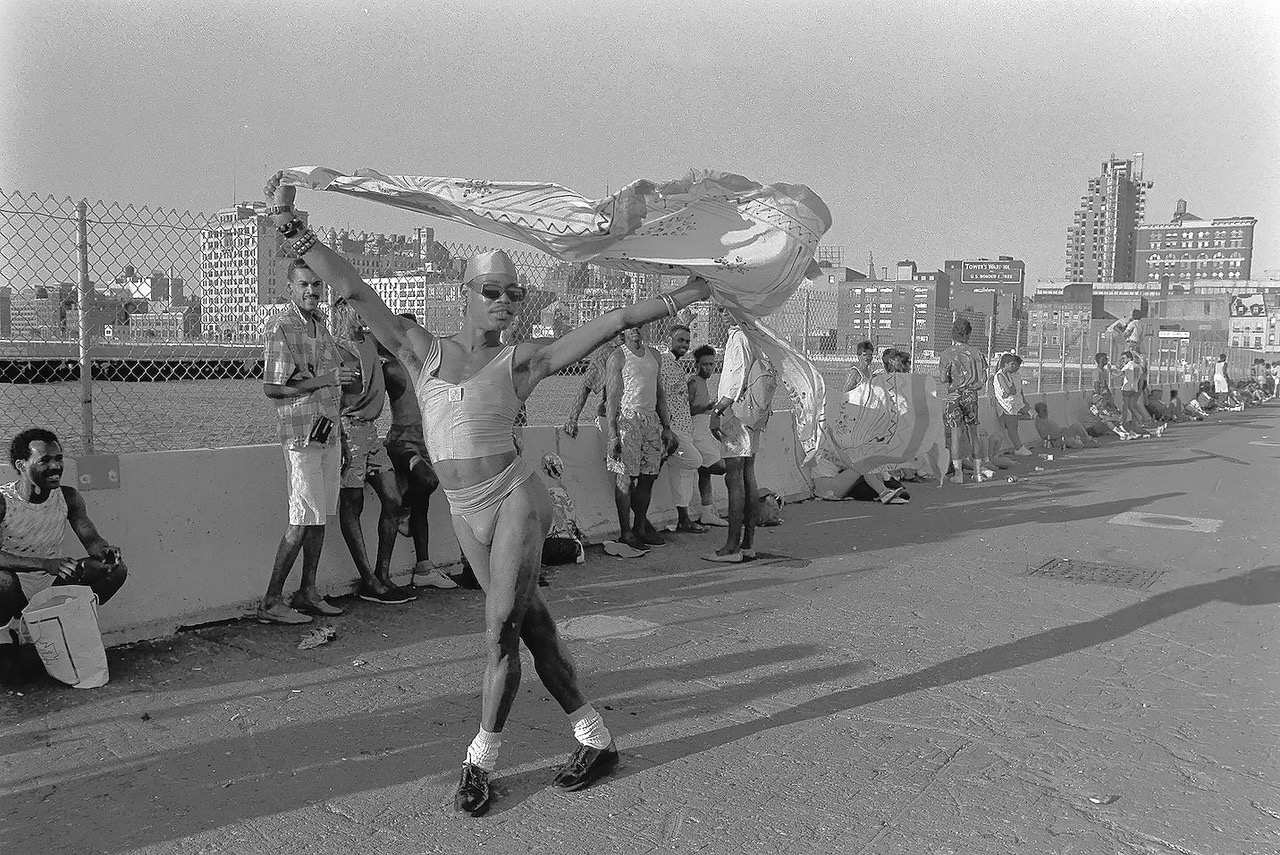
Photographer James Cuebas photographed the West Side waterfront between 1977 and 1986. Born and raised on the Lower East Side, he began his studies in photography in 1975 at age 17 at the Henry Street Settlement House, with poet and photography teacher Nancy Starrels. He studied communications arts at Long Island University and photojournalism at Empire State College. He is a member of the Lower East Side Printshop, and since 1991 has been a resident of the Upper West Side.

By the 1970s and 1980s, walking on the piers was risky, and often illegal due to condemned buildings. But the area’s lack of policing made it somewhat of a refuge for the LGBTQ community, a place where community members could hang out free of persecution, if not danger.
Tom Fox: the Hudson River Waterfront Before the Park
The Tom Fox Collection includes images of the Hudson River Waterfront dating from the 1970s, 80s and 90s. They were taken by Tom Fox, who played an influential role in the research, planning, and advocacy for the redevelopment of the Hudson River waterfront. Tom was the first president of the Hudson River Park Conservancy and completed the Concept and Financial Plan for the park. Several of these photos were included in Tom’s 2024 book, “Creating the Hudson River Park: Environmental and Community Activism, Politics, and Greed” (watch Village Preservation’s program with Tom about the book here).
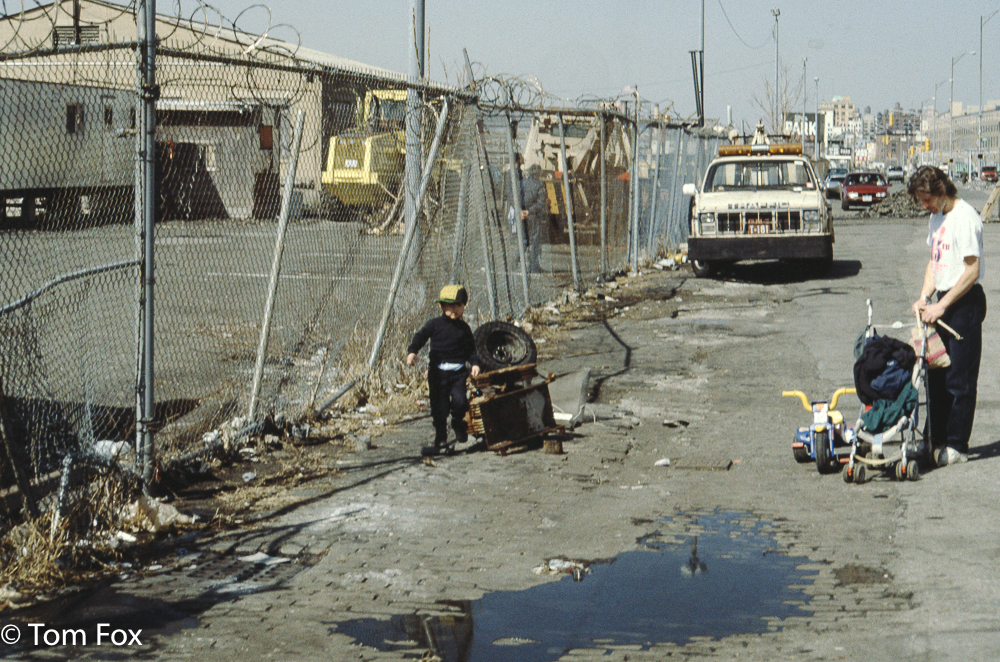
Fox’s photos capture how people were using the waterfront before its formal transformation into the park – and how they were helping facilitate its transformation.

They also capture the gradual change the waterfront took as new infrastructure was installed, one example is the Water’s Edge in Tribeca, shown below.


Click HERE to explore more of the waterfront’s transformation through the Tom Fox Collection, and click HERE to explore our entire historic image archive.