
The Village Roots of the New York Public Library
Established May 23, 1895, the New York Public Library is the largest municipal library in the world. Today, the NYPL has over 92 locations across Manhattan, the Bronx, and Staten Island, and holds over 53 million items. Its history is rich and deeply connected to our neighborhoods.
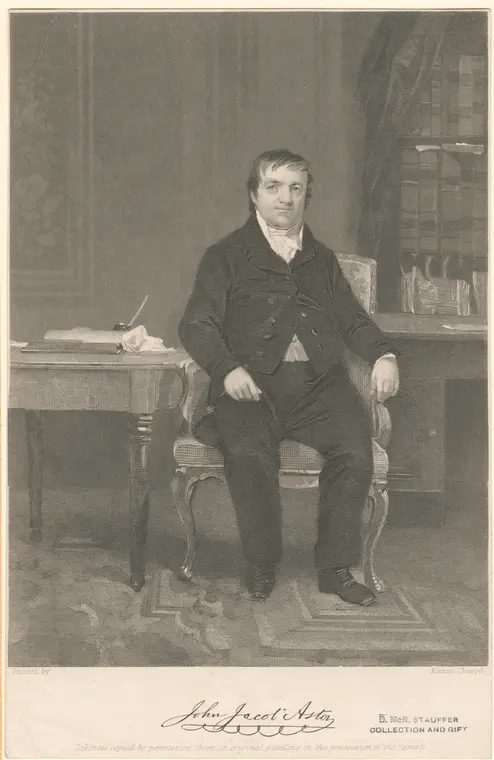
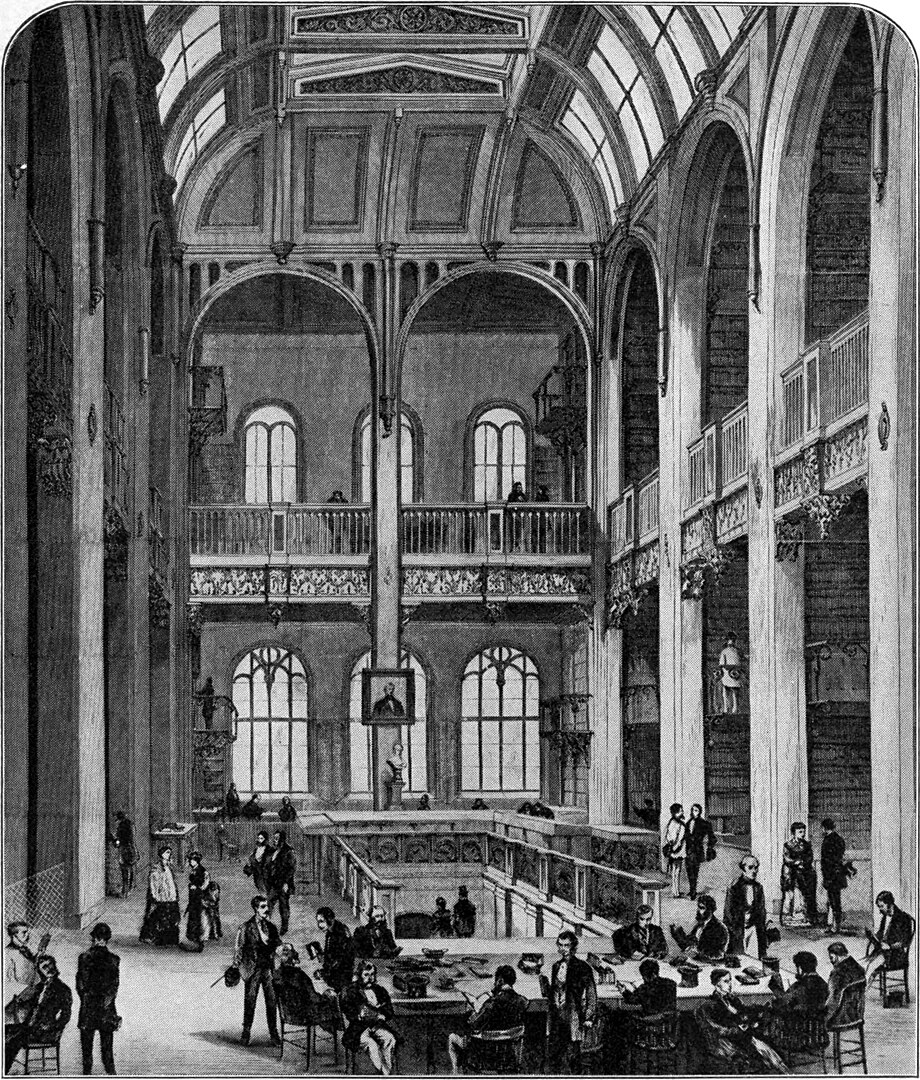
The story begins in the mid-1800s, when New York businessman and multimillionaire John Jacob Astor began working with educator Joseph Cogswell to establish a large public library in New York City. At Cogswell’s request, Astor pledged $400,000 dollars for this public library (equivalent to $14.9 million in 2025) in his will. Astor passed away in 1848, and construction for the library began. Aptly called the Astor Library, it was temporarily housed at 32 Bond Street in NoHo before finding a permanent home a few blocks east on Lafayette Place (now Lafayette Street). Located just south of Astor Place, the Astor Library opened to the public on January 9, 1854, with 80,000 volumes and the great writer Washington Irving as its superintendent.

Designed by Alexander Saelzer in the Rundbogenstil (German for “round style,” it was a combination of the Byzantine, Romanesque, and Renaissance styles popular in Germany and in the German diaspora in the 19th century), the choice reflected Astor’s German roots. And the library continued to expand, adding a northern extension in 1859 to house books and materials in history and literature. Material related to science and the industrial arts remained in the original building, referred to as the South Building or Hall. The library added a second expansion in 1881, thereby doubling its book capacity to a potential 400,000 volumes.
And across the city libraries were appearing. Uptown on Fifth Avenue, between 70th and 71st Streets, the Lenox Library was built in 1877. Unlike the Astor Library, the Lenox charged admission and did not allow the public access to its literary materials. Former Governor of New York and presidential candidate Samuel Tilden insisted on the importance of a library with such features, and bequeathed $2.4 million (equivalent of $86 million in 2025) to establish and maintain a free library and reading room in the city of New York.

By the tail of the nineteenth century, the Astor Library had 260,000 volumes and was by far the largest in the New York metropolitan area. Yet despite its growth, the institution struggled financially. In 1894, the Astor Library entered negotiations with the Tilden Trust to consolidate with the rival Lenox Library to create one public library. The idea came from two trustees of the Tilden Trust, John Bigelow, a New York attorney, and Andrew Hanswell Green, the city Comptroller. Both Bigelow and Green acknowledged that although the city had many libraries, almost all were privately owned. So Bigelow devised a bold plan whereby the resources of the Astor and Lenox libraries and the Tilden Trust would be combined to form a new entity, to be known as The New York Public Library, Astor, Lenox, and Tilden Foundations.
The new library was built on Fifth Avenue between 40th and 42nd Streets. Dr. John Shaw Billings was the director of the New York Public Library, from its construction through its opening. Billings sketched the library’s original floor plan on a postcard, envisioning grand reading rooms, expansive book stacks, and a rapid delivery system. Taken on by the relatively unknown architectural firm of Carrère and Hastings, the building was constructed in the Beaux-Arts style and took 16 years to complete. The project proved both challenging and costly. For two years before they could lay the cornerstone and begin construction, some 500 workers had to spend two years dismantling the above-ground Croton reservoir and preparing the site. The entire project cost $9 million dollars to complete.
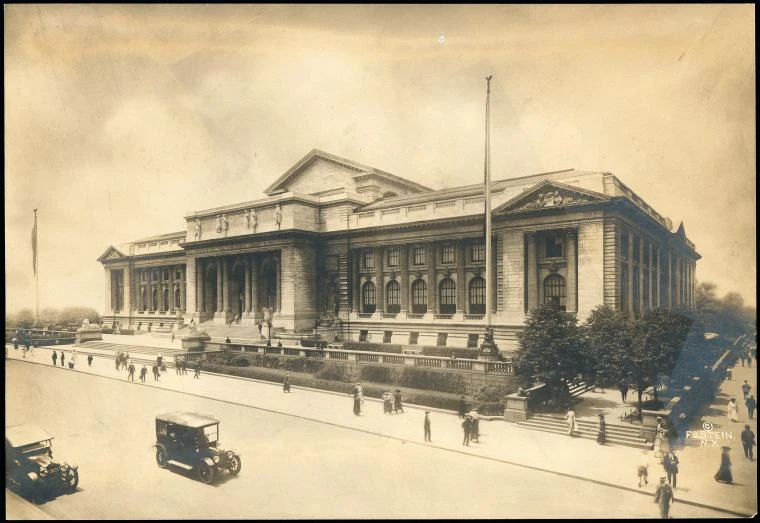
After years of work, the project finally concluded, and on May 23, 1911, the city held an official opening ceremony. The library was stocked with more than one million books, and the ceremony was presided over by President William Howard Taft and was attended by Governor John Alden Dix and Mayor William J. Gaynor. One day later, the library opened to the public, which rejoiced in response. Between 30,000 and 50,000 people visited that first day.
The original Astor Library building was not sold by the NYPL until 1920, when the Hebrew Immigrant Aid Society bought it for $325,000 as its headquarters and receiving station, dormitory, and synagogue for arriving Jewish immigrants. Over the following decades, the Society renovated the structure and removed now-obsolete library infrastructure. When the building faced demolition in 1965, preservationists and the New York City Landmarks Preservation Commission helped save it. Soon afterward, the former Astor Library found new life as The Public Theater.
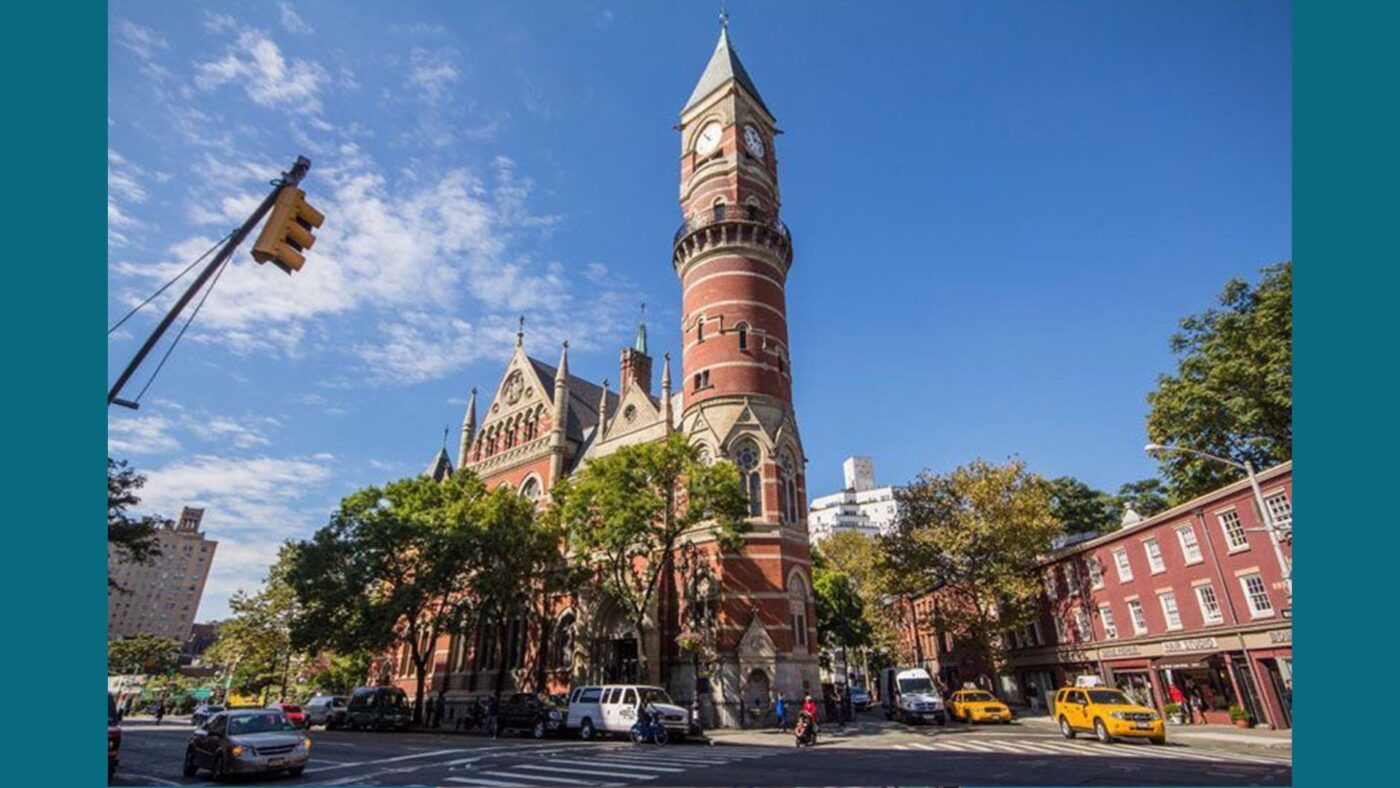
Since 1911, NYPL subsidiaries have opened across the city. In fact, one of the newer branches is found in one of our neighborhood’s oldest buildings, the Jefferson Market Library at 425 Sixth Avenue. Built in 1877 by architects Frederick Clark Withers and Calvert Vaux in the Victorian Gothic style, the building has served many purposes. Once a courthouse, then a police station, the building was abandoned and slated for demolition by the mid-twentieth century. Luckily, a group of passionate Villagers rallied to save the building, proposing to convert it into a much-needed, larger local library (at the time, the elegant but tiny Jackson Square Library served the neighborhood). The city finally agreed, and the building was rededicated as an NYPL branch in 1967, leading to the decommissioning of the Jackson Square branch.
Today, the New York Public Library remains a cultural center and institution, providing essential information to the public and transmitting knowledge across generations. And while the original main branch of the NYPL moved uptown, its roots remained connected to the Village.
What a great article. Excellantly put. Really learned a lot. Well put.