
Thomas Paine: Revolutionary Ideas for a Revolutionary Village
As the United States celebrates the 250th anniversary of its founding in 1776, Village Preservation’s “Revolutionary Village” initiative asks us to consider revolution not as a single historical moment, but as an ongoing process rooted in ideas, dissent, and the persistent reimagining of democracy. Few figures embody that tradition more powerfully than Thomas Paine, born on February 9, 1737, whose words helped ignite the American Revolution, and whose legacy continues to reverberate through Greenwich Village and far beyond.
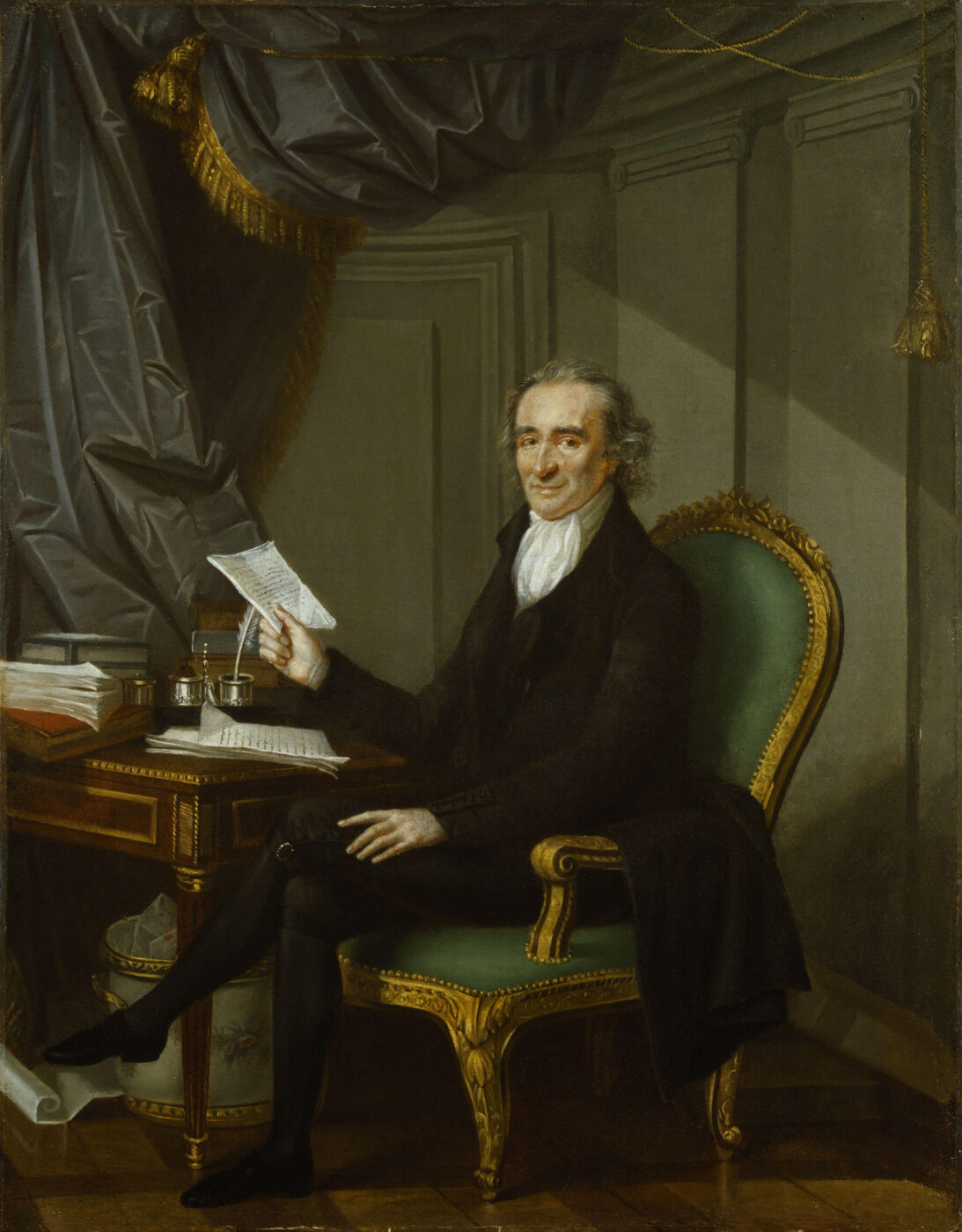
When Thomas Paine arrived in America in 1774, colonial resistance to British rule was widespread but fractured. What Paine provided was not merely argument, but clarity, urgency, and accessibility. His pamphlet Common Sense, published in January 1776, transformed political debate by rejecting monarchy outright and asserting that independence was not only desirable, but inevitable and morally necessary.
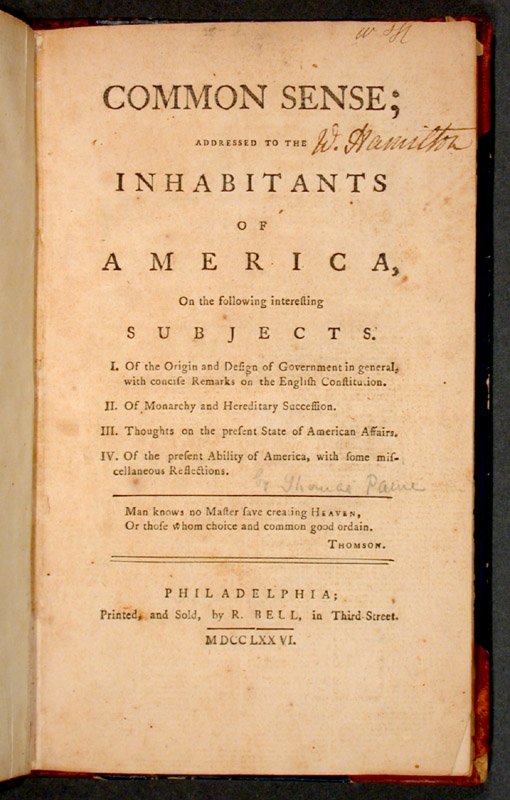
Unlike elite political tracts of the era, Common Sense was written in plain language and aimed at ordinary people. It reframed independence as a universal cause rather than a grievance of colonial elites. This shift in perspective was crucial in helping mobilize public opinion at a decisive moment. Its extraordinary circulation made it one of the most influential political documents in American history.
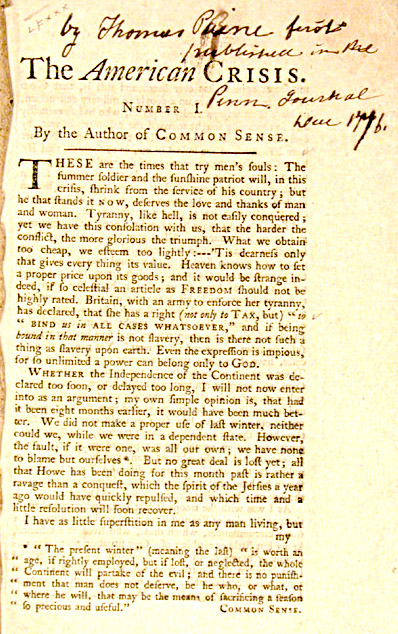
Later that same year, as the Revolutionary War faltered, Paine again intervened with The American Crisis, a series of essays that urged perseverance when defeat seemed likely. The opening line, “These are the times that try men’s souls…,” became a rallying cry, and George Washington famously ordered the essay read aloud to troops. Paine’s influence, therefore, was not abstract: his words helped sustain both popular support and military morale during the Revolution’s most precarious phases.
Despite his foundational role, Paine’s uncompromising radicalism made him a controversial figure in the new nation. He supported the French Revolution, criticized organized religion in The Age of Reason, argued for the end of slavery, and lobbied for ideas far ahead of their time, including expanded social welfare measures such as old-age pensions and aid to the poor.
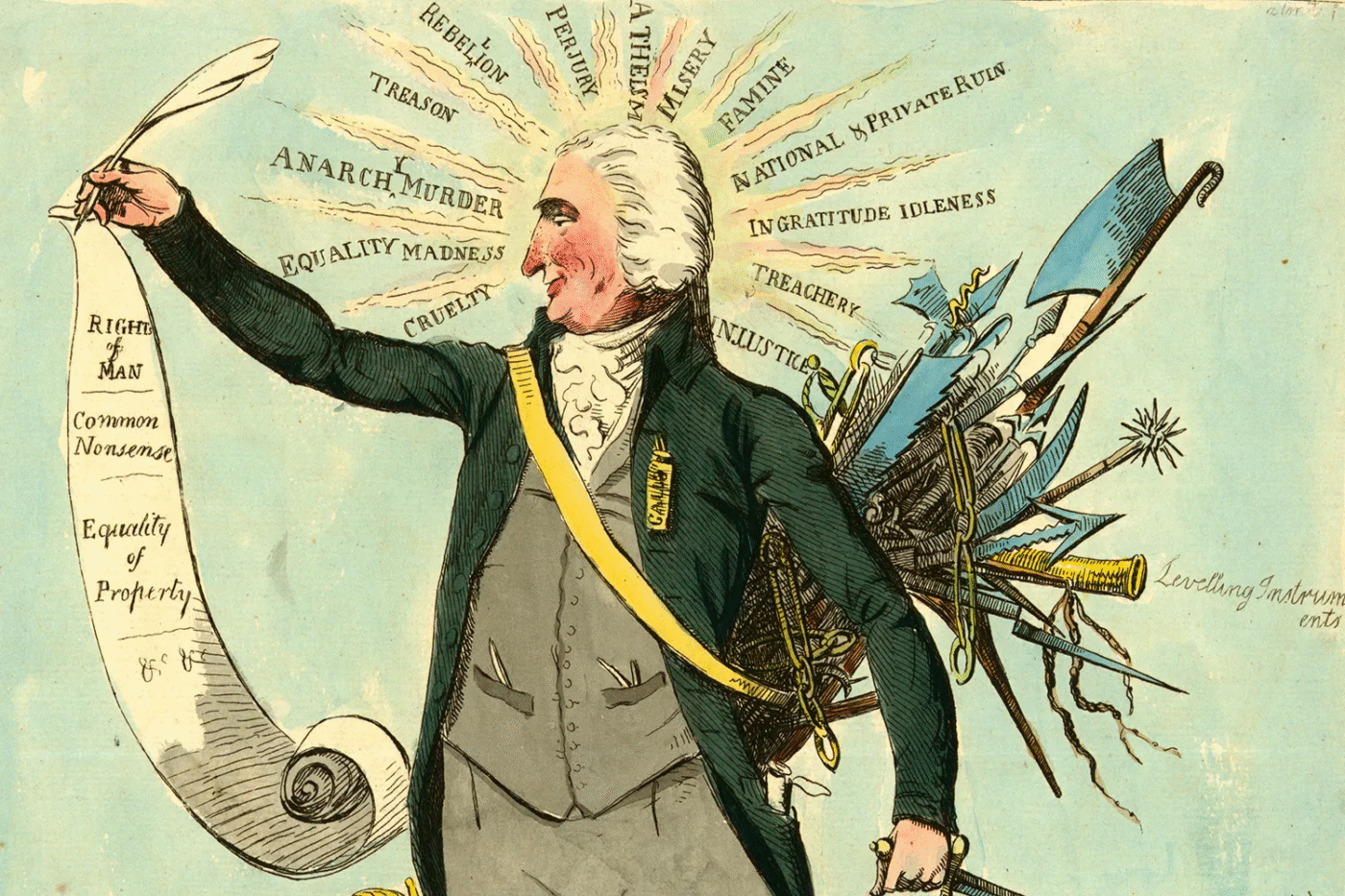
After living and France and experiencing its revolution, including being imprisoned, Paine returned to the United States in 1802. But he found himself politically marginalized. He would spend his final years in Greenwich Village, where he died in 1809.
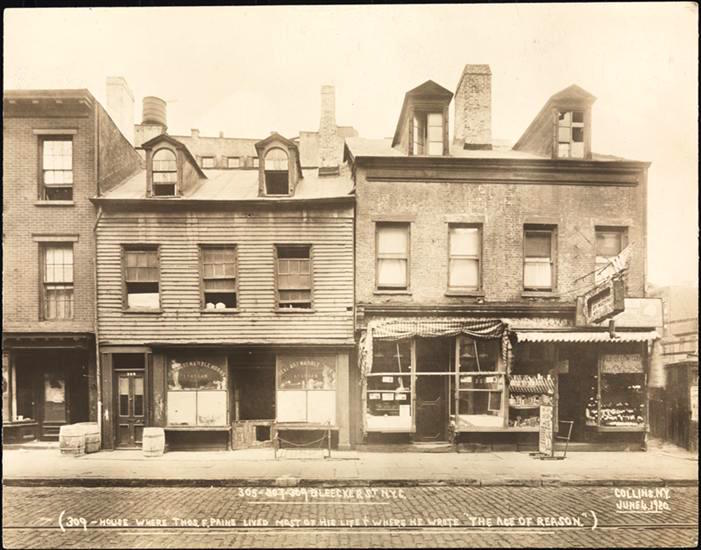
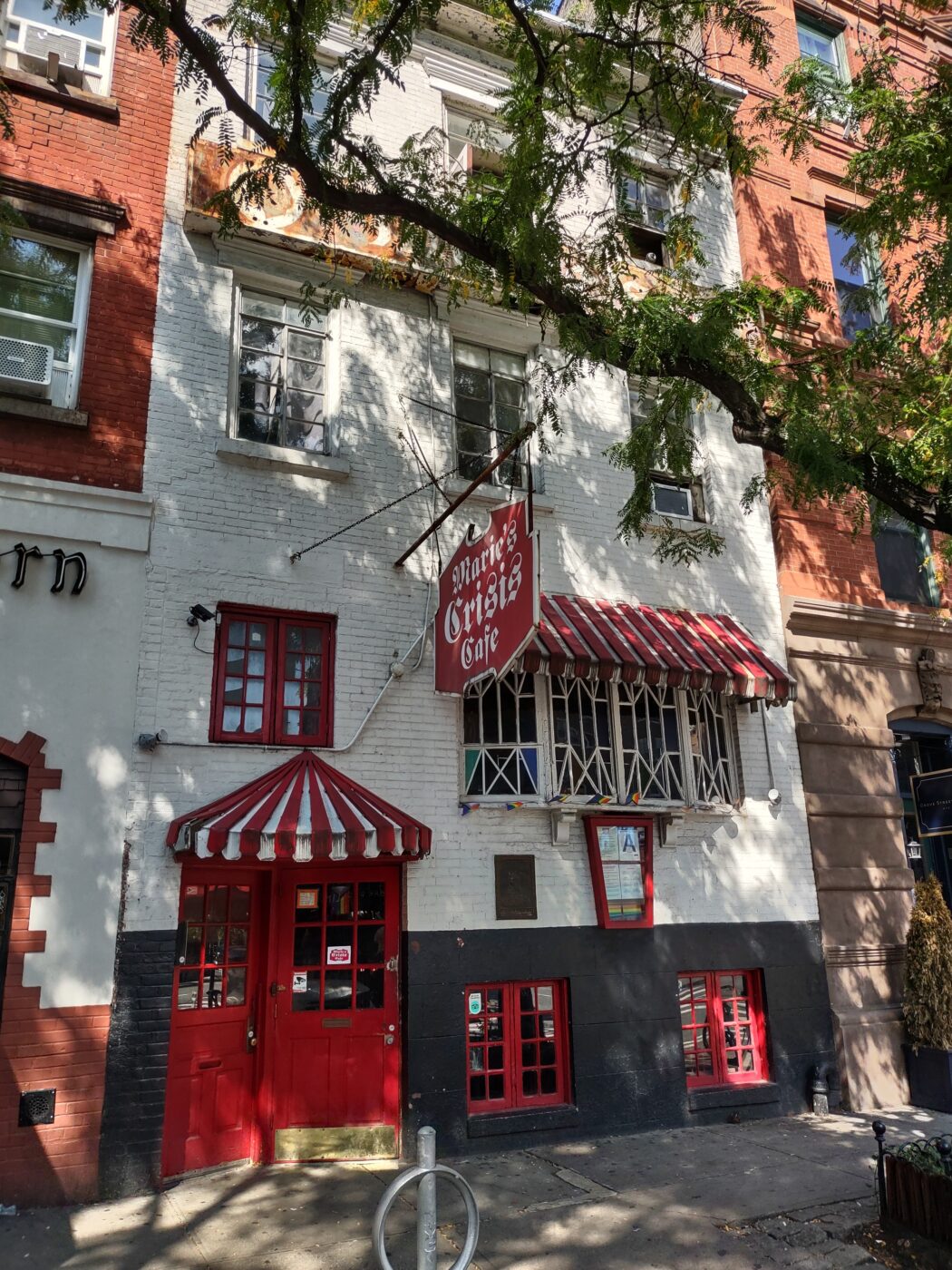
The physical fabric of that early Village has changed dramatically: the boarding house where he first lived at 309 Bleecker Street no longer exists, but the echo of his presence survives at 59 Grove Street, the site where he died. A plaque installed in 1923 marks this location, and for more than a century the bar Marie’s Crisis has stood here, its name nodding both to Paine’s influential pamphlet and to the neighborhood’s bohemian heritage.
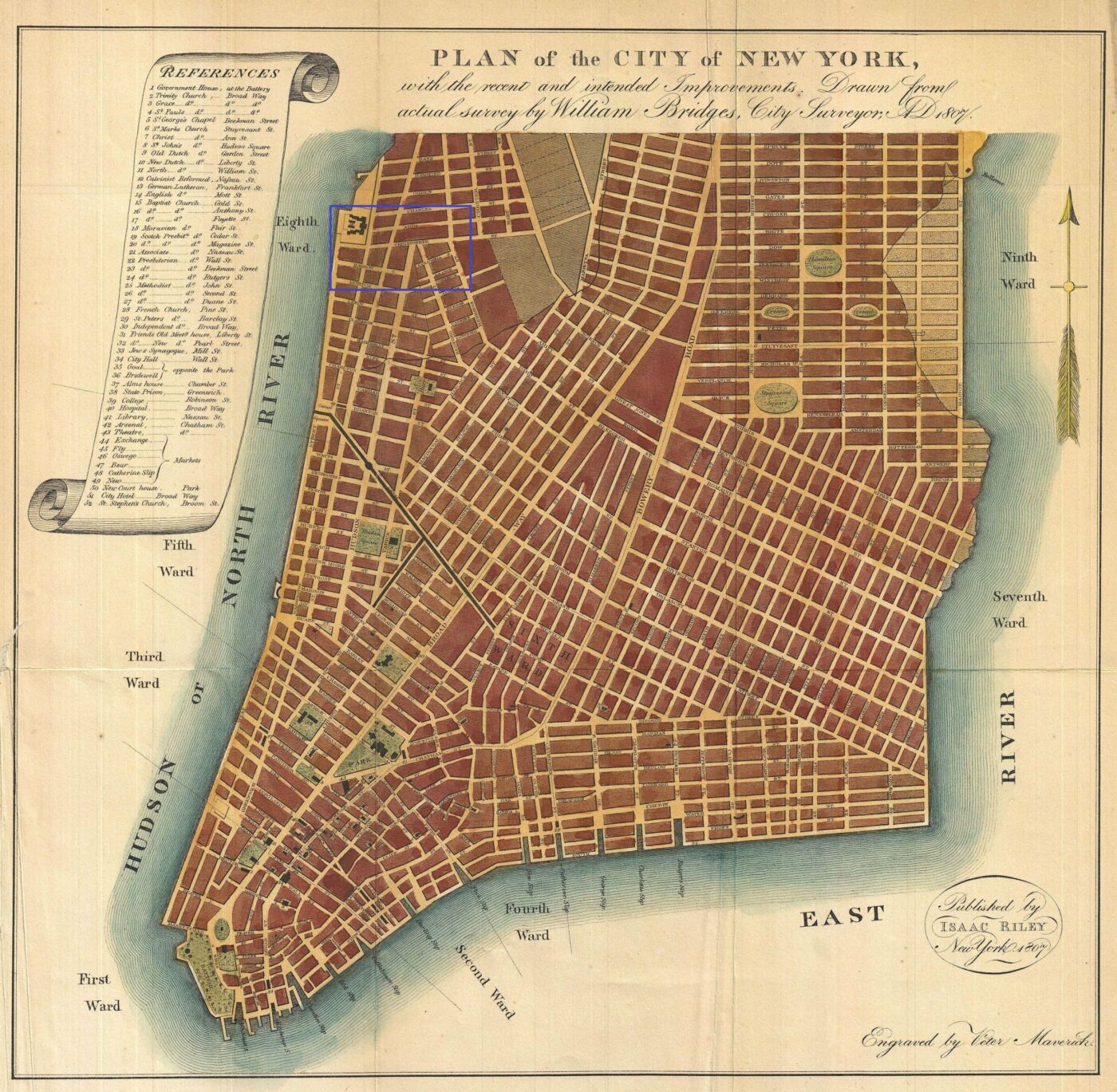
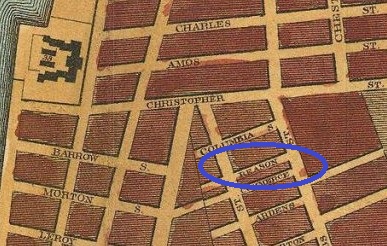
The erasure and rediscovery of Paine’s legacy, including the renaming of “Reason Street” (originally named for Paine’s “The Age of Reason”) to Barrow Street, reflects a broader tension in American history: how radical ideas are often embraced in moments of crisis, then sidelined once power consolidates.
While Paine himself died in relative obscurity, his ideas did not. Over the centuries, his insistence on popular sovereignty, freedom of conscience, and economic justice has repeatedly resurfaced in American political life. Abolitionists, labor reformers, suffragists, civil rights activists, and modern advocates for democratic reform have all drawn upon Paine’s belief that government exists to serve the people and not the other way around.
This enduring influence aligns closely with Greenwich Village as a long-standing incubator of dissent and democratic expansion. The Village has remained a place where Paine’s core principles, from a skepticism of entrenched authority to faith in human equality, have been continuously tested and renewed. While the founding generation’s struggle for independence anchors the semiquincentennial celebrations, Village Preservation’s interpretive approach also highlights later movements from abolitionism, women’s suffrage, and labor rights, to LGBTQ+ activism, free speech advocacy, and artistic innovation that reflect an enduring quest to expand liberty, equality, and participation in American society.
Revolutionary Village embraces this layered history, situating the American Revolution within a broader, 250-year continuum of struggle, creativity, and reform. Thomas Paine’s life in Greenwich Village reminds us that revolutions are sustained not only by battles and declarations, but by ideas; ideas that challenge orthodoxy, empower ordinary people, and remain relevant long after their authors are gone.
As the nation marks its semiquincentennial, Paine’s presence in Greenwich Village serves as both a historical anchor and a provocation: a reminder that democracy is not a finished project, and that the revolutionary spirit of 1776 continues to find expression in the streets, institutions, and communities of the Village today.