
Peter Bennett’s East Village: Then and Now, Pt. II
Village Preservation’s Historic Image Archive captures and preserves scenes of Greenwich Village, the East Village, NoHo, and beyond over many decades. One of our collections shows the East Village in the early 1980s, during a critical period when the neighborhood was a hub for artists, musicians, and writers, as well as drifters, and punks, and really anyone who wanted to spend time in an environment where anything goes.
These images were taken by photographer Peter Bennett, who grew up in Greenwich Village and lived in the East Village from 1979 through 1988. Working as a bartender at night, during the day he photographed the rapidly changing neighborhood around him. Through his lens, Bennet saw a city and neighborhood in flux — he took snapshots of buildings that were abandoned following the fiscal crisis of the ‘70s, people from all different walks of life, and businesses that have long since shuttered.
Though the neighborhood has shifted and evolved greatly in the last 40 years, glimpses of the old grit and history remain. Storefronts and the characters that filled them may have changed, but many building facades are still standing.
In Part 1 of this blog series, we took a look at some of the most dramatic shifts, including lots in Alphabet City that lay vacant or abandoned in the ‘80s and have since been built out. In this post, we’ll explore some of the sites which, though not quite the same as they once were, retain enough of their original features to still be recognizable today:
Fresh Jersey Eggs, 72 East 7th Street, 1984
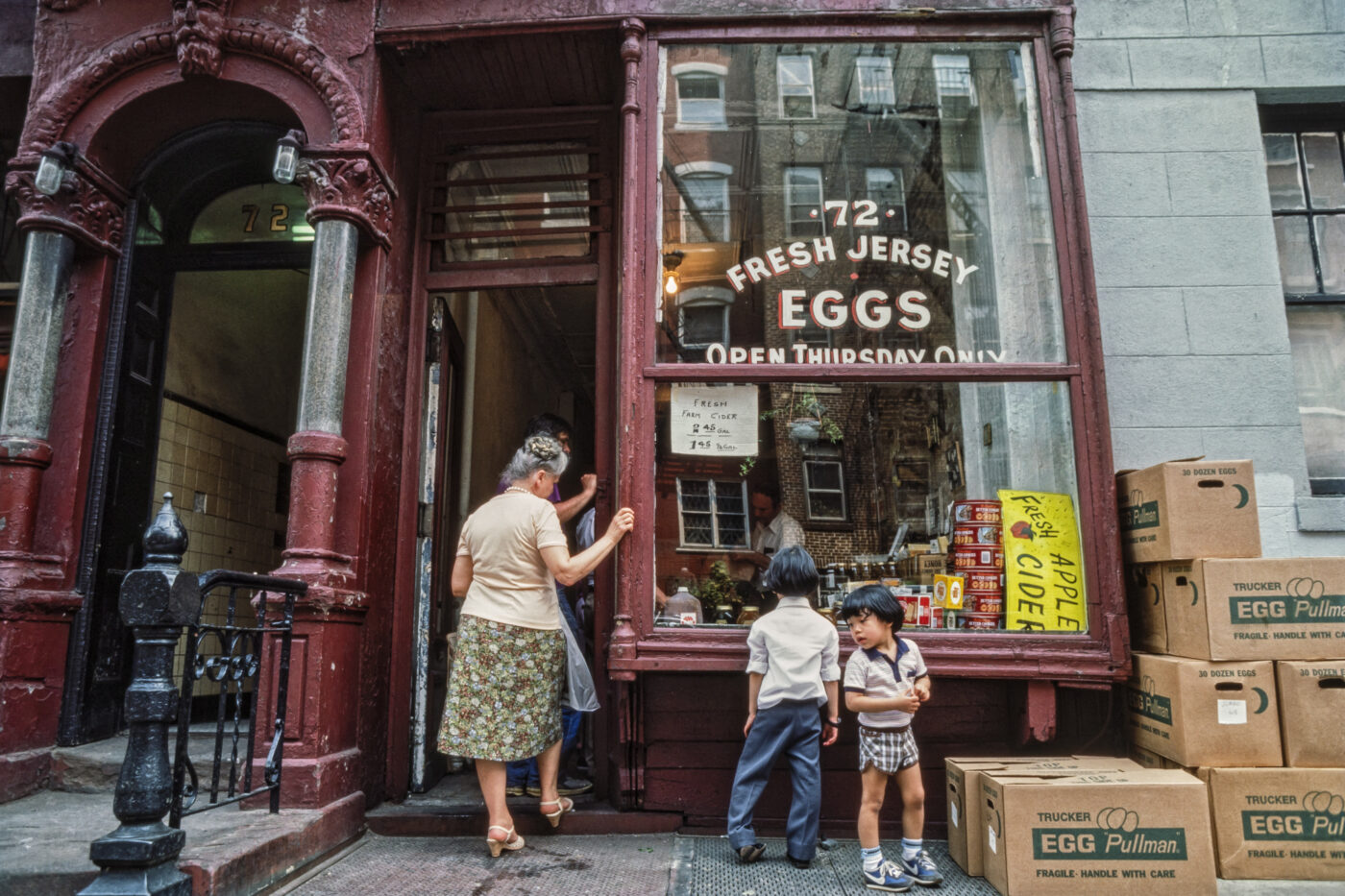
This 1984 image shows a painted wooden storefront retained from a much earlier time period. The building was originally constructed in 1897 by George F. Pelham, and was designated as part of the East Village/Lower East Side Historic District, sadly after the storefront had already been significantly altered. The designation report acknowledges this alteration, and also mentions the business captured in the above image, noting that “…one of the storefronts contained an egg store, open only on Thursdays. The store was run and operated by the Shady Hollow Farm in New Jersey from the 1950s until the mid-1980s.”
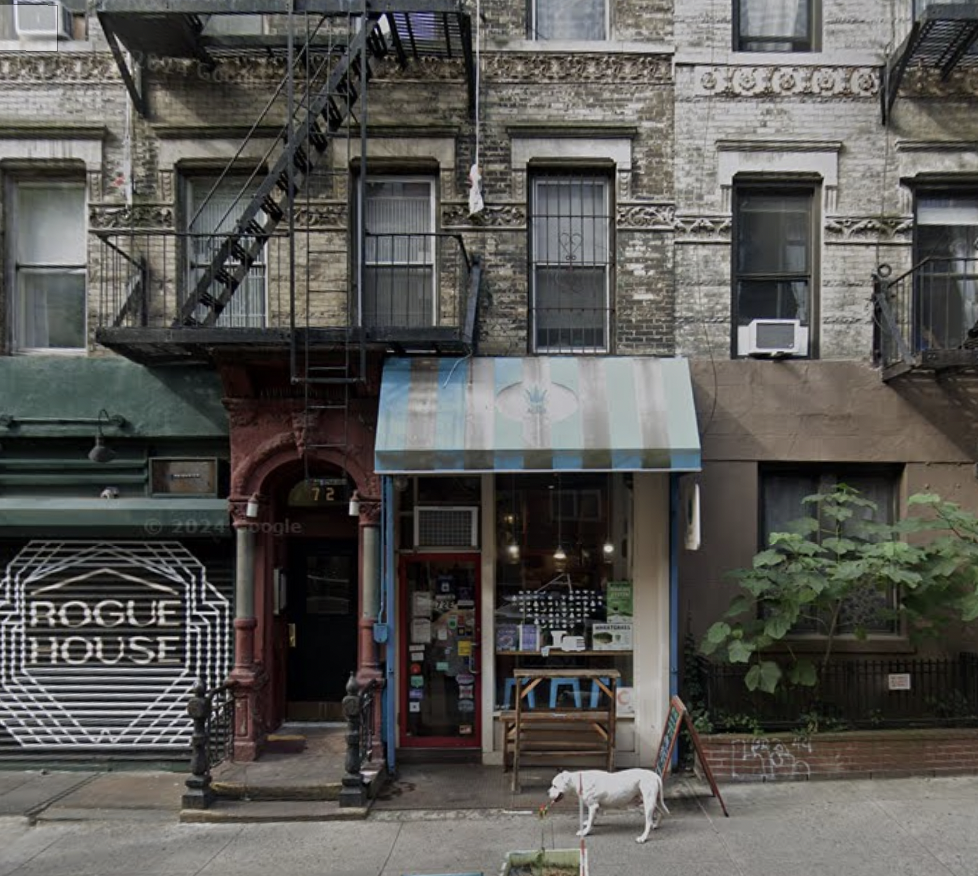
Today, the building contains modern storefront infill (which has been in place since before the historic district was designated in 2012). But the building is still easily recognizable thanks to the intricate arched stone surround for the residential entrance, seen here on the left.
Gem Spa at 131 Second Avenue at St. Marks Place, 1984
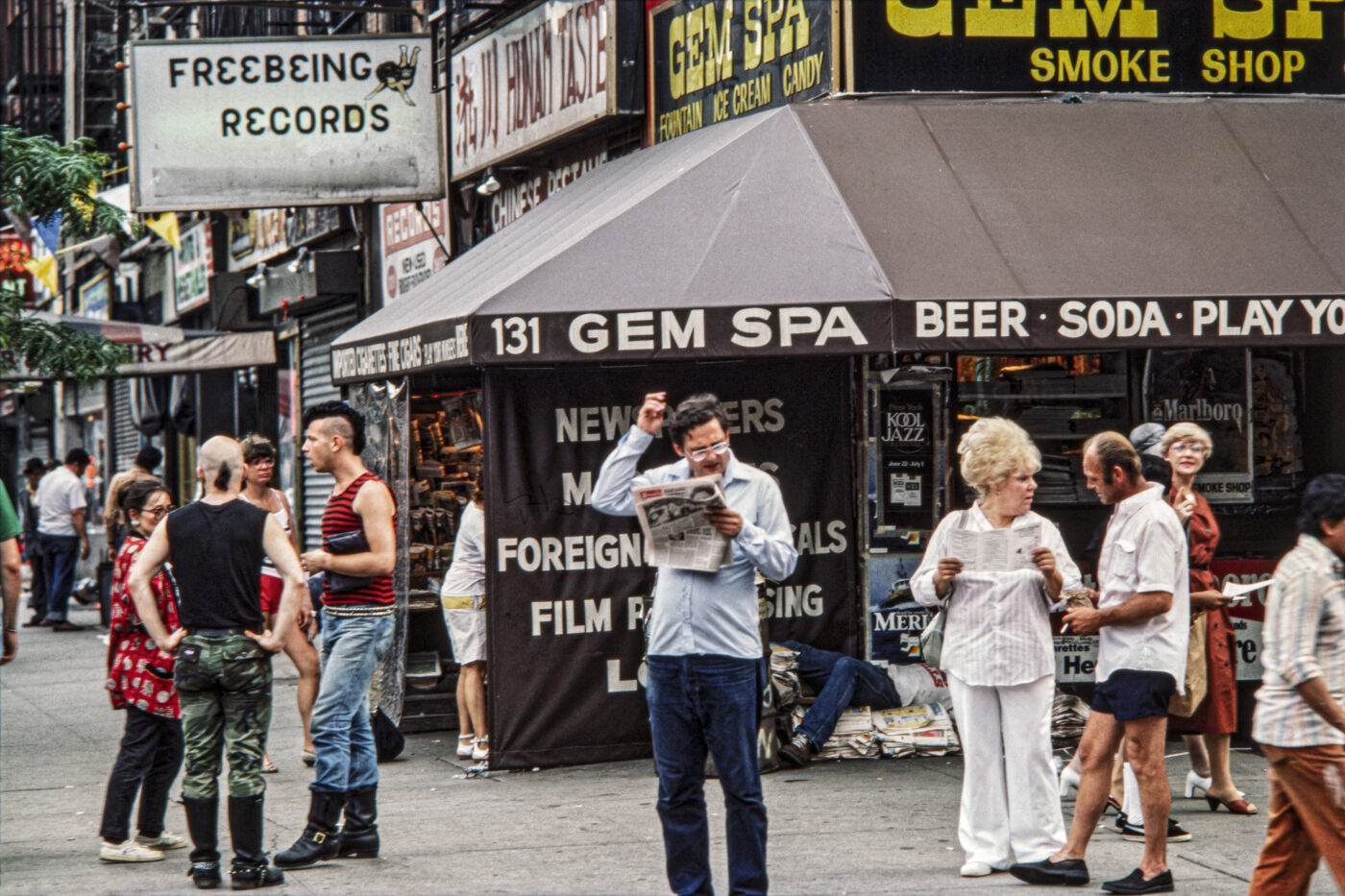
This one was a much-grieved loss for the neighborhood. Gem Spa was an East Village institution. Founded in 1921 under a different name, by 1957 it was called “Gem Spa,” and was beloved as a 24-hour newsstand that sold more than just your standard newspaper fare — it was long a hangout spot for beats and hippies, and was known for purveying a wide selection of underground newspapers and magazines, as well as one of the city’s best egg creams.
The business sadly closed after nearly a century, in 2020.
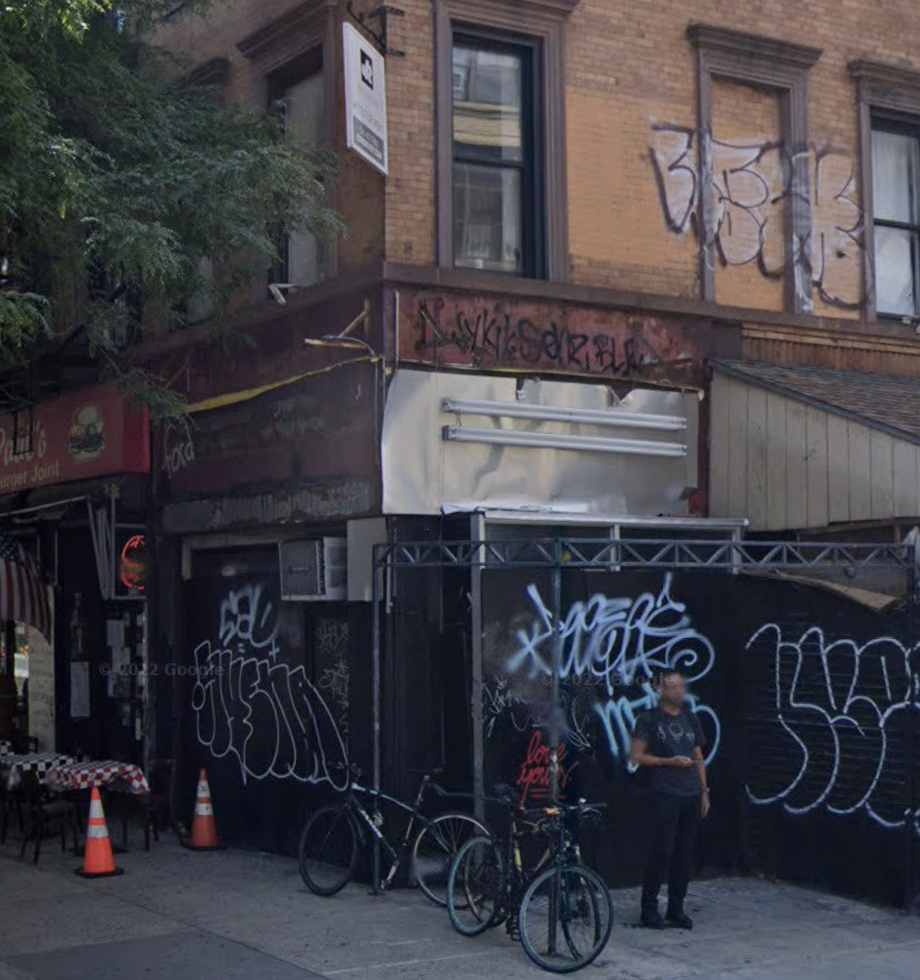
Street musicians in front of Manic Panic, 33 St. Marks Place, 1984
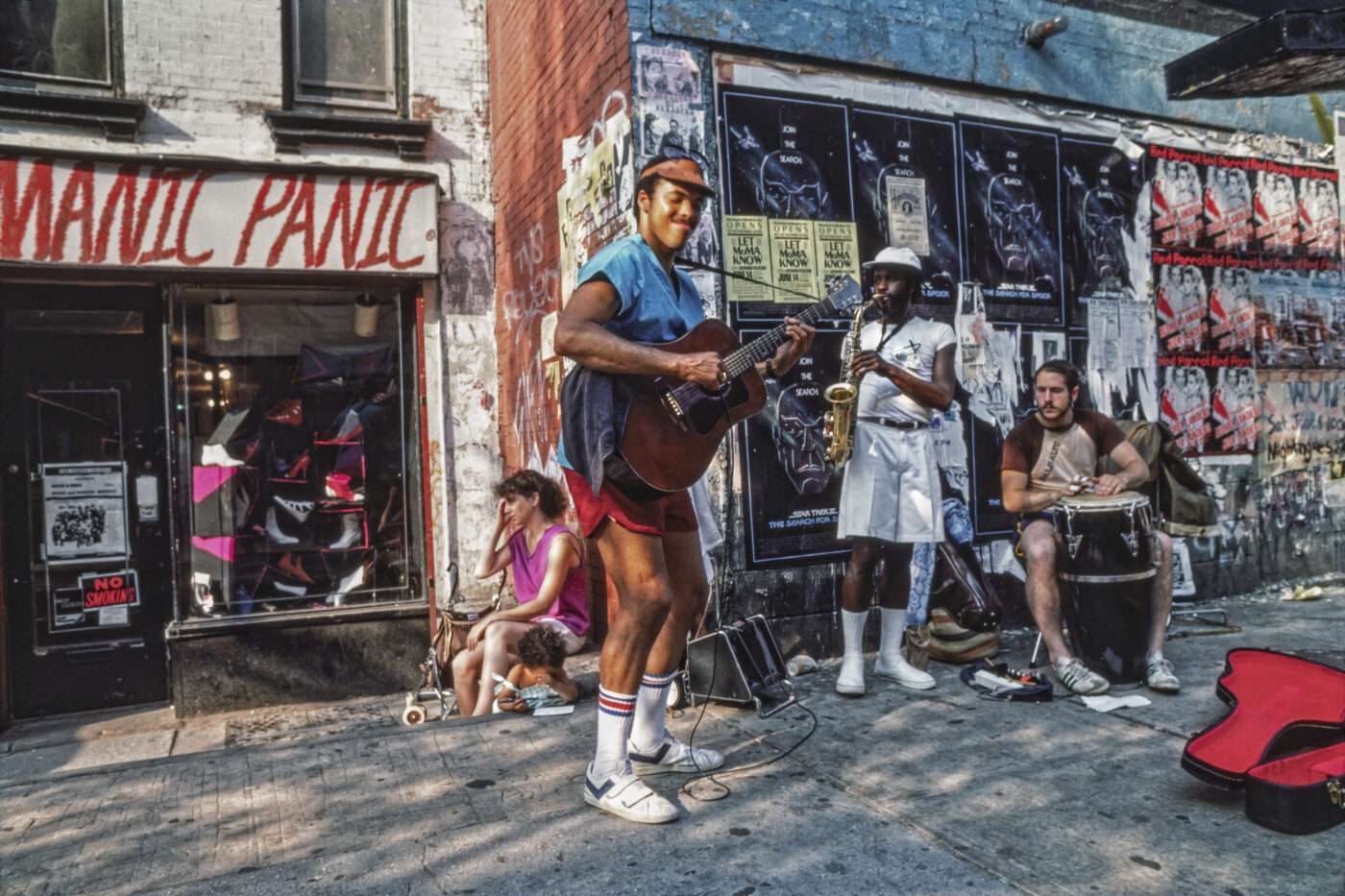
Today known as a colorful hair dye brand and still operating online and as a wholesaler, Manic Panic started out as a small shop at 33 St. Marks Place. The store not only sold rainbow-colored hair dye, but also vintage fashion pieces that were hand-picked by the store’s founders, sisters and Bronx natives Tish and Snooky Bellamo.
The store closed in 1989 after their landlord declined to renew their lease. This turn of events ended up being fruitful for the business, as the sisters continued operating and growing the wholesale side of their brand. They first moved to a small West Village apartment, then to a Tribeca loft, and then a more permanent warehouse in Long Island City.
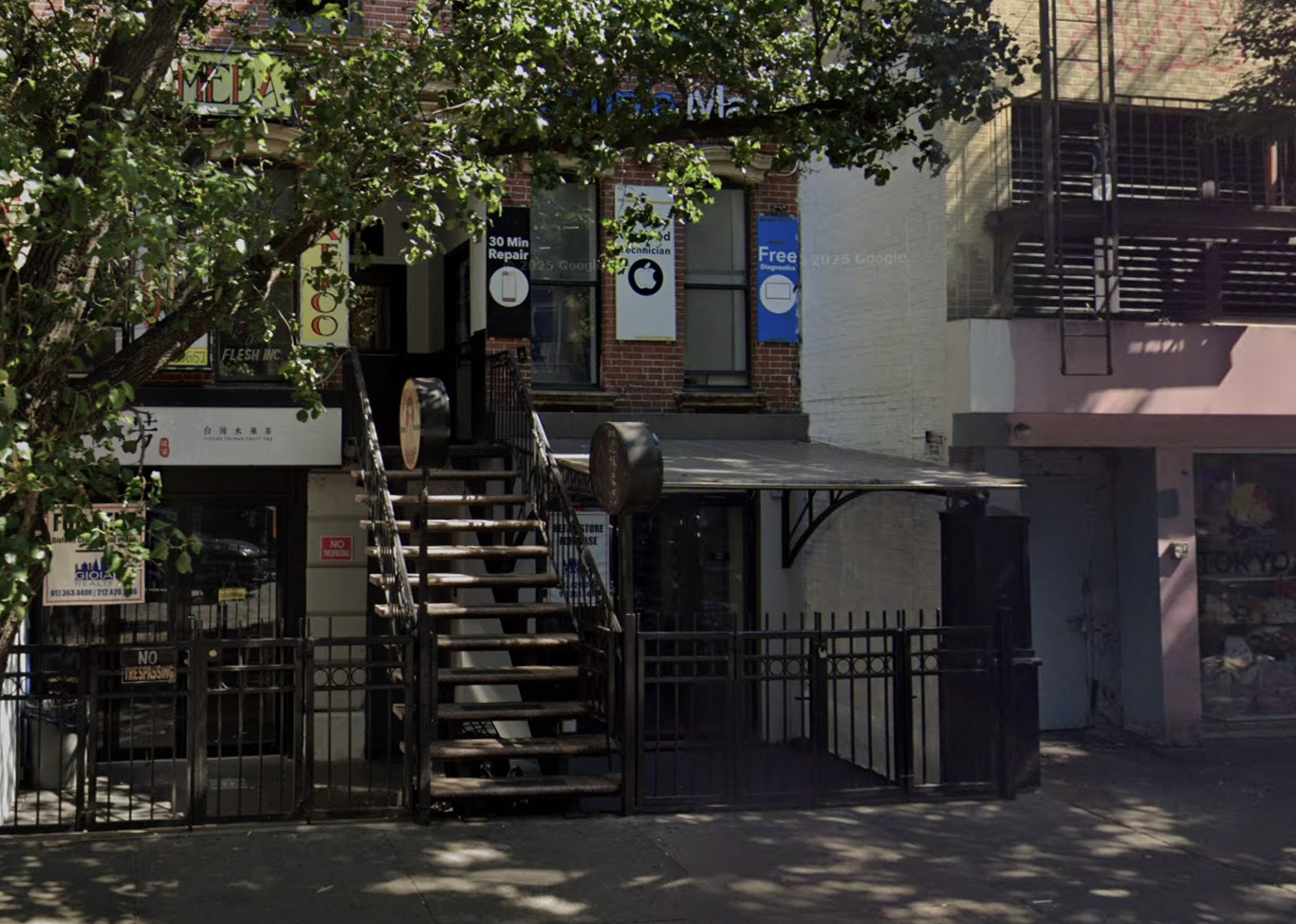
The building has hosted a variety of retail establishments since the late ‘80s, and has been witness to the evolution of St. Marks Place. While the storefront has clearly been altered with the addition of a staircase, among other changes, the building remains identifiable by its upper floor brickwork and the way it sets back from the adjacent property.
To see more, explore Peter Bennett: Early 1980’s East Village, and check out our entire historic image archive here.